Save our Tomales Bay – part 7

Click on the words above “Save our Tomales Bay…” to see this post as it was meant to be seen.

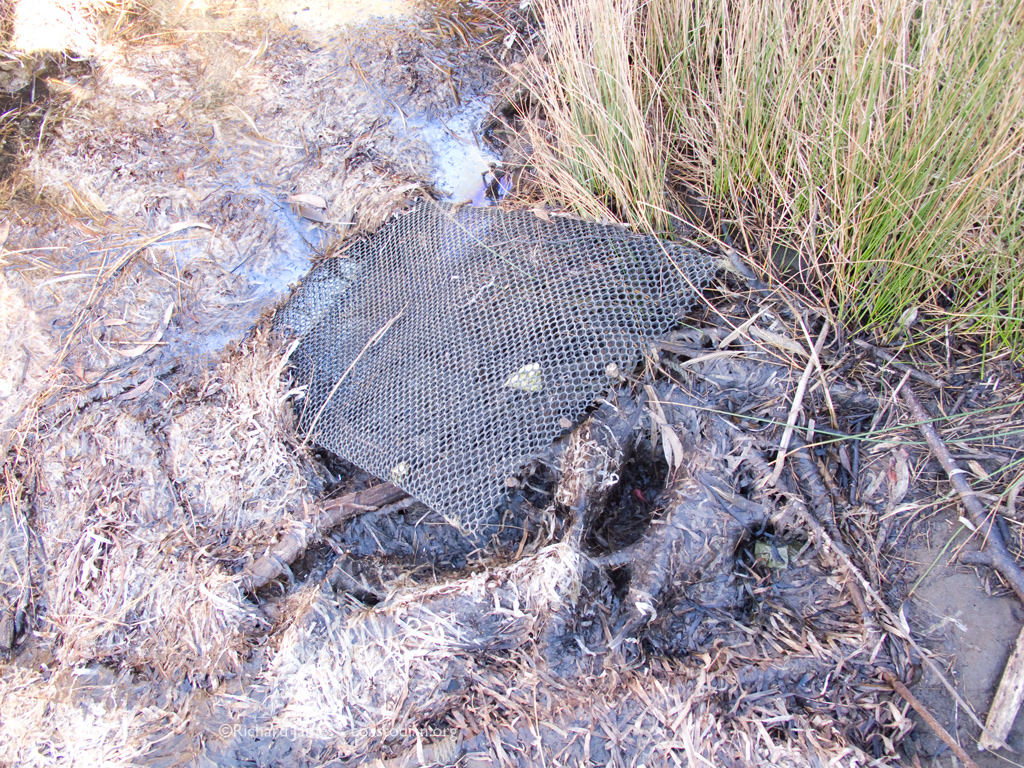
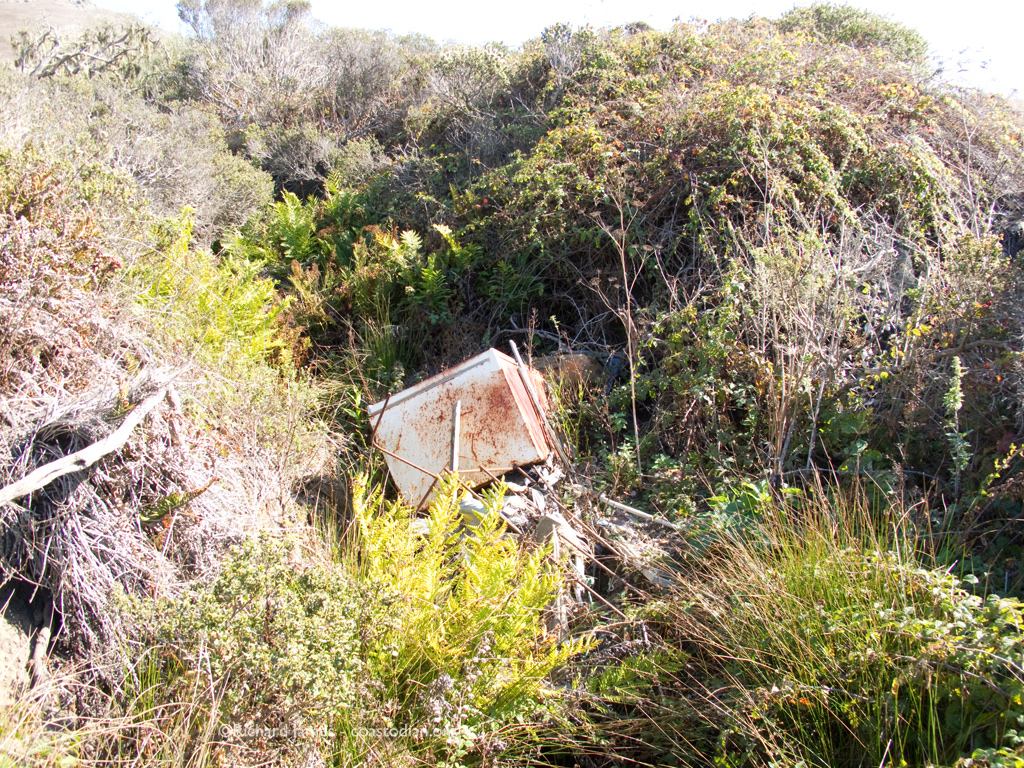
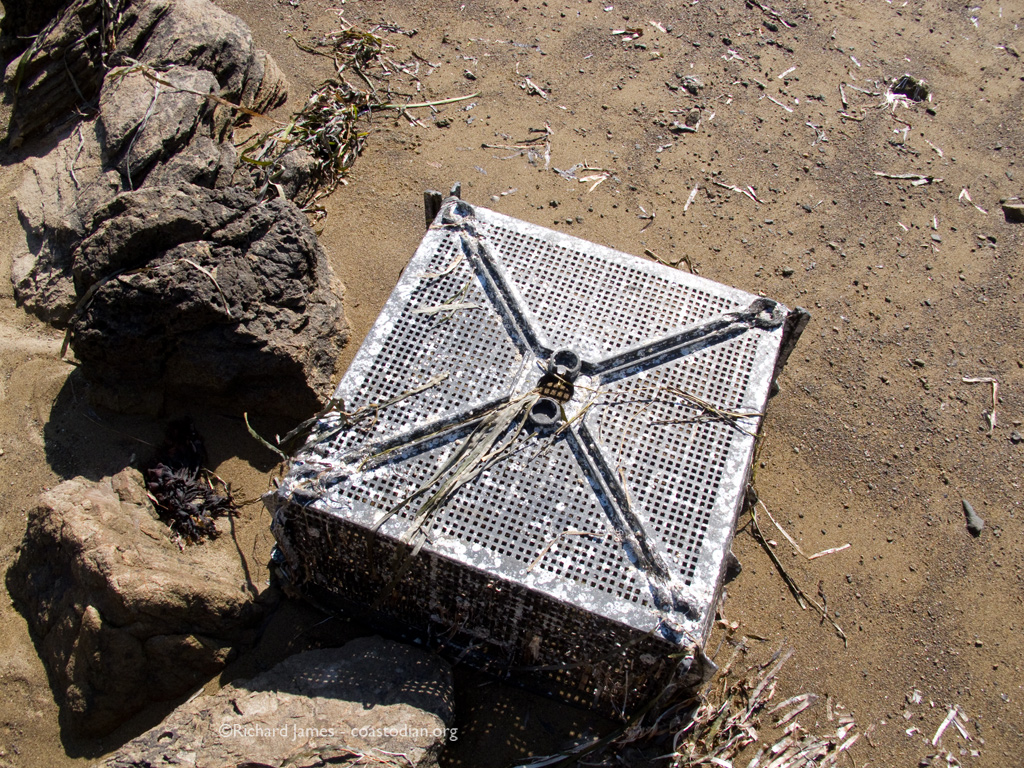
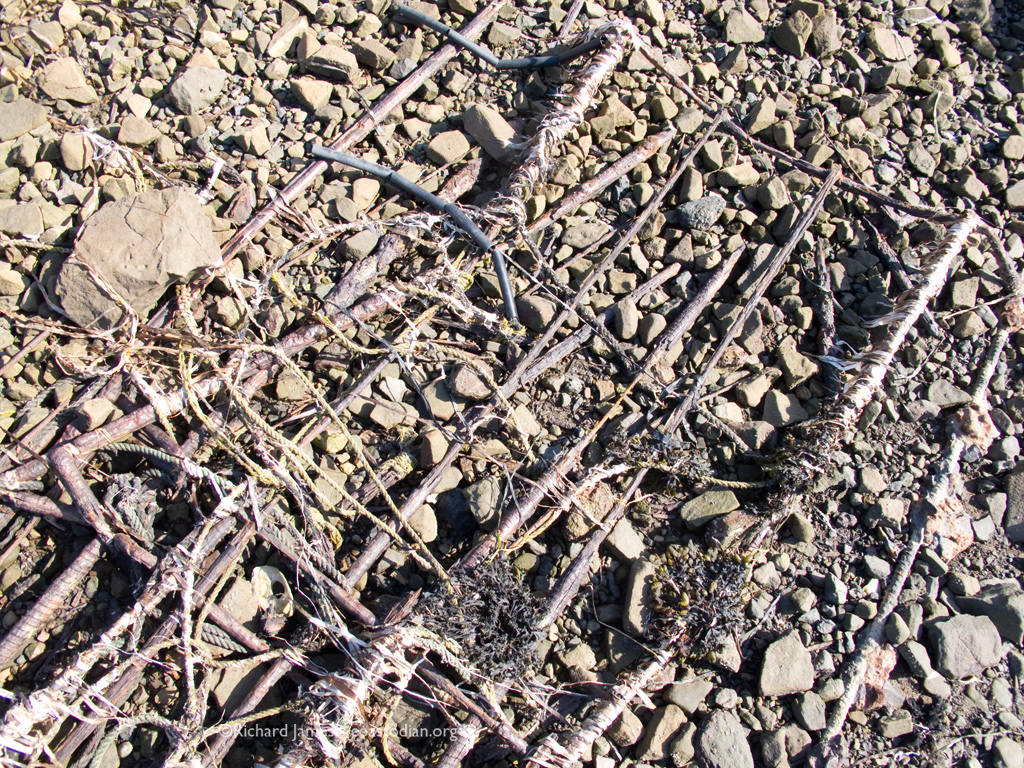
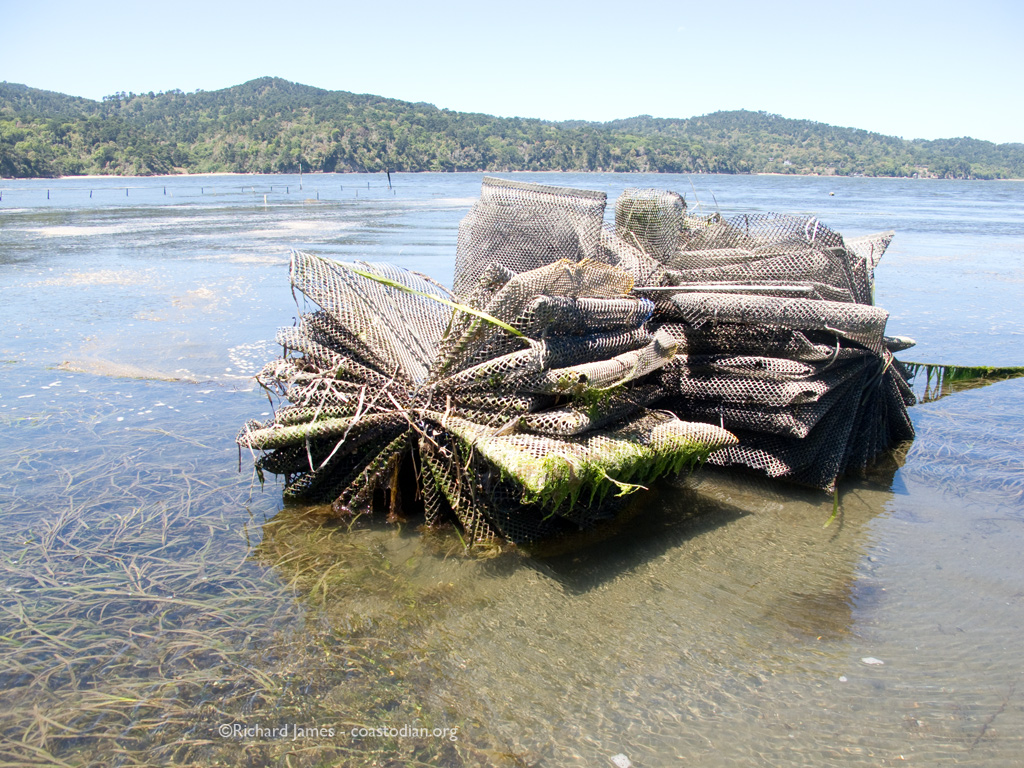
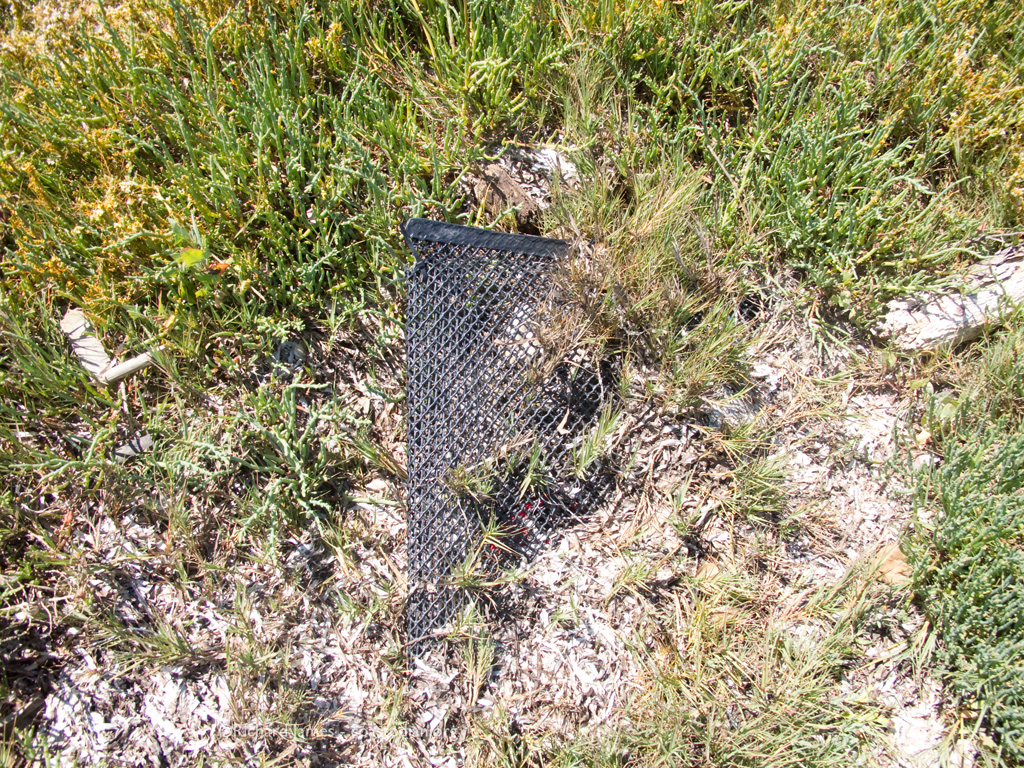
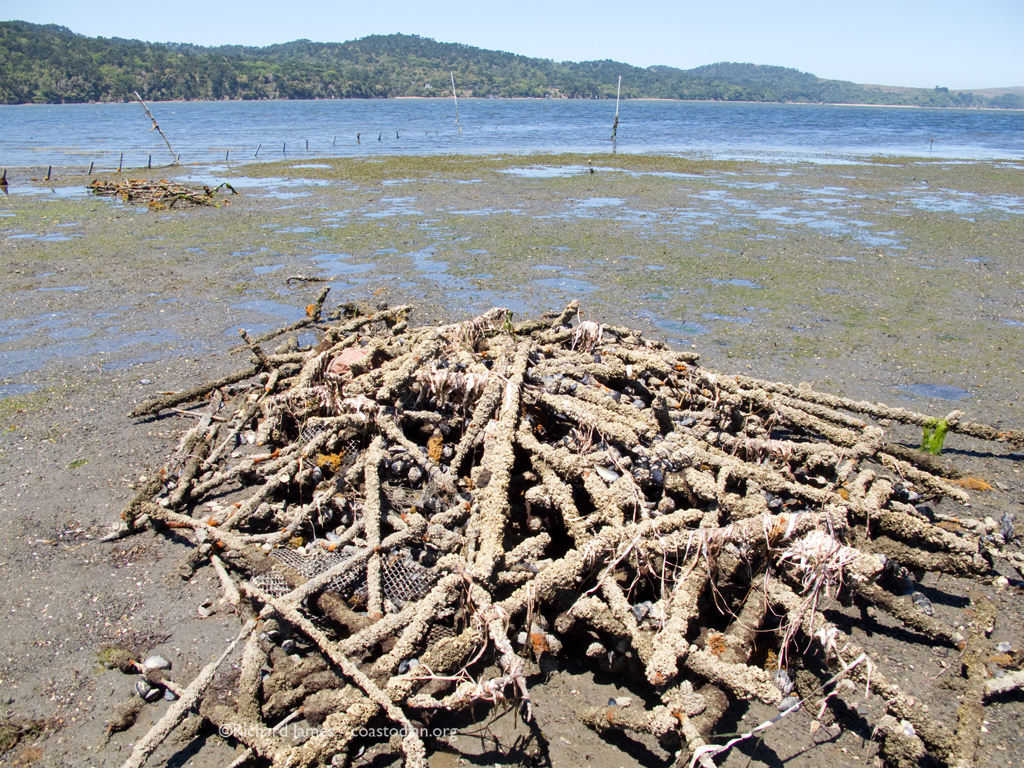
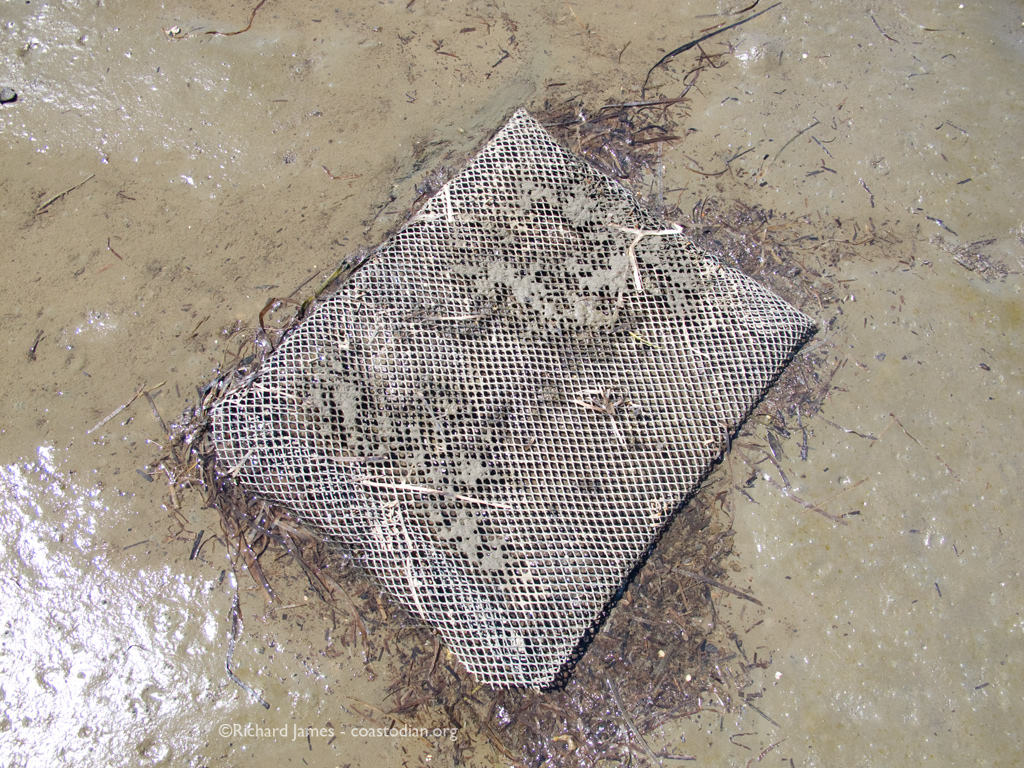
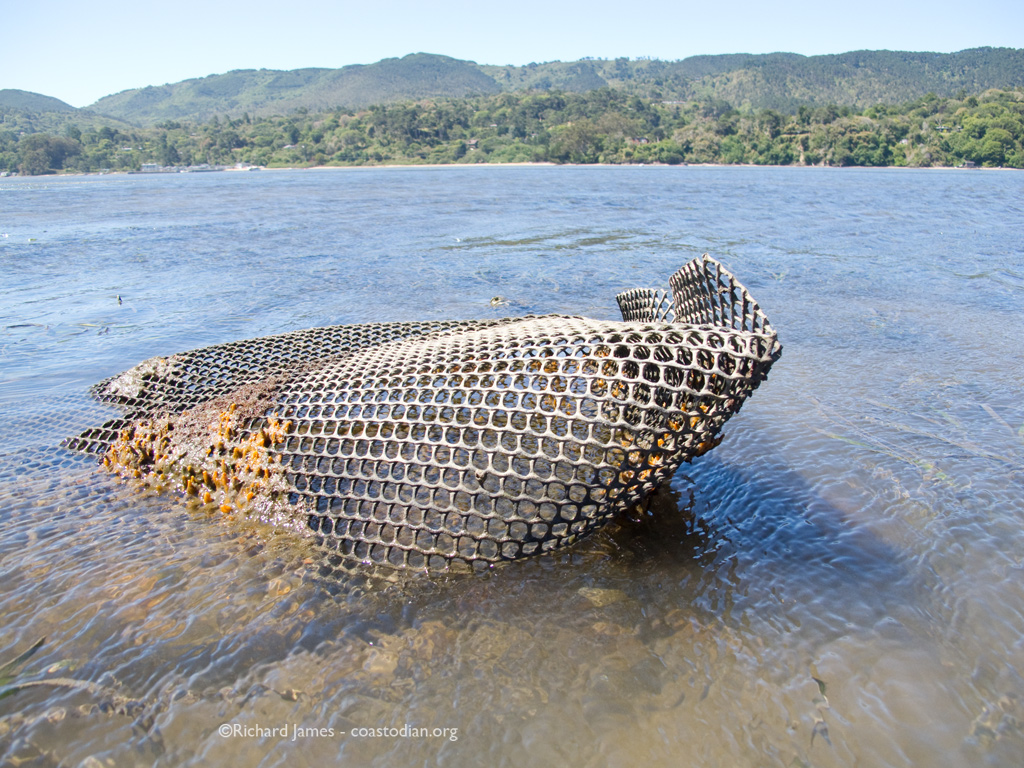
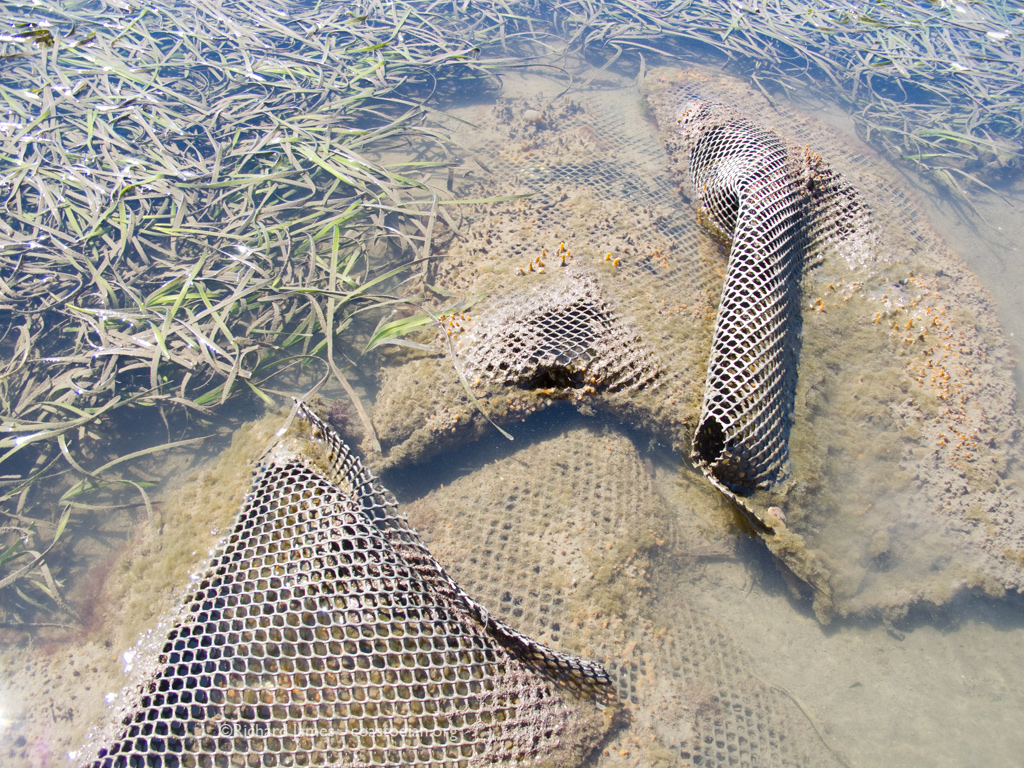
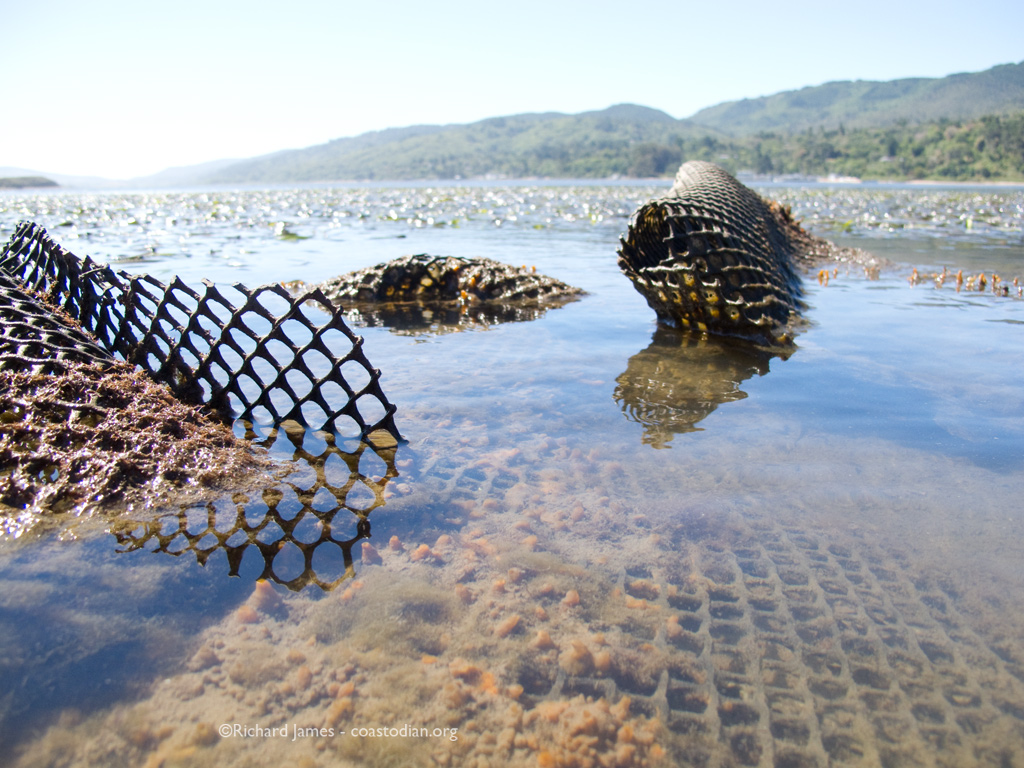
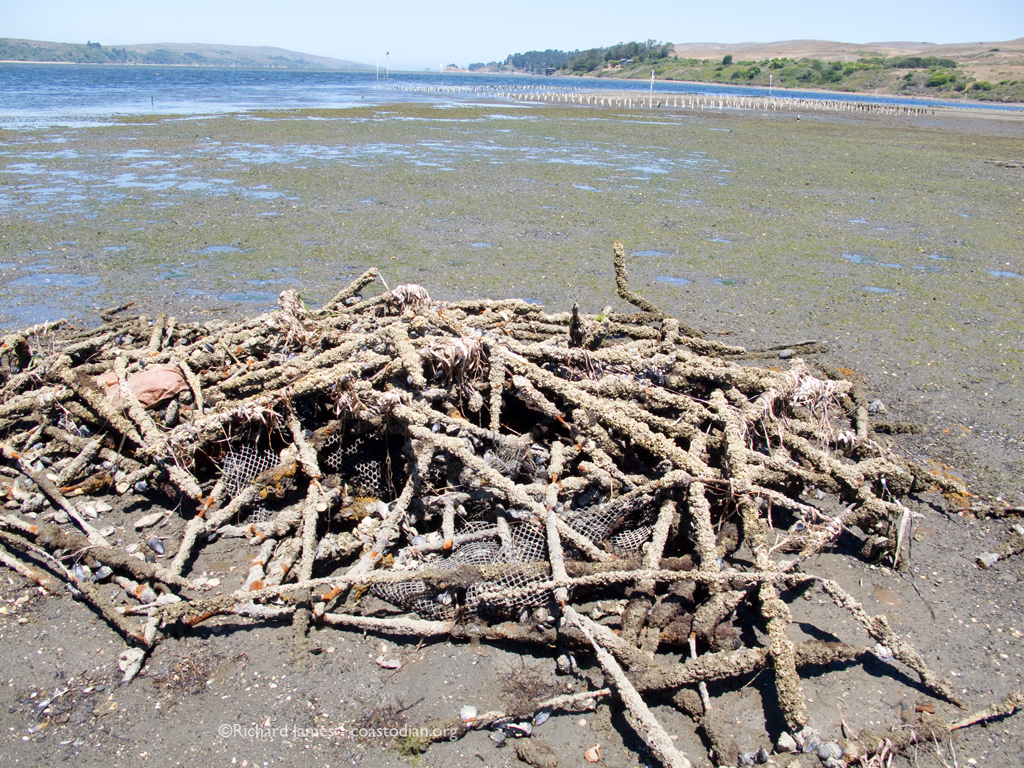
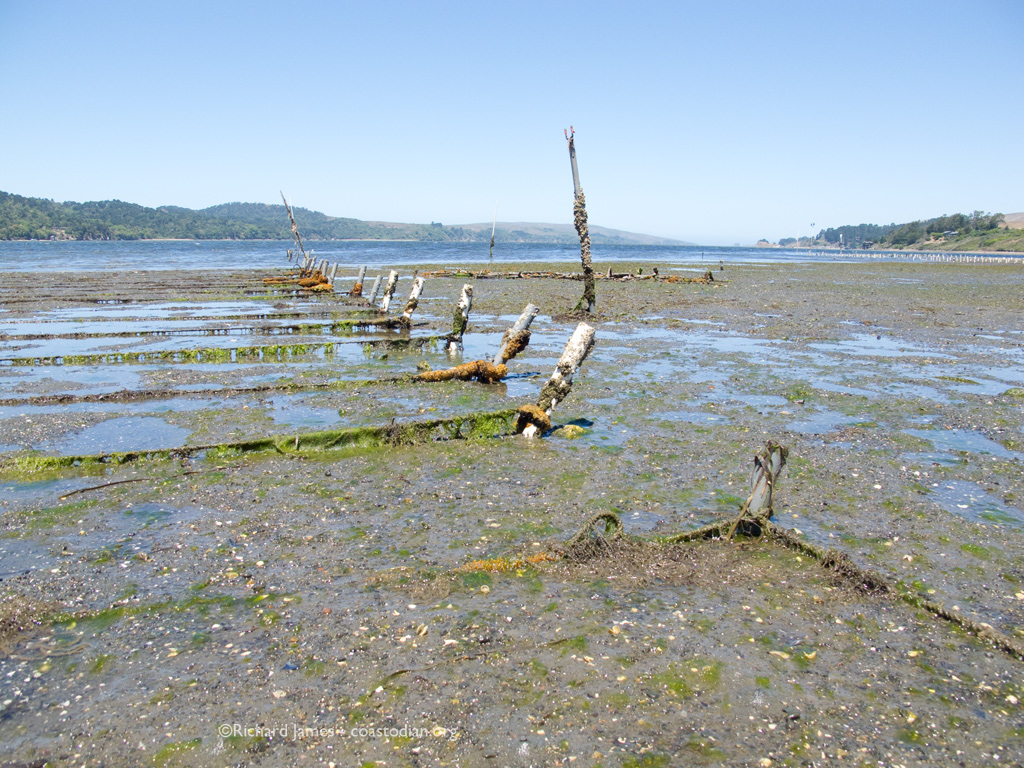
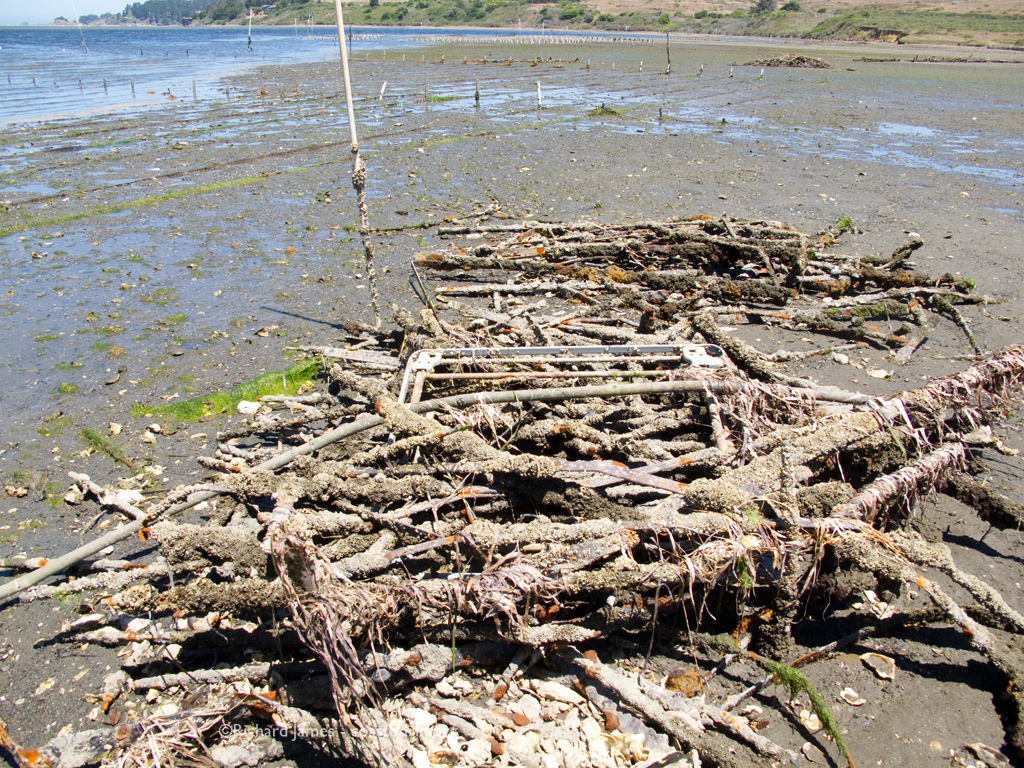
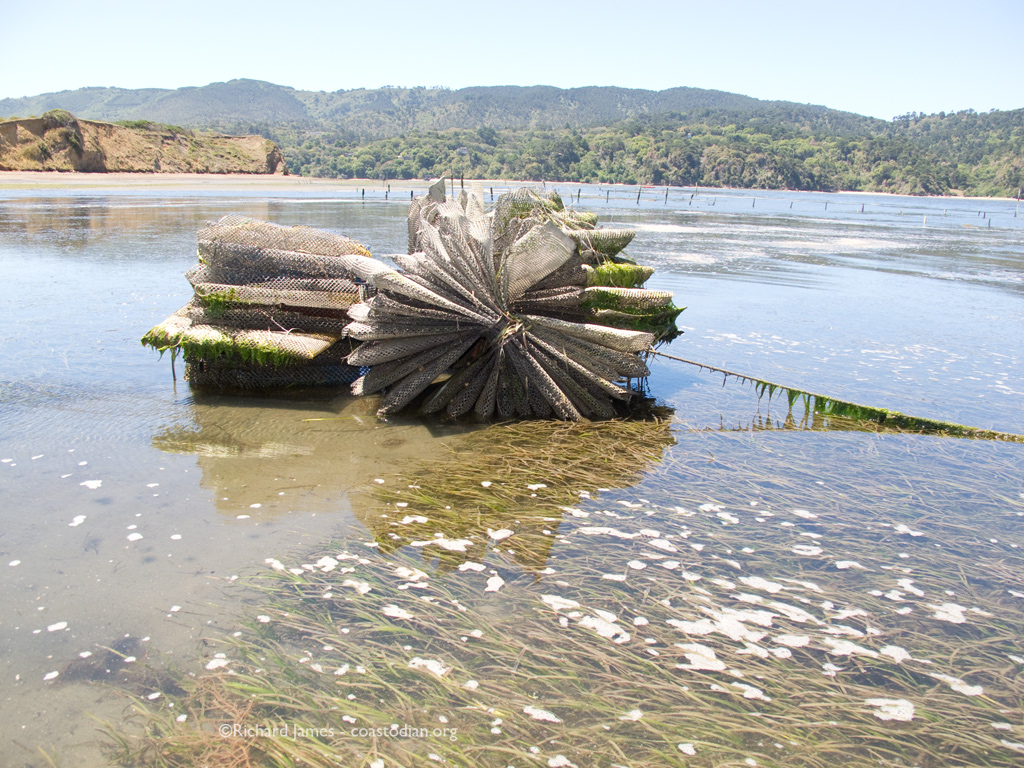
Historic-Oyster-Trash

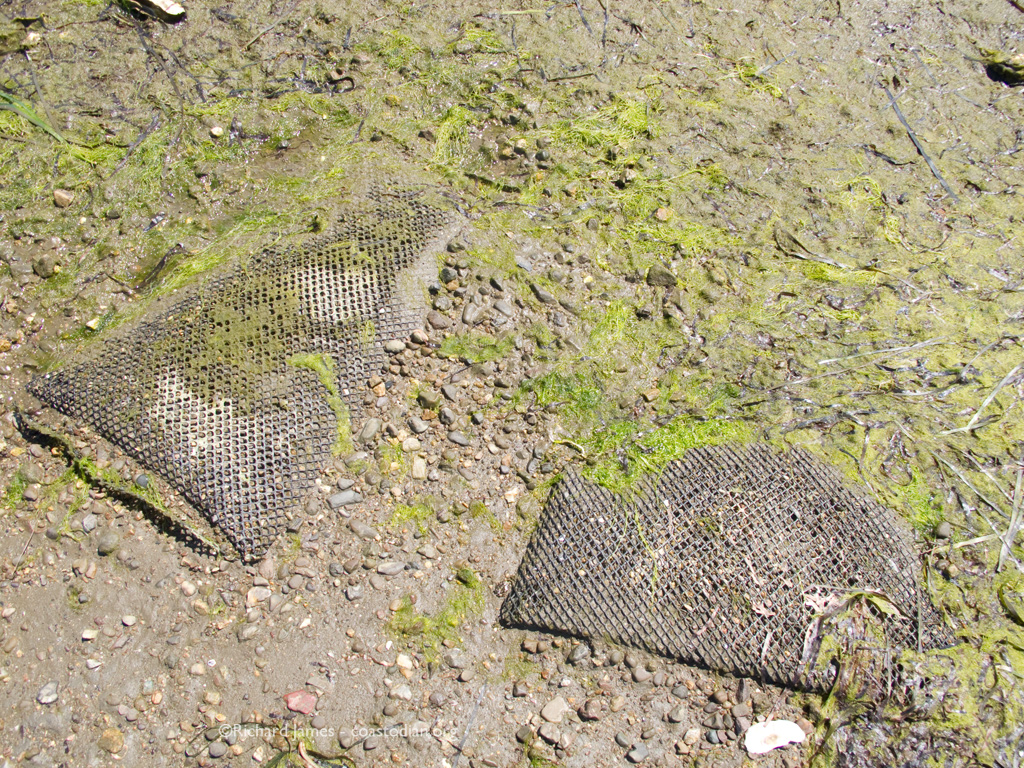
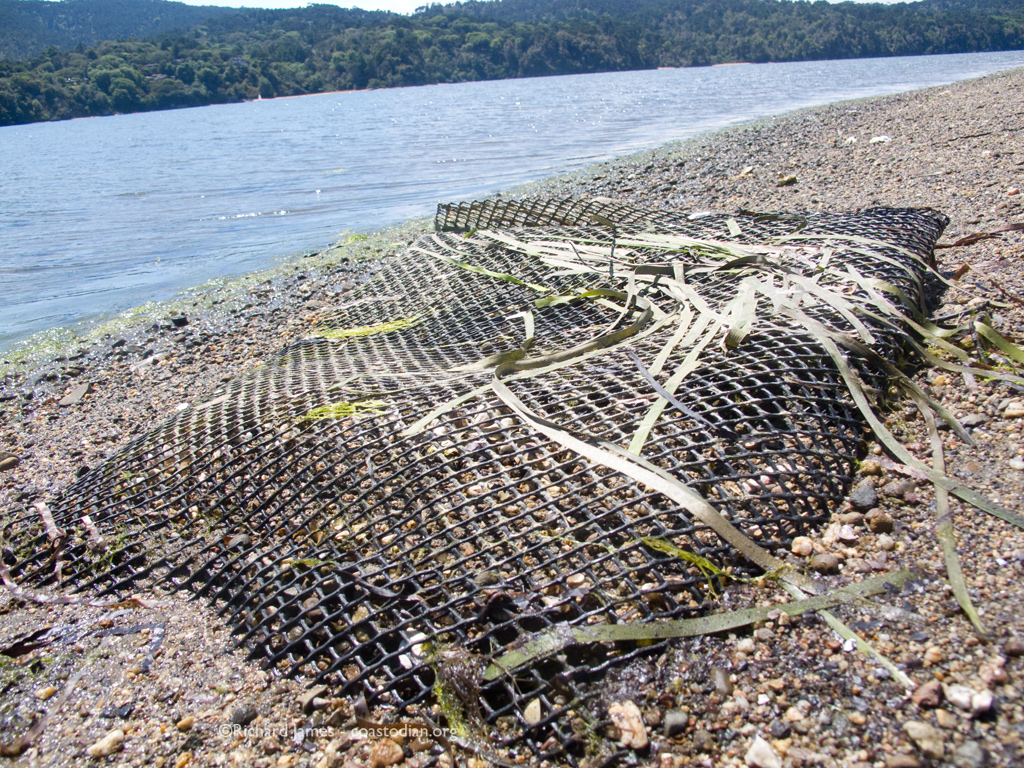
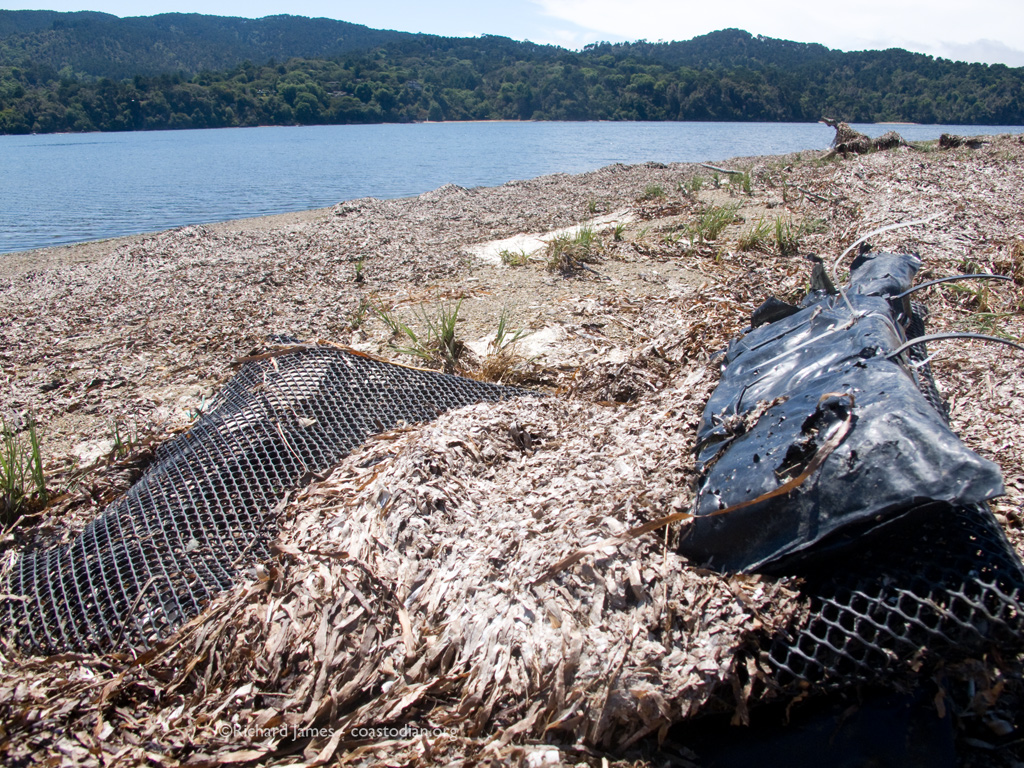
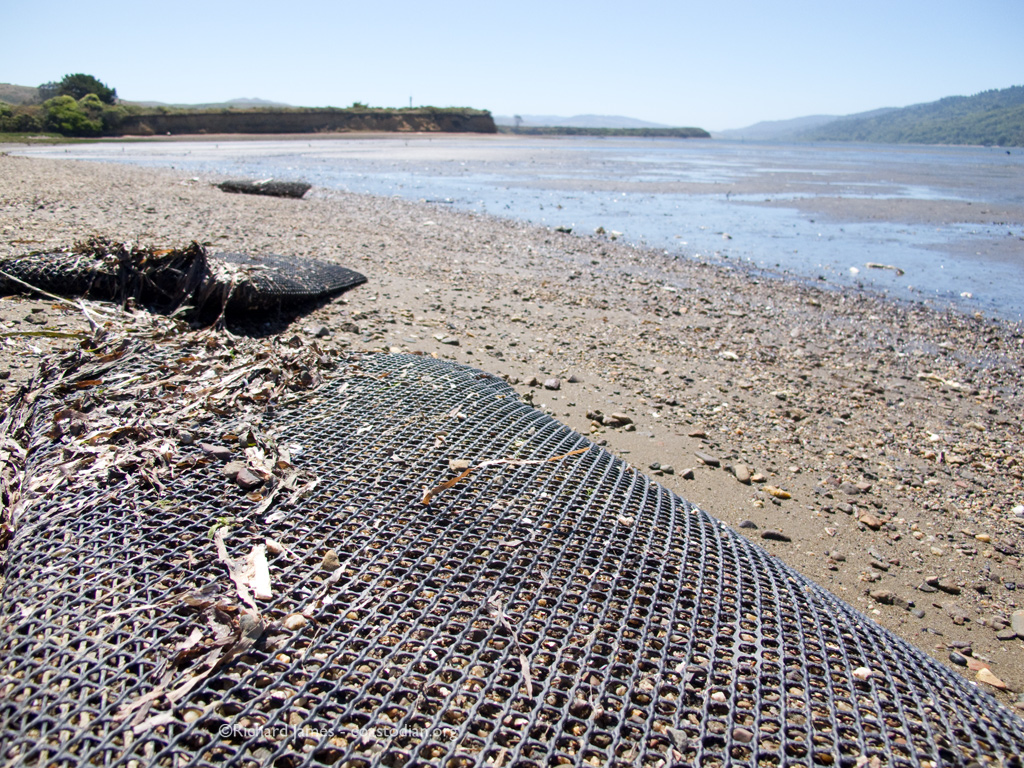
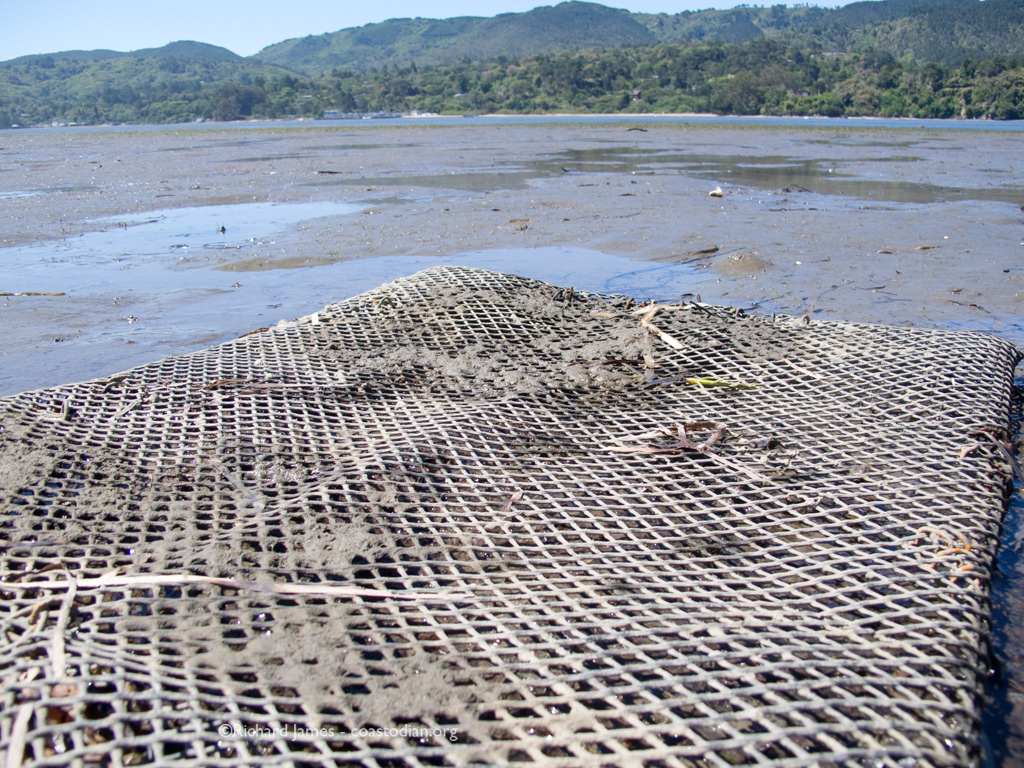
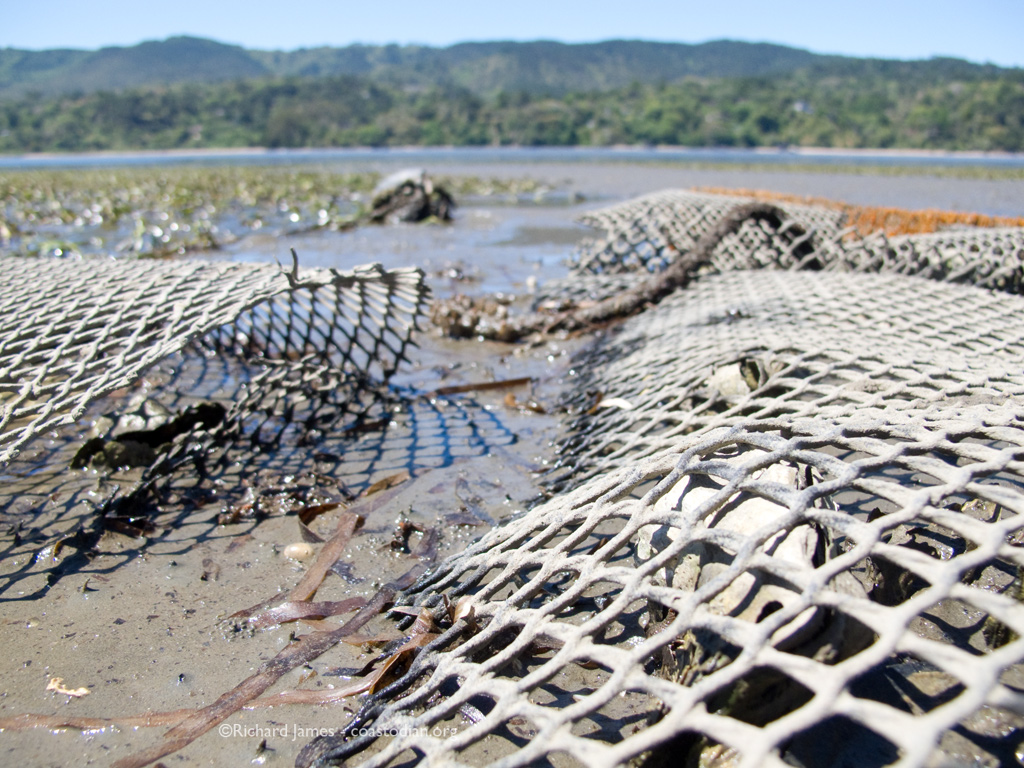
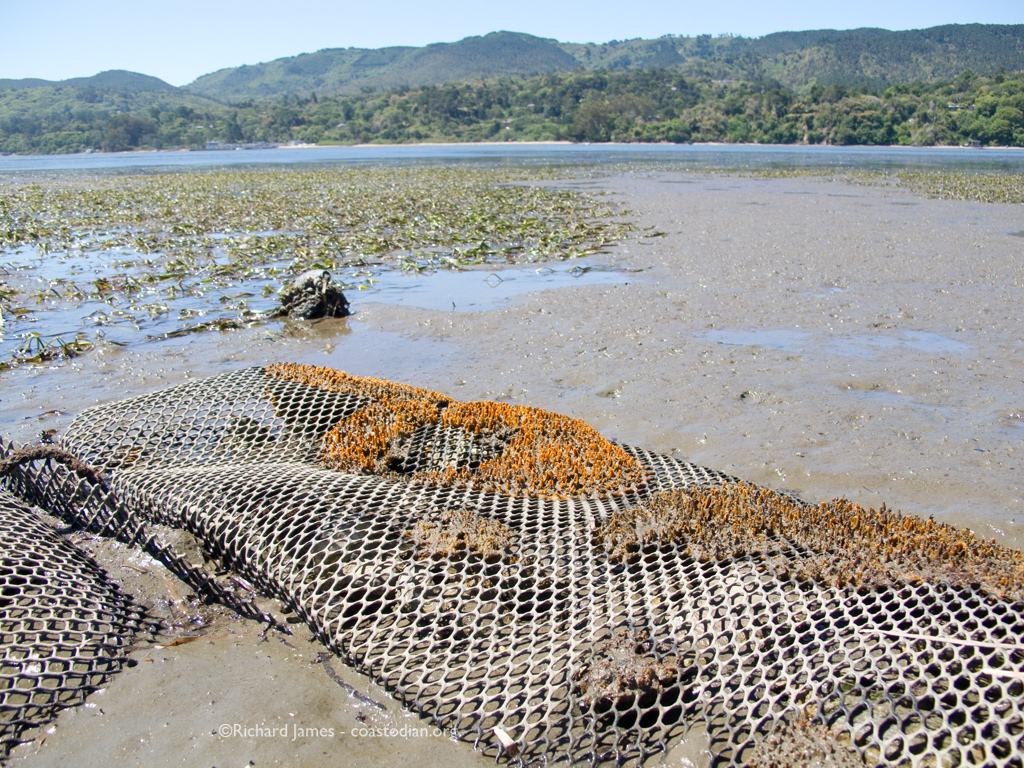
I’ve been boating the waters and walking the shore of Tomales Bay the past few months to see what the impact of oyster farming is on this body of water.

You can see my first post on this topic here.

You can see what I collected over 3 years from the soon to be closed oyster farm on Drakes Estero here.

Until recently I have only visited the area around Tomales Bay Oyster Company in the southern reaches of Tomales Bay.

There was so much debris to collect, it took me a while to get to other areas. And, as I said I would, I finally got up to the Walker Creek area to have a look at how the oyster growers in that area clean up after themselves.

More than one local told me that the folks at Hog Island expended great effort to clean up the mess that is inevitable when one tosses thousands of oyster filled bags into the bay for years at a time. The wind and waves wait for no one. Gear is blown all over the place, some, who knows how much, is sucked out to the open sea for the animals to contend with.

So, after loading my boat and gear onto my car, off I went to the north end of Tomales Bay.

I’ve made three visits to this area, this post will show what I found after visit number two.

This first image is from Google Earth. Each yellow pin shows where I found one or more grow out bags or other oyster debris.
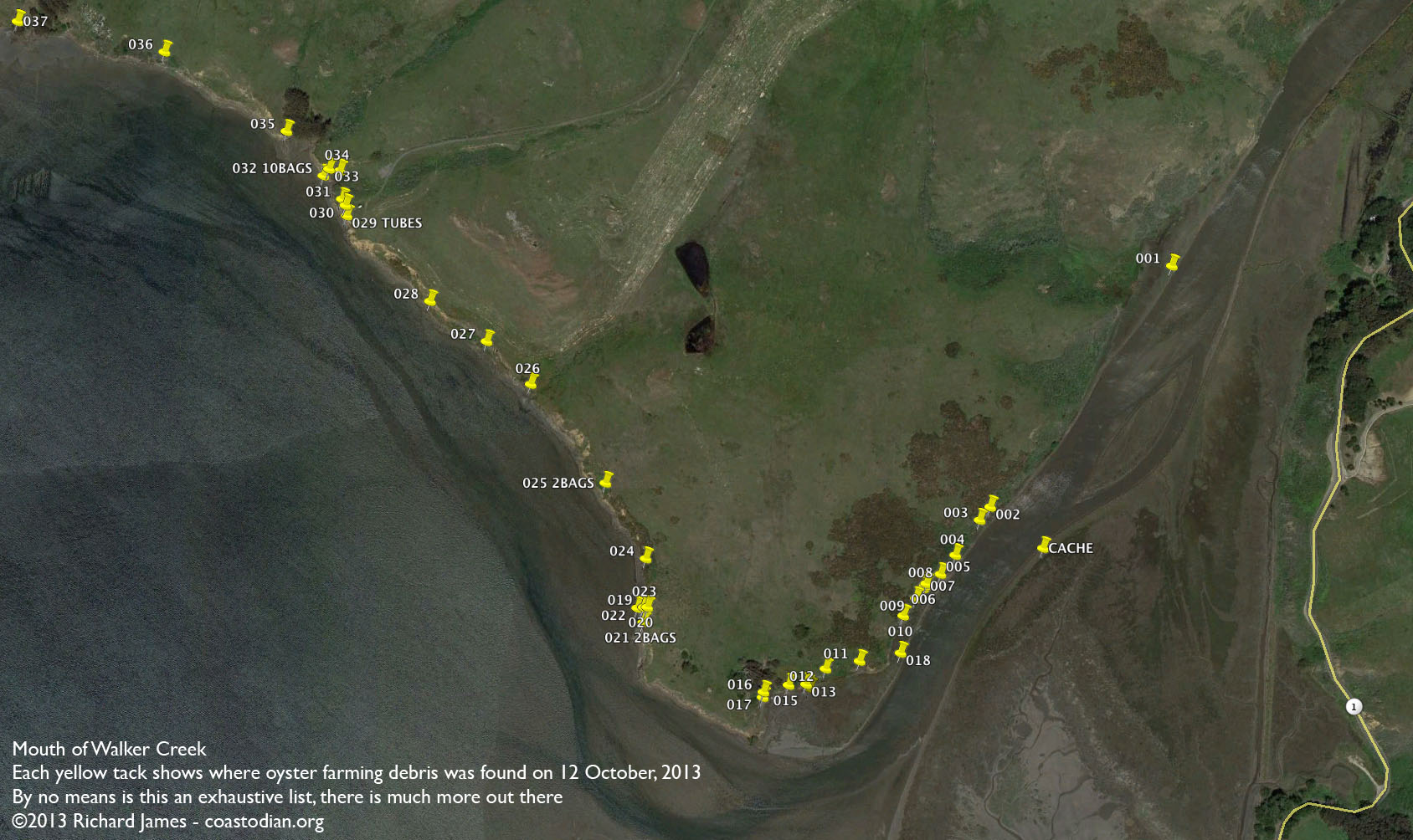
Map of Walker Creek mouth area showing oyster farming debris locations. Click for a larger image.

Map of Walker Creek mouth area showing oyster farming debris locations. Click for a larger image.

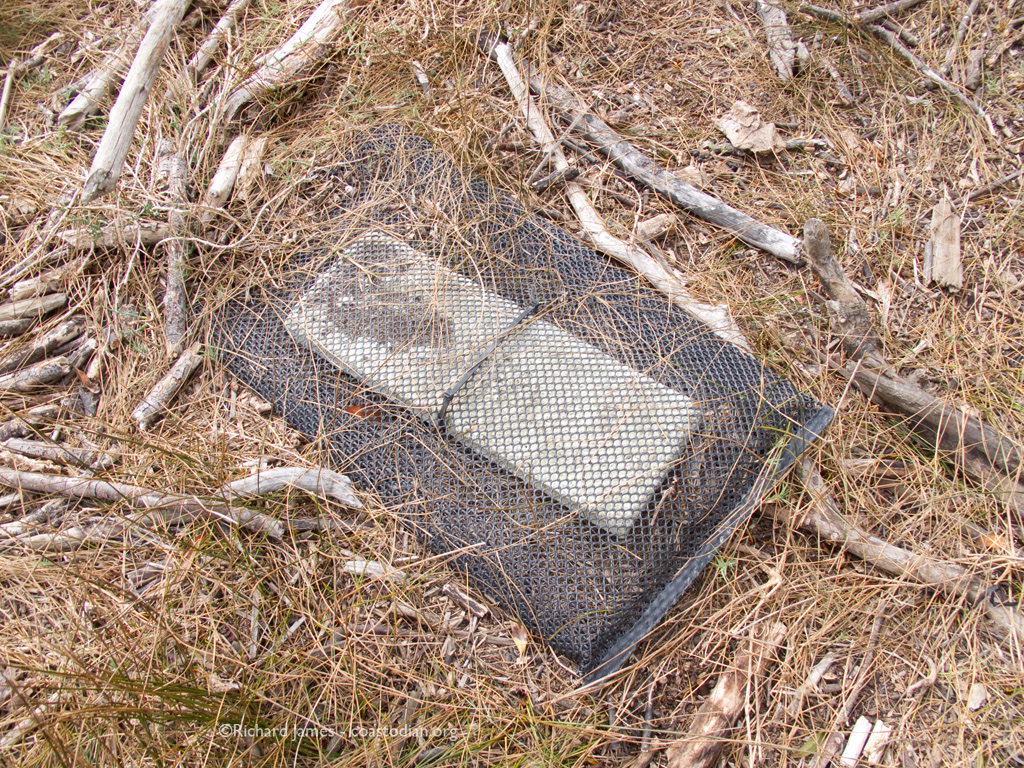
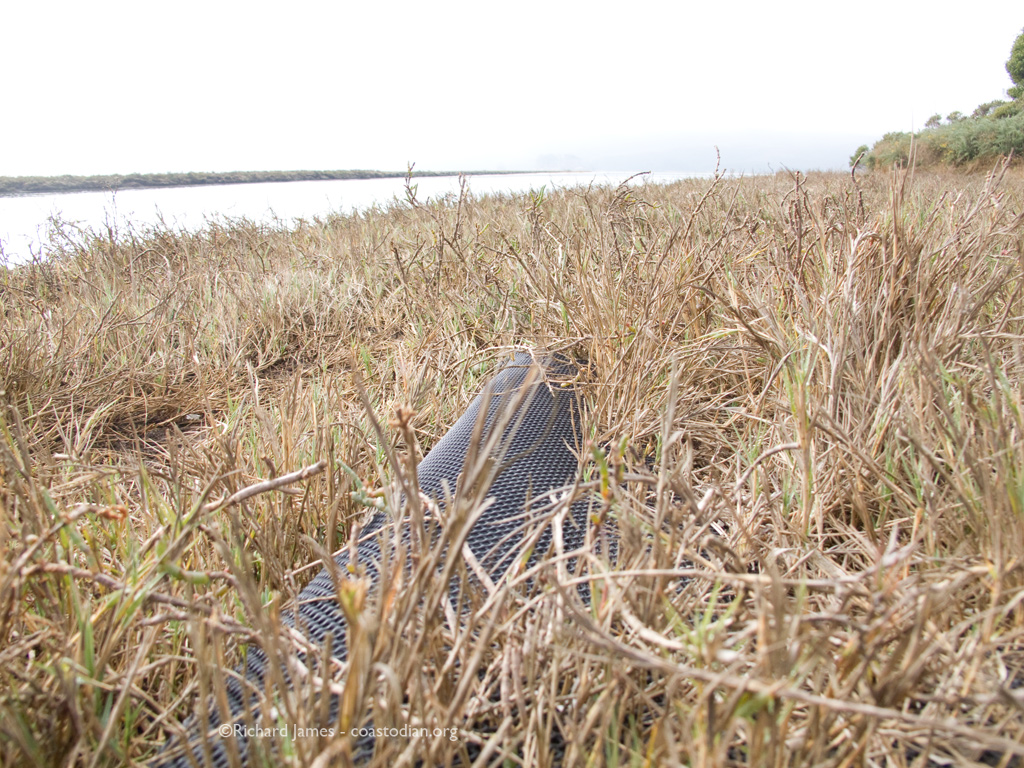
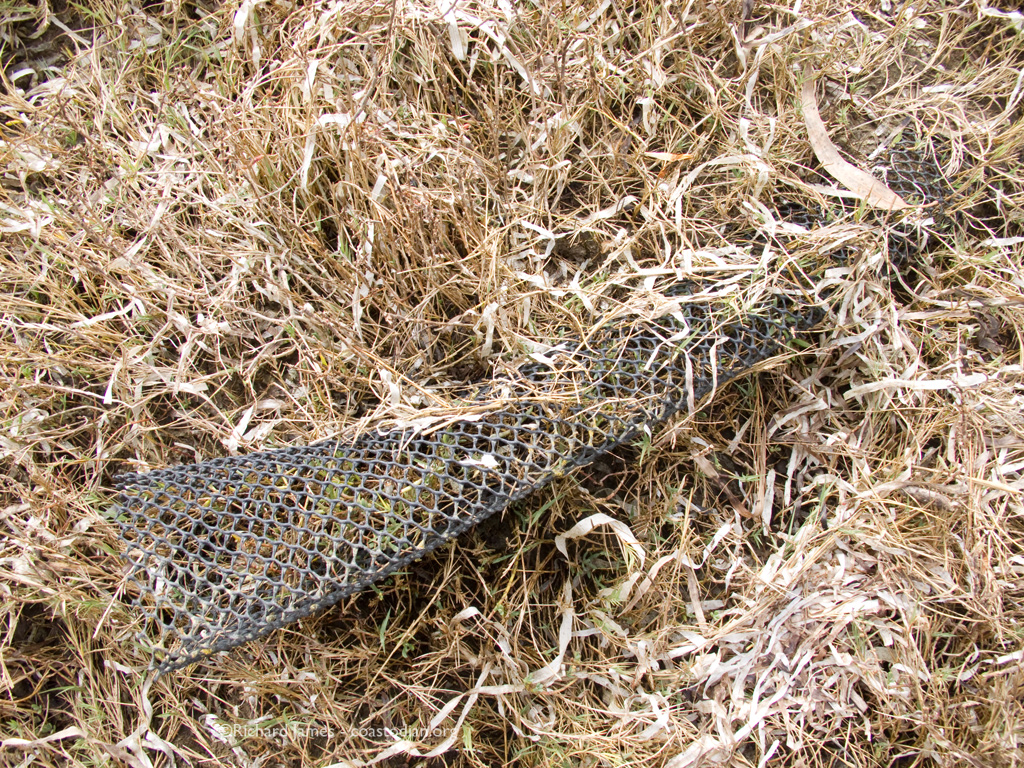
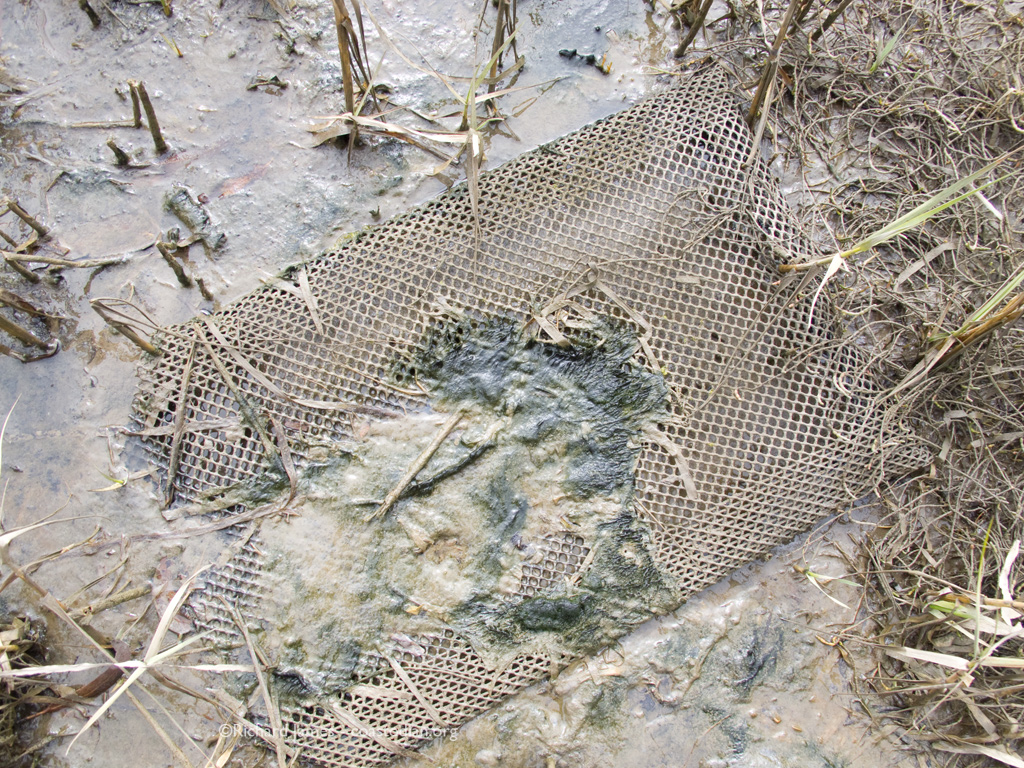
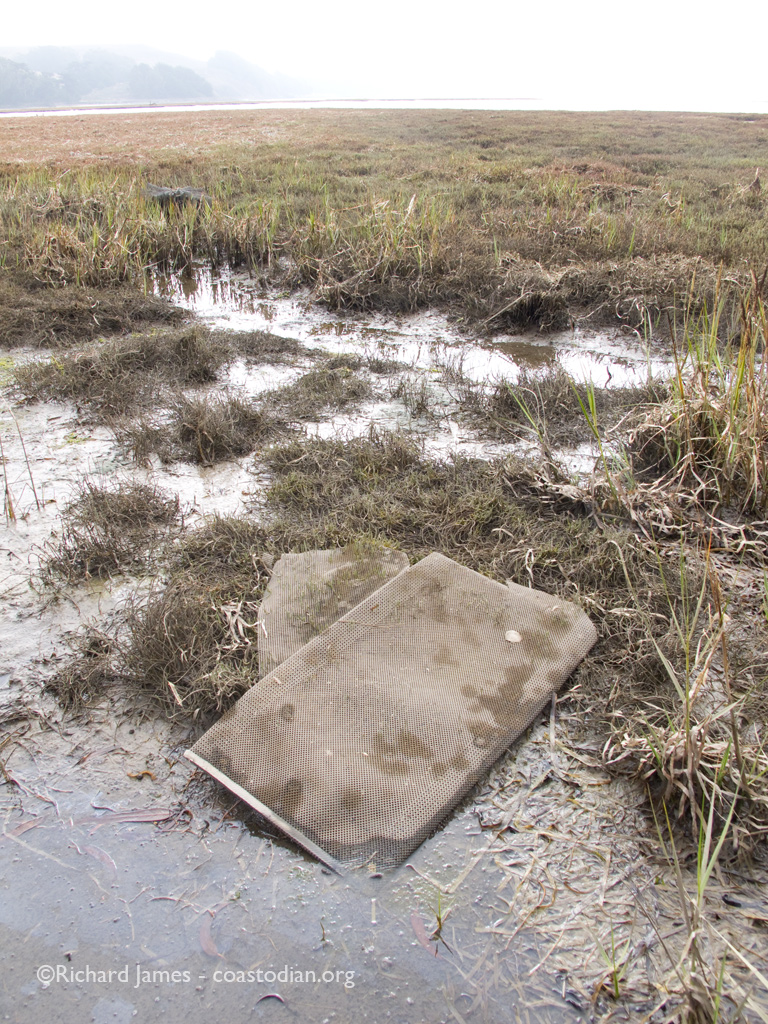
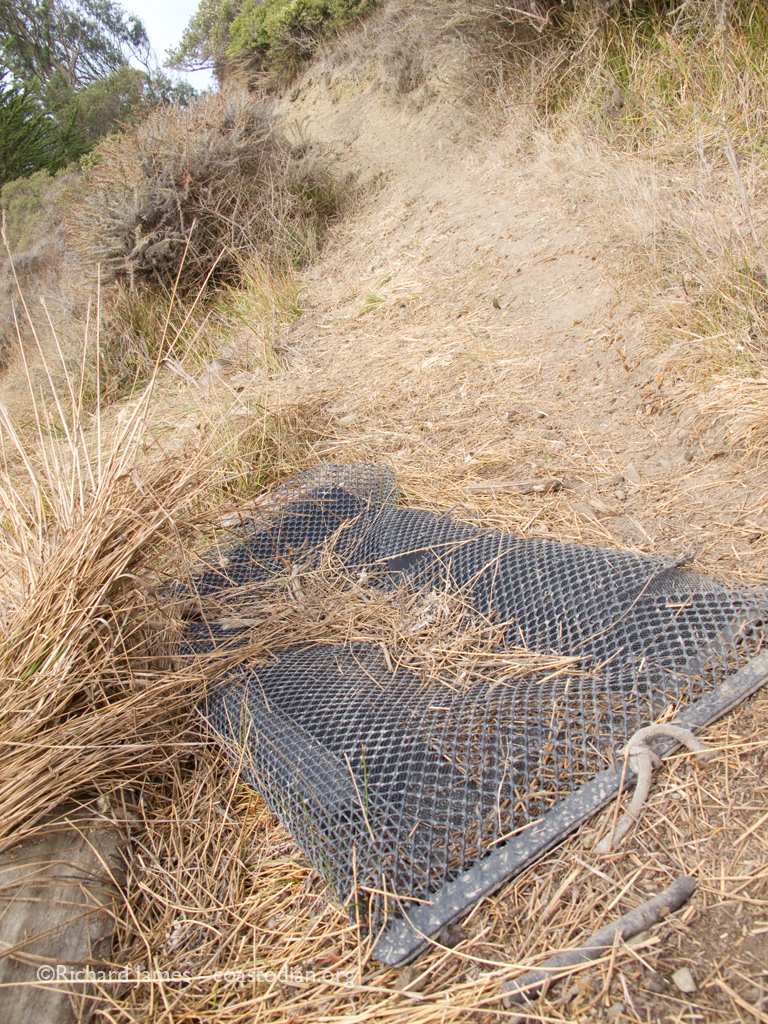
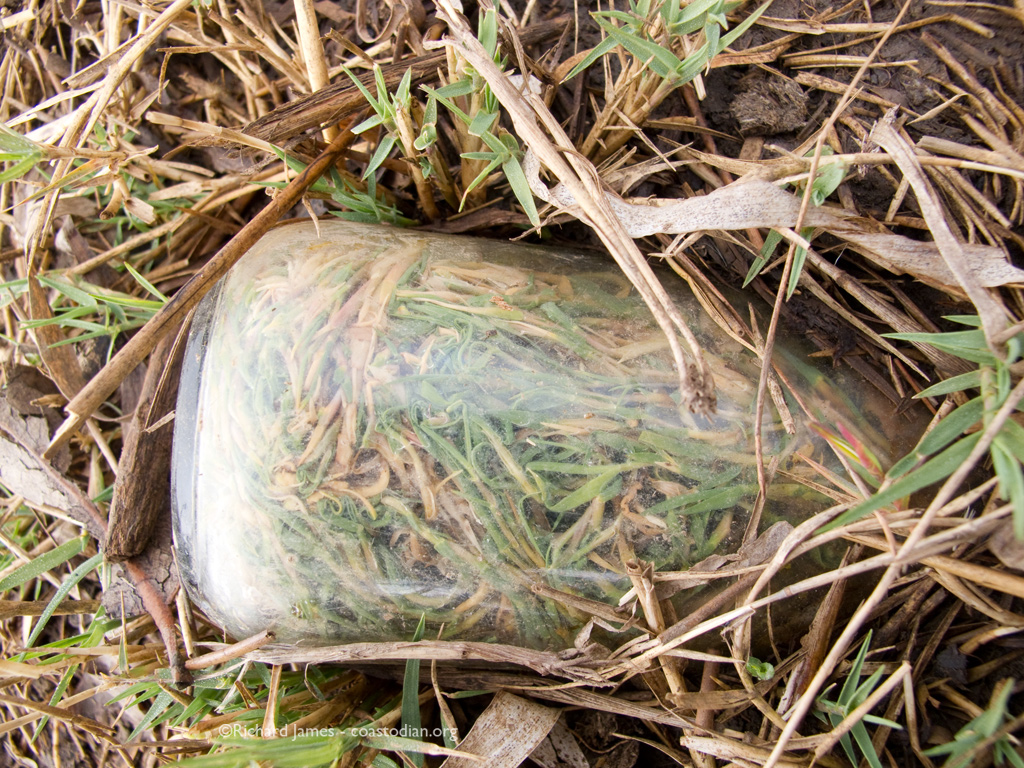
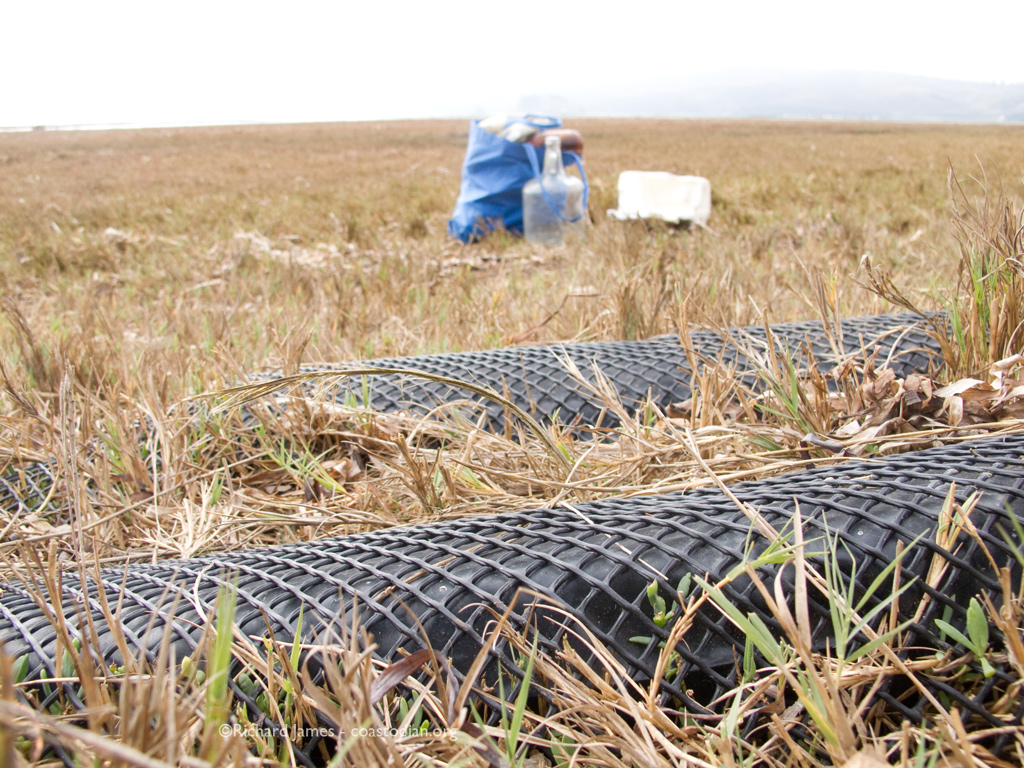
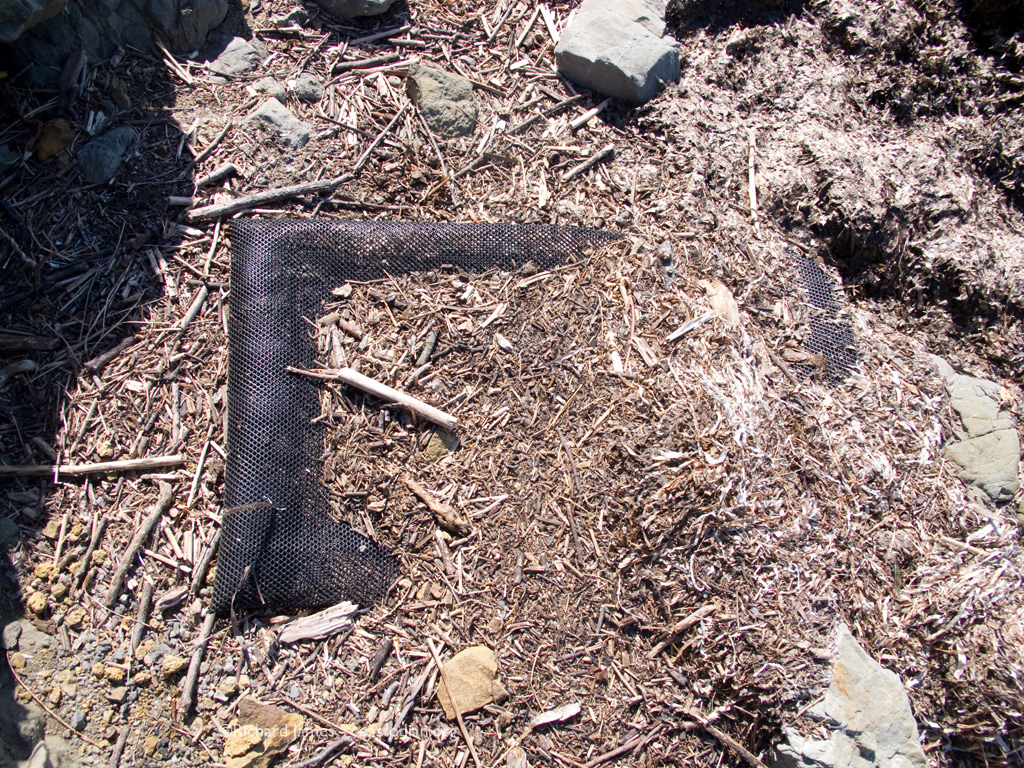
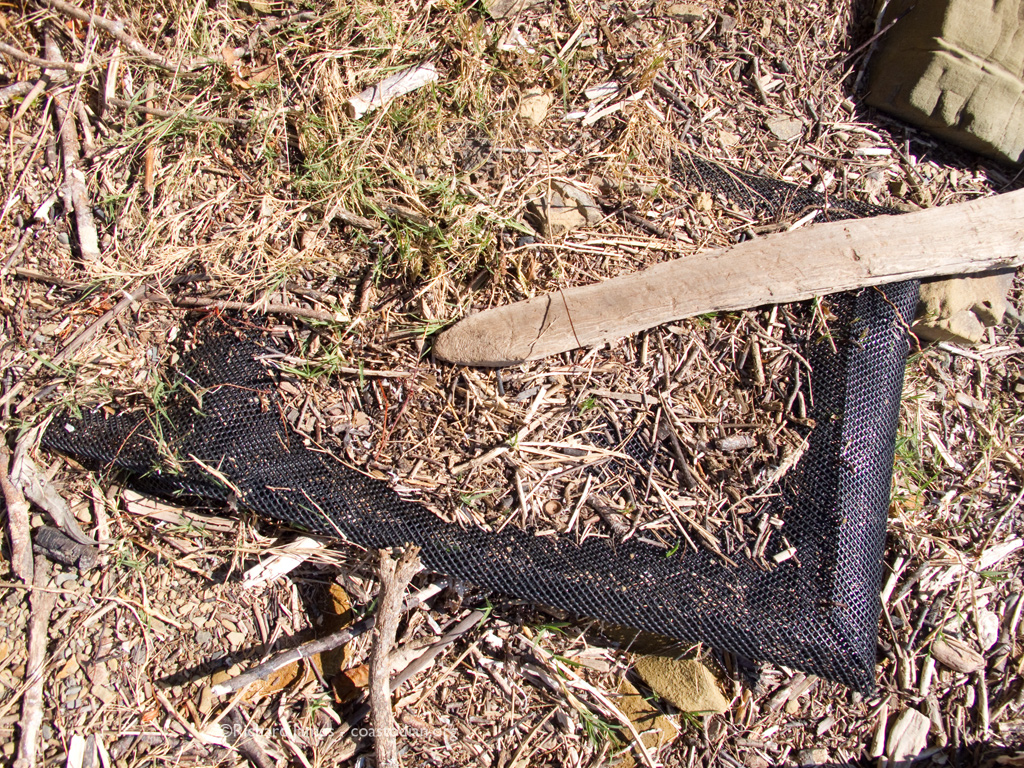
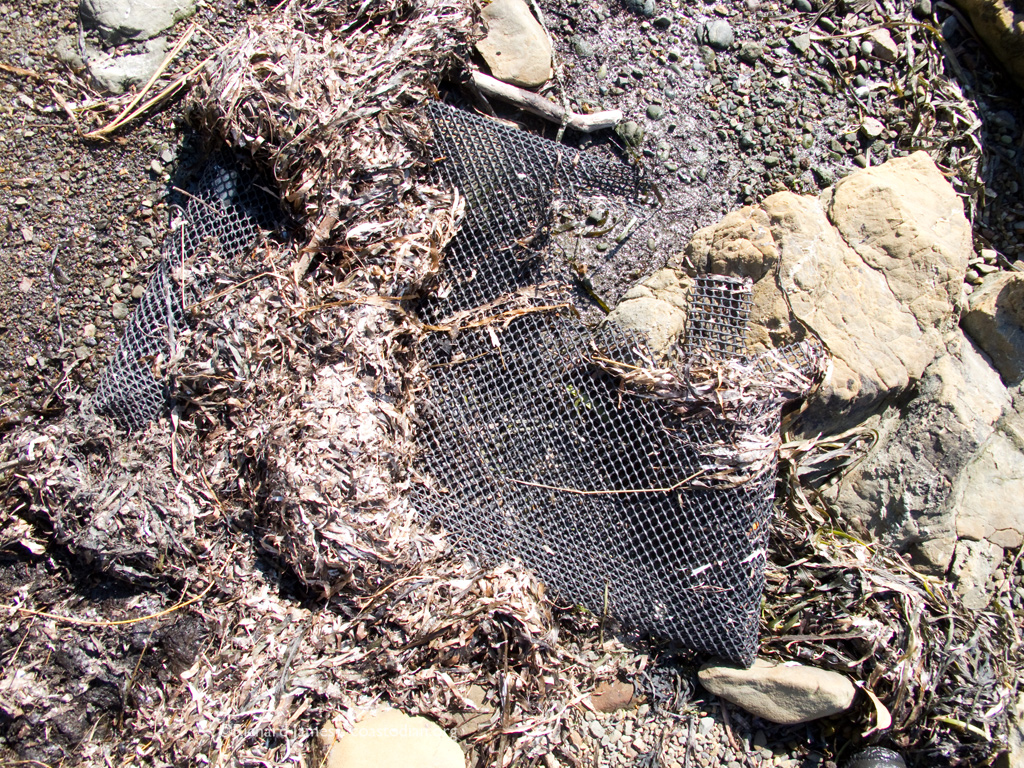
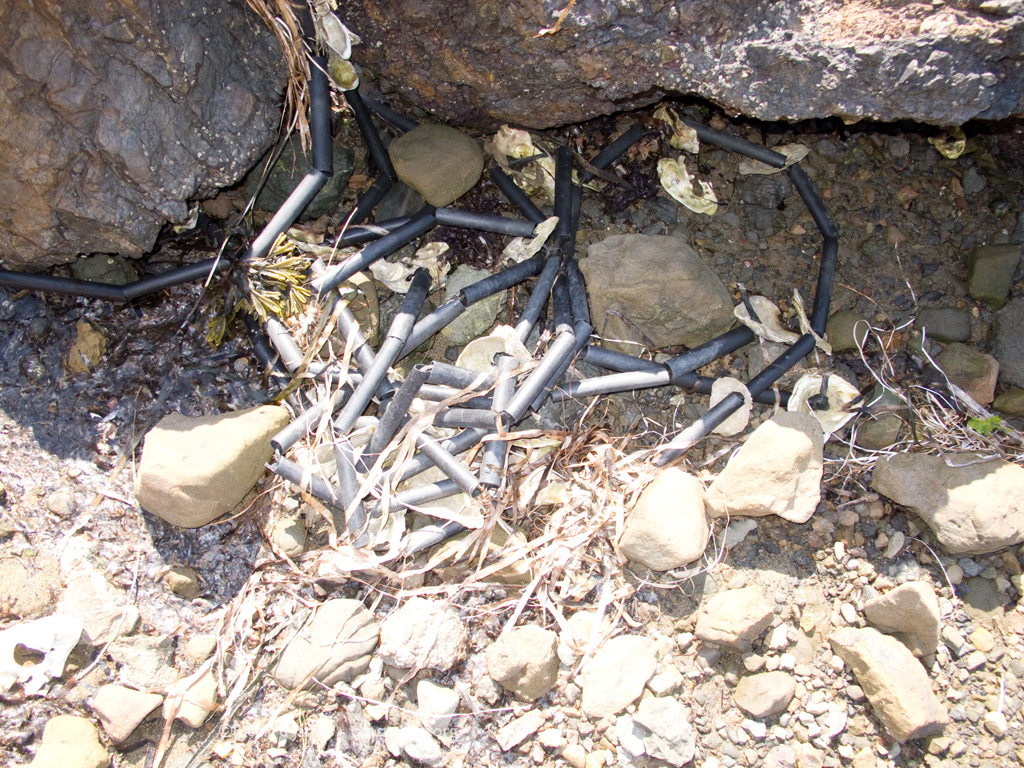
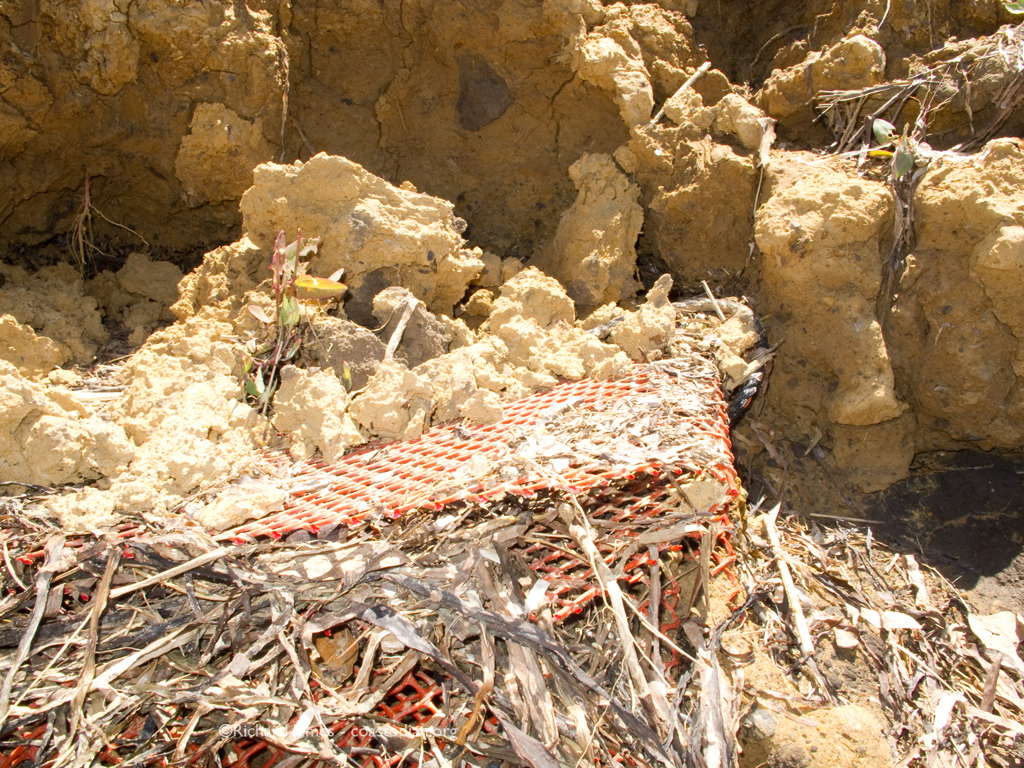
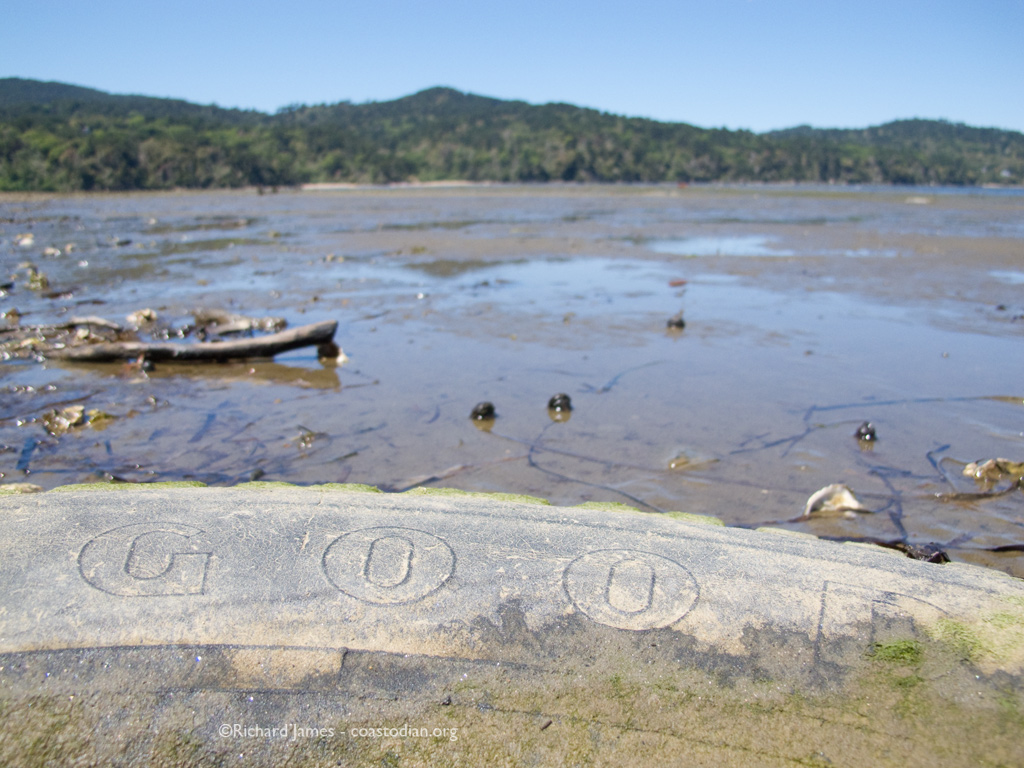
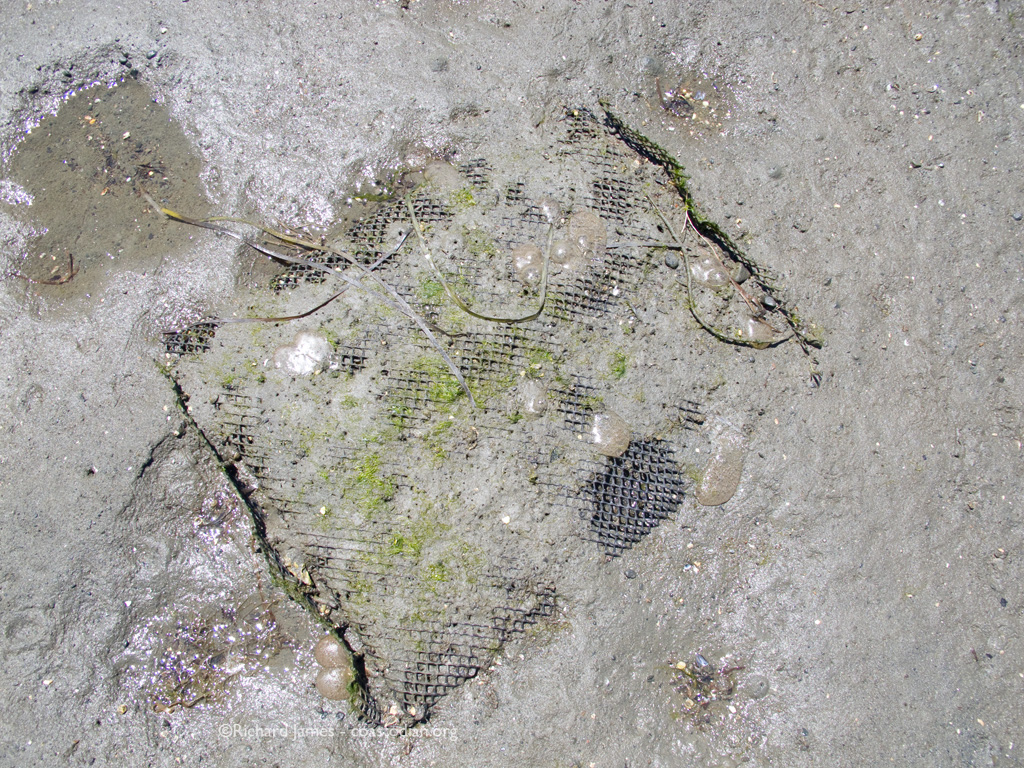
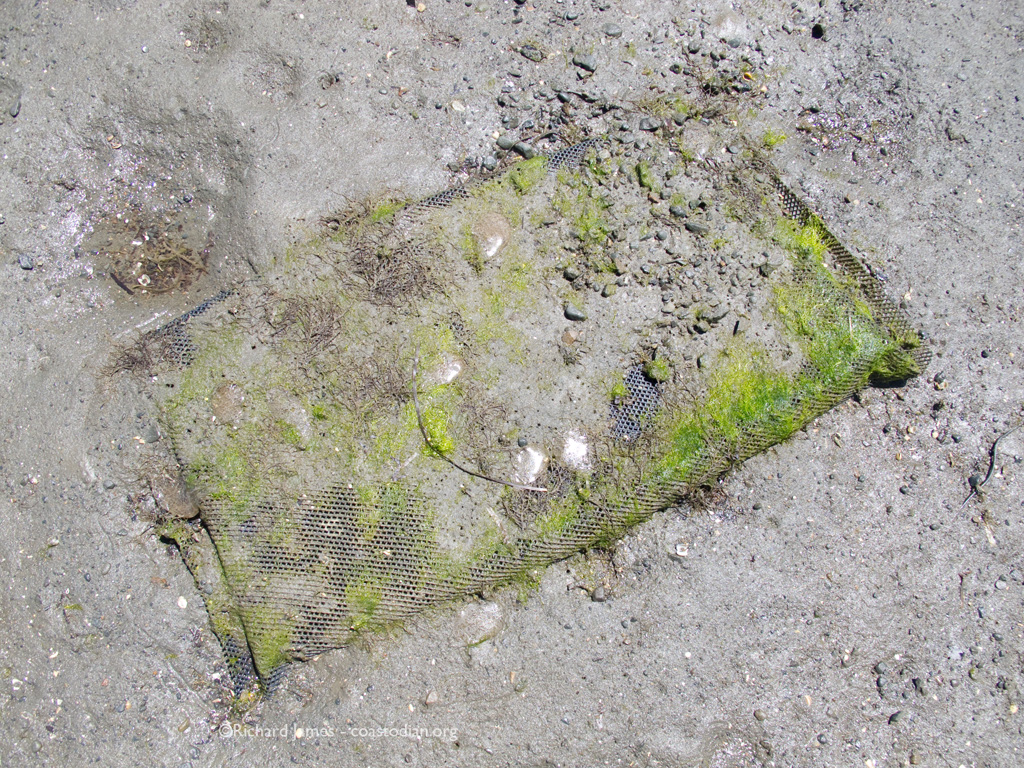
The next 60+ images show what I found at each yellow pinned location.

Tired of making many, many trips with my tiny boat to haul this garbage from others back to my car. Even more tired of destroying my car by hauling all of this trash belonging to those making a profit from public lands in my car, I had an idea. I was going to pile this trash where anyone driving by on route 1 could see it.

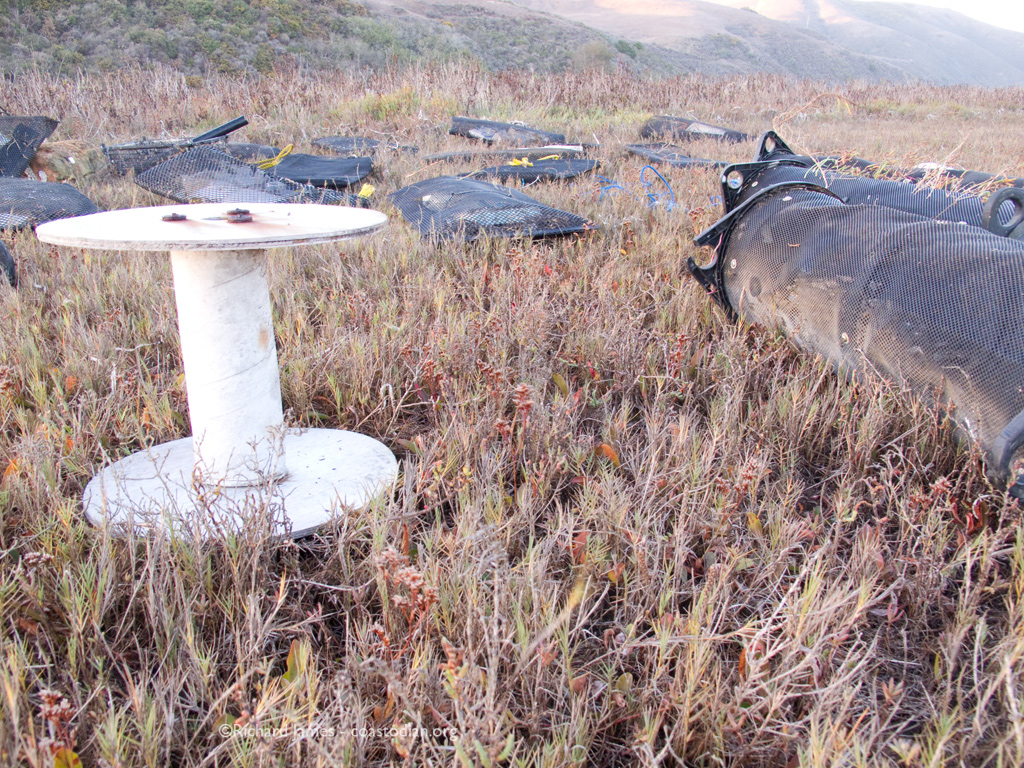
The last few images of this post will show the beginning of the monument to oyster profits for a few over a clean environment for all.

A future post will go into more details on this monument, and how it was received.

As you peruse these images, ask yourself if what I was told by a long time Hog Island worker and a parent of a Hog Island worker is true. That is, we take better care of the environment than do our colleagues to the south of us.

Did you see the monument to oyster profits for a few over a clean environment for all as you drove by? Please send me a note, or picture you made.

As always, click on an image to see a larger version.

RJames.IMG_0723

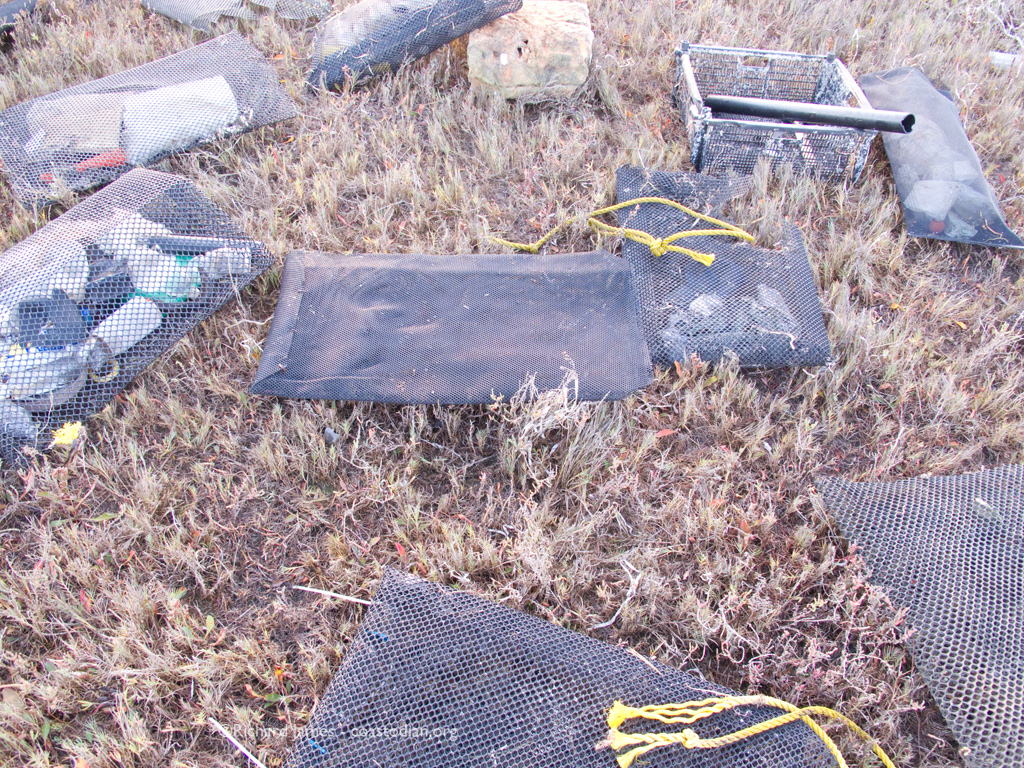
This first pile is what I collected as I drifted down Walker Creek. I hauled it up to the side of route 1 for collection later, where I found the following…

RJames.IMG_0724

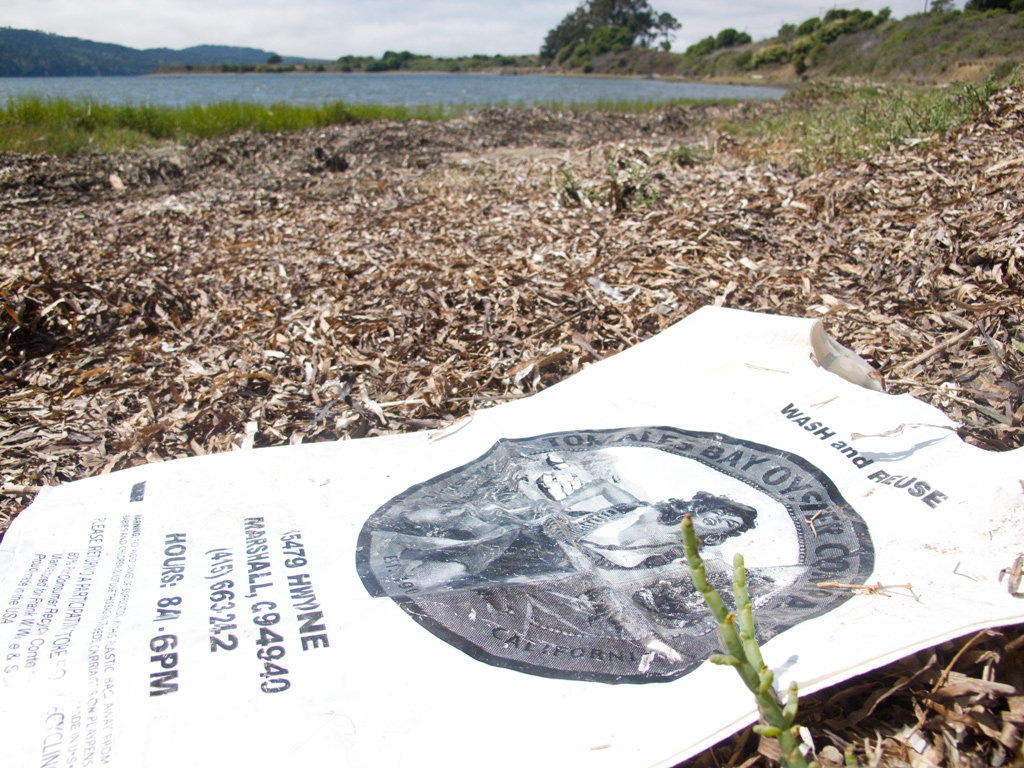
Someone decided that the right thing to do with this artwork and materials was to toss it over the side of the road. Does anyone recognize that painted fabric?

RJames.IMG_0729

RJames.IMG_0728

RJames.IMG_0727

RJames.IMG_0726

RJames.IMG_0730

RJames.IMG_0745

RJames.IMG_0744

RJames.IMG_0743

RJames.IMG_0742

RJames.IMG_0741

RJames.IMG_0740

RJames.IMG_0739

RJames.IMG_0738

RJames.IMG_0736

RJames.IMG_0735

RJames.IMG_0734

RJames.IMG_0733

RJames.IMG_0732

RJames.IMG_0731

RJames.IMG_0746

RJames.IMG_0747

RJames.IMG_0748

RJames.IMG_0750

RJames.IMG_0751

RJames.IMG_0752

RJames.IMG_0753

RJames.IMG_0754

RJames.IMG_0755

RJames.IMG_0756

RJames.IMG_0757

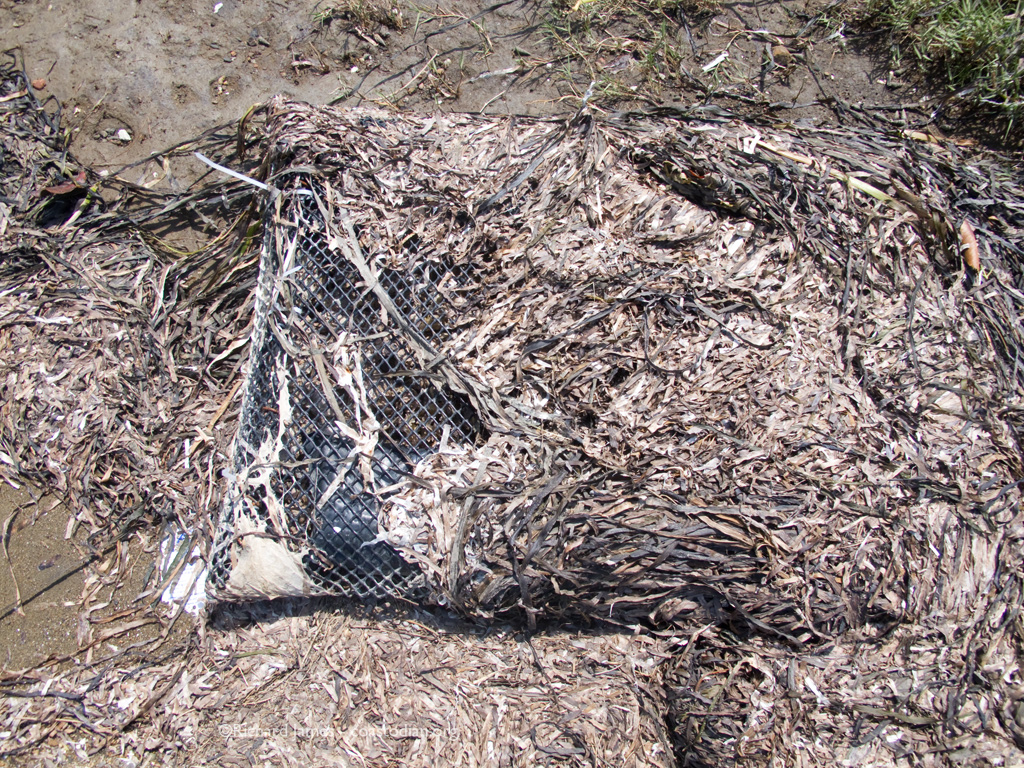
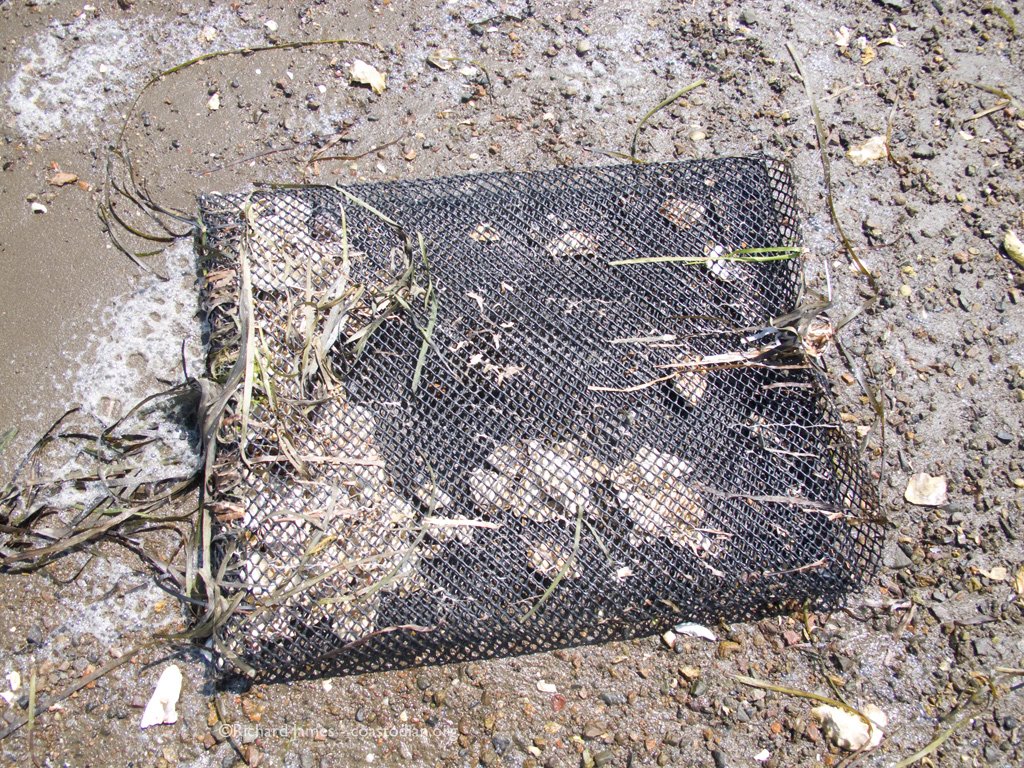
RJames.IMG_0759.1

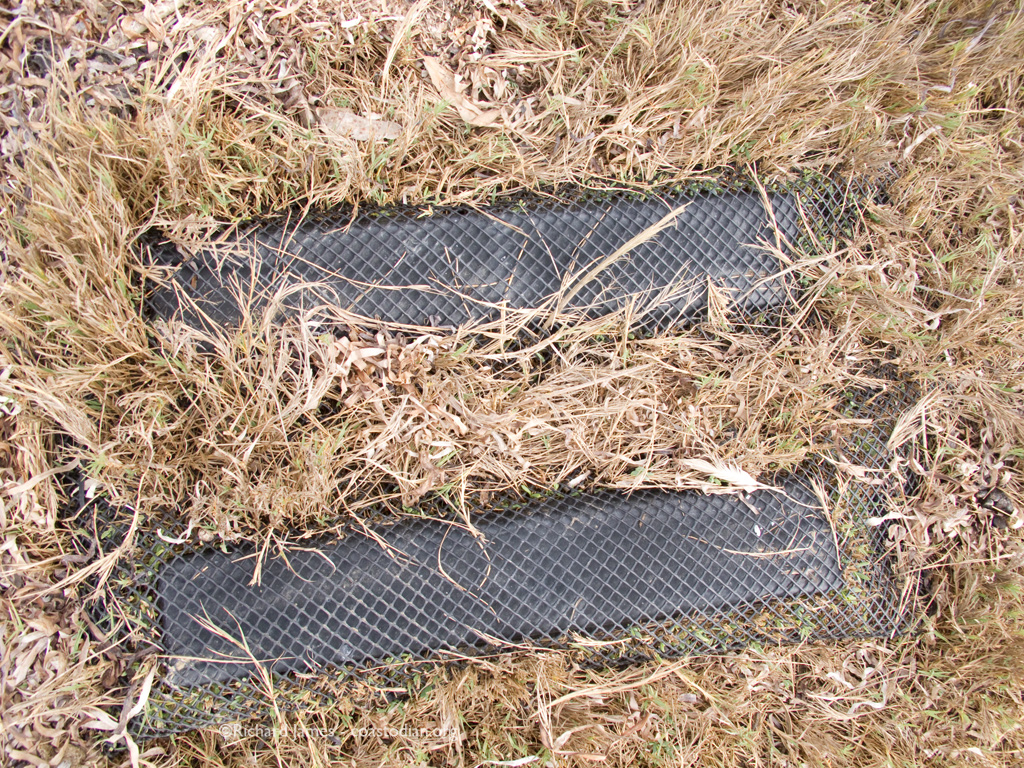
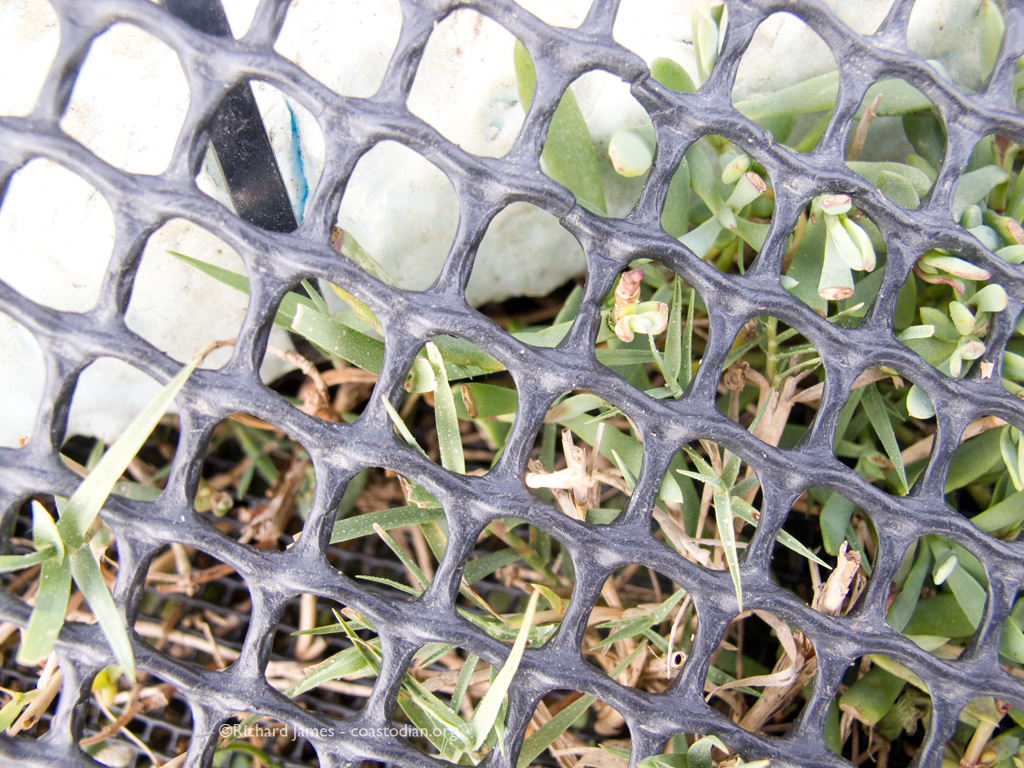
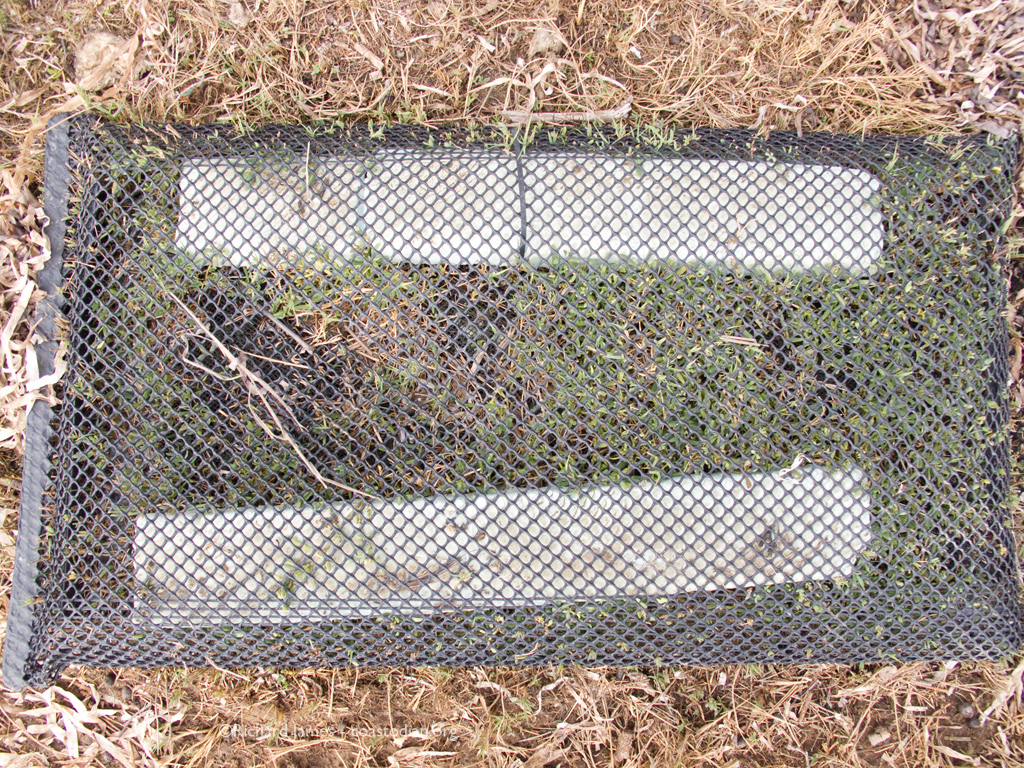
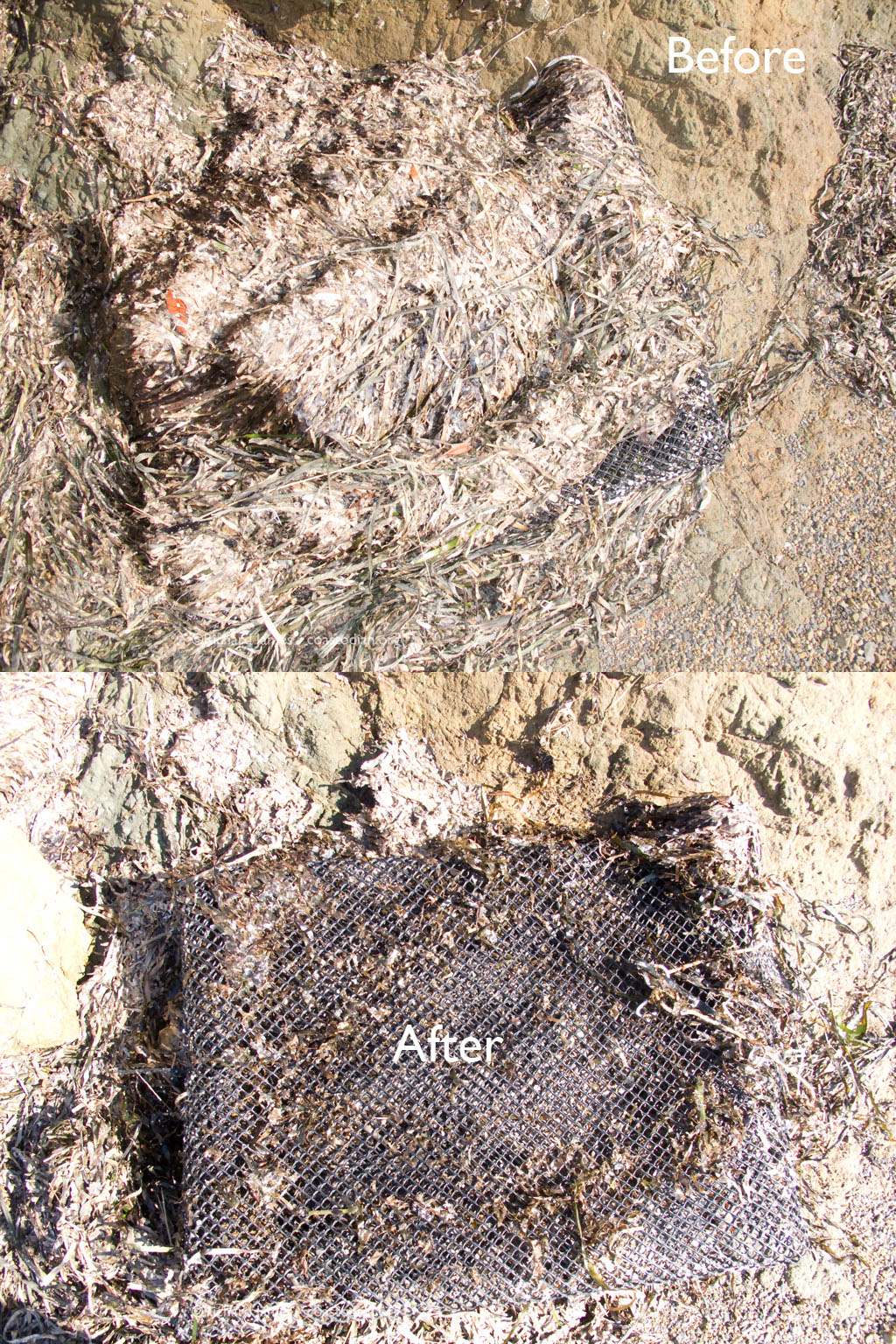
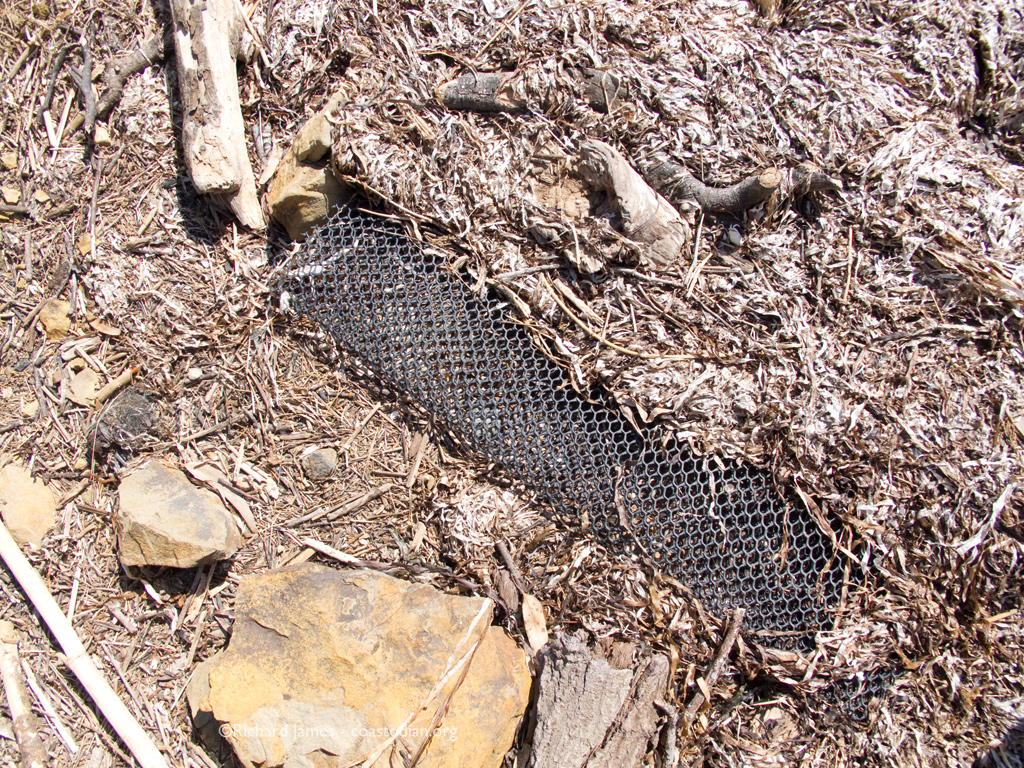
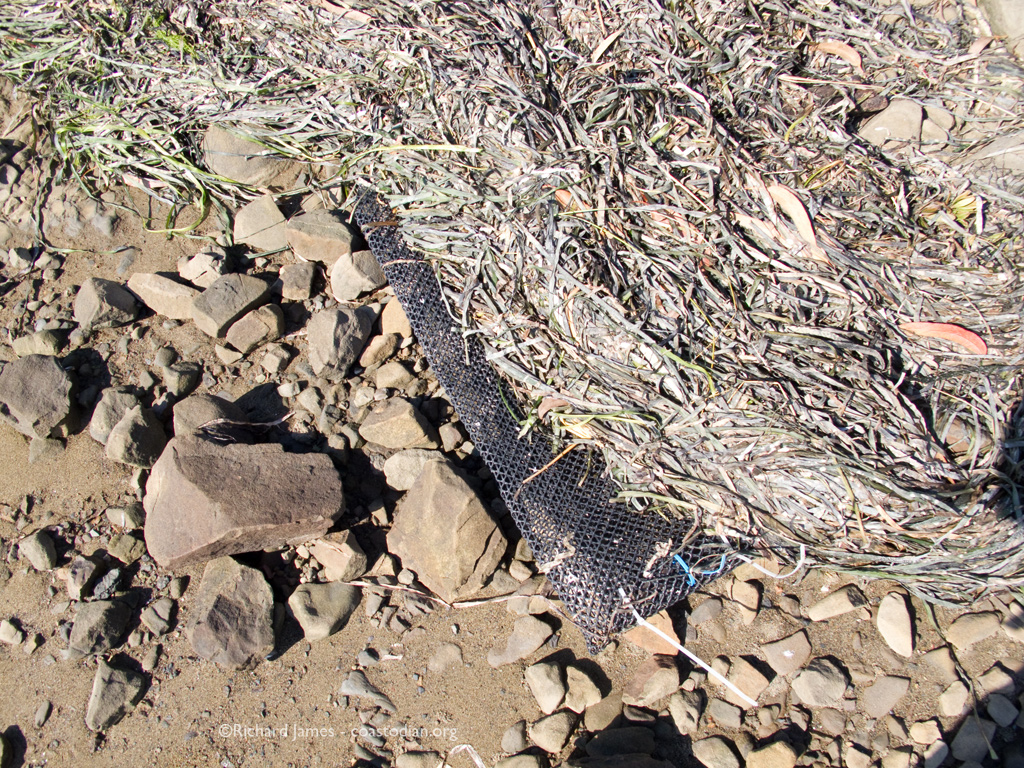
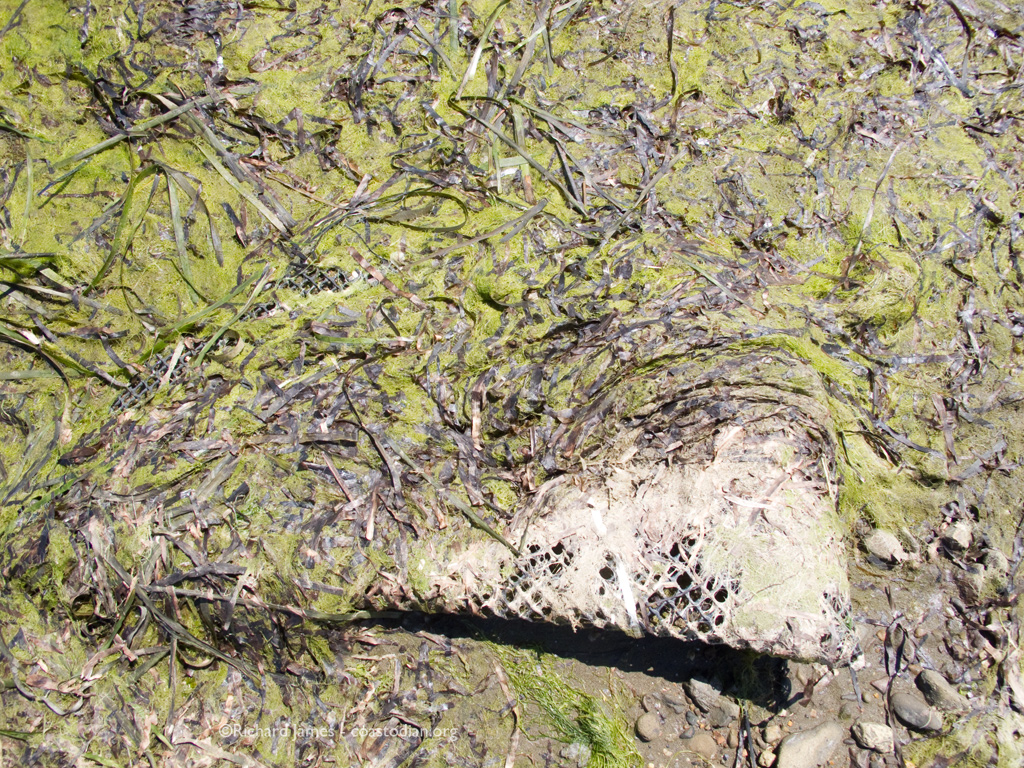
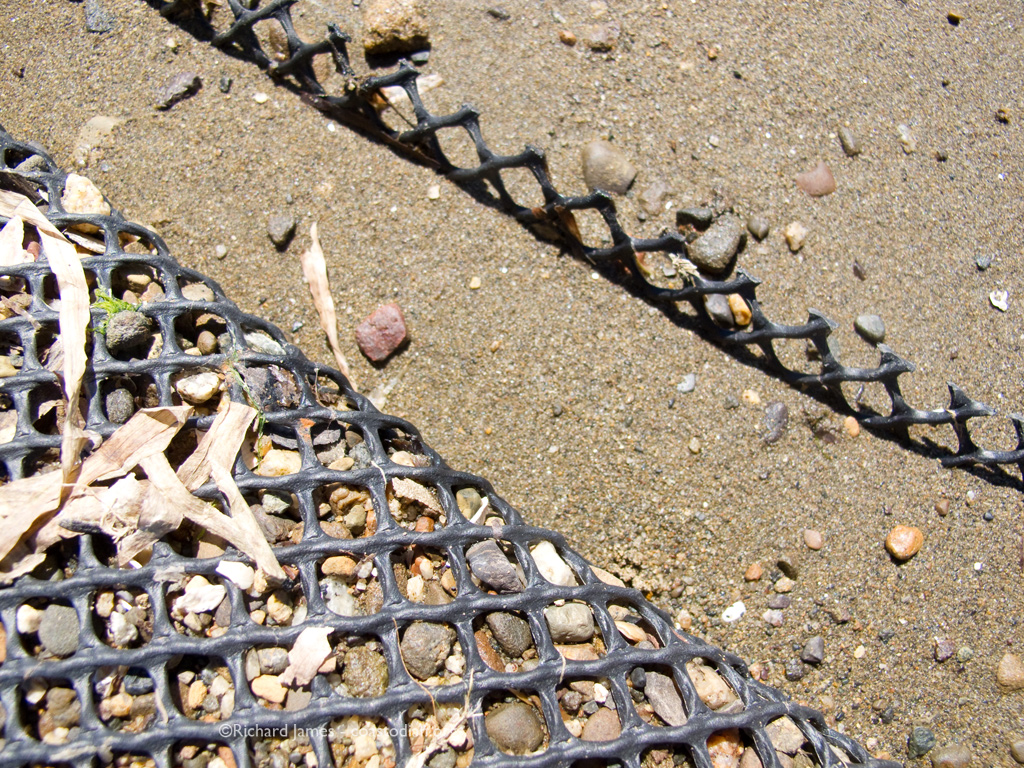
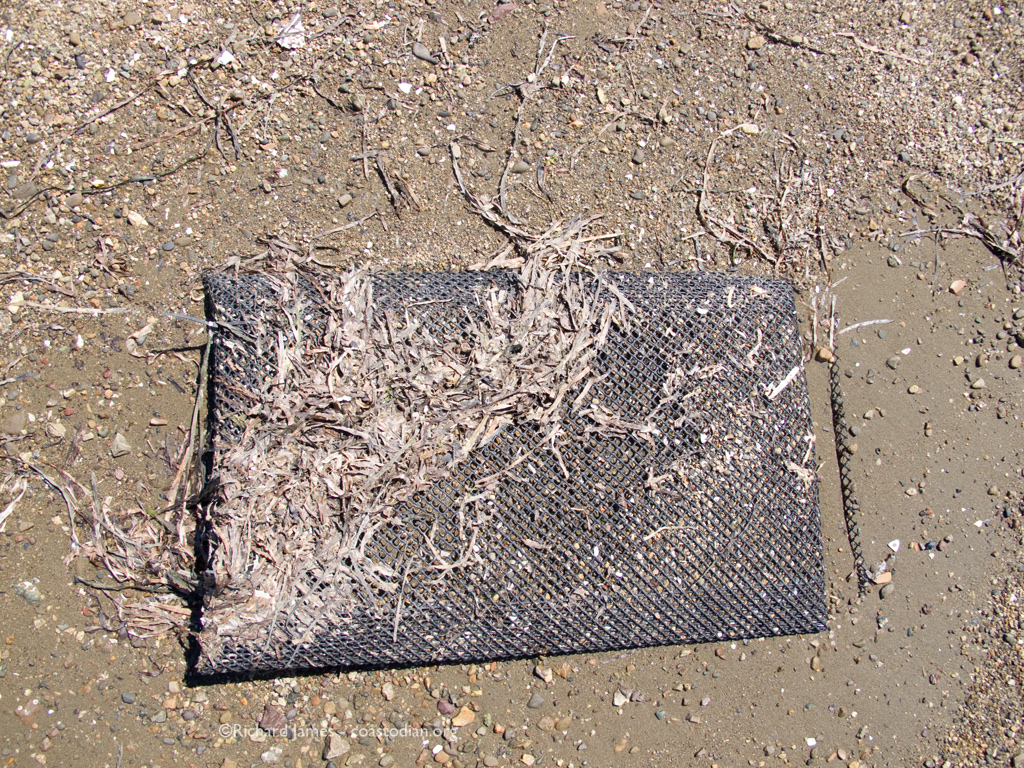
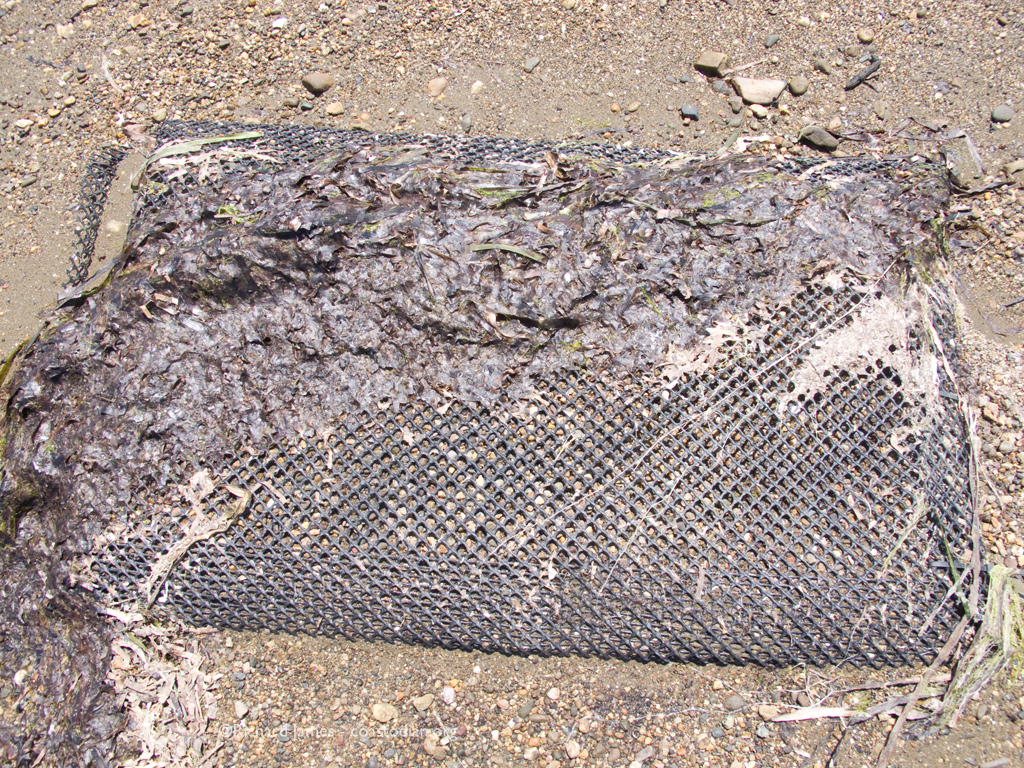
Above is what it looks like as I found it. After flipping it over to remove the eel grass camouflage is seen below.

RJames.IMG_0760

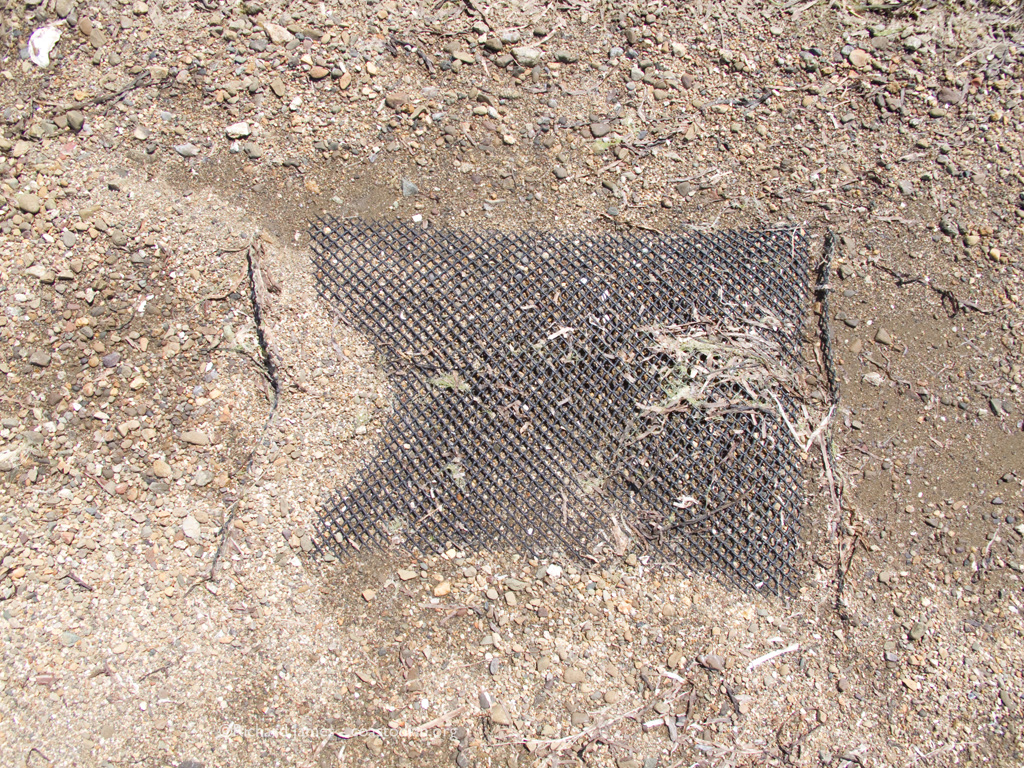
RJames.IMG_0762.1

Above is what it looks like as I found it. After flipping it over to remove the eel grass camouflage is seen below.

RJames.IMG_0763

RJames.IMG_0764

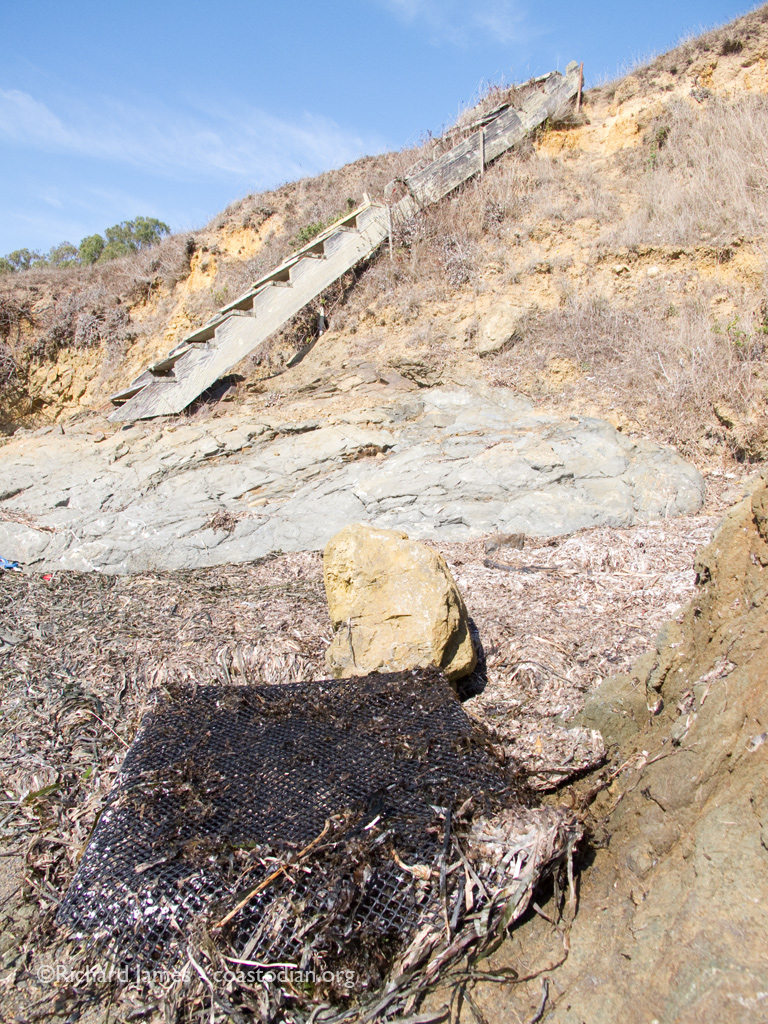
A short video showing a high density of oyster grow out bags abandoned on the shore of Tomales Bay.


Historic-Oyster-Trash

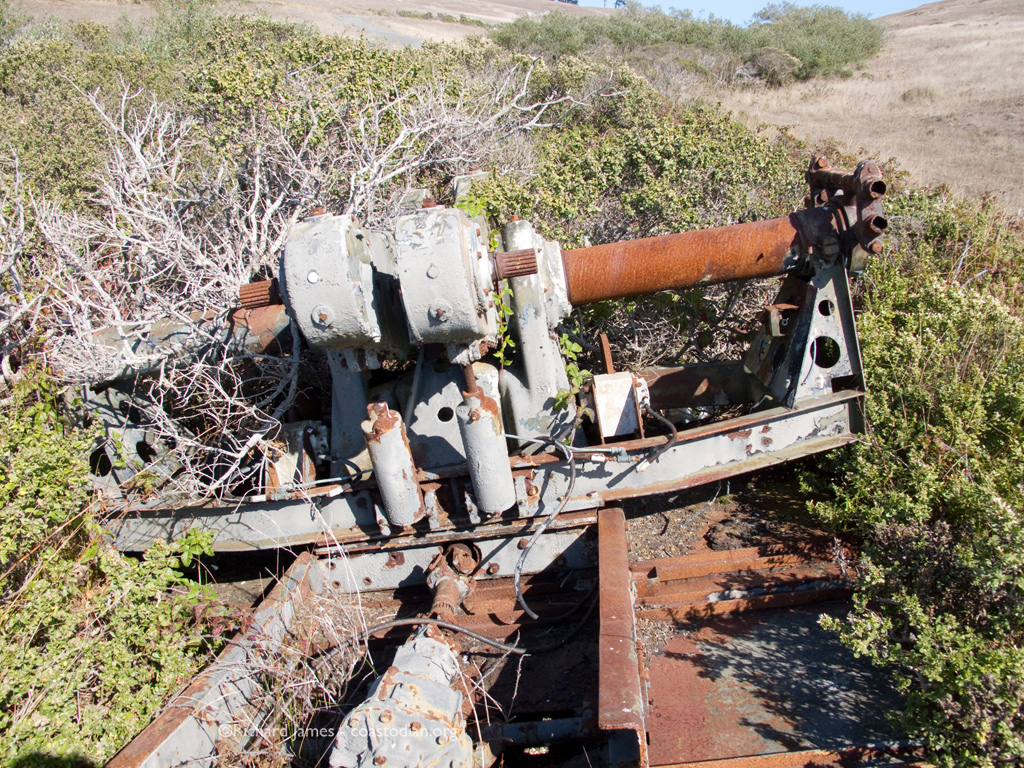
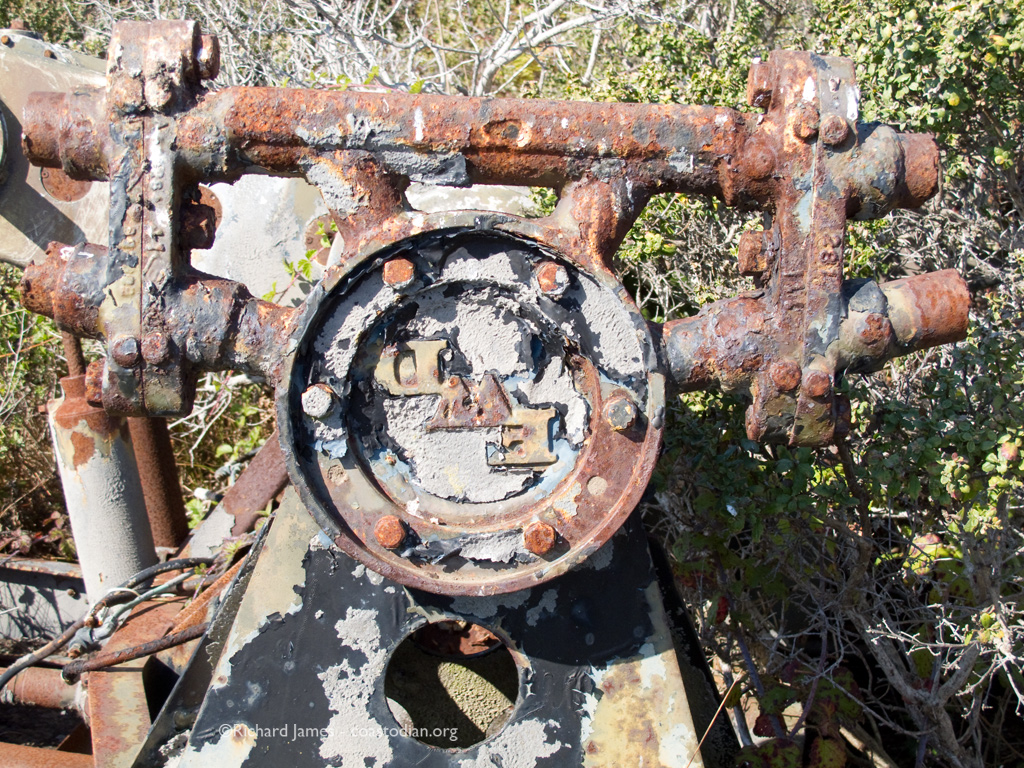
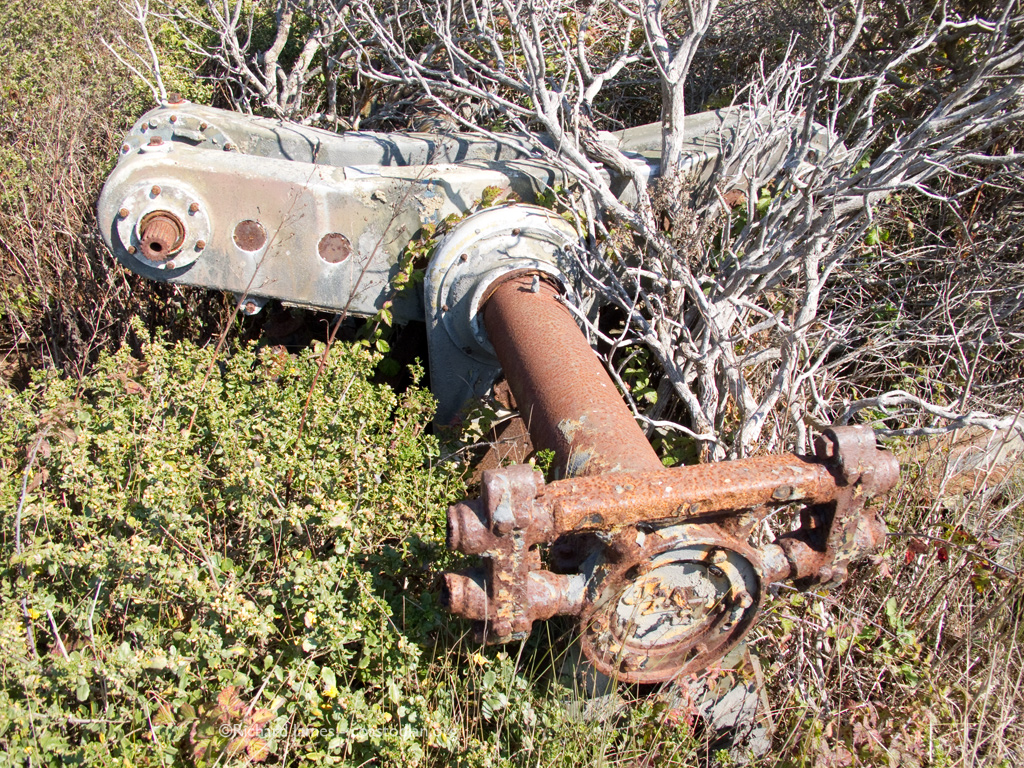
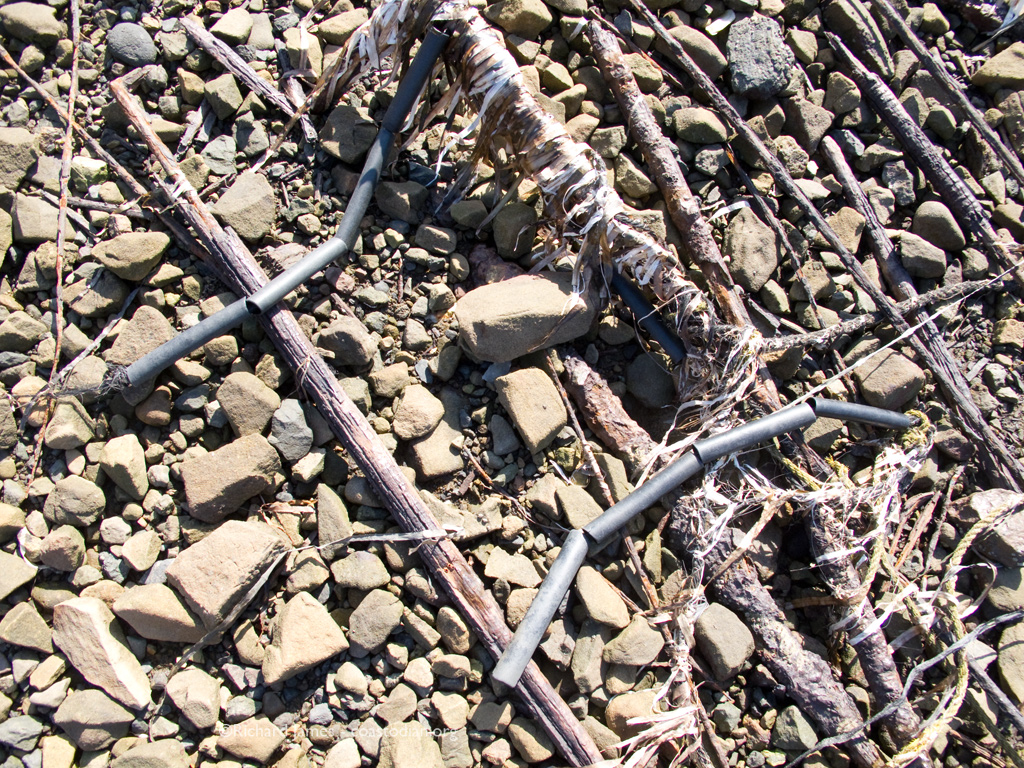
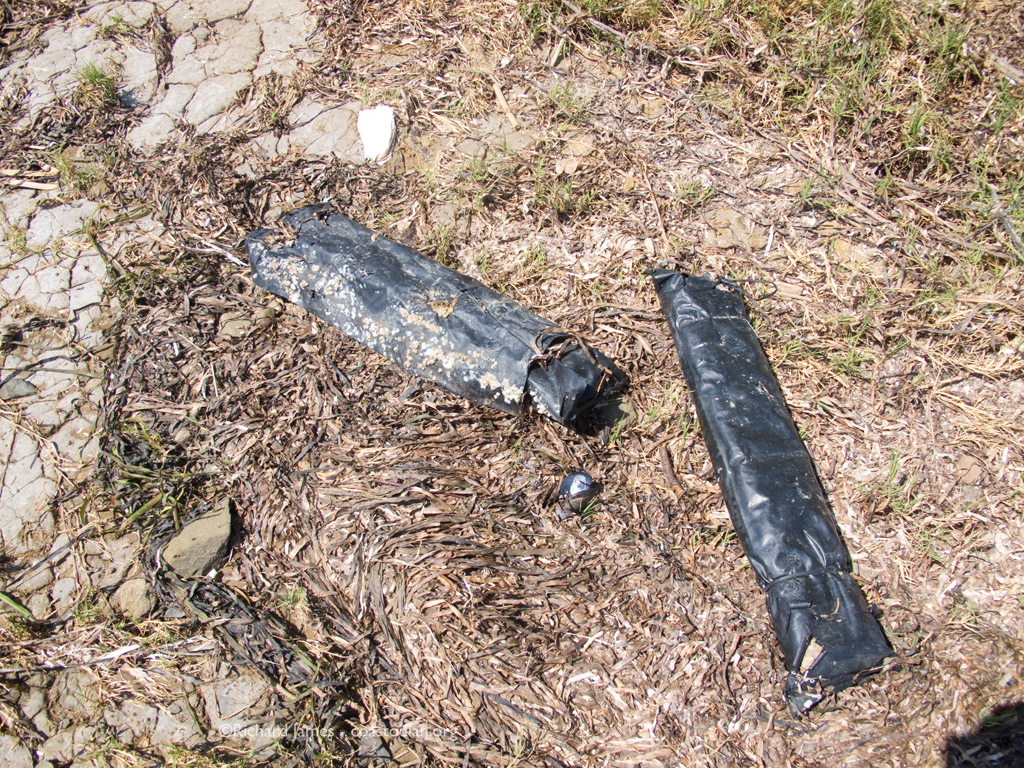
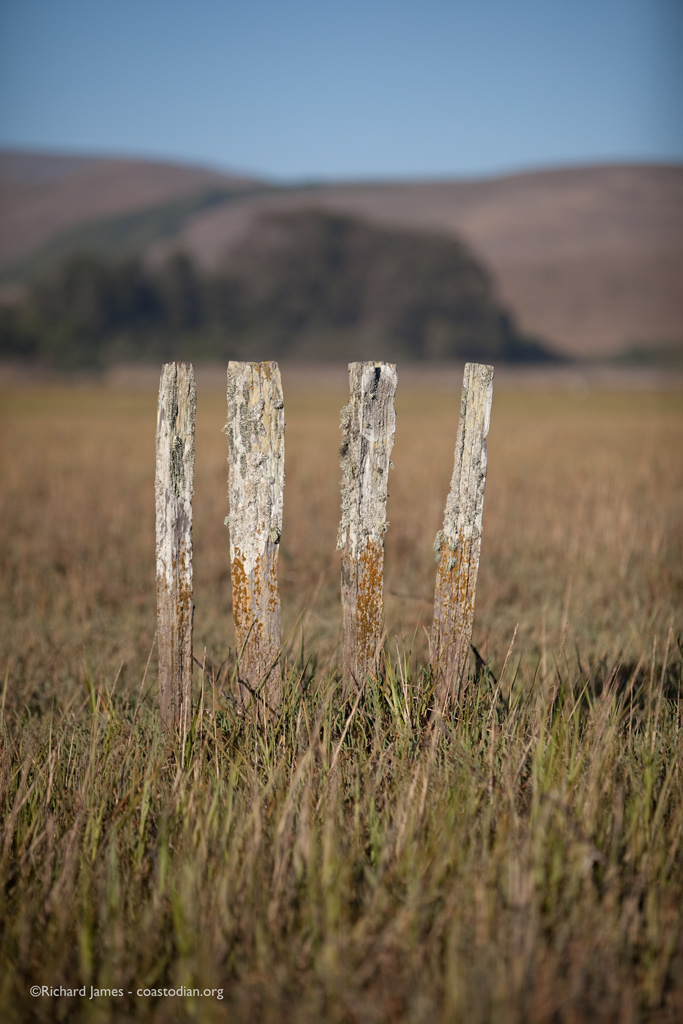
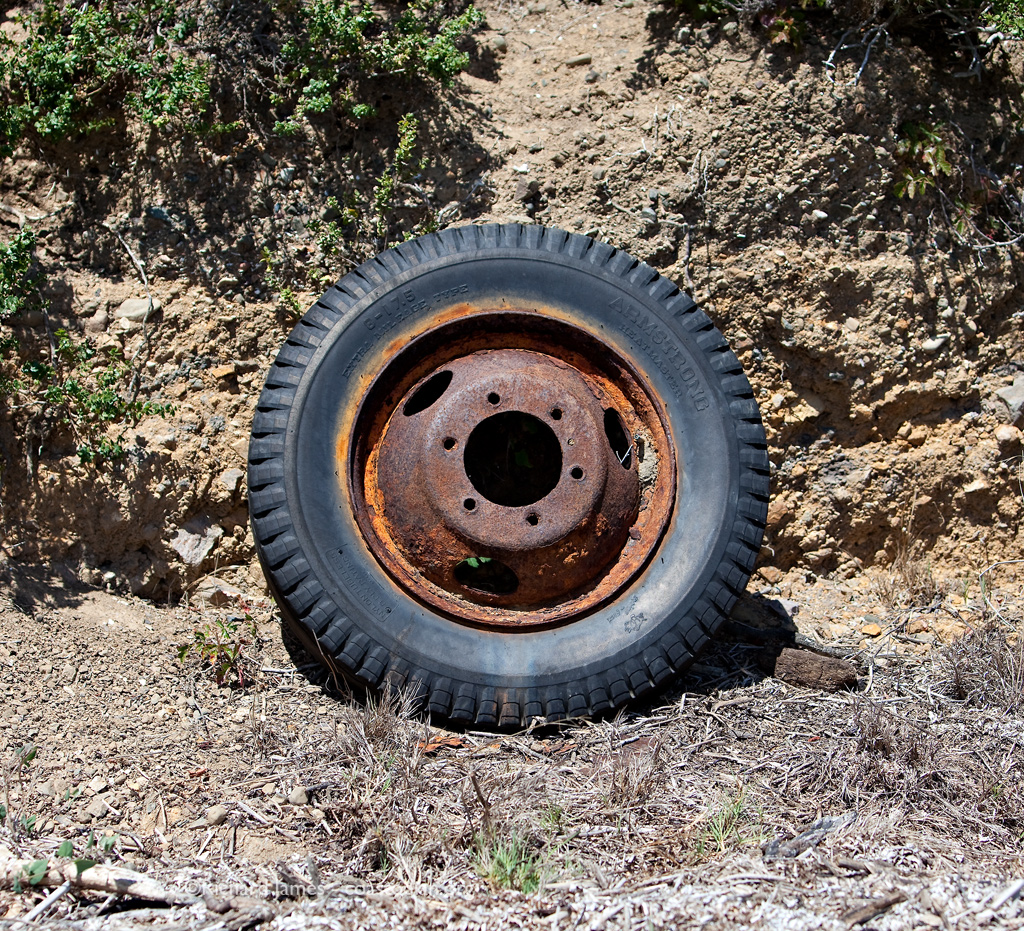
The next few images of heavy machinery are, I was told by a long-time West Marin resident, from oyster farming operations of long-ago.

Leaving a mess seems to run in the DNA of oyster farmers.

RJames.IMG_0770

RJames.IMG_0779

RJames.IMG_0781

RJames.IMG_0784

RJames.IMG_0787

RJames.IMG_0789

RJames.IMG_0790

RJames.IMG_0791

RJames.IMG_0792

RJames.IMG_0793

RJames.IMG_0794

RJames.IMG_0795

RJames.IMG_0796

RJames.IMG_0802.cc

My boat loaded down with as much as I dare take on such a windy day as this one was.

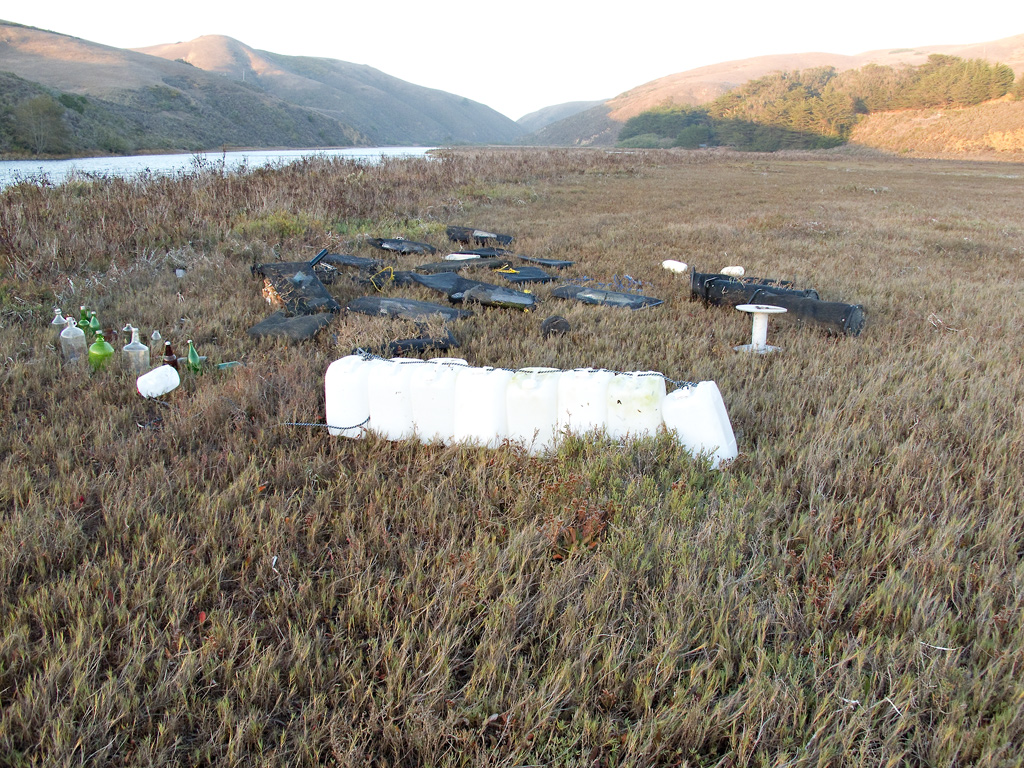
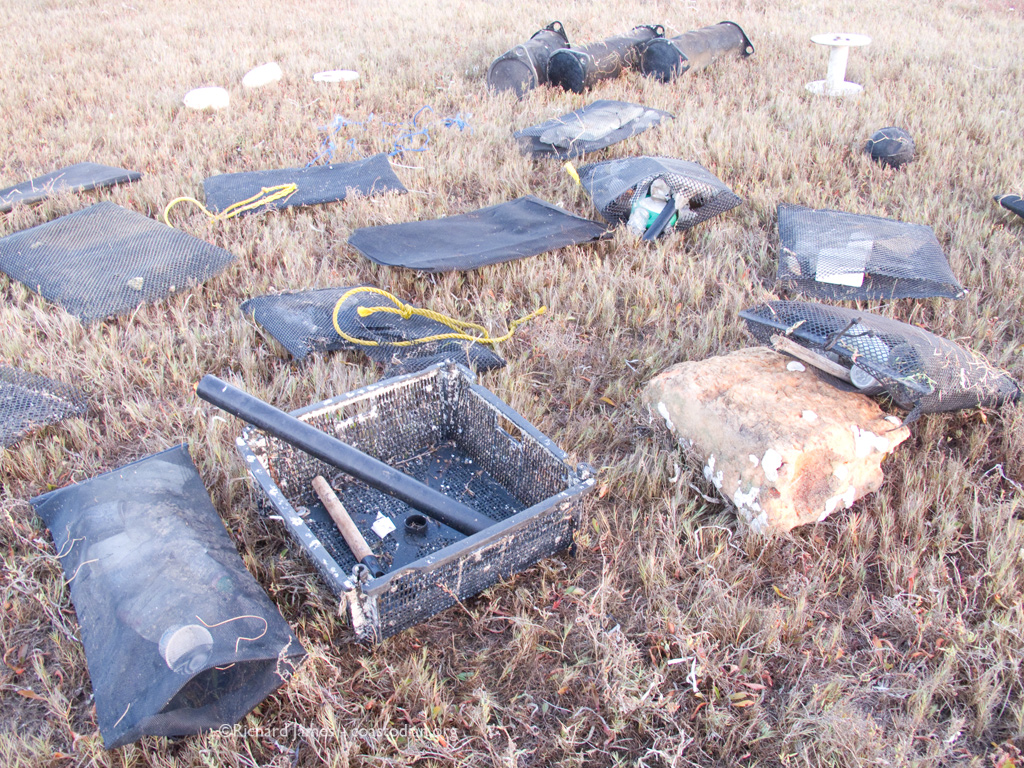
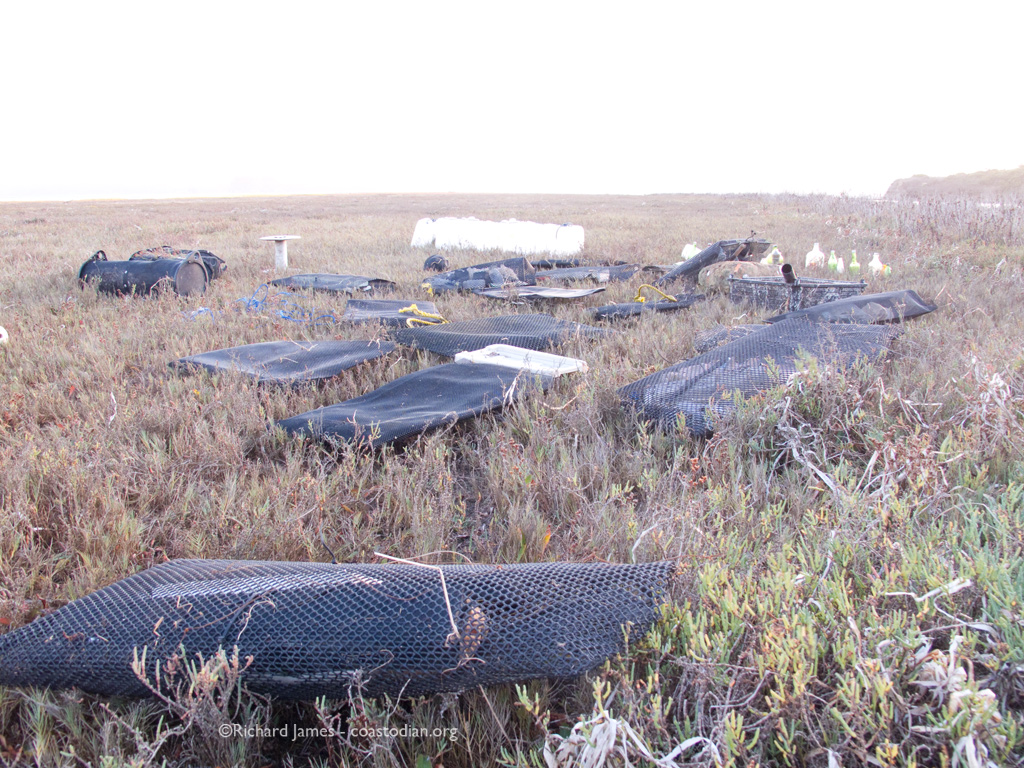
The following images are of the debris where I hauled it to make the monument to oyster profits for a few over a clean environment for all.
RJames.IMG_0803

RJames.IMG_0804

RJames.IMG_0805

RJames.IMG_0806

RJames.IMG_0807

RJames.IMG_0808

RJames.IMG_0809

RJames.IMG_0811

RJames.IMG_0812.cc

RJames.IMG_0813

RJames.IMG_0814

RJames.IMG_5384.cc

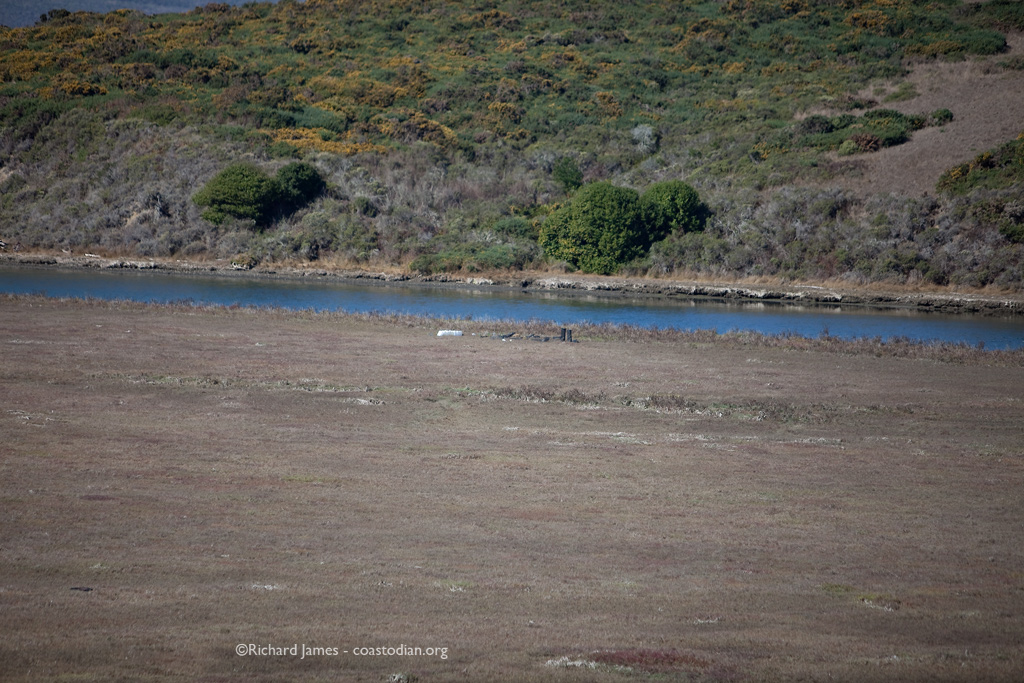
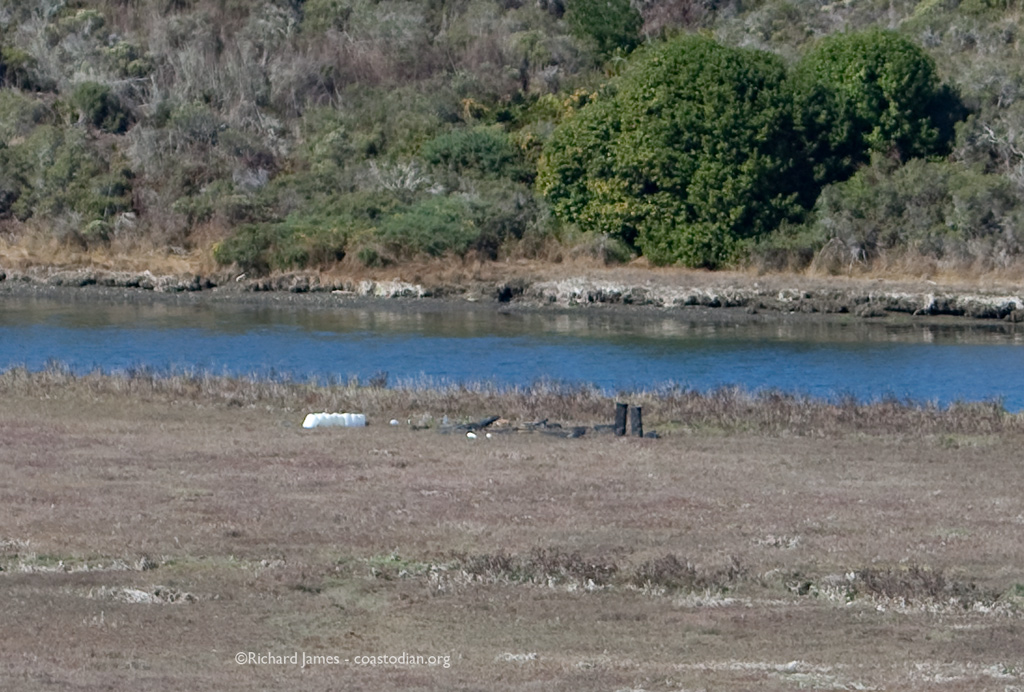
As you can see in this image taken from the side of route 1, even at 200 mm magnification, the monument is too far away to make an impact on even the most unusual of tourists that may make the effort to get out of their car before taking the iconic picture of nature.

RJames.IMG_5385.cc

I could move the oyster farming debris closer to the road for ease of viewing, but no, that would make it harder for the oyster farmers to come pick up their trash on their own. Even after doing the heavy lifting and long walking, I figured I needed to make this easy if they were going to clean up after themselves.

Stay tuned for the next exciting installment of “Save our Tomales Bay”, or “How to get the mess makers to clean up after themselves, or better yet, not make a mess in the first place…”

Those of you that made it this far are rewarded with the main reason I visit the wild places of California as often as I can.

This is why we all need to do our utmost to protect the environment that many, many species besides humans call home.

Black Turnstones on the wing. Click for a larger image.

Black Turnstones on the wing. Click for a larger image.

Egrets on the wing. Click for a larger image.

Egrets on the wing. Click for a larger image.

.

Next related post may be found here.

Previous related post may be found here.

See the first post in this series “Save our Tomales Bay” here.
Save our Tomales Bay – part 6

Click on the words above “Save our Tomales Bay…” to see this post as it was meant to be seen.

Oyster bags, oyster tags, what a drag!

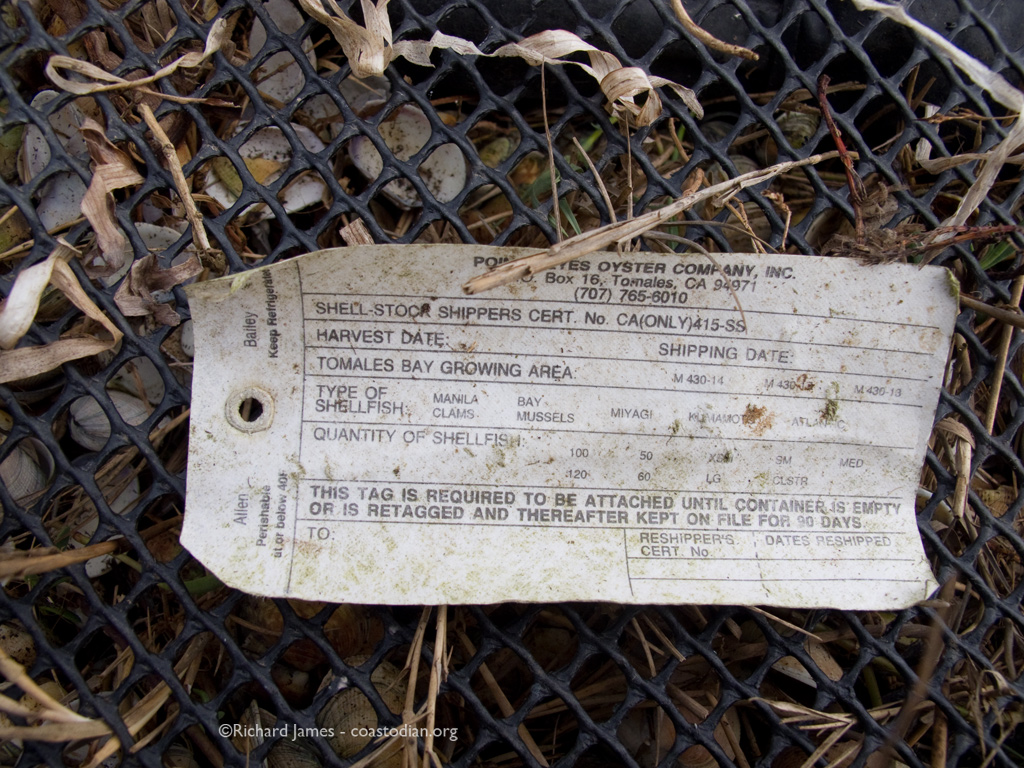
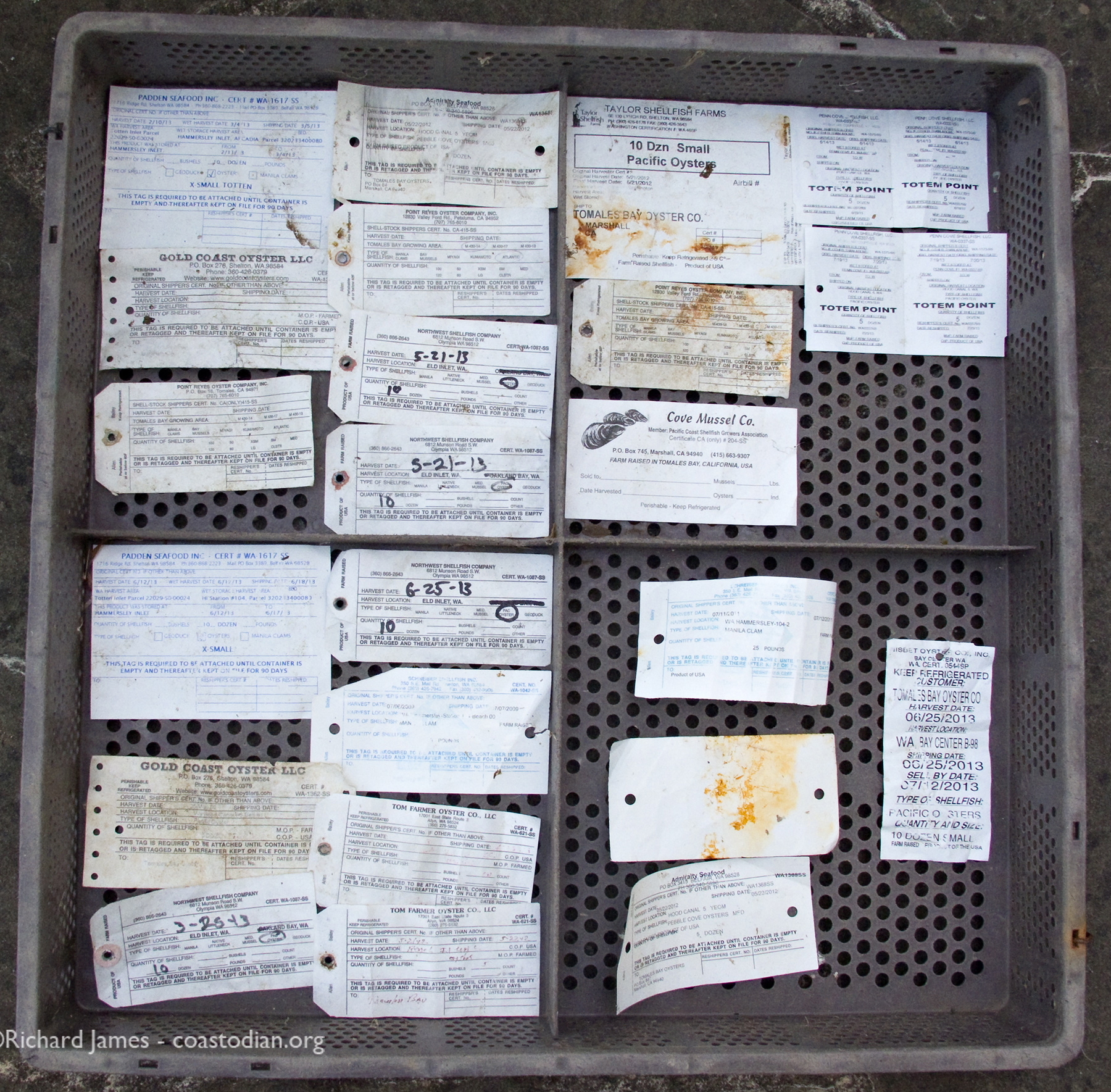
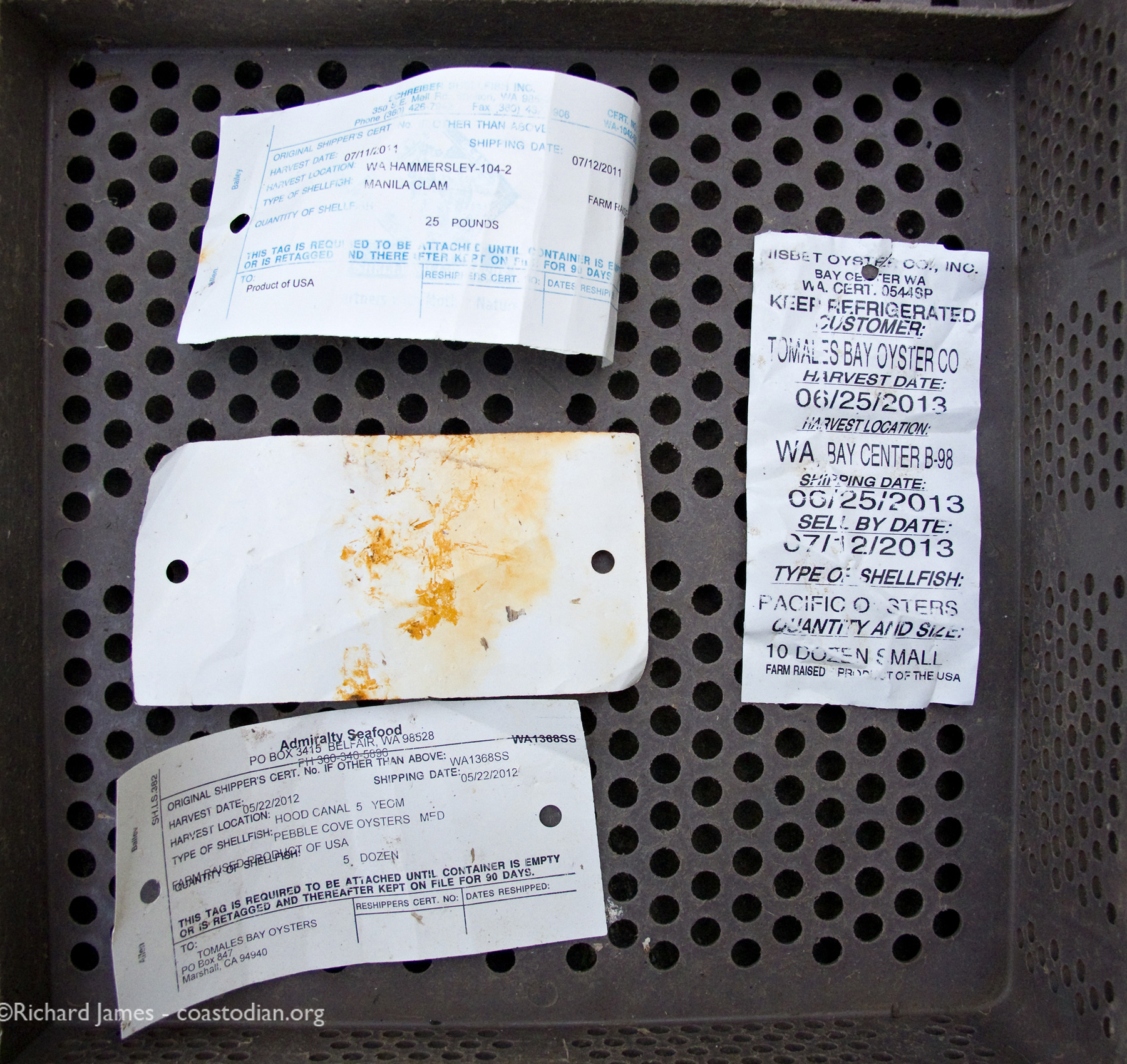
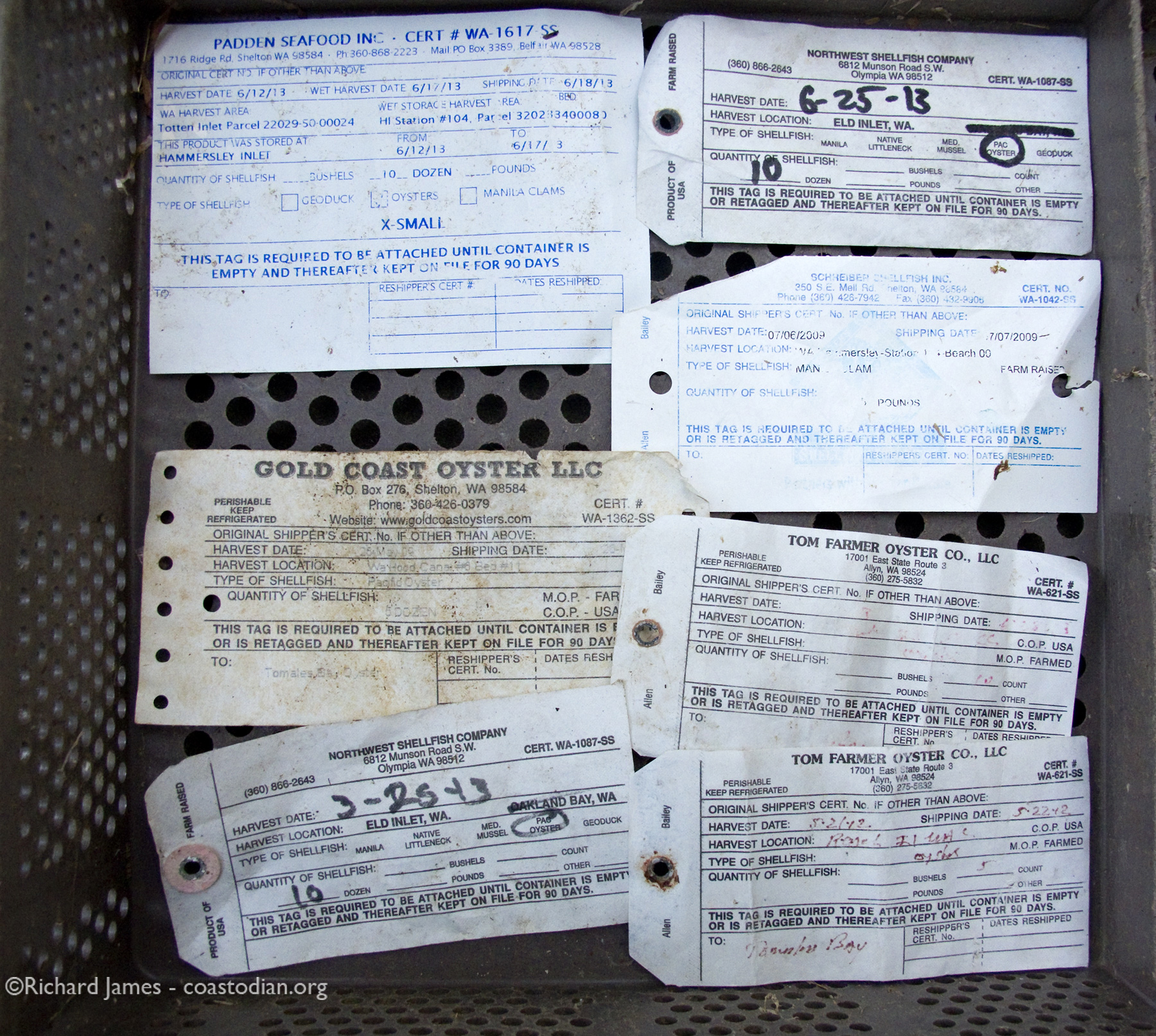
Not only do the oyster farmers of Tomales Bay leave the tools of their trade all over the environment, they leave the tags from the bags shipped here from Washington State.

IMG_0656.cc

Let’s have a closer look at those tags

IMG_0657.banner.cc

It says, “This tag is required to be attached until container is empty or retagged and thereafter kept on file for 90 days.

90 days from May 21st would be August 21st. Yet, I found these tags littering the shore (along with hundreds of grow out bags) in June, July and August. Does keeping tags on file in the oyster business mean scattering them to the winds to be deposited on the shores of Tomales Bay and Point Reyes Seashore?

There is so much to learn about this local, sustainable, easy on the land business of growing, er shipping from Washington, oysters.

Do you know your oyster farmer? Call them, all the Washington numbers are there on those tags you can see better below.

Does it make sense to ship oysters so far to sell them? Maybe farming what local, non-protected waters can support is the wiser course in the long run. If the local waters can only support X pounds of oysters per year, harvest X pounds.

Either way, picking up after yourself is a given. Why is it accepted that these mariculture operations can leave such a mess in the waters and on the shore? The Leysan Albatross and other pelagic birds that scoop up all the plastic garbage humans dump in the sea, and feed it to their chicks who then die, they have no seat at the table where decisions are made by those in power, those extracting a profit. Who speaks for the animals of the sea?

West Marin oyster farmers want to greatly expand the number of acres in Tomales Bay where they can practice their trade.

From what I have seen so far in my many days on the water and along the shore picking up after them, they don’t deserve to farm the acres they mis-use now. If these farmers sent two people out one day each week, or even every other week to clean up THEIR mess, I’d have nothing to write about. More importantly, the animals of the sea would be less likely to die by ingesting our waste.

This farming can be done responsibly if the farmers are willing to act in a manner many talk about. Are short-term profits going to fog the eyes of these business people such that they are blind to the damage being done?

I hope not.

As always, to see a larger version of the following images, click on it.

IMG_0657.cc

IMG_0660.cc

IMG_0658.cc

IMG_0659.cc

IMG_0662.cc

.

Next related post may be found here.

Previous related post may be found here.

See the first post in this series “Save our Tomales Bay” here.

Save our Tomales Bay – Part 5

Click the words above “Save our Tomales Bay…” to see this post as it was meant to be seen.

The past several weeks I’ve been picking up the trash left behind by local oyster farming operations on Tomales Bay.

In this post from 29 June, I wondered aloud if those responsible for the mess would pick up after themselves, or would I need to find more help to rid the environment of the trash of private enterprise.

A week later and a few of the larger bales of plastic oyster grow-out bags had been recovered.

This past weekend I went back to have a look at some of the submerged bags, those filled with gravel and embedded in the sand, mud and gravel.

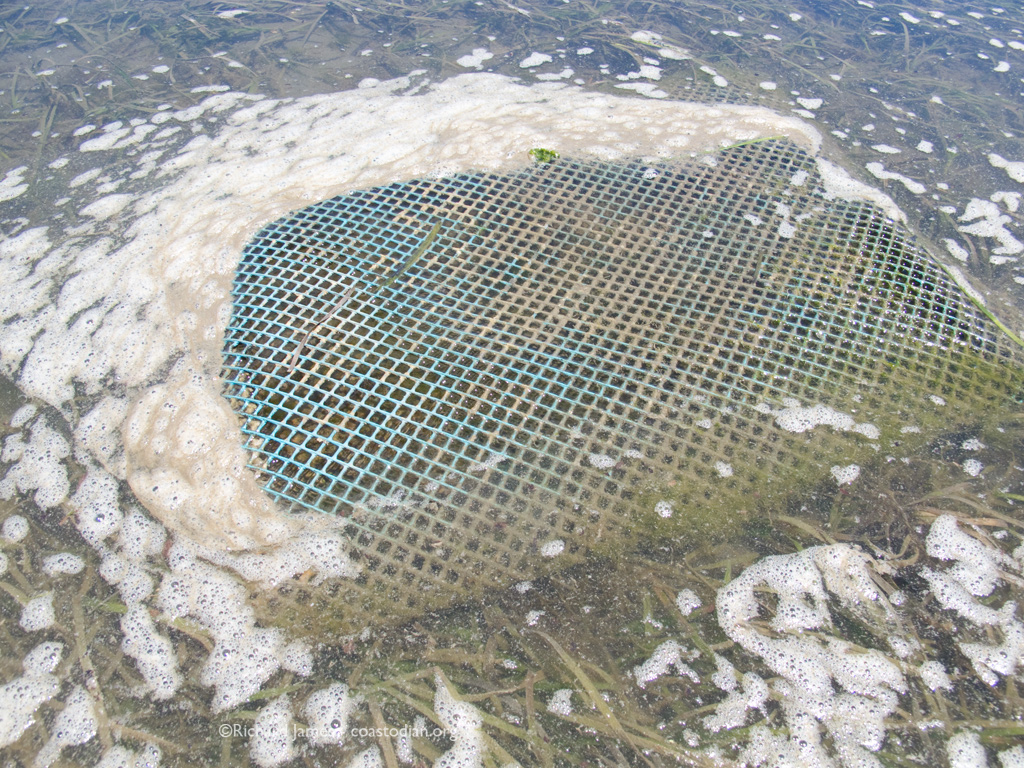
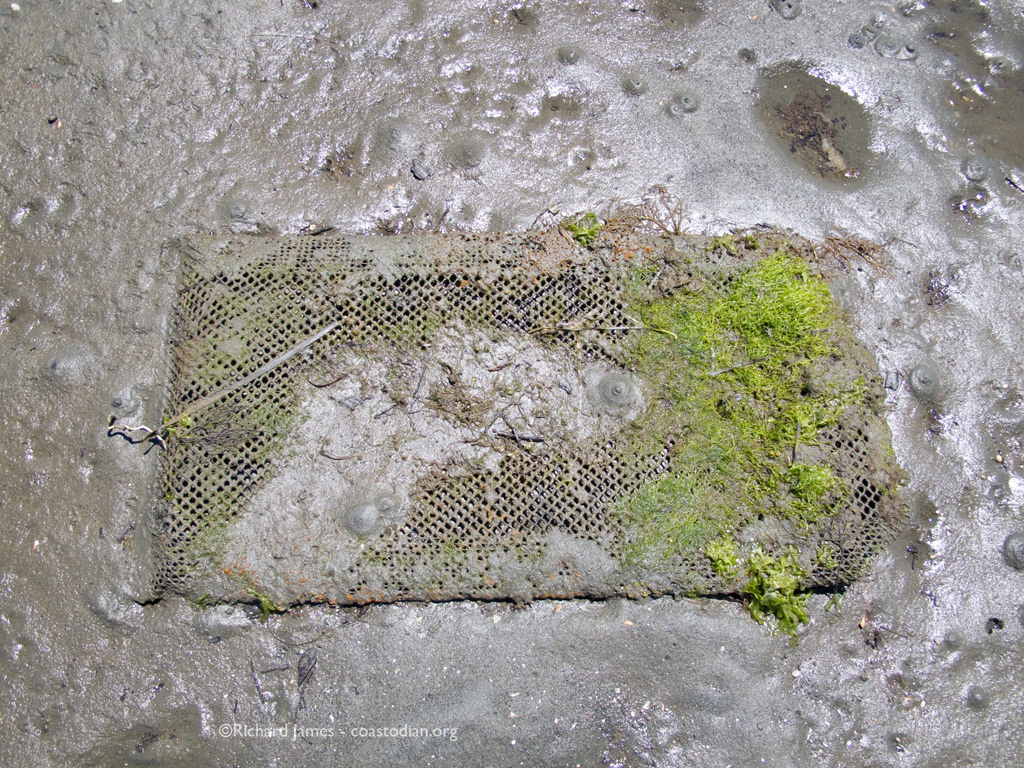
Unfortunately they were still there. as were the many bags I had tossed up high on the shore to keep the tide from carrying them away.

I found that by slicing along one edge of the buried bags, the sand and gravel can be more easily emptied out. But, the freshly sliced plastic is also very sharp. My punctured thumb bled profusely after learning this the hard way.

What follows are images showing the consequences of sustainable, low-impact, no inputs required mariculture of West Marin.

Have a look and ask yourself if this truly is as earth-friendly as it is being portrayed. I imagine with some thought, as well as more labor, oysters could be grown and harvested without leaving such a mess behind.

In a future post, you’ll see evidence of the origin of many of the oysters sold in West Marin to a public that thinks they are buying “local”, as well as sustainable.

All images can be seen larger simply by clicking on them.

IMG_0655


click image for larger version

IMG_0654


IMG_0653


click image for larger version

IMG_0651


IMG_0650


click image for larger version

IMG_0649


IMG_0647


click image for larger version

IMG_0645


IMG_0644


click image for larger version

IMG_0641


IMG_0639


click image for larger version

RJames.MVI_0622


RJames.IMG_0637


click image for larger version

RJames.IMG_0636


RJames.IMG_0635


click image for larger version

RJames.IMG_0634


RJames.IMG_0632


click image for larger version

RJames.IMG_0630


Above or below, which view do you prefer?

RJames.IMG_0629


click image for larger version

RJames.IMG_0628


RJames.IMG_0627


click image for larger version

RJames.IMG_0626


RJames.IMG_0625


click image for larger version

RJames.IMG_0621


RJames.IMG_0619


click image for larger version

RJames.IMG_0617


RJames.IMG_0614


click image for larger version

RJames.IMG_0613


RJames.IMG_0612


click image for larger version

RJames.IMG_0611


RJames.IMG_0610

.

Next related post may be found here.

Previous related post may be found here.

See the first post in this series “Save our Tomales Bay” here.

Save our Tomales Bay – Part 4

Click on the words “Save our Tomales Bay” above to see this post as it was meant to be seen.

As always, to see a larger version of an image below, click on the image.

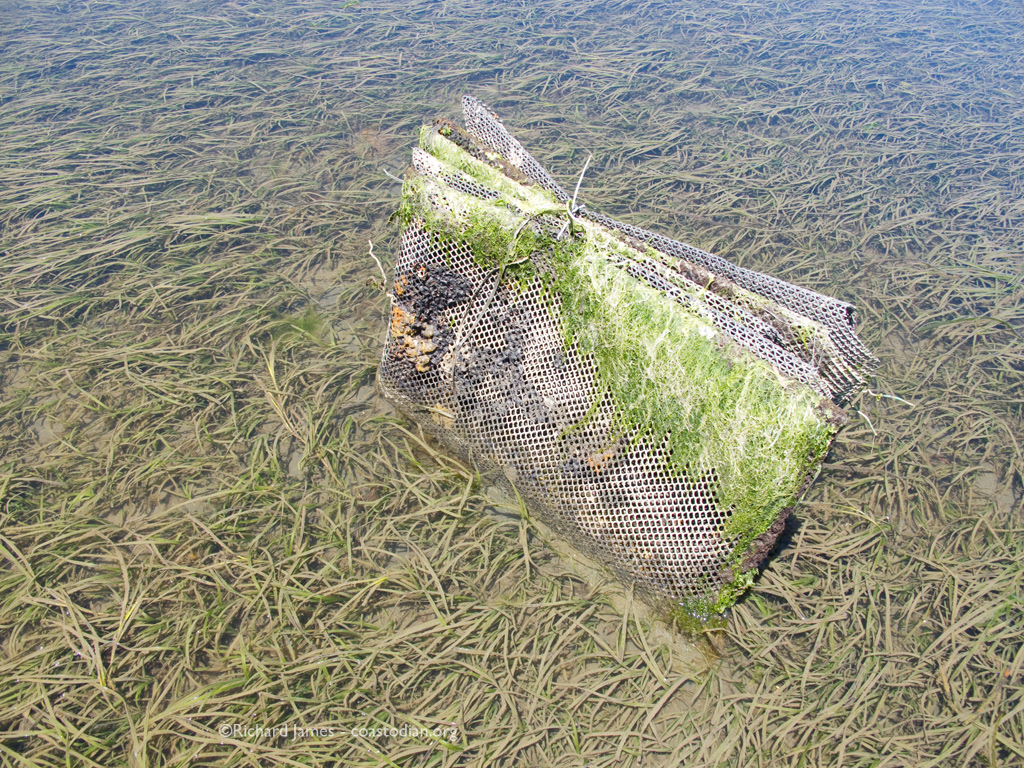
Last week while kayaking on Tomales Bay I came upon this grow out bag floating in the hot, bath-like water and mud south of Inverness Park – nearly to White House Pool. It had gotten loose from the area the commercial operation had placed it to grow and drifted a few miles south.

These bags get loose by the hundreds each year and drift all over the ocean, breaking down into smaller and smaller pieces of deadly plastic, one day to be eaten by a hapless bird out looking for food.

One idea that could address employment as well as ocean debris problems is for the oyster farms to hire more people to keep a closer eye on things.

Depending on the outcome of the seemingly never-ending dance of the liars, err lawyers, we may soon have many very experienced oyster-workers looking for work. And, as can be seen by anyone that takes the time to visit the waters of Tomales Bay, we have a never ending supply of feral plastic that needs tending to.


IMG_4703.cc


IMG_4705.crop.cc.cw

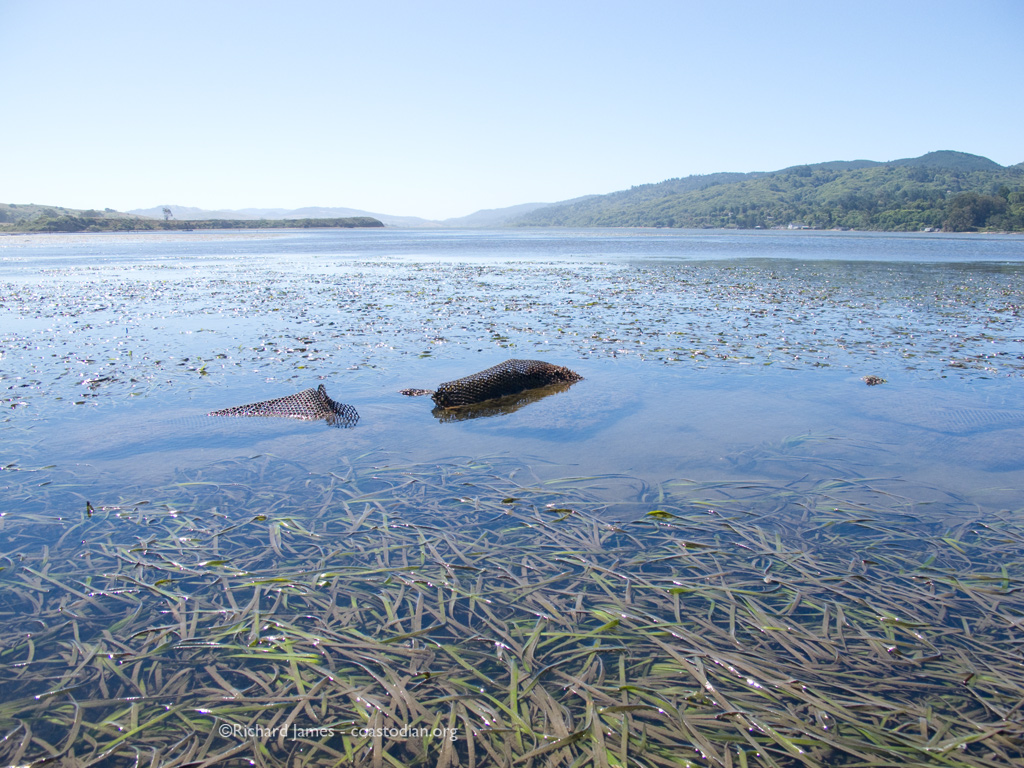
No matter which side of the fence you stand on the oyster issue, there is no denying that the view is sublime, and one which we all need to be doing our utmost to protect from degradation.


IMG_4712.cc.cw


I shall not tire in my efforts to ameliorate the impact of humans on this most sacred of places, earth.

IMG_4588.cc

.

Next related post may be found here.

Previous related post may be found here.

See the first post in this series “Save our Tomales Bay” here.
Save our Tomales Bay – part 3

Click on the words “Save our Tomales Bay” above to see this post as it was intended to be seen.

For the many thousands of you that wait on the edge of your recliner for my next batch of images showcasing the worrisome ways in which humans lay waste to the watersheds of the world, I apologize.

Today while visiting the shore of Tomales Bay, as I have the past few weeks in search of debris to remove from the shore and water, I found that much of it had been removed.

Woo hoo!

Last week I opined that with the volume of oyster grow-out bags still littering the shore (hundreds), either the people that put them there would need to pack them out, or I’d need lots of help.

I’m, not sure who did it, but thank you!

RJames.IMG_0528

The above bundle of bags is gone, Hopefully retrieved and no longer poised to explode and spread plastic all over the bay. Thank you.

Today the tide was higher and I was on land, not in my boat. So I had no easy way to see if the piles of iron and dozens of submerged, gravel filled bags buried in the bottom have been removed. I hope they were. I’ll come back again to see.

I did find fewer than ten bags on shore and only a few in the water.

IMG_0583

IMG_0582

IMG_0581

Location -     38.119608° N   -122.864715° W   Datum WGS84

Location – 38.119608° N -122.864715° W Datum WGS84

This work site still had the fifteen or so bags laying about I saw weeks ago. I left them then, and I left them today. The wind can easily take these bags into the water where the tides can carry them out to sea. Surely this work area can be kept cleaner!

Location -  38.128490° N   -122.864172° W   Datum WGS84

Location – 38.128490° N -122.864172° W Datum WGS84

Location -  38.128490° N   -122.864172° W   Datum WGS84

Location – 38.128490° N -122.864172° W Datum WGS84

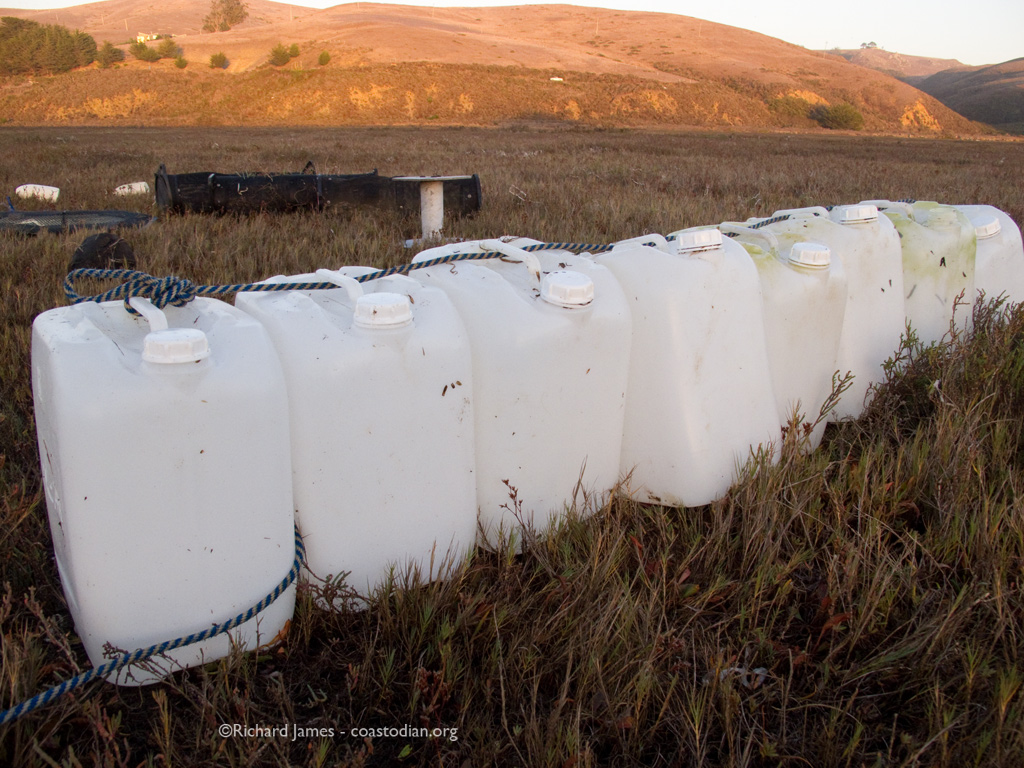
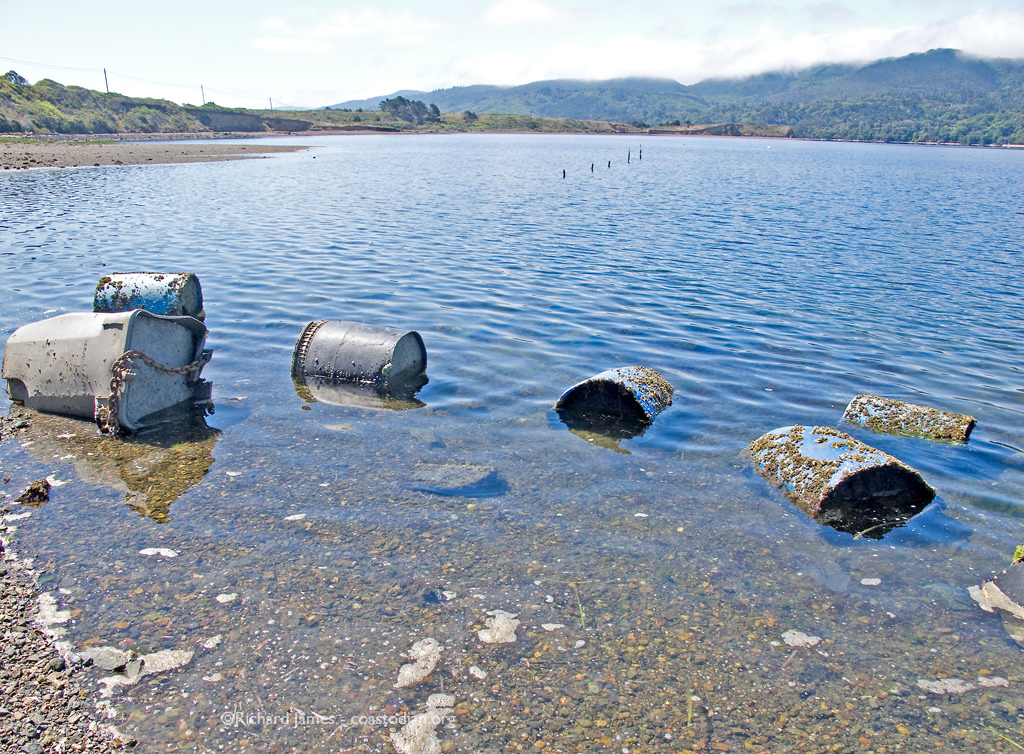
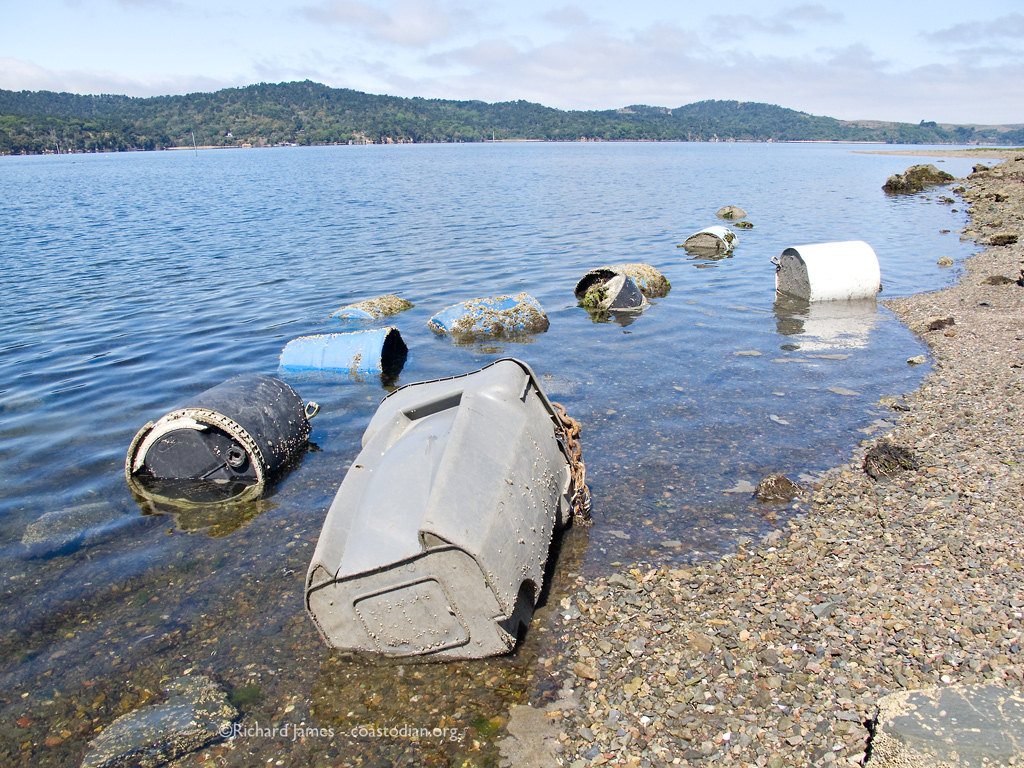
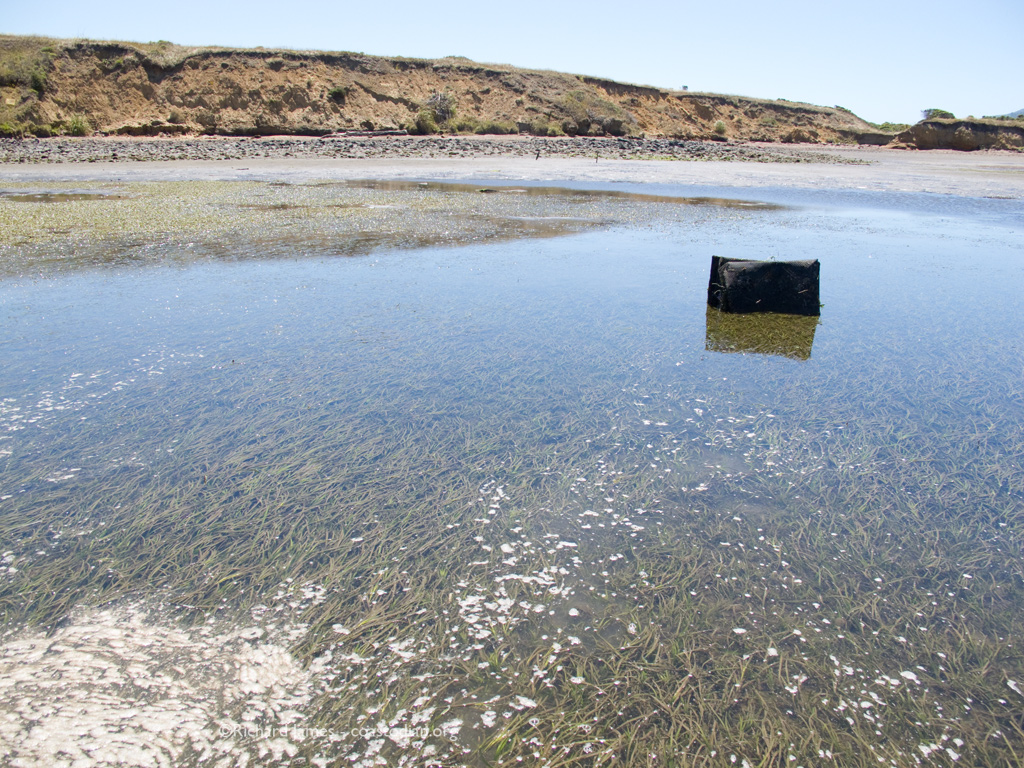
The sad new discovery was the anchors shown in the banner image and again above. Ten to twelve large plastic trash cans or barrels filled with concrete. Who left these here? This is 2013, not 1950. We have known for a long time that we can’t simply extract resources and leave our mess behind for others to deal with. Our planet is buckling under the damage caused by that out-dated thinking.

Who amongst you has an idea on how to get this blight out of Tomales Bay?

Location -   38.125753° N   -122.862869° W   Datum WGS84

Location – 38.125753° N -122.862869° W Datum WGS84

I could have had a V8!

Location -    38.125670° N   -122.862855° W   Datum WGS84

Location – 38.125670° N -122.862855° W Datum WGS84

Still more rusty oyster infrastructure from days gone by, littering the bay.

Location -    38.125670° N   -122.862855° W   Datum WGS84

Location – 38.125670° N -122.862855° W Datum WGS84

Next I plan to visit the area around Walker Creek and Preston Point to see what sort of monuments to the human madness are mired in the mud up that way.

IMG_0584

Here are a few images showing what a healthy shoreline looks like, plastic free!

IMG_0595

IMG_0593

IMG_0594

.

Next related post may be found here.

Previous related post may be found here.

See the first post in this series “Save our Tomales Bay” here.

Save our Tomales Bay – Part 2

Click on the words “Save our Tomales Bay” above to see the related banner image.

Today and last week I boated across Tomales Bay with the intention of seeing what sort of plastic debris I could find and haul out.

Given my last post about the oyster farming debris I dug out of the shore of Tomales Bay and packed out, I did not think I’d find nearly so much.

How wrong I was.

Last week, a little north of the area of my last visit on the SE shoreline of Tomales Bay, I beached my boat and began to walk the wrack.

I stopped counting oyster grow-out bags after 20.

There were so many, I had to make 3 trips back across after loading my boat as tall as I dare. Digging the heavy bags out of the mud high on the beach was exhausting. Lack of energy and daylight prevented me from making another 3-4 trips that I figured were needed to remove all the bags littering the sand, plants and water.

Today I went back to the same area with photography in mind. I wanted to be sure to record the impact of mariculture on our shared bay. To be honest, I also did not want to feel like I’d been hit by a truck, as I felt the day after 8 hours of picking up trash last week.

In four trips across Tomales Bay in a small sit on top kayak, I hauled out 160 grow out bags, along with lots of other bottles, wrappers, foam etc. There is easily twice that many more in this one area. I wonder if the farm(s) that leave this mess there will begin to clean-up after themselves? If not, I am going to need lots of help.

Commerce makes a profit, consumers enjoy a meal. The earth pays a steep price never to be compensated.

When will humans learn that the unpaid compensation will be recovered one day in the form of a dead planet, no longer able to sustain humans as well as many other life forms?

What follows are images that to me, are proof positive that the decision to let the oyster lease in Drakes Estero expire was the right choice. These same scenes repeated themselves throughout The Estero, though I never personally saw this many bags washed ashore on one boating trip in The Estero. I did see dozens of them that had been pulled out by the tides into Drakes Bay and deposited on Limantour and Drakes Beaches, as well as other nearby beaches. How many escaped unnoticed?

See earlier post about the nearly 6000 PVC pipe spacers I collected from Point Reyes beaches.

All of the images can be clicked on to see a larger image.

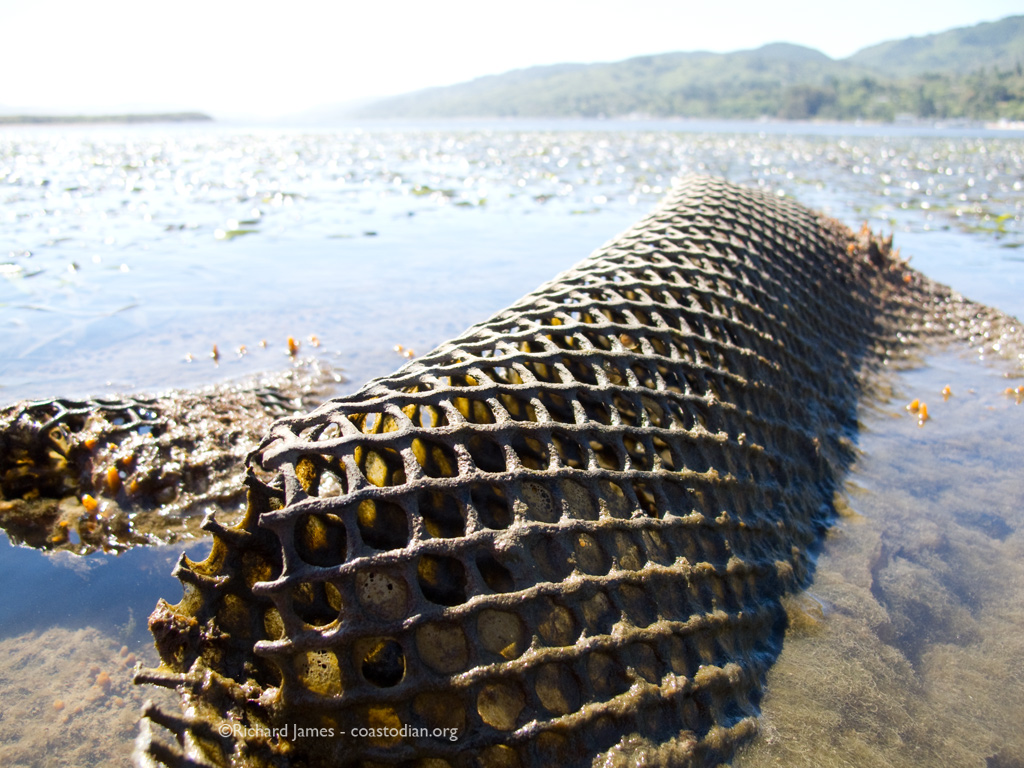
160 polyethelene oyster grow out bags left to the elements in Tomales Bay

160 polyethelene oyster grow out bags left to the elements in Tomales Bay

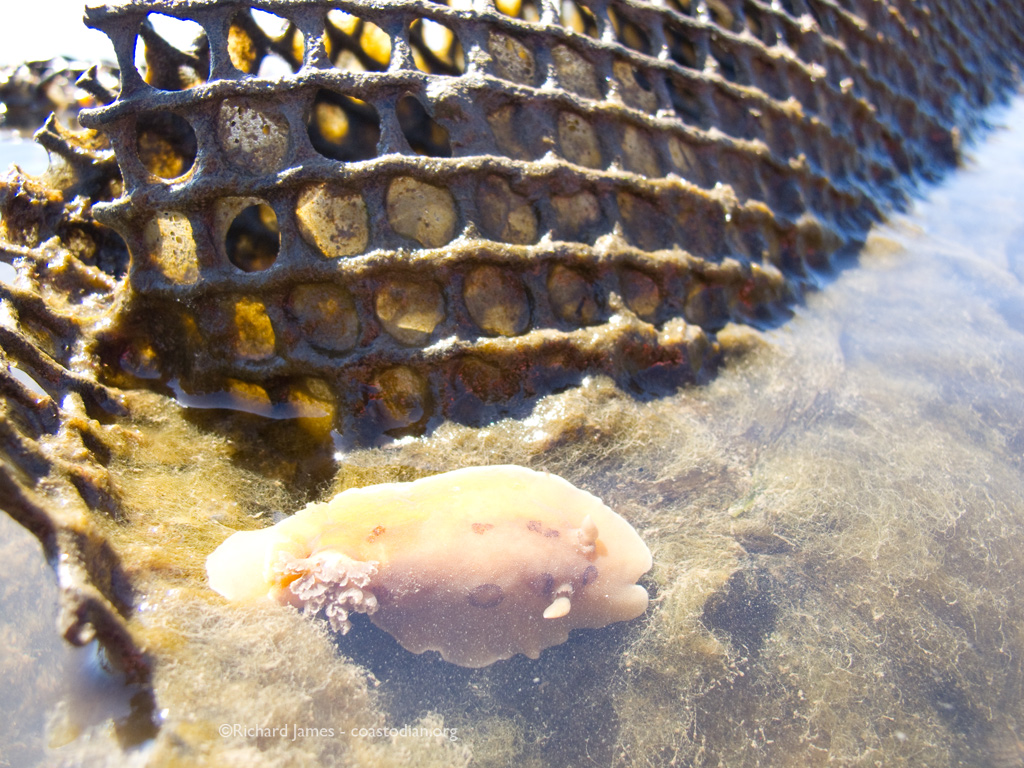
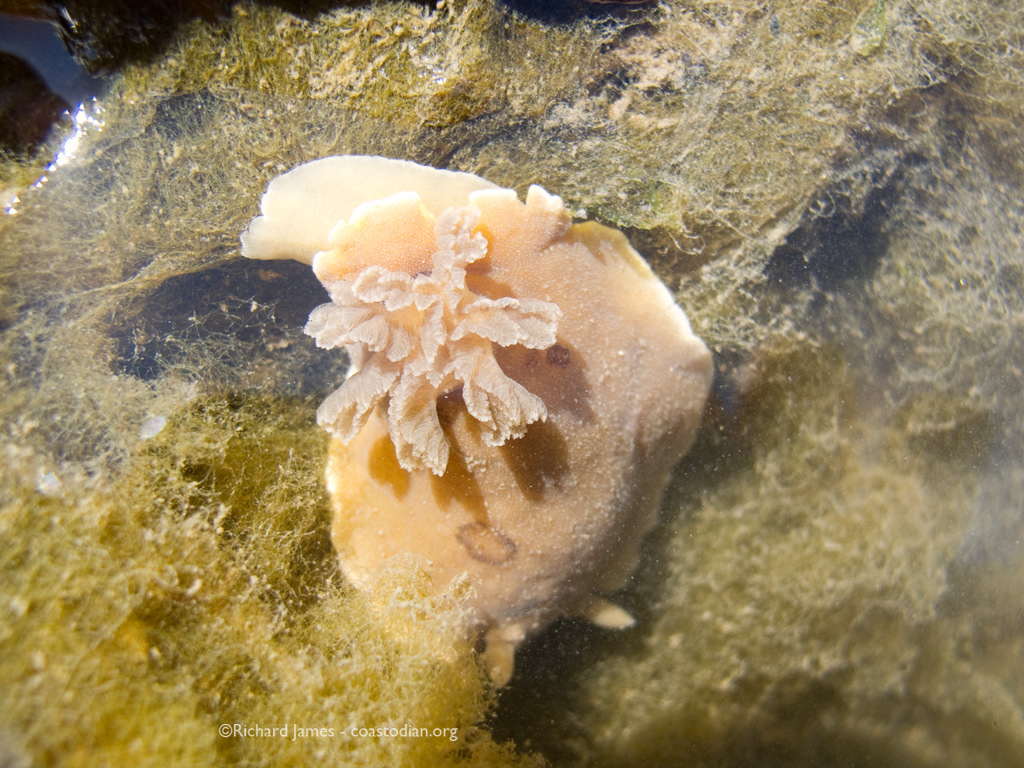
Nudibranch dining on a grow out bag

Nudibranch dining on a grow out bag

RJames.IMG_0455

Click on image to see a larger version.

RJames.IMG_0454

IMG_0542

IMG_0532

Click on image to see a larger version.

IMG_0518

IMG_0494

Click on image to see a larger version.

IMG_0482

160 polyethelene oyster grow out bags left to the elements in Tomales Bay

160 polyethelene oyster grow out bags left to the elements in Tomales Bay

160 polyethelene oyster grow out bags left to the elements in Tomales Bay

160 polyethelene oyster grow out bags left to the elements in Tomales Bay

Click on image to see a larger version.

Been there so long, pickleweed is growing through it.

Been there so long, pickleweed is growing through it.

RJames.IMG_0480

RJames.IMG_0478

RJames.IMG_0477

Click on image to see a larger version.

RJames.IMG_0475

RJames.IMG_0474

RJames.IMG_0473

Click on image to see a larger version.

RJames.IMG_0471

RJames.IMG_0470

RJames.IMG_0469

Click on image to see a larger version.

RJames.IMG_0467

RJames.IMG_0465

RJames.IMG_0463

Click on image to see a larger version.

Nudibranch dining on a grow out bag

Nudibranch dining on a grow out bag

RJames.IMG_0516

RJames.IMG_0515

Click on image to see a larger version.

RJames.IMG_0513

RJames.IMG_0512

RJames.IMG_0511

Click on image to see a larger version.

RJames.IMG_0510

RJames.IMG_0509

RJames.IMG_0506

Click on image to see a larger version.

RJames.IMG_0505

RJames.IMG_0504

RJames.IMG_0503

Click on image to see a larger version.

RJames.IMG_0499

RJames.IMG_0495

RJames.IMG_0541

Click on image to see a larger version.

RJames.IMG_0540

RJames.IMG_0539

RJames.IMG_0538

Click on image to see a larger version.

RJames.IMG_0537

RJames.IMG_0536

RJames.IMG_0535

Click on image to see a larger version.

RJames.IMG_0534

RJames.IMG_0531

RJames.IMG_0530

Click on image to see a larger version.

RJames.IMG_0528

RJames.IMG_0527

RJames.IMG_0526

Click on image to see a larger version.

RJames.IMG_0524

RJames.IMG_0523

RJames.IMG_0522

Click on image to see a larger version.

been there so long it is buried

been there so long it is buried

been there so long it is buried

been there so long it is buried

been there so long it is buried

been there so long it is buried

Click on image to see a larger version.

NOT good!

NOT good!

RJames.IMG_0546

Click on image to see a larger version.

RJames.IMG_0545

RJames.IMG_0543

In West Marin of all places!

Calling this sustainable mariculture would be as crazy as saying The Inverness Garden Club sprayed Roundup® in a public area near Tomales Bay, without permits, telling no one.


.

Next related post may be found here.

See the first post in this series “Save our Tomales Bay” here.
Save our Tomales Bay

Over the past few weeks signs have popped up all over West Marin stating
“Save our Drakes Bay Oyster Farm”.

I am reminded of a young child that wants a puppy. Really wants a puppy.

Begs and pleads to her/his parents to get a puppy.

Days and weeks of begging for a puppy.

The parents engage in the sort of dialog you might expect.

“Puppies are a lot of responsibility honey.”

“I’ll take care of him” is the reply.

“You have to feed the puppy and make sure it has clean water.”

“I will, I’ll feed it every day.”

“And you have to pick up the mess from the puppy too.”

“I will, I will pick up after him.”

And so a puppy is purchased and brought home.

At first, all is well and the child does indeed do as promised. After a few weeks, soccer practice gets in the way and the dog poop is not picked up regularly. Then homework is too burdensome and the morning walk is not doable anymore. Soon, even feeding the dog is forgotten by the child.

Everywhere around us we see signs asking for an oyster farm. An oyster farm that has been shitting in the estero for as long as it has been there. See a previous post for a image showing a tiny subset of what an oyster farm does to a pristine seascape.

You’d think that with all the scrutiny on the Drakes Bay Oyster Company and the environment, the other oyster farmers in Tomales Bay would be super-vigilant, keeping a close eye on their operations, making sure they clean up after their gear is ripped out and strewn about by wind and wave.

Well, think again. I boated across Tomales Bay yesterday from my place and spent a few hours walking the shore, digging oyster grow-out bags, blue foam, rope, floats, trays etc out of the wrack.

Collected from SE shore of Tomales Bay on 8 June, 2013 in a few hours by one person. Click image for a larger version

Collected from SE shore of Tomales Bay on 8 June, 2013 in a few hours by one person.
Click image for a larger version


Drakes Estero is situated in a National Seashore and has been defiled by human commerce for 70 years or more.

Tomales Bay is designated a state park if I am not mistaken. And, as you can see is clearly not very well respected by local commerce.

Both of these places are situated on earth, the only earth we have. And unless your head is in the sand, or some other place, you can see that we have been trashing it at an ever faster pace since we learned how to use our opposable thumbs.

We can feed ourselves without trashing the planet. We all have to share the burden a little bit, but we can do it.

West Marin prides itself on local, sustainable…….in light of local practices, add blah, blah, blah to the mantra.

I’m sorry, no puppy for you. And no oyster farm in Drakes Estero.

Kehoe Beach – 27 January, 2012, 3:58 pm looking south, status quo.
Click image for a larger version

Next installment may be found here.
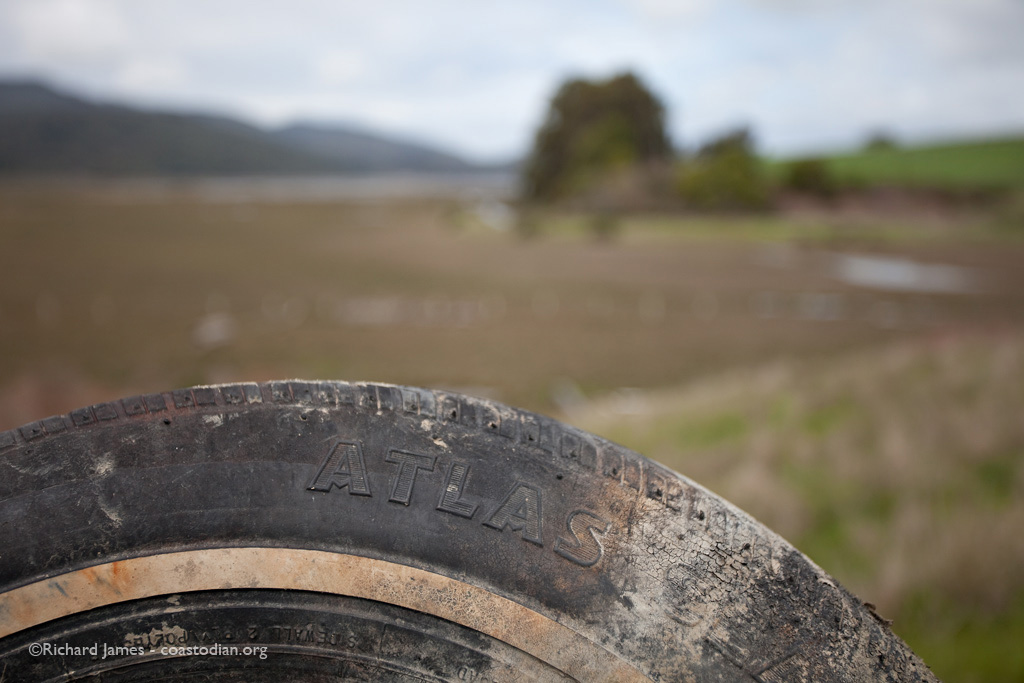
Atlas Lugged….out of Tomales Bay

Click on the title of this post to read it and see a related header image.

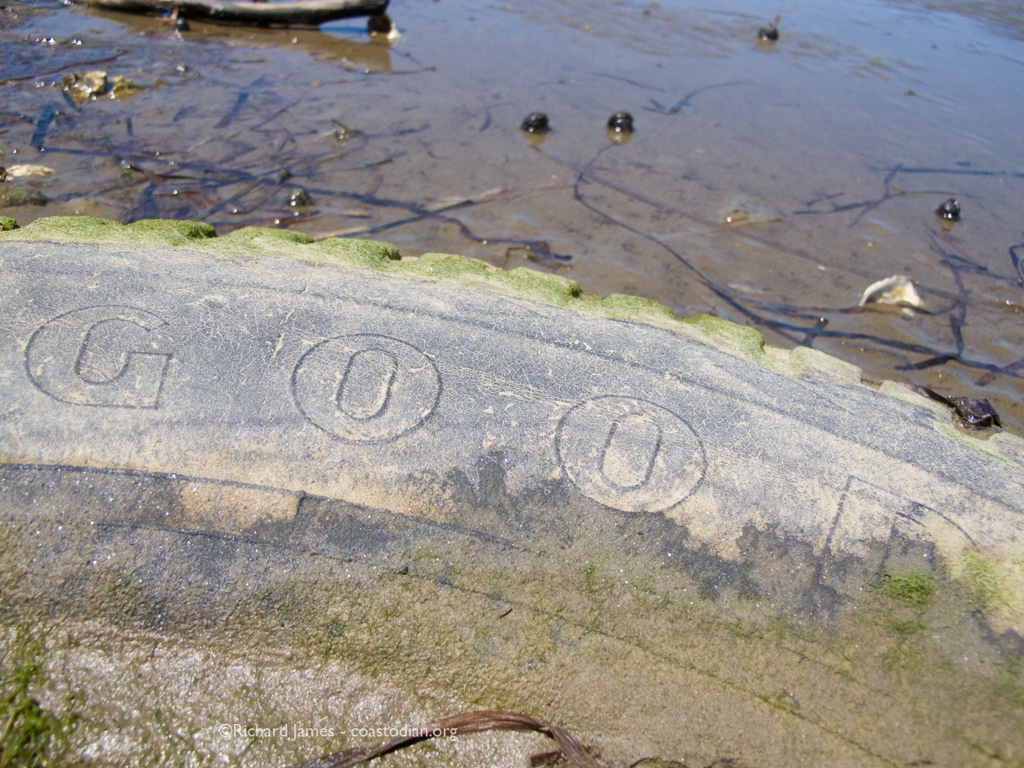
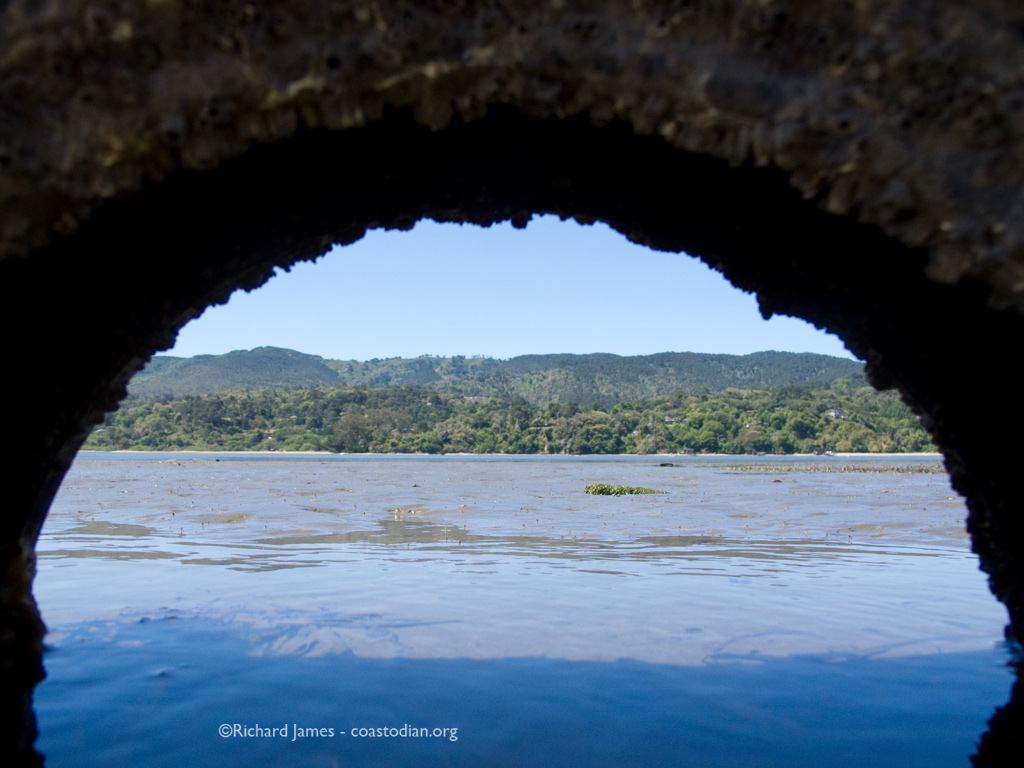
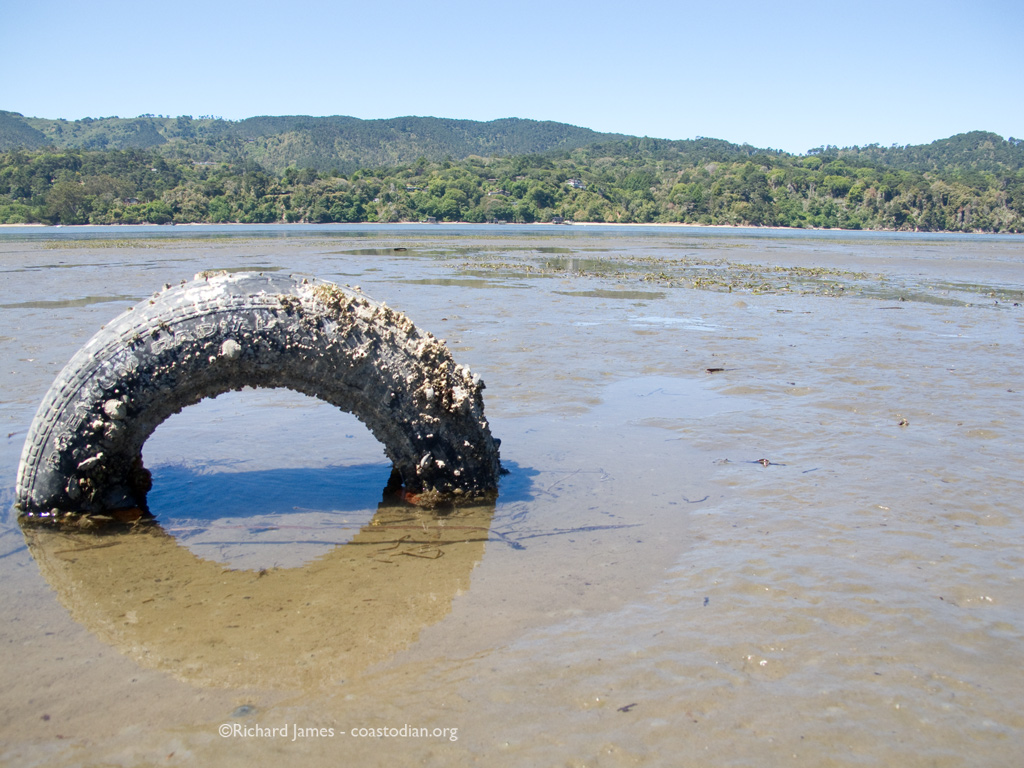
Last week I shared some images of my kayak adventure during which I recovered nine discarded tires from the muck of Tomales Bay.

Come see the meager progress I made in cleaning up the local environment.

Ayn Rand wrote of a dystopian society in her book, Atlas Shrugged. To me, the way we humans treat this place we call home is about as dystopian as it can get. ©2013 Richard James Photography - coastodian.org

Ayn Rand wrote of a dystopian society in her book, Atlas Shrugged.
To me, the way we humans treat this place we call home is about as dystopian as it can get.
©2013 Richard James Photography – coastodian.org

©2013 Richard James Photography - coastodian.org

©2013 Richard James Photography – coastodian.org

©2013 Richard James Photography - coastodian.org

©2013 Richard James Photography – coastodian.org

©2013 Richard James Photography - coastodian.org

©2013 Richard James Photography – coastodian.org

©2013 Richard James Photography - coastodian.org

©2013 Richard James Photography – coastodian.org

Anyone know what that green thing is? ©2013 Richard James Photography - coastodian.org

Anyone know what that green thing is?
©2013 Richard James Photography – coastodian.org

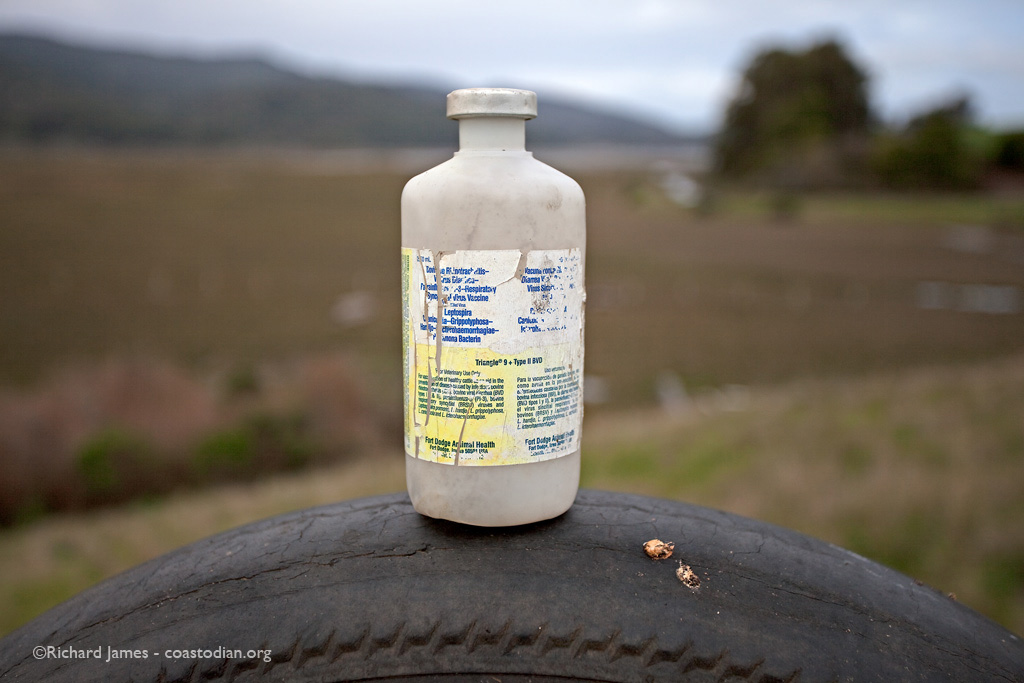
Veterinary drug container found in the wrack

Veterinary drug container found in the wrack

For Veterinary Use Only For vaccination of healthy cattle as an aid in the prevention of disease caused by infectious bovine rhinotracheitis (IBR), bovine viral diarrhea (BVD types I & II), parainfluenza-3 (PI-3), bovine respiratory syncytial (BRSV) viruses and Leptospira pomona, L. hardjo, L. grippotyphosa, L. canicola and L. icterohaemorrhagiae. This product contains BVD Types I and II.

For Veterinary Use Only
For vaccination of healthy cattle as an aid in the prevention of disease caused by infectious bovine rhinotracheitis (IBR), bovine viral diarrhea (BVD types I & II), parainfluenza-3 (PI-3), bovine respiratory syncytial (BRSV) viruses and Leptospira pomona, L. hardjo, L. grippotyphosa, L. canicola and L. icterohaemorrhagiae. This product contains BVD Types I and II.

Triangle 9 gives the local seafood that “je ne sais quoi

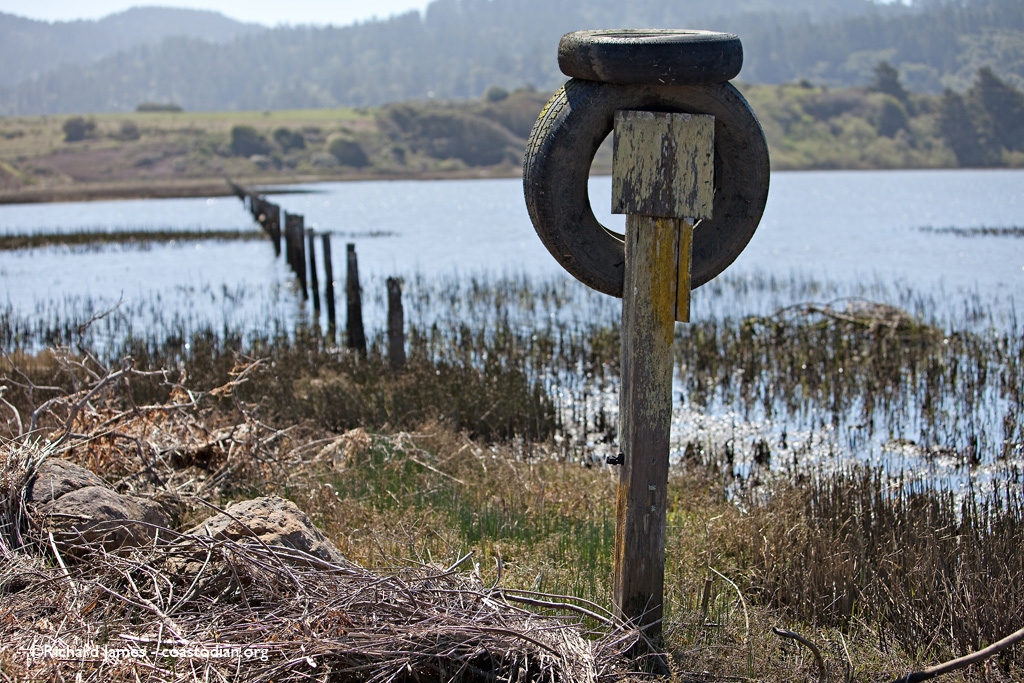
Nine nasty tires hung upon a fence. ©2013 Richard James Photography - coastodian.org

Nine nasty tires hung upon a fence.
©2013 Richard James Photography – coastodian.org

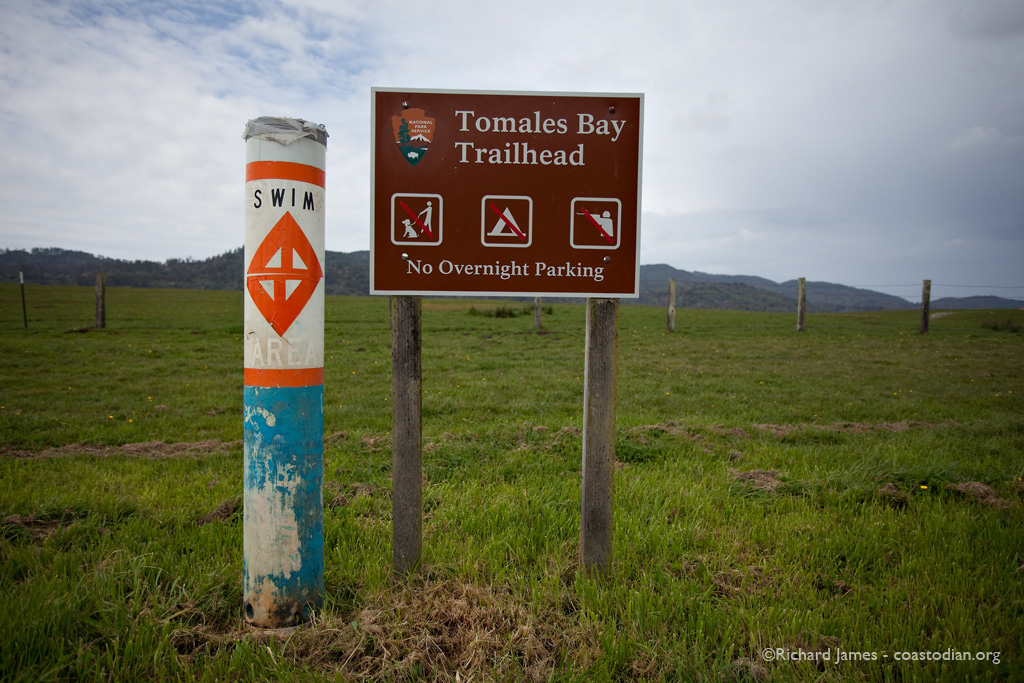
With the rise of the sea that is expected, this may be a fine home for this marker buoy. ©2013 Richard James Photography - coastodian.org

With the rise of the sea that is expected, this may be a fine home for this marker buoy.
©2013 Richard James Photography – coastodian.org

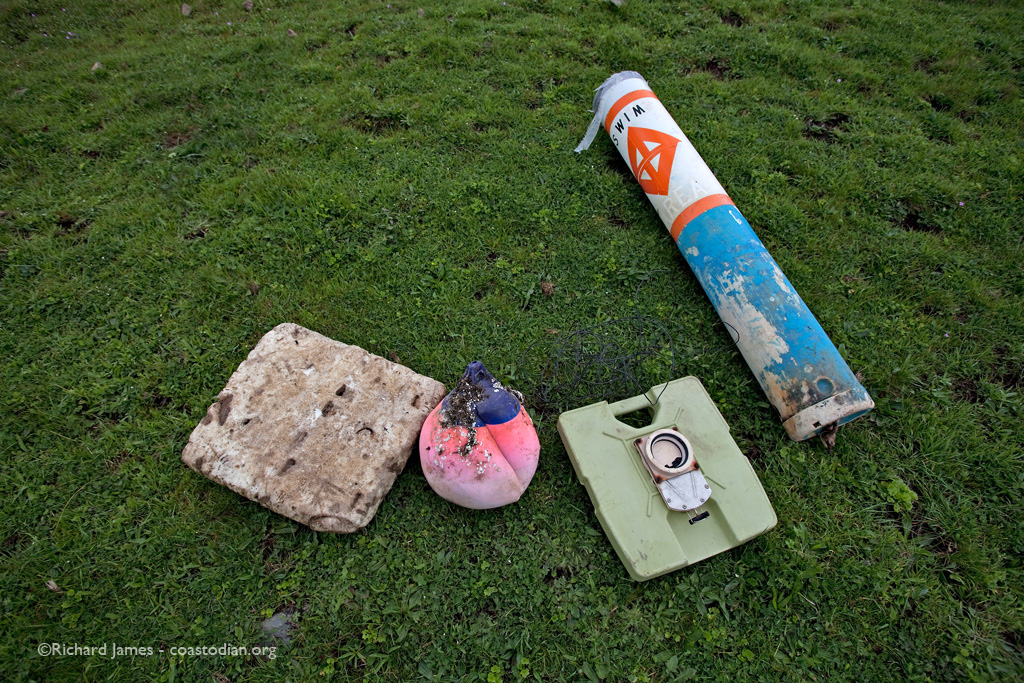
Anyone know where this buoy belongs? Let me know and I’ll drop it off so it can be replaced.

Anyone want to help pack these tires out next weekend?

The cows in this pasture are some of the friendliest I have ever had the pleasure to walk near.

Tired & broken

Click on the title of this post to read it and see a related header image.

The weather today was fine for a paddle on Tomales. Provided one got on the water in time to use the tide and beat the wind.

I did some of the former and little of the latter.

A late start also means the light is gone, unless there is a heavy cloud layer which there was not.

So I headed east to an area I had not walked before in search of human trash.

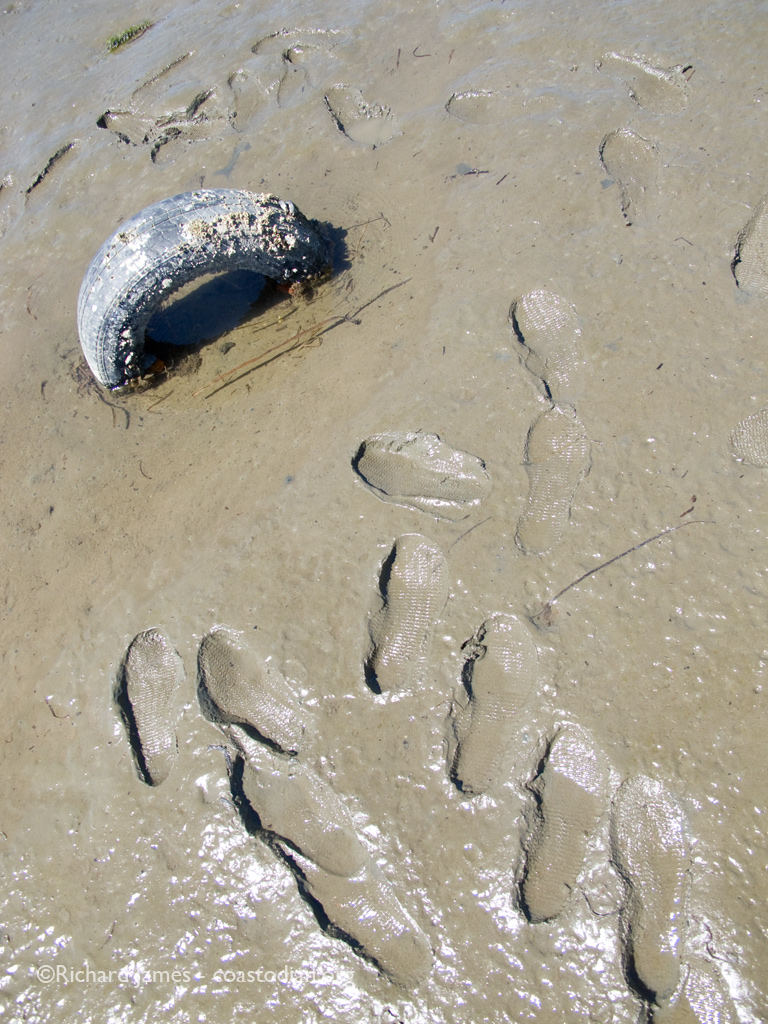
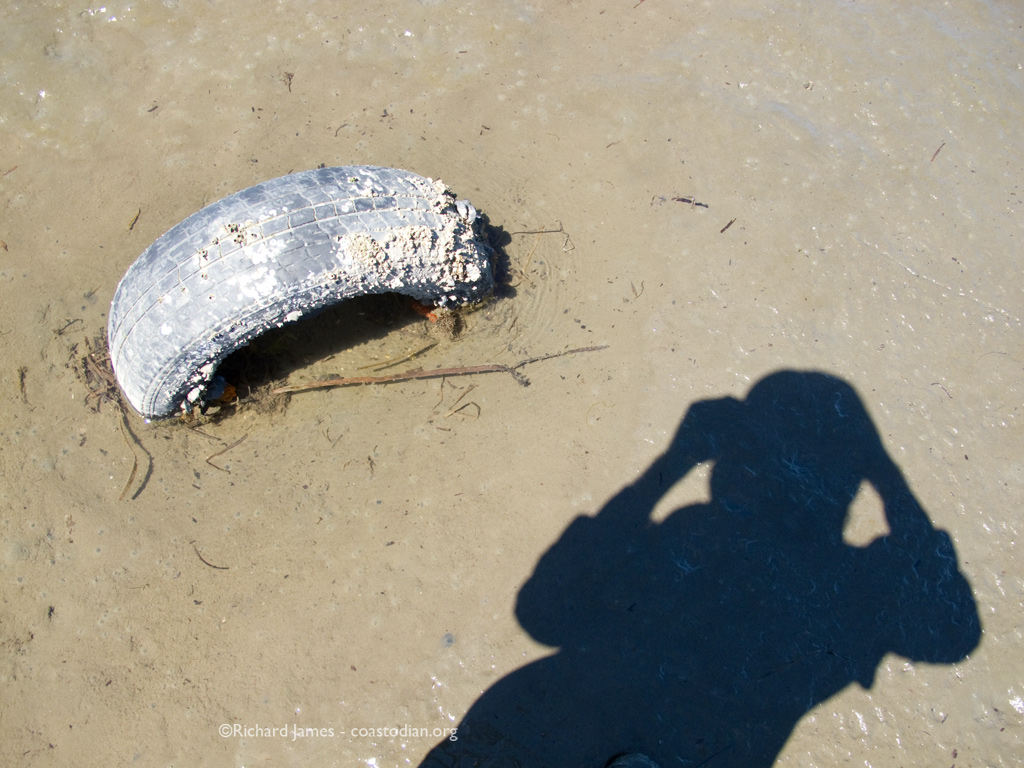
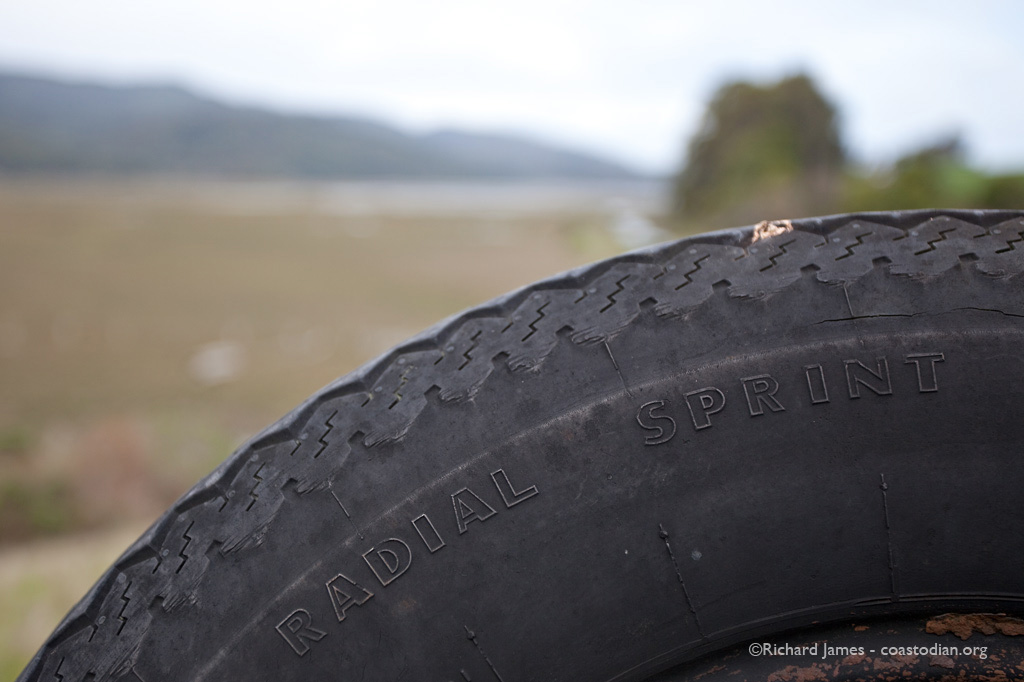
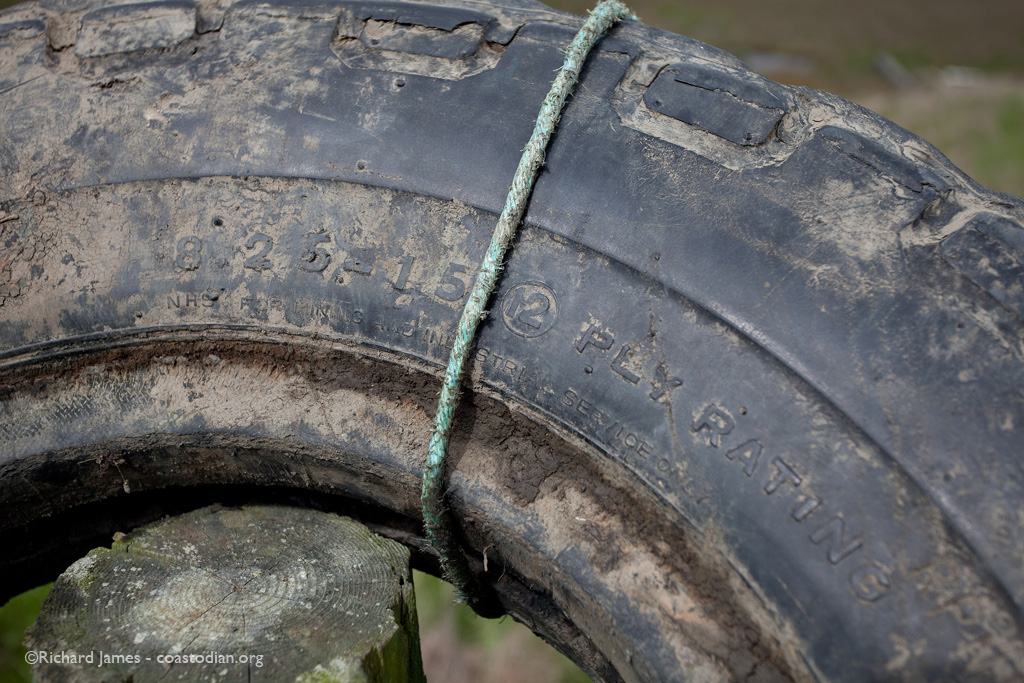
The usual suspects were in great abundance – plastic bottles, glass bottles, tennis balls, food wrappers, shotgun shell wads and tires. Nine of them.

I pulled three of them out of the deep dark muck that is the bottom of parts of the bay. Sinking up to my knees at times, I quickly became covered in dark, black, smelly mud. With my hands and most of the rest of me covered in mud, there are not many pictures from today.

Two of the tires adorn an old post as you see in the photo below.

IMG_3546.cc.cw

One was too heavy with mud to haul very far, so I pulled it up as high above the highest wrack for future efforts. Another still on the rim got the same treatment. Five others adorn a newer fence up closer to the highway.

Oh, the broken in the title of this post refers to my side-view mirror.

As I pulled my kayak off my car at the end of the day, it slipped and slid to the ground, shearing off the mirror as it went.

No good deed goes unpunished some say.

Maybe I will get a little better gas mileage without that appendage hanging off the side.

Views of Tomales Bay, bobcat butt and tennis balls

Click on the title of this post to read it and see a related header image.

After the sad event of the first day of the year, I took my boat up to Nick’s Cove and went for a paddle.

As I walked around picking up trash on a tiny Tomales Point beach, I turned a corner and found myself 20 feet from a small bobcat with it’s back to me, tearing apart a hawk it had just killed. Another hawk on the ground nearby lifted off, leaving me with the wind and a hungry cat that did not know I was near. I dropped down and began quickly to pull my camera from its’ bag. Not quickly enough. The cat turned and proceeded to stare right through me.

For a moment I thought it was going to come after me. Its’ eyes were fixed on me. Each with a dark black iris, ringed by bright yellow. Two black moons transiting two bright suns. A pair of solar eclipses. Both locked on me as it stood over the kill, feathers pasted to its’ chin and face. It seemed to wonder for a brief moment if I were prey or predator. I wondered, too.

All the while, I kept sliding my camera up and out as I asked in my mind for it to hang around for picture or two.

It was having none of this. Dropping its’ head, it grabbed the bird in sharp teeth, gave me one last icy stare and quickly turned to slide up the steep brush covered hill.

Upon walking a few hundred meters north, plucking plastic off the beach, I found three other large piles of feathers. I now call this beach, Bobcat buffet beach.

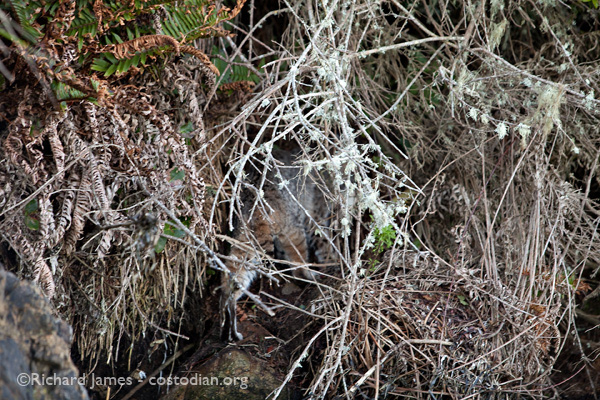
Bobcat butt

Bobcat butt

Kayak loaded with plastic

Kayak loaded with plastic

Kayak loaded with plastic

Kayak loaded with plastic

Marbled godwit near Walker Creek

Marbled godwit near Walker Creek

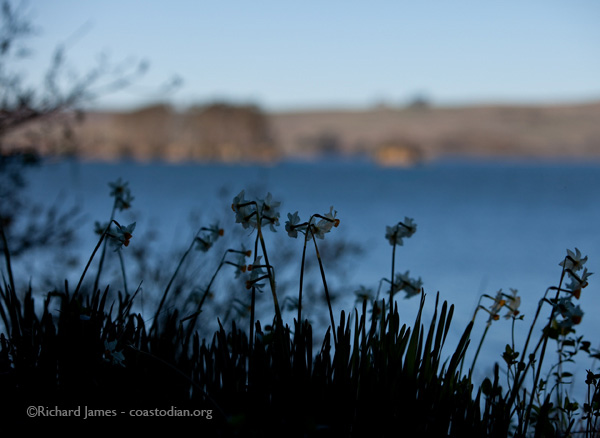
Hog Island behind  narcissus

Hog Island behind narcissus

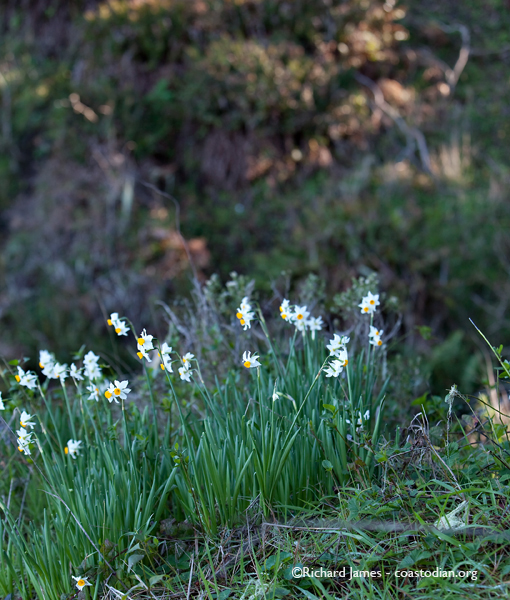
Narcissus covering a hillside on Tomales Point. In January!

Narcissus covering a hillside on Tomales Point. In January!

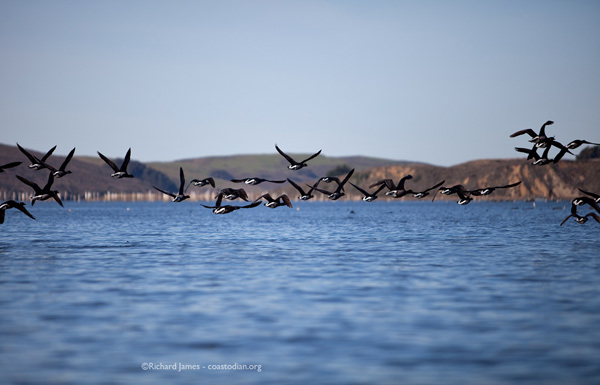
Brant on the wing, Tomales Bay

Brant on the wing, Tomales Bay

Here are some images from a different paddle from Chicken Ranch nearly to Point Reyes itself during a high tide.

Great egret

Great egret

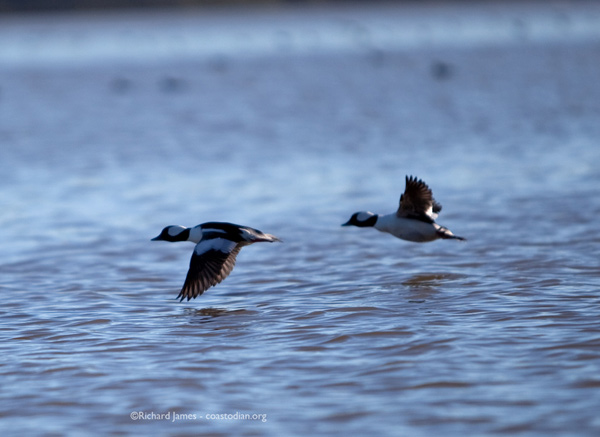
Bufflehead

Bufflehead

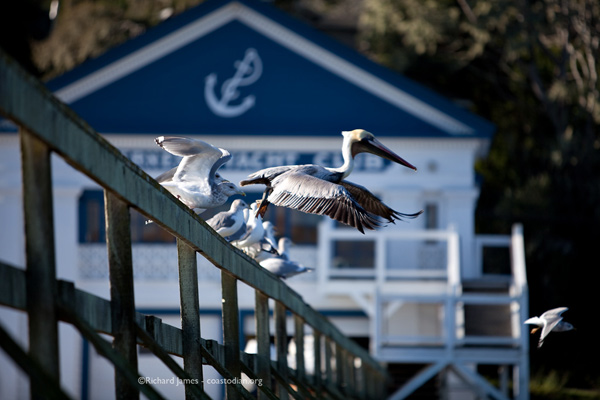
Brown pelican and some gulls at the club

Brown pelican and some gulls at the club

Lone pintail

Lone pintail

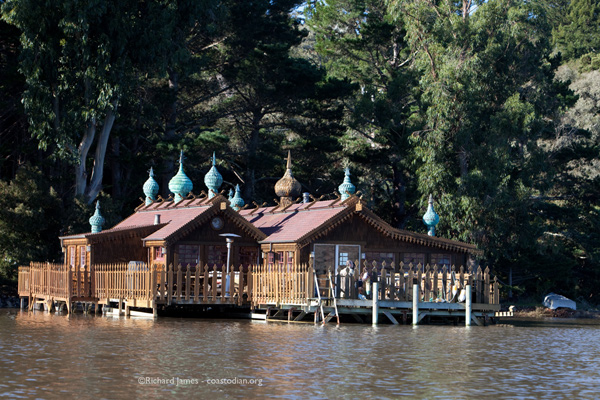
The dacha

The dacha

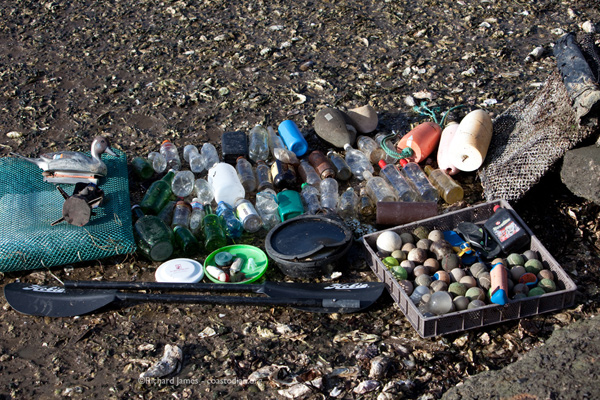
One days' haul. There was much more, this was all that would fit on my tiny kayak. That is my new spare paddle, with my new pet decoy pintail behind it.

One days’ haul. There was much more, this was all that would fit on my tiny kayak. That is my new spare paddle.

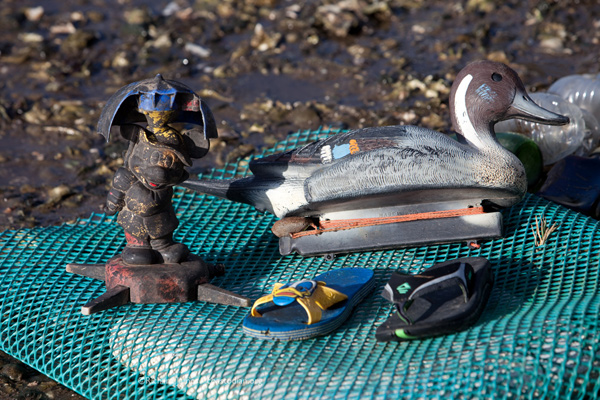
Mickey Mouse lawn sprinkler, pintail and two sandals atop oyster grow-out bag. I thought I had snuck up on the bird so I made a picture. Only when I had a look on my camera did I realize I'd been duped. Not the first time.

Mickey Mouse lawn sprinkler, pintail and two sandals atop oyster grow-out bag. I thought I had snuck up on a live bird so I made a picture. Only when I had a look on my camera did I realize I’d been duped. Not the first time.

Nearly fifty tennis balls and only one shotgun shell found. Maybe it is not the duck hunters we need to worry about. Rather, those renegade tennis players. I traded that new quart of 20-50 for a dozen kumamotos. Yum!

Nearly fifty tennis balls and only one shotgun shell found. Maybe it is not the duck hunters we need to worry about. Rather, those renegade tennis players. I traded that new quart of 20-50 motor oil for a dozen kumamotos. Yum!

Speaking of tennis balls, I picked out the best tennis balls from the pile I have gathered over the past 3 years and brought 500 to the humane society of Novato for their guests. That’s right, 500. I likely have another 300-400 in poor shape. They were very happy to get them and assured me they would not let them get into a creek, nor the ocean. After telling them of the large number of irresponsible, sometimes very hostile dog owners that run their dogs off leash at Point Reyes, especially in endangered Snowy Plover habitat, they also assured me that they teach responsible dog ownership at the humane society.

I am told there are about two thousand snowy plovers left along the Pacific coast, perhaps five thousand world-wide. Five thousand! According to the humane society web site, there are approximately 78.2 million owned dogs in the United States. The beaches of Point Reyes are one of the few places where Snowy Plovers attempt to breed and keep their numbers from reaching zero.

Unconditional love. Isn’t that a big reason why humans “own” a pet? Coming home to a face happy to see you no matter what. Who can argue with that? Well, think of all the love and appreciation of those plovers, humans and other species that come after us for keeping one more species from becoming extinct. Ceasing to exist.

I am well aware that not a single dog in the West Marin area chases birds. Their owners have told me so, again and again. But, when people from out of the area bring their pets here and see the locals running their well-behaved dogs off-leash, guess what? That’s right, lots of paws and noses scurrying over the sand. The same sand that is home to precious few endangered plover nests for a few months each year. Nests so tiny and well hidden, neither you nor your dog would know you just stepped on it.

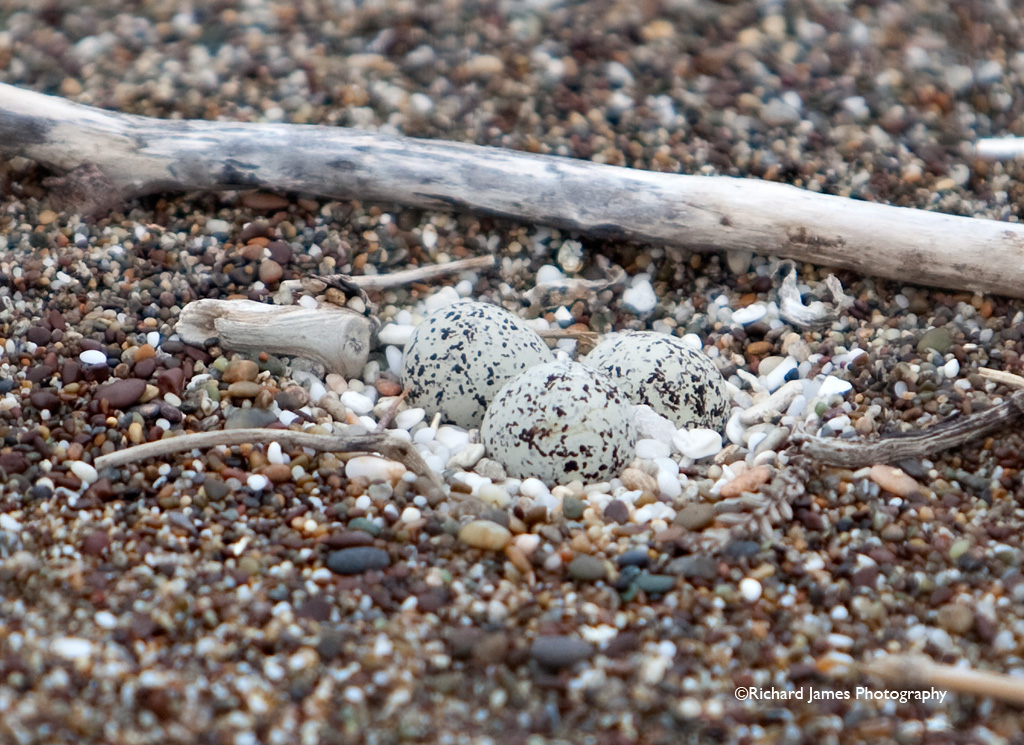
Three Western Snowy Plover eggs in a scrape (nest)

Three Western Snowy Plover eggs in a scrape (nest)

Many, if not all of us out here are here for the beauty of the place. Please try to enjoy that beauty in a non-destructive way that all of us, humans, as well as non-domesticated critters included can live with.

A link to the rules regarding pets at Point Reyes National Seashore can be found here.
I am off to go visit my five pet white sharks now. They prefer to live in the sea, off-leash. We have a long-distance relationship that is working so far. I love them out there, knowing they are being sharks. And they love me here on land, trying to not destroy the place quite so quickly as many humans seem hell-bent on doing.