Peregrine vs. peeps, etched in my memory forever

Click on the title of this post to read it and see a related header image.

Having previously hidden in the bushes a rather heavy and valuable item I dug out of the sand, a quick visit to Drakes was in order. Little did I know, in addition to recovering my treasure, I’d see another amazing moment involving birds in their natural environment, this was a top ten event for life. Maybe top fifteen.

Hustling down Drakes Beach, it was mostly as I’d left it two days prior, though now I was picking up many items I had skipped before. There is just too much trash on the beach for one person.

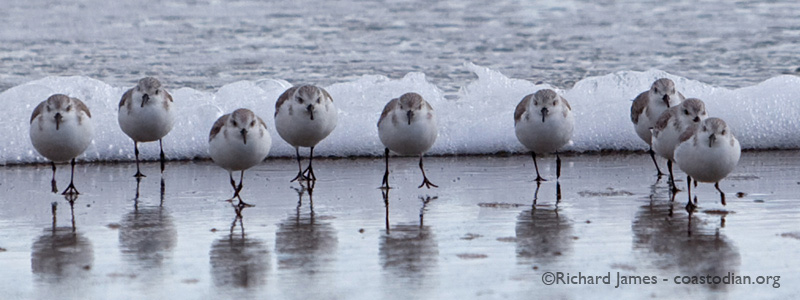
Two hundred meters into my journey I noticed a large flock of sanderlings and maybe a few western sandpipers were probing for invertebrates near the water. Two or three hundred birds scattered across fifty meters of shore, all pecking and moving, looking for food as the water lapped at the hard-packed fine sand. Suddenly, from the west the birds started to lift straight up. Though not the usual dance, where those at the back of a bunch fly over to become the birds at the front of the bunch, to get first tracks on new ground. This was a more chaotic movement, they were all moving in different directions, quickly.

For a moment I wondered why, then I saw it, dropping out of the sky from maybe a hundred feet up. Sharp, stout, pointed wings. Black mark through each eye. Wow I thought! A peregrine is making a high speed run through this flock of snacks. Many times I had found the remnants of one of these events on the beach. A pile of feathers. Once, while out with the Point Reyes plover person, we saw a peregrine sitting on a log, snacking on a recent kill. As we walked closer, it flew off with the body of a small bird clutched in its’ talons. We walked over to the log it had been on to find bright red blood dripping down the log and an even brighter red heart the size of a chick-pea, still glistening, having just been torn from the chest of this tiny shorebird. What A shame to leave the heart I thought. My grandmother always savored the heart, liver and kidneys from any deer that had been killed.

The falcon dropped fast, exchanging altitude for speed. As the peeps rose up and tried to steer clear, the falcon, now going 50-60 mph was 3 feet off the beach and looking to make contact. Again and again it dropped one wing, then the other, turning left and right. Instead of colliding, and killing, it was more like a slalom skier, passing gates, never catching a tip, always a fraction of an inch from striking.

Shorebirds continued to lift and scatter down the line from west to east as fans would raise arms in a wave at a football stadium. Wanting so to see skier impact a gate followed by an explosion of feathers, I was disappointed, but only a tiny bit as the falcon passed the end of the line of gates. A perfect ski run. A big fat zero in the dinner department. Over in 3 seconds. It flapped 5 or 6 times and shot back up into the sky.

The sanderlings and others headed out to sea. The falcon pulled a tight turn and flew back over me looking for stragglers, finding none it flapped off into the setting sun.

I must have said wow twenty times, replaying what I’d just witnessed as I walked another three hundred meters to see if my treasure was where I’d left it.

Northern Fulmar redux

Click on the title of this post to read it and see a related header image.

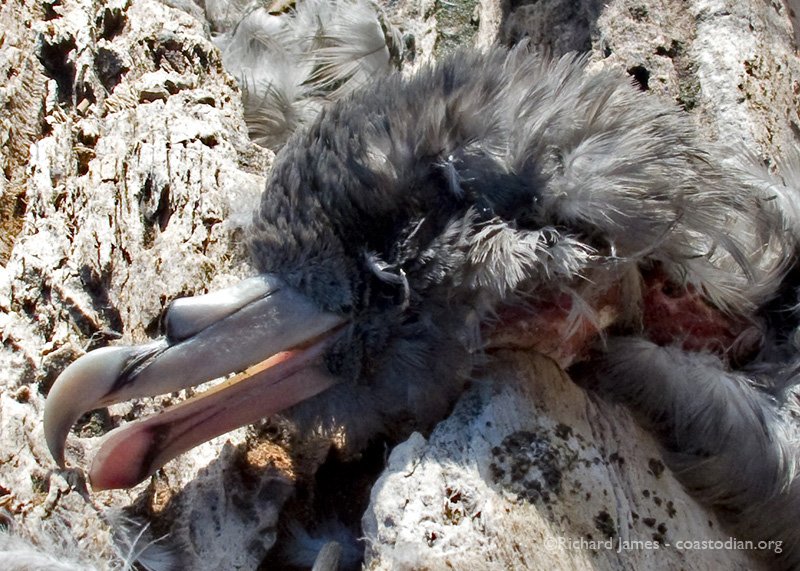
When alive and living on the open sea as pelagic birds do, this fulmar, a member of the order Procellariiformes, drank salt water then ejected the salt from the extra feature atop its’ bill. These birds are known as tube noses.

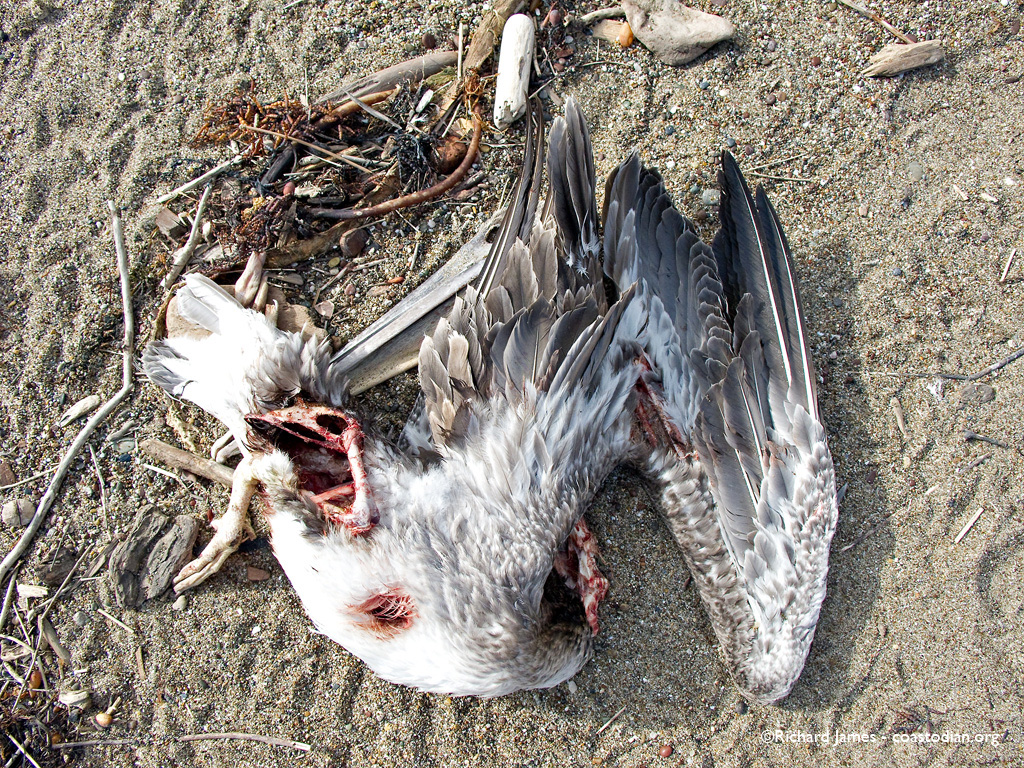
Now that it has died, the flesh that once flexed wings is in the belly of a turkey vutlure most likely.

This fulmar flies on and on.

Bad day to be a northern fulmar

Click on the title of this post to read it and see a related header image.

Since the high litter season is upon us, I am out on Drakes gathering the man-made debris washing in with the strong southern winds of late.

Near to where the northern fur seal found me just over a week ago (turns out it is a female and very feisty as well as still alive), I came around a corner just as a juvenile red-tailed hawk lifted off the sand with an injured, but still very alive northern fulmar. It was slowly climbing and headed straight towards me with the struggling pelagic payload in its’ talons.

I dropped down to the ground to cut a smaller profile as I watched the hawk flapping and flapping, yet gaining altitude like an overloaded Bonanza at noon in august at Truckee. That is, it had a positive rate of climb, barely.

The fulmar was flapping and struggling under the hawk which probably did not help matters much.

As the pair was about to be overhead and about 70-80 feet up, the hawk jettisoned the fulmar and floated upwards with ease. The fulmar dropped like, well, a rock. SPLATT! Onto the hard sand with about 1 inch of water. The dazed bird looked around, not sure if this was better than being pierced by talons and flown away to be eaten.

I sat crouching for a couple minutes to see if the hawk planned to return and try again. It did circle us a few times but eventually flew off to find a smaller bird.

After walking east a few hundred meters and picking up oyster spacer tubes and tampon applicators by the dozens, I turned around and found the floundering fulmar being swept back and forth in a slowly rising tide. I dropped my bags of plastic and went over to see if I could move it to a less hectic place. Even after all it had been through, this bird was very capable of defending itself. I barely was able to grasp its’ wings and keep my hands away from the sharp end trying to peck me. I carried it up to where a pile of logs had been pushed up against the wall and laid it in a protected spot in which to die without the tide and raptors interrupting.

I wonder what that crab fisherman was expecting to attract with a bait bag full of tampon applicators?

Squid egg masses

I learned today from the folks at The California Academy of Science that these egg masses are likely from the Common Market Squid (Doryteuthis opalescens)

You can learn a bit more about it here.

Squid egg masses

Squid egg masses

Still tired of all the man-made debris washing up.

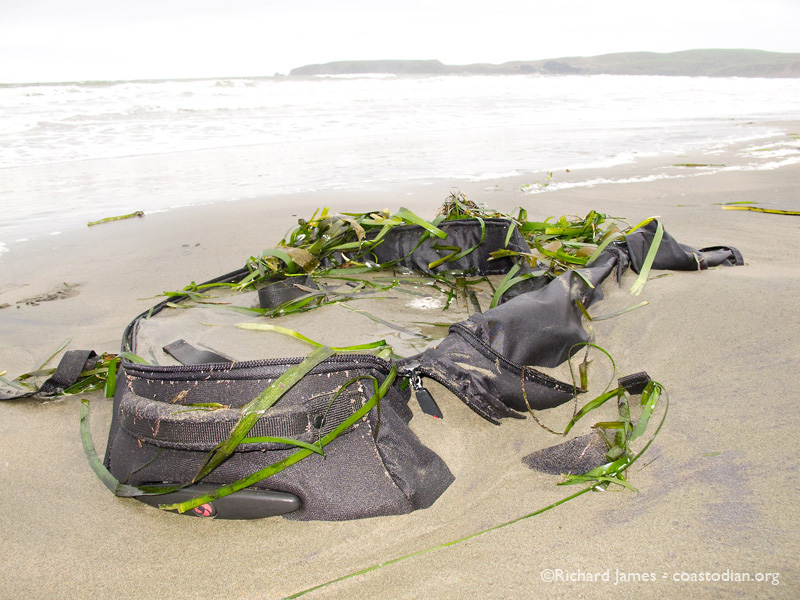
Did they pack all that sand and eel grass? Was Drakes Beach their final destination?

Marc from France – A photographer touring California for the first time. He has two small children back home and was happy to find a frisbee for them. I gave him the football I had just found for his 9 year old son Isaac. Marc was in love with the light and the Point Reyes area. I offered some travel tips for his next 12 days.

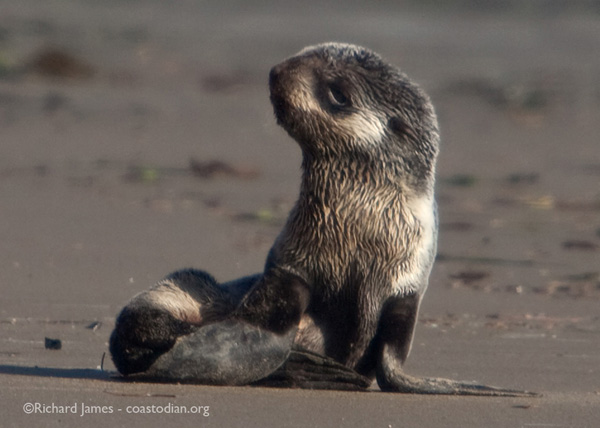
Not made of plastic and alive for once – Northern Fur Seal pup

Click on the title of this post to read it and see a related header image.

13 Dec 7:40pm – I just got word that the fur seal known as Sparkle has died. She was just too small and undernourished to make it.

I just read that the sex of the seal has been determined, female.

NOTE: I was at an art opening at The Marine Mammal Center tonight (29 Nov) and learned a little more about this fur seal. It weighed a diminutive 4.5 Kg, the tiniest of the 7 fur seals they have presently. In addition to being severely underweight (below birth-weight), it is also very dehydrated and likely has pneumonia. There is a good chance it will not survive.

Big storms are happening in California which means litter season has begun.

I went out to walk along Drakes Beach this afternoon to see what the strong southerly winds had pushed ashore.

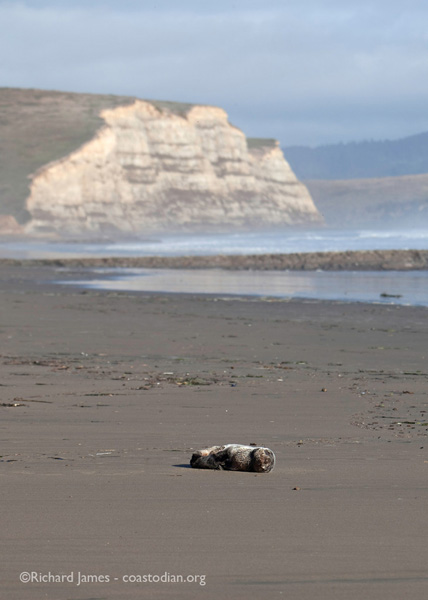
While walking back to the car, this little one hauled out right in front of me.

Emaciated Northern Fur Seal pup (Callorhinus ursinus)

As tired and emaciated as it was, I surely looked too much like a predator, so back in to the roiling surf it went.

I kept walking back to the car and watched as it hauled out again and scooched back in the surf again and again and again.

Quickening my pace so it might haul out behind me and feel safe enough to stay, I stepped over kelp, logs and foam, careful not to trip. Thankfully it did haul out again and headed for high ground.

I only had a point and shoot camera, so I stayed a good distance away and watched as it shivered and groomed. It was exhausted and I imagined happy to be out of the pounding surf.

Over the past few years I have packed out the dessicated bodies of two dead Northern Fur Seal pups (and one Guadalupe Fur Seal). This was the first live specimen I had ever seen. I really wanted good images, but my main camera was an hour away.

NOTE: I am on the collecting permit of the California Academy of Science. Because of this, I periodically recover birds or marine mammals deemed of interest to the Cal Academy. Please do not remove animals from the beach, ever. If you see a live or dead seal, note the location (GPS waypoint is best), size, species if you know it, condition and call the dead animal hotline at Cal Academy (415-379-5381) if the animal is dead. If it is alive, call the Marine Mammal Center stranded animal line at (415-289-7325). Never pick-up a pup that is alone. It is likely the mother is away feeding.

Scooping up the piles of plastic I had cached on my walk out, I hurried back to the car for the drive back to get my long lens and fast camera.

An hour later I was back with 400mm of lens and tripod to allow me enough distance so as not to worry the animal as I ogled with my binocs and clicked the shutter. It had moved out into the center of the beach, perhaps the falling rocks from the cliff above made it think twice about being so close to the cliff. The dropping tide created a vast, flat and mostly dry place to curl up.

As I maneuvered and fiddled with my tripod, microphone and other equipment and shot images, others took an interest in this furry bundle of protein sleeping on the beach. A vulture floated by and peered down. A raven swooped overhead and lit on the cliff over us, wondering if this morsel was ready to consume. A very large gull sauntered up quite close, I thought I might be able to record an interesting exchange as they got to know one another. But the gull looked at me and backed off. It did not know that I eschew gull.

Not the best image, but it does show nicely how to distinguish a Northern from a Guadalupe fur seal. The fur on the fore-flipper of a NFS stops far from the tip, as you see here. The fur on a Guadalupe continues down about half way to the end and has a less straight line where it ends, more ragged.

After an hour or so of watching and clicking, I packed up and headed back home.

On the way back, a few phone calls later, after they concluded that I did indeed know the difference between a California sea lion and a fur seal, a person from The Marine Mammal Center was on his way out to recover it.
He was going to arrive after dark and his flashlight was not working. I offered to come along and show him where it was and I had several bright lights. He was happy to have me join him.

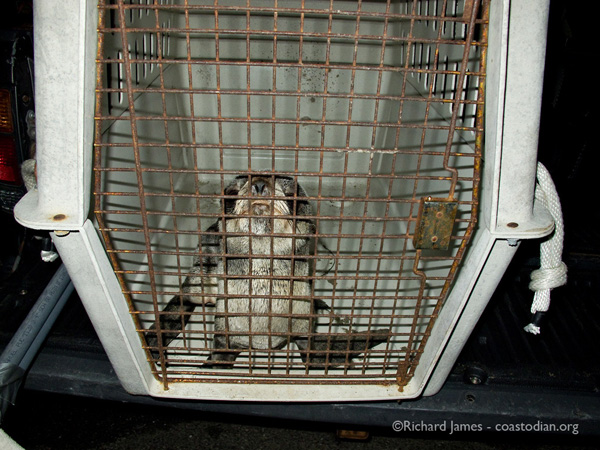
After parking, we carried a small dog carrier with us as I lit the way on our walk to where the seal was last seen. We were on it much sooner that expected as it had moved a 100 meters or so. We dropped the carrier and Doug set off towards the rapidly fleeing seal. Up close it it was even smaller than it appeared while I photographed it.

Doug estimated it to weigh about 5 kilograms and to be about 2 months old. It was clearly emaciated, though still rather feisty.
Into the carrier it went and we carried it back to the truck.

Sparkle, as this seal has been dubbed is likely just arriving at The Marine Mammal Center as I type this. It will immediately be fed via a tube the equivalent of Pedialyte to rehydrate it. Tomorrow it will be looked over by a veterinarian. Go here to see a list of all the animals currently being cared for at the Marine Mammal Center

If it recovers enough weight and is otherwise healthy, it will eventually be released to hopefully live a long and productive life.

Here is a a 3 minute video of my visit today with a Northern Fur Seal. My apologies for the intrusive banner across the bottom. I hope to at least be recognized as the person producing the images and videos when they show up all over the internet and in classrooms.

Humans are hard on the planet, but we can learn how to be less so, if we care to.

In the post below this one, “Fishing is hard on the sea …” I shared images of trash I packed off my local beaches from one storm.

I need to expand a bit on what I wrote. The items you saw in those images are mistaken for food and eaten by hundreds of thousands of birds all over our planet each day. Some of these birds fly thousands of miles to gather food for their offspring. After being fed a belly full of plastic, they die.

Look at this image showing oyster farming detritus:

NOT albatross food

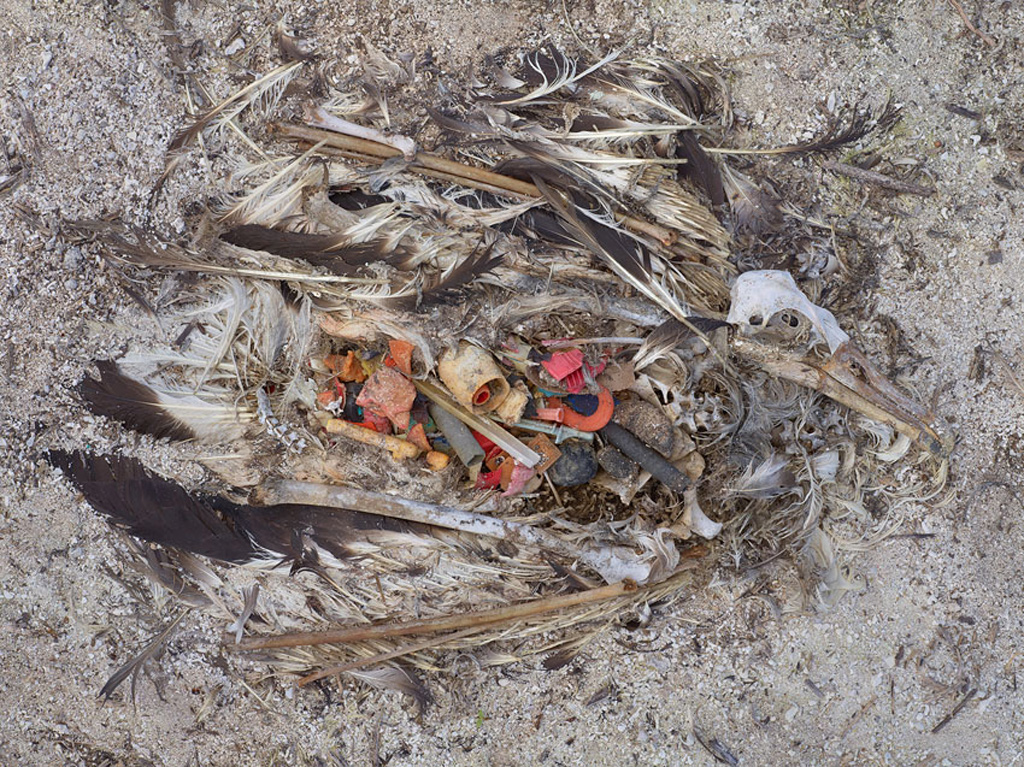
Now look at this image by Chris Jordan of a dead albatross on the Midway Atoll:

Dead Albatross by Chris Jordan – See the oyster spacer tube in there!

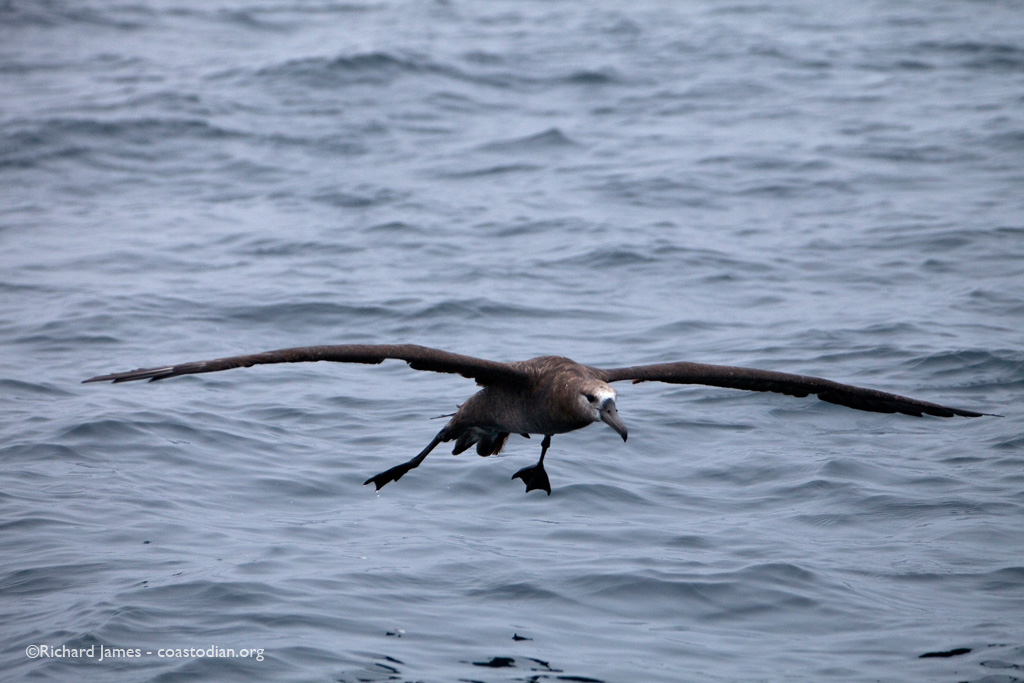
Here is a live albatross for comparison:

See all the disposable lighters in this image:

Disposable, hmmmm……where do they go?

And again, a dead albatross by Chris Jordan:

Dead Albatross by Chris Jordan – where disposable lighters end up.

More human waste from Point Reyes beaches:

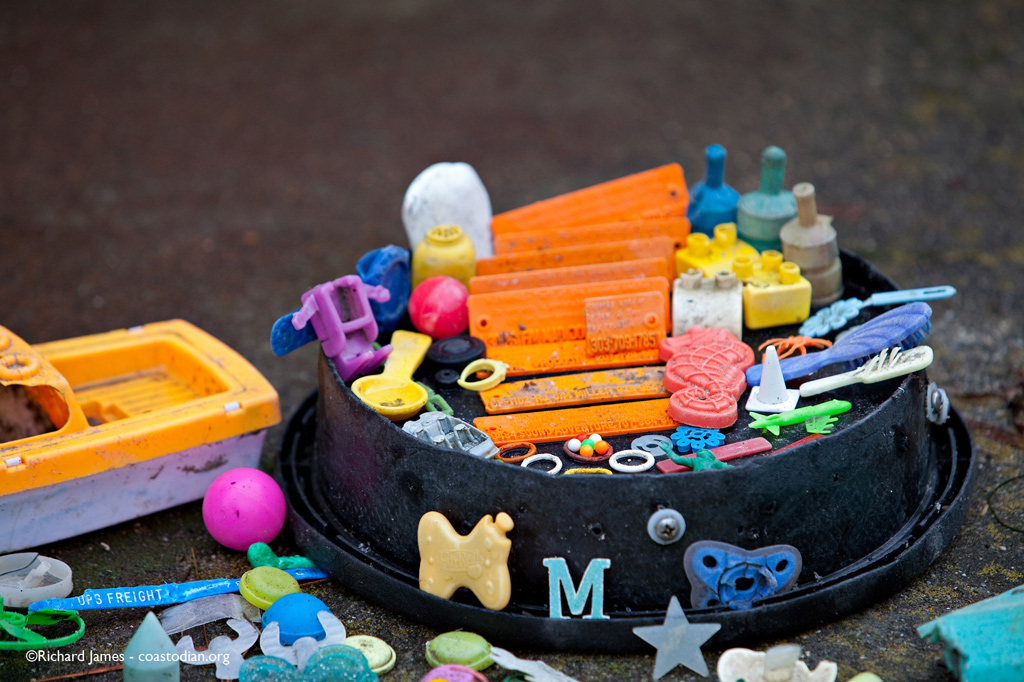
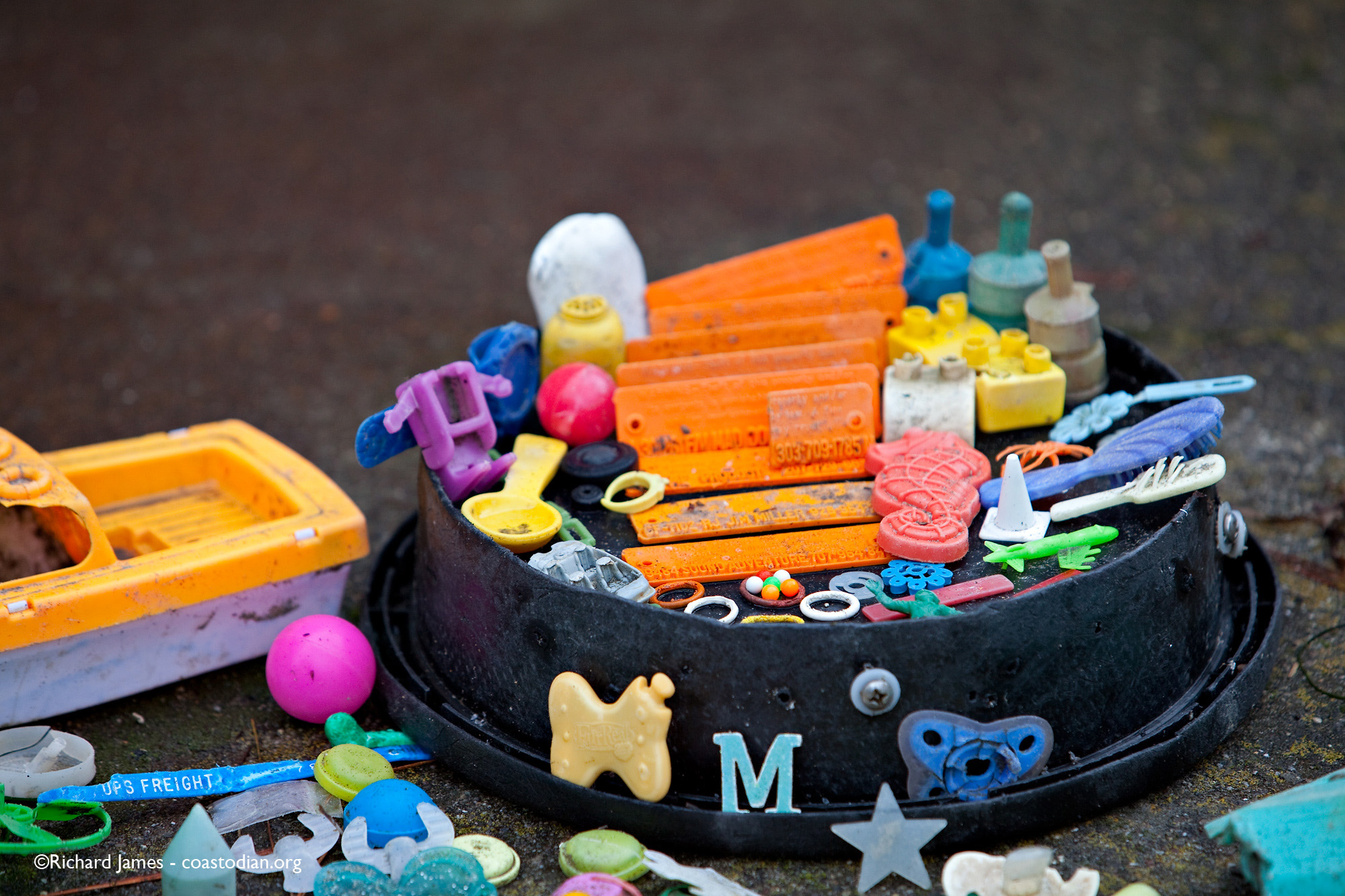
Discarded toys – NOT albatross food!

Another dead bird from Midway courtesy Chris Jordan:

Dead Albatross by Chris Jordan

Chris has been documenting the deaths of thousands of birds on Midway for several years. A movie is coming soon. You can see more of his work here

There, I wanted to draw a line between what I pick up off the beach and the impact it has on our planet.

Can you think of how you might adjust your daily living patterns a little so that you generate less stuff that may end up killing some hapless bird trying to put some food on the table?

So what is a Park for anyway?

To me, it is a place where I go to be away from the internet, curmudgeons, war, pointless consumerism. I go to places like the back-country of Kings Canyon National Park and remote beaches of Point Reyes National Seashore to be soothed by a planet unspoiled by the contrivances of humans. I go to these places to remember what life is all about. I’ve been blessed to be able to see all that I have seen.

It is important to protect these special places and I am glad (mostly) that we have the park service to do so.

I’ve been packing about 1 ton of trash off the beaches of Point Reyes each year since late 2008. My knees remember each stoop to pick up another bottle cap, another plastic wrapper, each step back up the hill onto to the Pierce Point trail.

When I started this cleaning, I secured permission to deposit what I gather in the park dumpsters. I’ve learned more about dumpsters than I care to know. When I find that the South Beach dumpster is so rusted out, that items placed in it fall out the bottom and are blown back on the beach, an email/call or two, or three will usually get it replaced. The same for South Beach and Drakes Beach. Thank you Cicely.

Lately I’ve become frustrated with the park service. OK, I have been frustrated with them for quite some time now. For example, seeing that the fellow who services the bathrooms at the many beach parking lots tosses large cardboard boxes into the dumpster instead of recycling them bothers me. If I, a volunteer, can sort and recycle the items I pluck off the beach, the paid staff can surely recycle the tools of their trade. I have been fishing them out, crushing them and recycling them at my house for sometime now.

I’ve told a number of NPS people, hoping to get the paid staff to do the right thing. It took a while until a small recycling bin eventually showed up at one site for staff to use instead of the dumpster. Bravo. Now, to get them all to use it…

Though, after hearing that one supervisor, having learned of me pulling cardboard out of trash bins again and again, said to another employee “I’m going to super-glue a box in the bottom of the dumpster so he has to crawl inside to get it,” a light went off for me.

I no longer track my hundreds of hours and submit them so the park can receive money for their volunteer program.

This may seem trivial on its own. But the above example is only one of many instances (nor is it the most troubling) I saw firsthand of “do as we say, not as we do” within the NPS.

I may still gather human trash off the otherwise pristine beaches around here. But I’ll do it for me, selfish bastard that I am.

And for those that come after us.

Fishing is hard on the sea, living is hard on my heart

Click on the title of this post to read it and see a related header image.

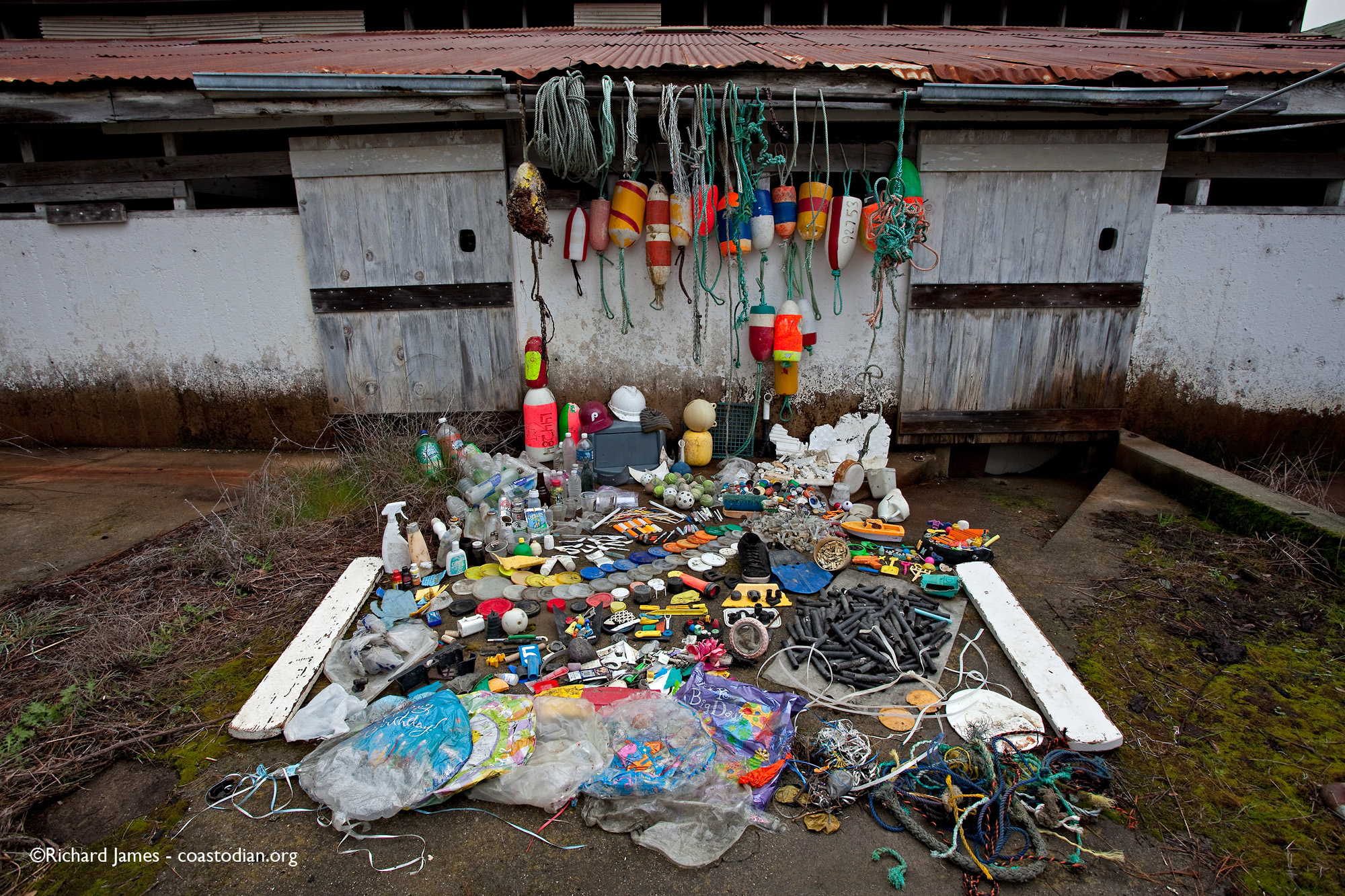
The debris shown in the images below was collected after the first big storm of 2012 in early February.

Over two days I spent 10 hours and covered about three miles of Drakes Beach and South Beach. Just imagine what all the beaches of Point Reyes were covered with from just one storm!

The plan was to have posted these images in February. Due to painful distractions, I am finally getting around to sharing what I hope you find are compelling images. That is, I hope they compel you to give some thought to all that happens in order to bring seafood to your table.

Tomorrow is the commercial crab opener of 2012. Thousands of crab pots have been dropped in the sea attached to miles and miles of petroleum based rope, foam floats and plastic bait jars. Much of this gear will be lost due to storm, propeller strike or other activities. While scraping and grinding along the bottom of the sea, or abrading on the beach sand, many thousands of pounds of plastic will be pulverized and deposited into the food chain.

Does society have any idea what is undertaken to put seafood on their table? The time, expense and effort of the fishermen, the vast amount of gear lost at sea each season, or stolen by unscrupulous crab fishermen? A local fishermen once told me, after sharing with me the many ways in which fishermen “do unto others” in not such golden ways, “Crab fishing makes ya crabby!”

Be sure to have a look at the last picture. There you will get a close look at about 75 oyster spacer tubes from Drakes Bay Oyster Company (DBOC) in the foreground. I have found well over 5000 of these in the last five years. From as far north as the tip of Tomales Point and south to Slide Ranch.

Click on image for bigger picture – Debris recovered over two days work, about ten hours effort

Click on image for bigger picture – Should the price of crab reflect the cost to the planet?

Click on image for bigger picture – Maybe some of this is yours?

Click on image for bigger picture

Click on image for bigger picture – Heroin, nicotine and caffeine….slower, faster, anywhere but here and now…

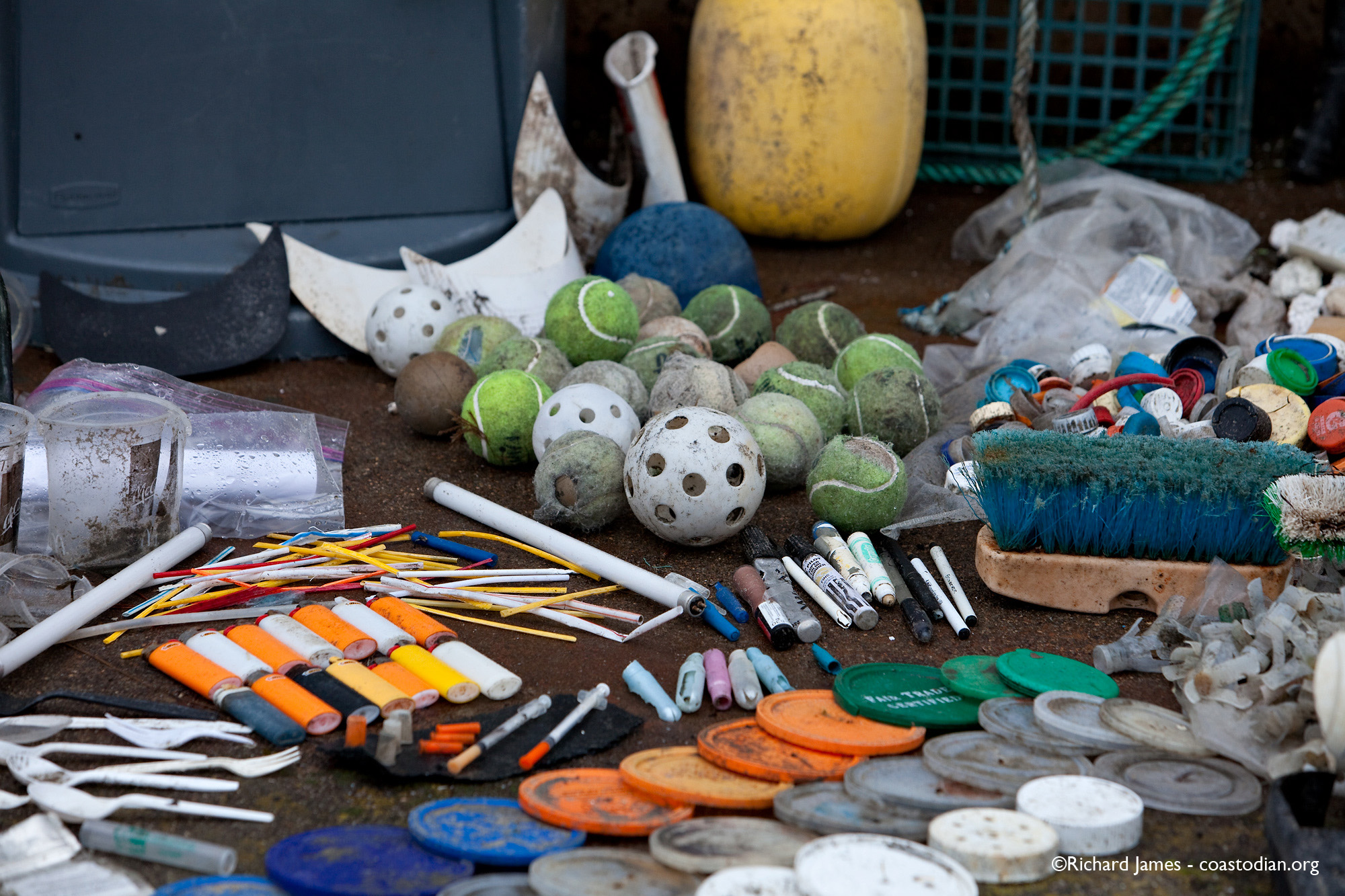
Click on image for bigger picture – If all dogs at the seashore are on leash….how come I find 100’s of tennis balls and ball tossers each year?

Click on image for bigger picture

Click on image for bigger picture – Each one of those orange tags represents about $200 in lost gear for a crab fisherman. What if they paid a deposit on each trap set? To offset the cost of picking up after all their gear that litters the ocean and beaches.

Click on image for bigger picture – Black PVC pipe oyster spacers used by Drakes Bay Oyster Company. You see 75 or so here. I have found over 5000 of these on Point Reyes beaches, as well as dozens oyster grow-out bags and the foam from inside grow-out bags.

All forms of commercial fishing take a huge toll on our planet.

Is it asking too much to set aside portions of the planet as areas we tread upon lightly, or tread upon not at all?

Many say we must do all we can to produce food locally, sustainably to feed the 7 billion humans on earth.

Others say we need to slow the growth of the human population, keep it more in line with the carrying capacity of earth.

This planet is fragile. Humans, only one of the many species on this blue sphere, have developed the means to do great good and great harm. As we ever more quickly modify our nest, it is less able to feed an ever growing population. Does this make sense? Does a growing family move into ever smaller and smaller housing?

I think The Dude said it best:

Tired of plastic on the beach

Click on the title of this post to read it and see a related header image.

A dozen or so tires wash up on the beaches each year at Point Reyes. Most of them on the rim which makes them very heavy. I usually move them up as high on the beach as I can in case someone more industrious than myself feels like packing them out. I’ve only packed out two that I can recall. The rest either washed back out, or someone came and got them.

There is a forty-eight inch diameter aircraft tire buried in the sand on Drakes Beach, sans rim. In case you feel inclined to go get it, park your car near the cafe, walk ~2 miles to the right(low tide a must), it is high on the beach. Bring a shovel or two.

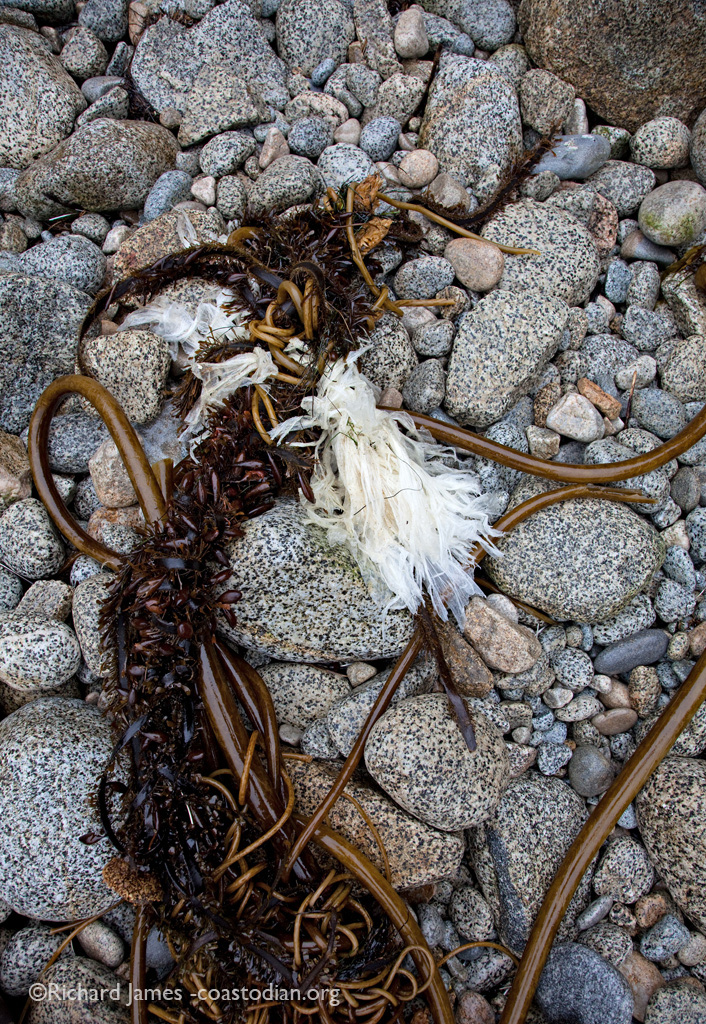
Shredded plastic wrap tangled in bull kelp and feather boa kelp

Bull kelp and feather boa kelp, minus the plastic

Tangled up and blue

Click on the title of this post to read it and see a related header image.

September, seductive winter light is coming on, beaches are covered deep in sand pushed ashore over the summer, making access easier. Not the high season for litter usually. Local fisherman have been plying the Marin coastline for months looking for crab, salmon, halibut and rockfish.

I can tell when they have been out. Beaches are covered in beer and soda cans, bait packaging, miles of plastic rope, hundreds of buoys and bait containers, snack wrappers and sometimes fishing poles or parts of boats. All blown or carelessly tossed overboard, then blown to shore. I pick it all up and pack it out on my back.

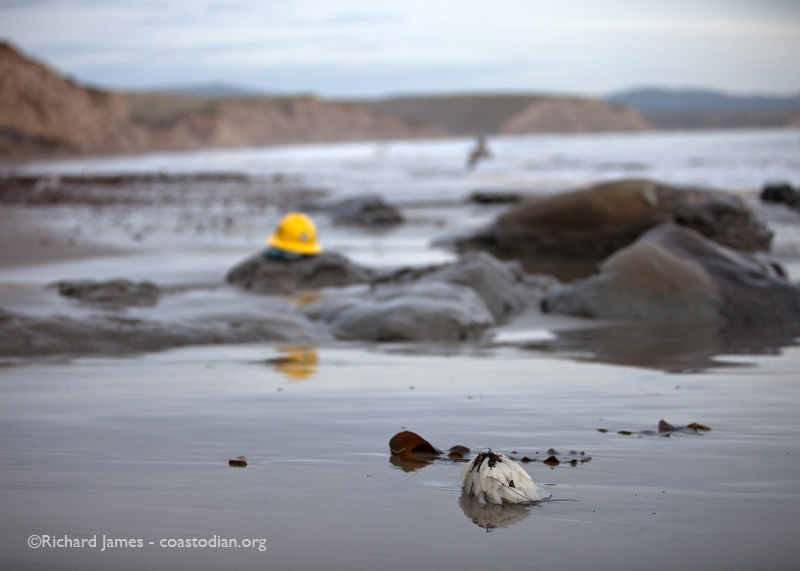
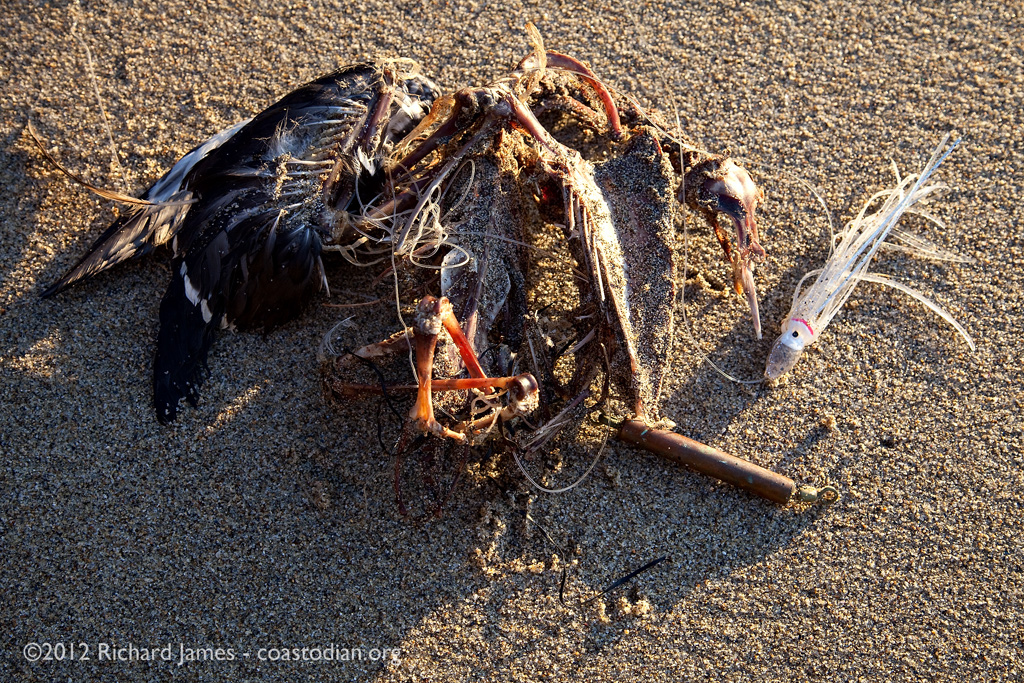
This evening a shiny flasher caught my eye in the wrack, I bent down to untangle it from the surf grass and other kelp. A long strand of mono-filament was threaded into the plants, a plastic hoochie, more line, a copper spring of some sort. Then I spied the scavenged body of a seabird, a murre or guillemot with a large nest of the mono-filament tangled around what was left of the wings and sternum.

NOTE: According to a bird expert I know, the bird is a common murre.

Had the bird seen a fish on the hook, swallowed it and died? Or had it surfaced and become tangled up in the line after diving perhaps 200 feet deep in search of a meal? I did not know. I only know that it was alive before coming into contact with this man-made trash, and now it was dead, wrapped in plastic.

Egg to bird to egg to bird and so on. Nothing in that cycle is toxic. All of it breaks down into something another creature uses for life.

Humans on the other hand have created all manner of clever tools. Tools made of plastic, which comes from oil. Plastic clothing, plastic fishing gear, plastic boats, plastic food wrappers. All of it so convenient for humans, for a moment that is. Once we are done with our “single-use” item, we generally toss it overboard, or into the land-fill, or the street, or out the window as we drive down the freeway.

None of this plastic breaks down or goes away or turns into something humans can eat.

What other creatures celebrate milestones in their life by releasing balloons into the air? Balloons made of nylon or latex that will fall back to earth eventually. Balloons that look like jellyfish and other forms of food to sea-life. Have a look here at the hundreds of images of balloons I found at the beach and in the High Sierra Nevada.

We are poisoning our nest, the nest of all the creatures on this planet, with our human conveniences.

Can we survive without so much plastic in our lives?

We survived until 1907 without any synthetic plastic.

From an article in the New York Times:

About 300 million tons of plastic is produced globally each year. Only about 10 percent of that is recycled. Of the plastic that is simply trashed, an estimated seven million tons ends up in the sea each year.

There, it breaks down into smaller and smaller fragments over the years.

The tinier the pieces, the more easily they are swallowed by marine life. (One study found that fish in the North Pacific ingest as much as 24,000 tons of plastic debris a year).

Sparky the brown pelican

Click on the title of this post to read it and see a related header image.

NOTE: The following events occurred May/June of 2011.

©2012 Richard James

As some of you know, because I called you for help as the following unfolded,
today while picking up the beach I came upon an injured brown pelican.

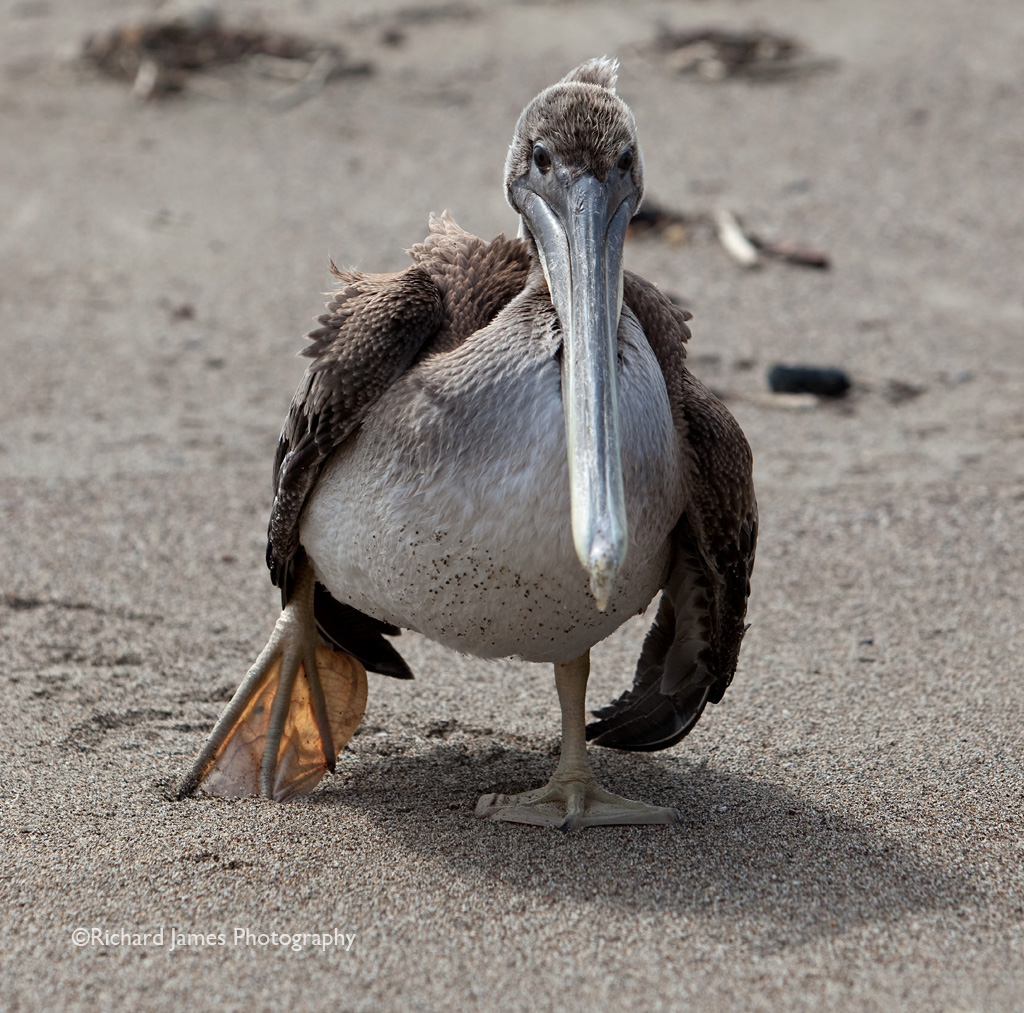
Sparky, wings dragging

Both wings were drooping a bit as it shuffled off when I first came upon it.

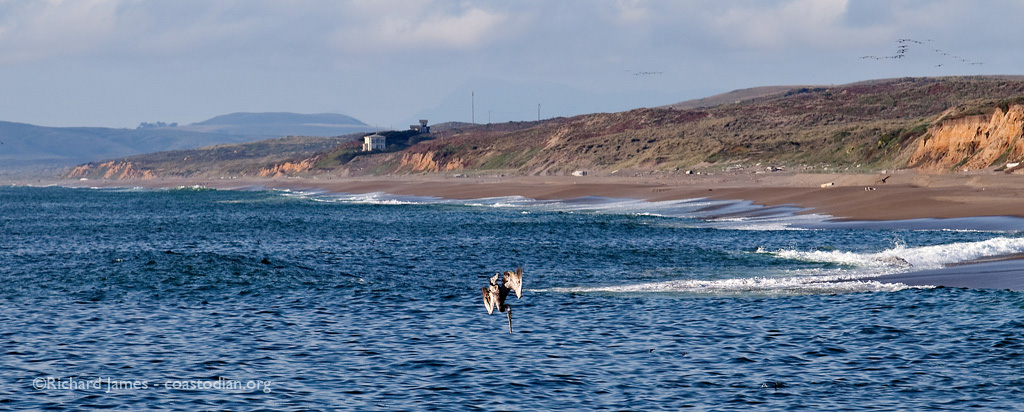
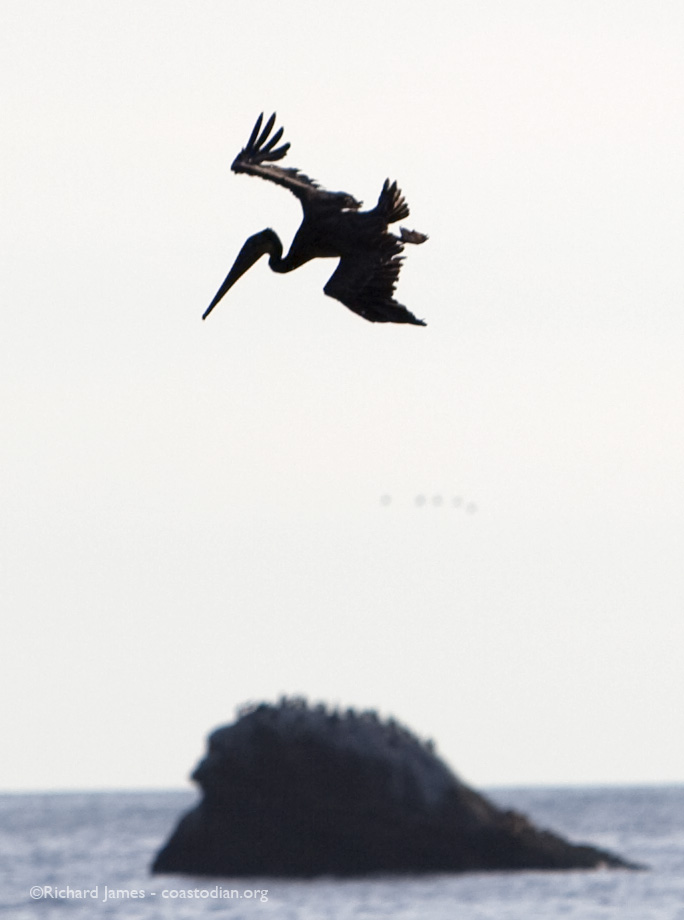
Pelicans soar over the water looking for fish. When a fish is spotted, wings are tucked back, beak out straight, they dive down and hopefully scoop up a meal in their over-sized pouch. If they are not so lucky, they miss, take off and try again. If they are really unfortunate, they hit the surface of the water at the wrong angle and break a wing or two, or their neck.

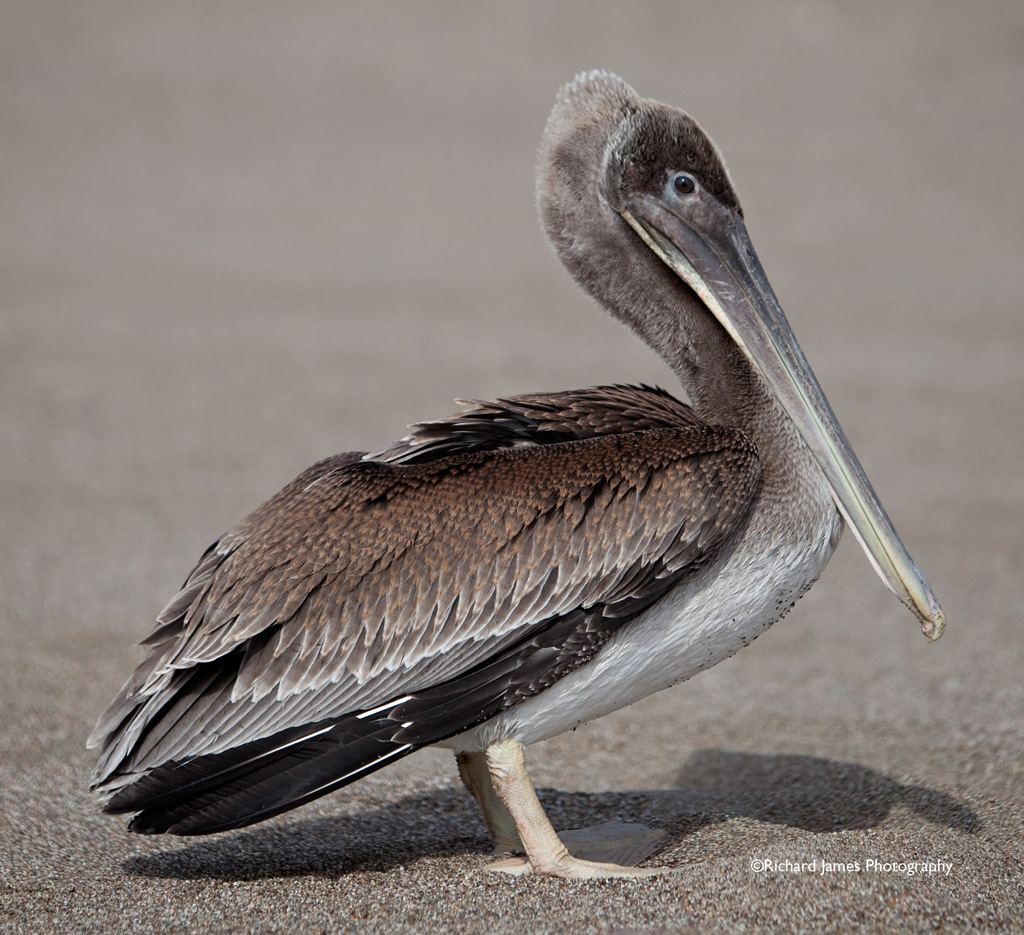
This bird was dry and other than the dangling wings (which I believe were broken) looked just fine as it eyed me crouching 30 feet away, admiring the gorgeous lines and feathers. I dropped my bags of trash, sorted out my camera gear and crawled around, awed by the beauty of this enormous bird and recorded images. After shooting pictures of it for about 15-20 minutes, I asked the bird out loud if it wanted me to leave it on the beach or get help. Without hesitation, the bird walked 10 feet towards me and stopped in front of me, staring, blinking, waiting it seemed.

Question answered.

I stashed the large debris I had collected above the high-tide line behind a large log and stowed my camera gear for the hike out. I pulled out one of the large white bags from my pack that I use to hold litter. After straightening the bag so I knew where the edges were, I stood up and eyed the bird before me. I’d have to move quick to secure it.

Up til now, the bird had been very docile during the photoshoot. Now, as I quickly strode towards it, I presented the biggest threat it had seen from me and raised both wings up high and opened its’ razor sharp beak. Closing the distance between us rapidly, I gently draped the entire bird, wings, sharp beak and all within the bag and closed down on it.

Carefully I tucked the wings into their natural closed state. With wings secure, I made sure the beak was closed and wrapped my hand gently around it, then tucked the bird under my right arm and walked to pick up my small bag of plastic rubbish.

Hmm, now to get to my car with a very large bird under my arm.

I could walk south, then east to my car, nearly 2 miles, or, I could walk north about a third of a mile to Ben Davis’ place. I decided to walk to Ben’s and see if he would give me a ride back to my car. If he was not there, I’d walk down his long driveway to the road and hitch a ride back to my car, I hoped.

After walking, occasionally stooping to pick up trash and re-cradling Sparky as I decided to call this bird, I reached Ben’s place. All the way down the beach, Sparky was quite relaxed under my arm, hardly moving. Only when I turned away from the sea to scale the bluff did it become active and struggle under my arm, trying to free itself.

Looking up towards the house, there was Ben, Pat and their nearest neighbor Ernie Spalleta at the bench having a beer, it was Memorial Day weekend.

As I walked up, Ben called out my name to see if it was me, I said yes and that I had a favor to ask.

I told him what I had under my arm and asked for a ride to my car.

He instantly got up and said sure.

Hos tiny dog hopped into the pickup with me as I sat down and sniffed my bundle. Sparky was none too happy about this. I suggested to Ben we leave the dog behind. He handed it to Pat and off we went down the long drive to Sir Francis Drake Blvd.

On the short ride to my car, Ben related that in days gone by, pelican feathers were coveted for fishing lures called “hoochies” and people would often shoot them to get these sought after plumes.

Back at my car I thanked Ben as he drove off and re-wrapped Sparky and packed my things. The bird rested on my lap so I could secure it while I drove back to my place. Sparky left several chalky white deposits on my lap, seat and center console. For a bird more at ease soaring inches off the waves, riding in this noisy metal box was likely not all that comforting. My several calls to friends in the know led me to a place where they rehabilitate wild animals. I hoped they would be able to help out this gorgeous bird. Tiny mites crawled all over me.

Once home, I placed Sparky in a large plastic tub I found on Kehoe last year, covering it with two plastic screens I had also found washed up on local beaches recently. I weighted it all down with a large piece of anthracite I found 2 years ago and got in the shower to wash the bugs off. Being sure to strip my bug infested clothes off while out on the deck where they still sit.

I checked on Sparky as I left for the event I had to attend and there he/she sat, quite calm.

After returning I have checked 2 more times to see the bird has moved to a new position each time and seems to be resting peacefully.

I’ll drive to Wild Care in the morning to drop Sparky off and hope for a speedy recovery.

======================================

Above is all I wrote that evening.

I continued to check on Sparky every 20-30 minutes. Each time all looked fine as it crouched in the large tub acting as home until I could get it to the bird care place the next morning.

At 12 midnight I came out to find Sparky was lifeless, head slumped down on the floor.
I reached in and found the body still warm, rigor had not set in.

Although not surprised, I was still sad. I had hoped to get this bird to where its’ wings could be mended and it could be released. No more.

I later learned that large birds like this, once they break wings, can never be released to the wild. So it is probably for the better. No animals belong in a zoo.

The next day I wrapped the pelican body in the same bag as before and hiked back to the spot I found it. I unwrapped it and left it for the scavengers and elements.

The next day I returned to see what had become of my friend.

Each evening and morning, raccoons, skunks, coyotes and bobcats roam the beach in search of food.

Nature is so beautiful, no lies, no hesitation, no waste, no greed.

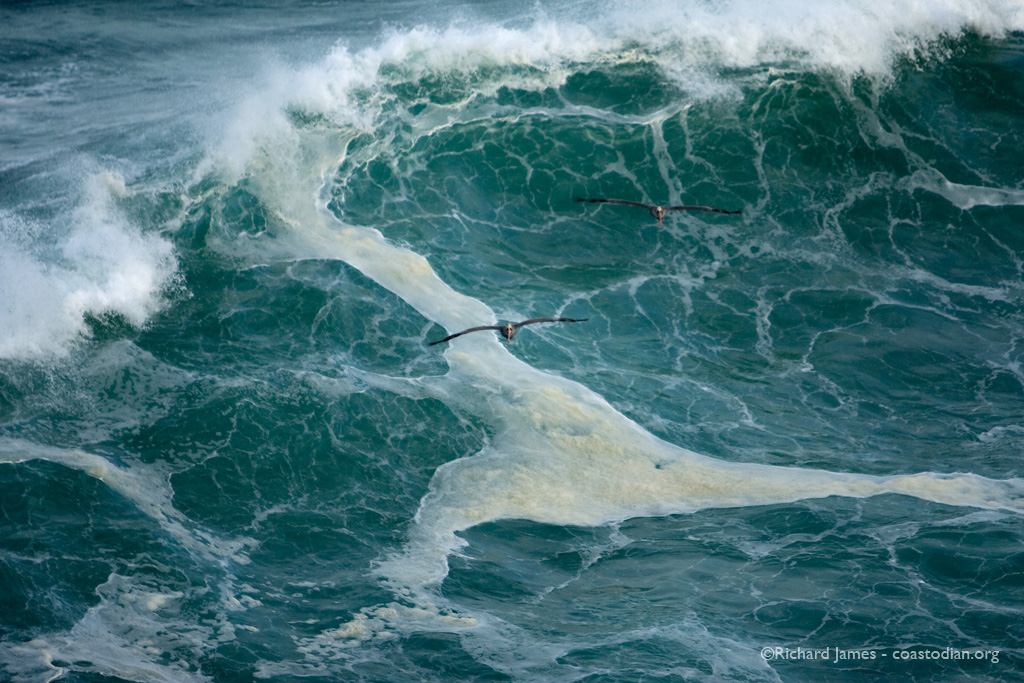
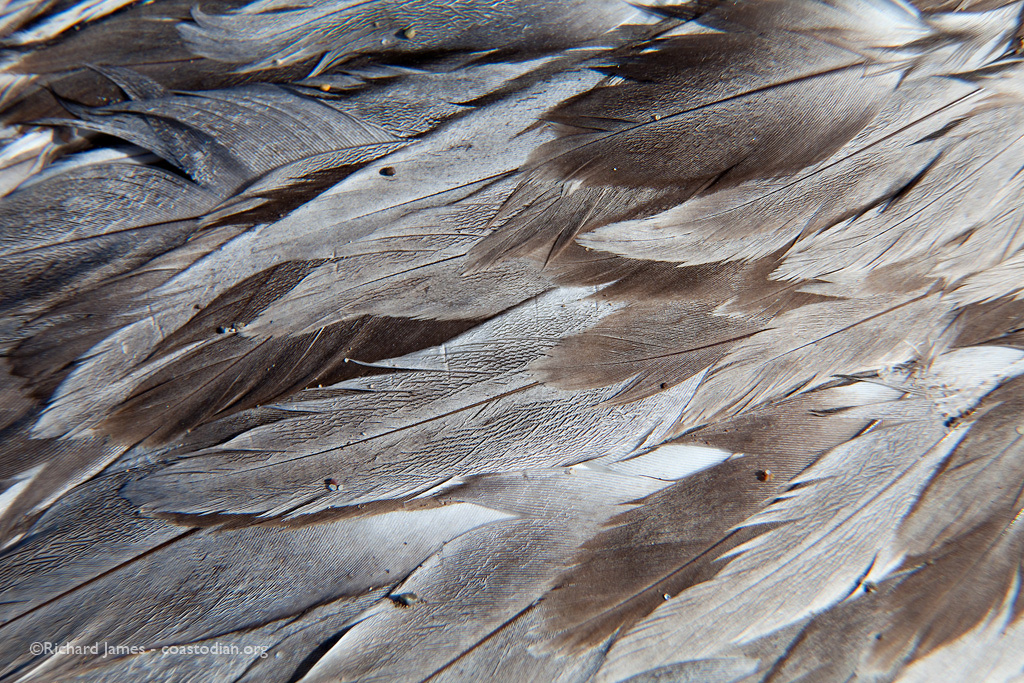
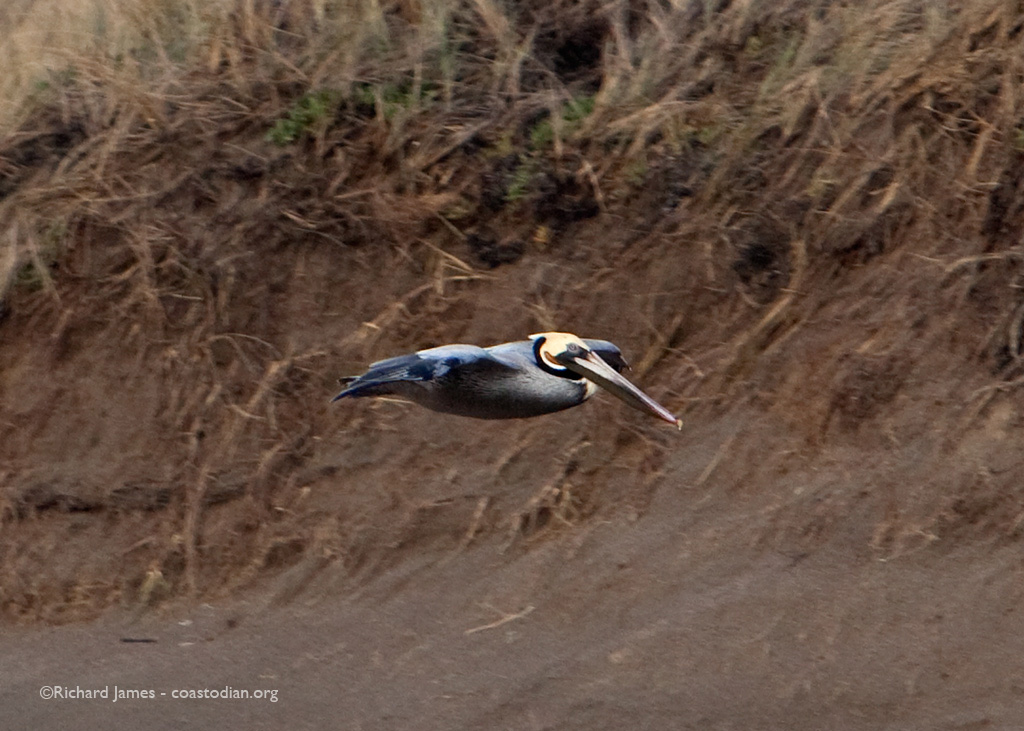
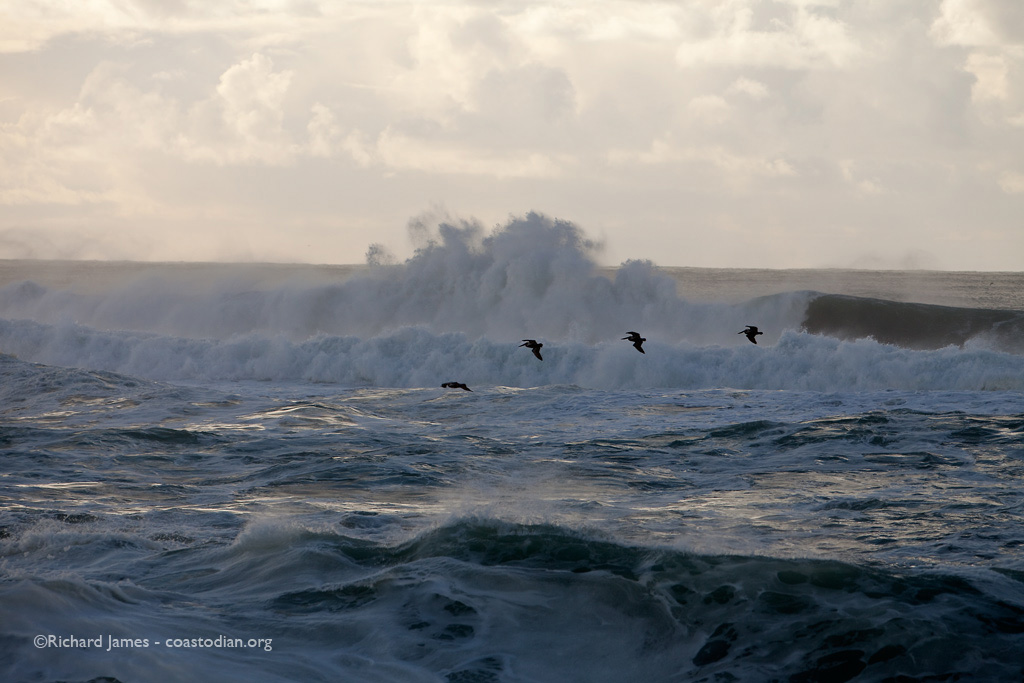
Below are some images of brown pelicans from over the years. Click on an image to see it larger.

For Kate

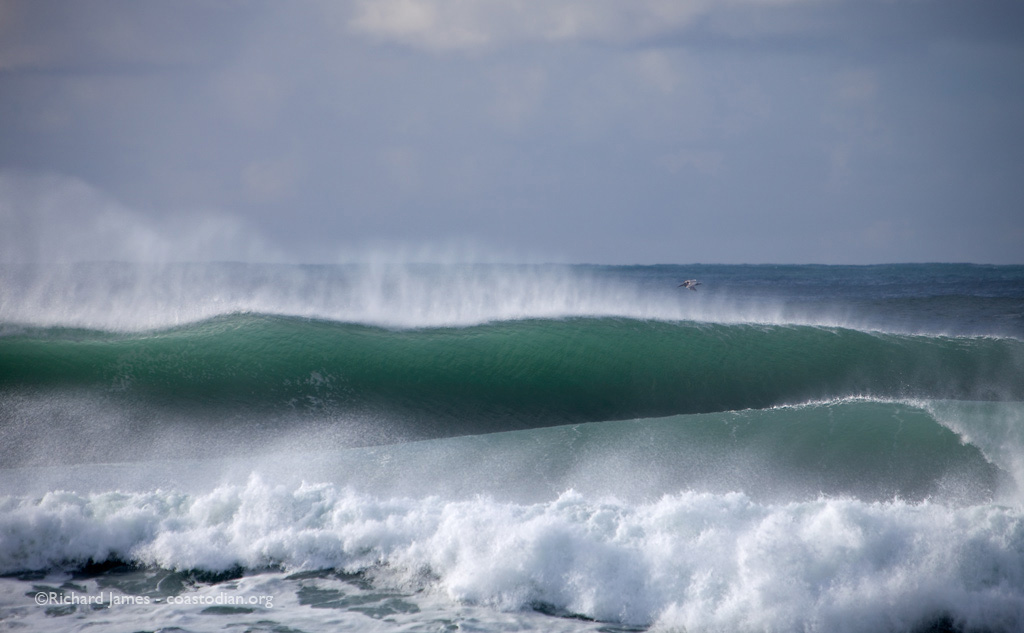
Mad ocean, foaming at the mouth

Click on the title of this post to read it and see a related header image.

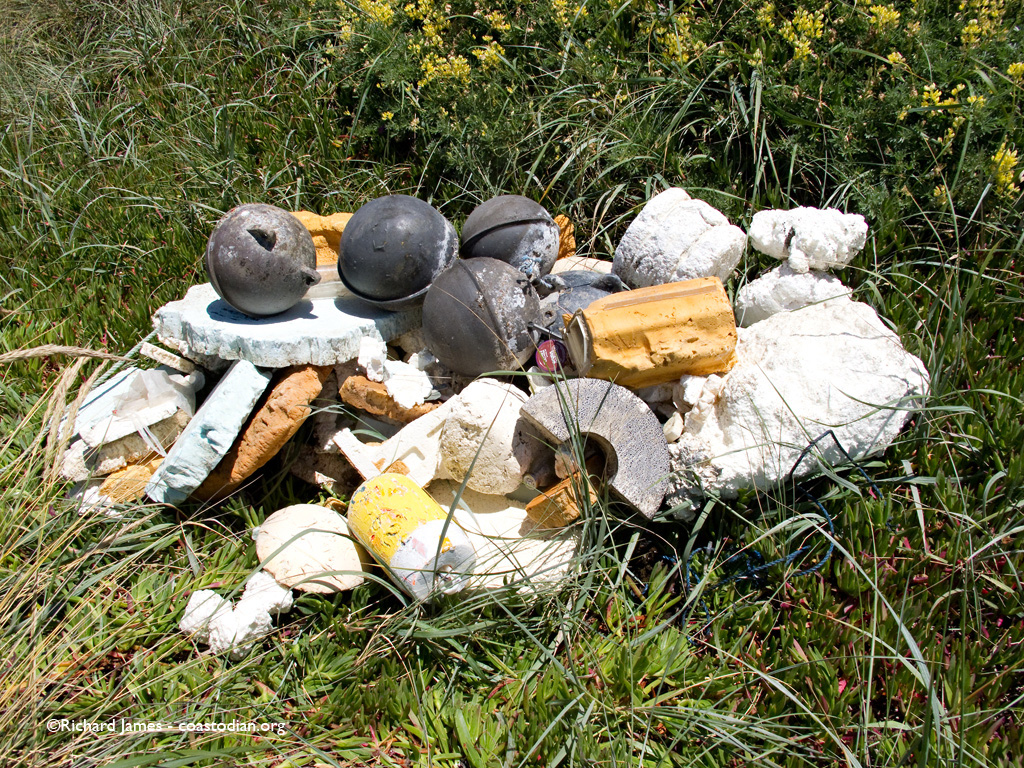
The past few months have brought a never-ending supply of foam to the beaches at Point Reyes. Mostly polystyrene, though other flavors as well, all petroleum based.

This pile has been growing and shrinking for several months. I add to it that which I am unable to haul out at the time, then return later to pack out what I can.

I strive to get foam off the beach as soon as possible. Birds peck at it looking for food, harming themselves in the process, as well as breaking it up into smaller pieces for other unsuspecting animals to attempt to snack on.

This young elephant seal is still trying to figure out how to feed itself now that mom and her high-fat milk is gone. I hope it quickly learned that foam is NOT food.

The rough water of winter storms grinds it up and pushes it into the drainages that meet the beach.

Such a lovely sight in a national seashore!

This scene is reproduced all over the world each and every winter.

I spent nearly 2 hours picking up most everything not wood or sand in this image.

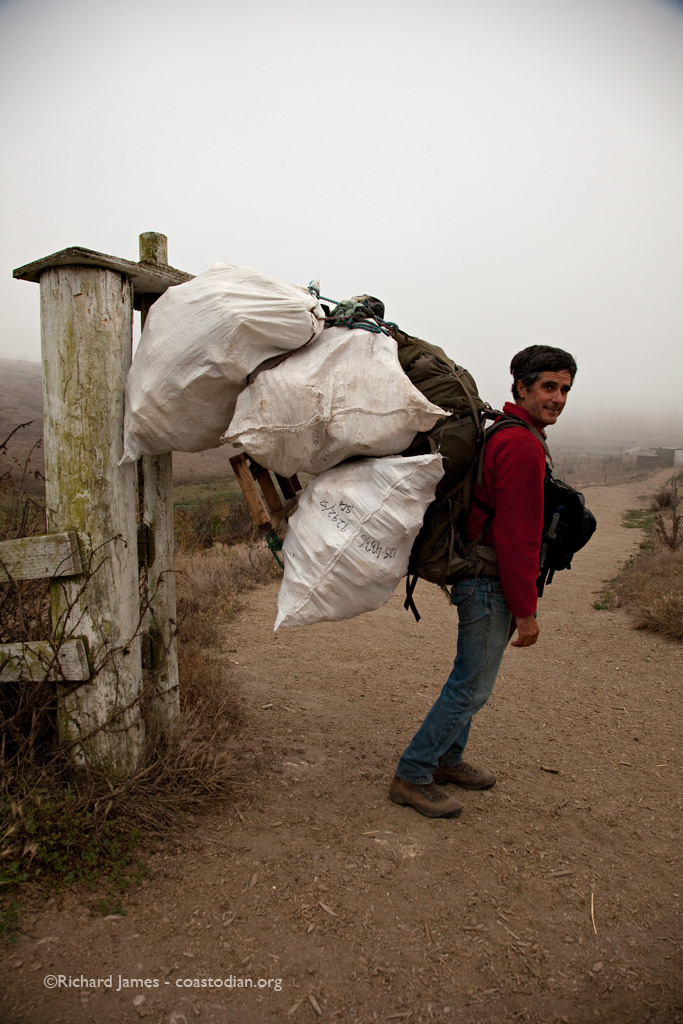
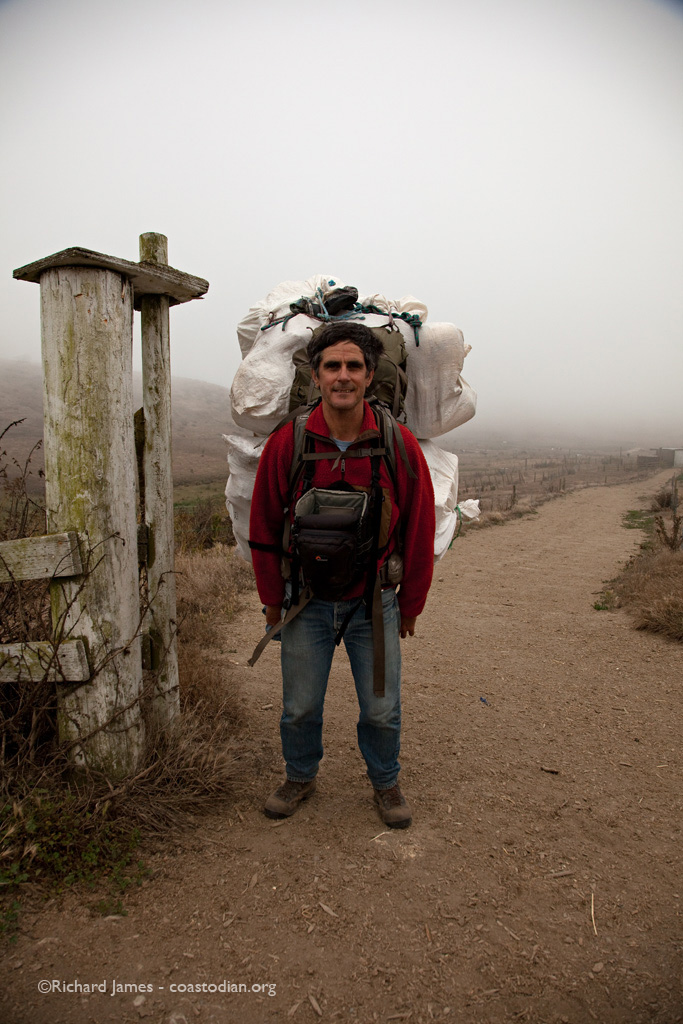
Foam does not weigh much, but it is big and bulky. Forty-five pounds or so on one’s back is like a spinnaker. Thankfully I had the wind at my back on the hike out and made great time.

The next stop for this load of man-made mess is the dumpster at Point Reyes headquarters.

I wonder where the contents of the dumpster will end up?

Remember, on this tiny planet, there is no away.