Humans are hard on the planet, but we can learn how to be less so, if we care to.

In the post below this one, “Fishing is hard on the sea …” I shared images of trash I packed off my local beaches from one storm.

I need to expand a bit on what I wrote. The items you saw in those images are mistaken for food and eaten by hundreds of thousands of birds all over our planet each day. Some of these birds fly thousands of miles to gather food for their offspring. After being fed a belly full of plastic, they die.

Look at this image showing oyster farming detritus:

NOT albatross food

Now look at this image by Chris Jordan of a dead albatross on the Midway Atoll:
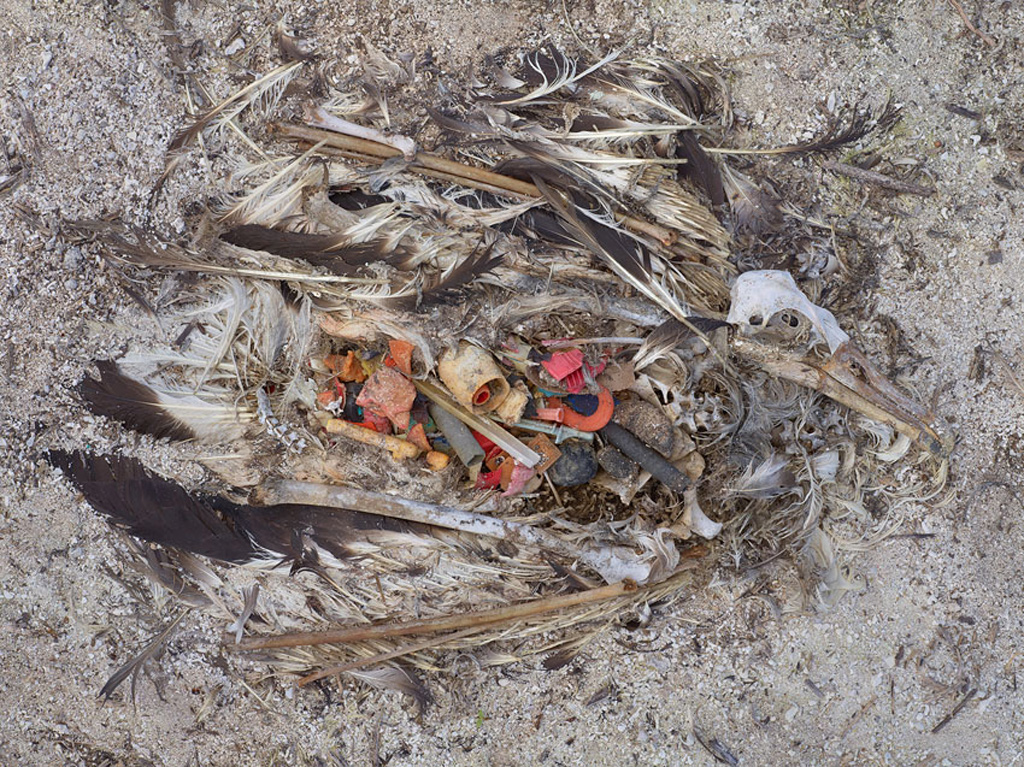
Dead Albatross by Chris Jordan – See the oyster spacer tube in there!

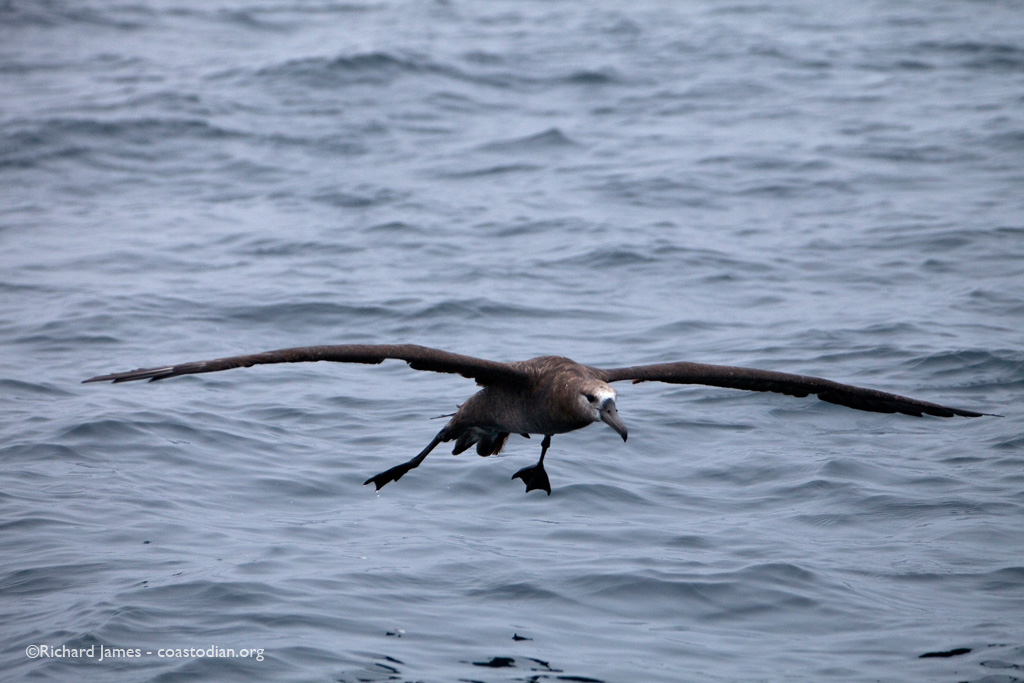
Here is a live albatross for comparison:
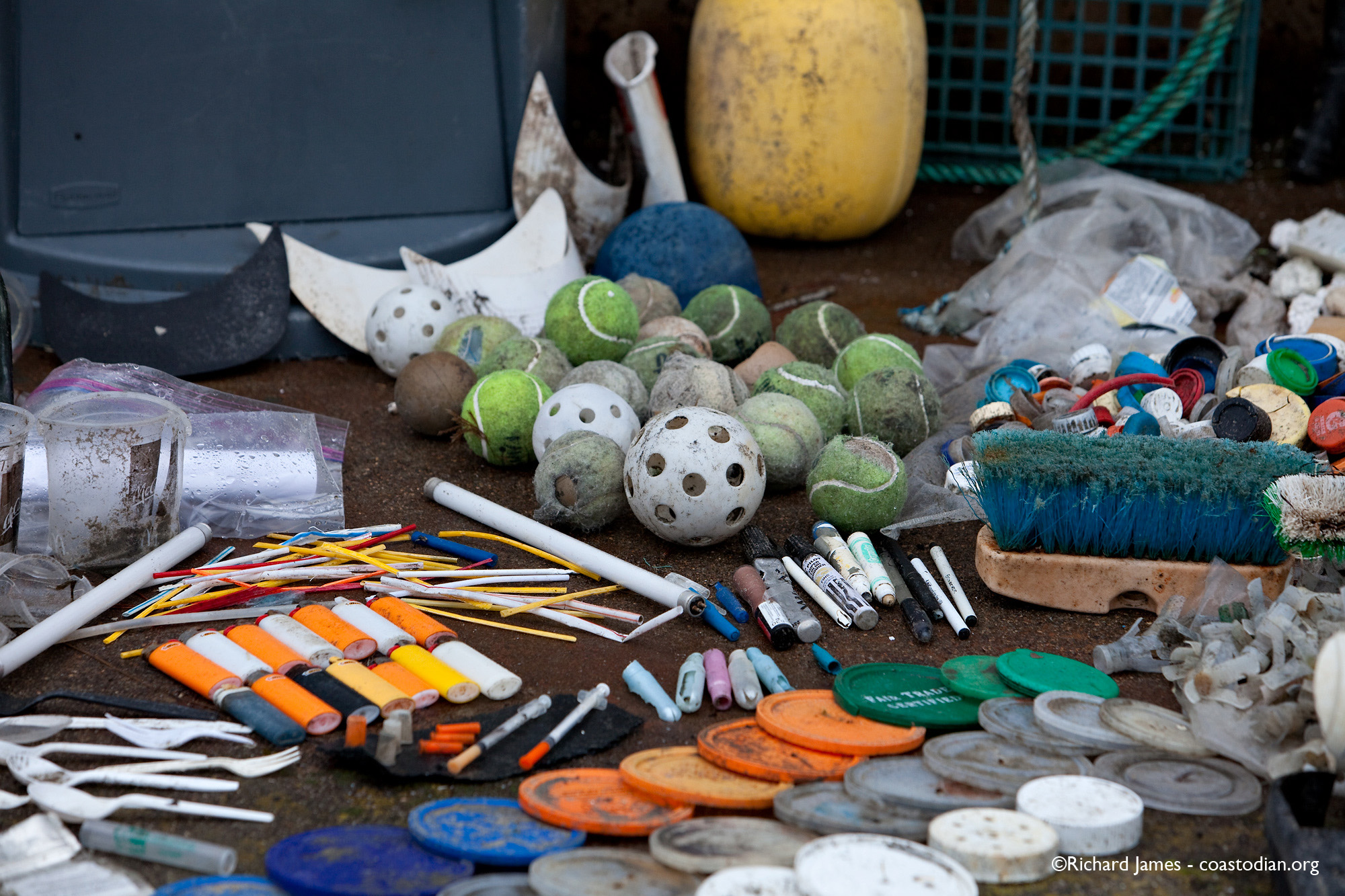
See all the disposable lighters in this image:

Disposable, hmmmm……where do they go?

And again, a dead albatross by Chris Jordan:

Dead Albatross by Chris Jordan – where disposable lighters end up.

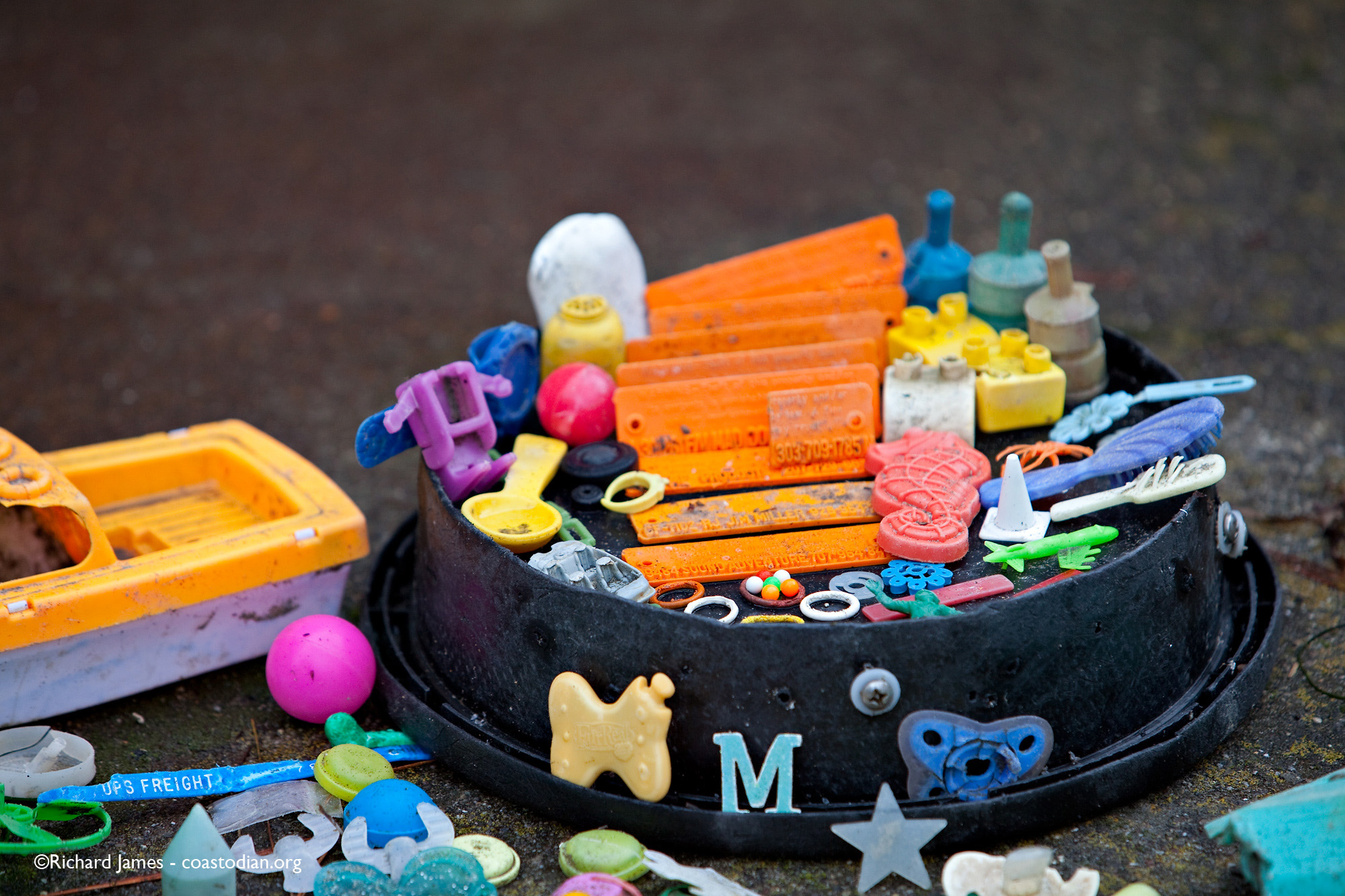
More human waste from Point Reyes beaches:
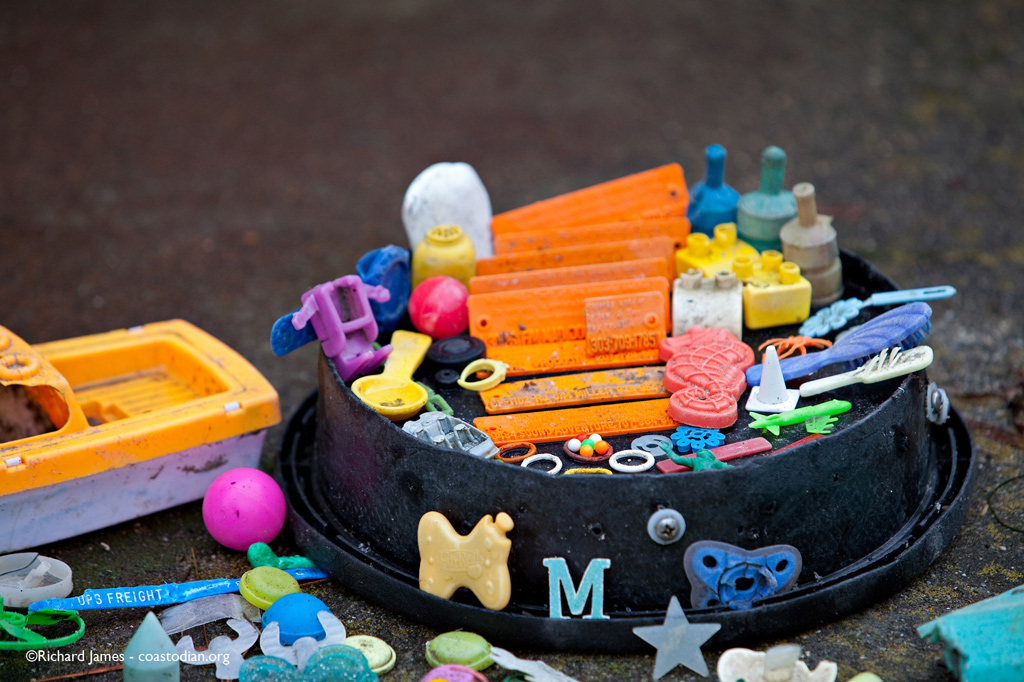
Discarded toys – NOT albatross food!

Another dead bird from Midway courtesy Chris Jordan:

Dead Albatross by Chris Jordan

Chris has been documenting the deaths of thousands of birds on Midway for several years. A movie is coming soon. You can see more of his work here

There, I wanted to draw a line between what I pick up off the beach and the impact it has on our planet.

Can you think of how you might adjust your daily living patterns a little so that you generate less stuff that may end up killing some hapless bird trying to put some food on the table?

So what is a Park for anyway?

To me, it is a place where I go to be away from the internet, curmudgeons, war, pointless consumerism. I go to places like the back-country of Kings Canyon National Park and remote beaches of Point Reyes National Seashore to be soothed by a planet unspoiled by the contrivances of humans. I go to these places to remember what life is all about. I’ve been blessed to be able to see all that I have seen.

It is important to protect these special places and I am glad (mostly) that we have the park service to do so.

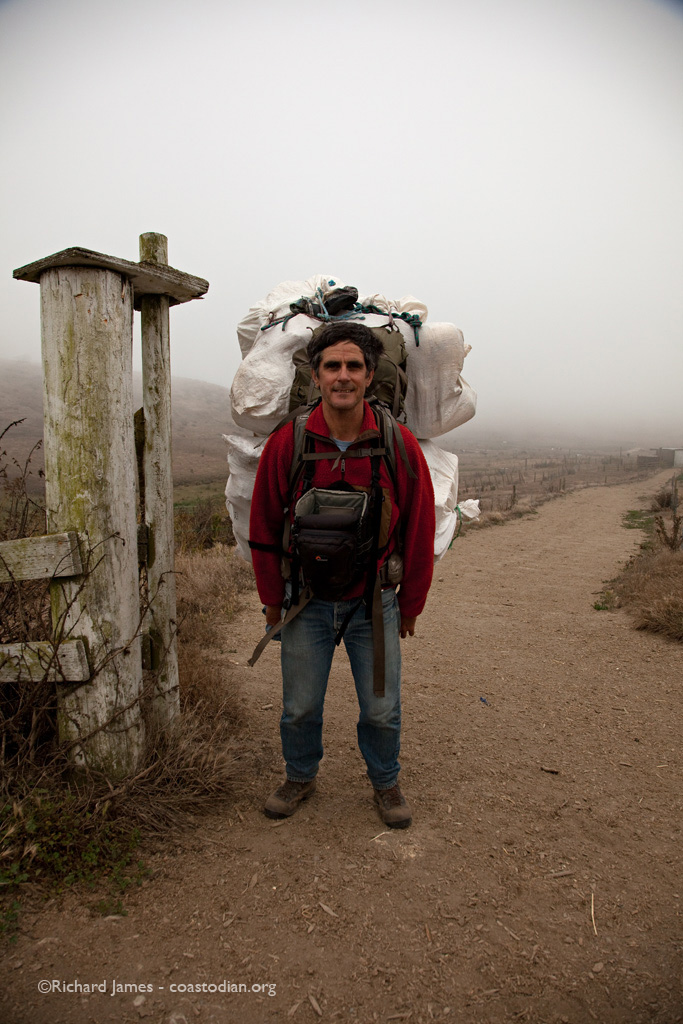
I’ve been packing about 1 ton of trash off the beaches of Point Reyes each year since late 2008. My knees remember each stoop to pick up another bottle cap, another plastic wrapper, each step back up the hill onto to the Pierce Point trail.

When I started this cleaning, I secured permission to deposit what I gather in the park dumpsters. I’ve learned more about dumpsters than I care to know. When I find that the South Beach dumpster is so rusted out, that items placed in it fall out the bottom and are blown back on the beach, an email/call or two, or three will usually get it replaced. The same for South Beach and Drakes Beach. Thank you Cicely.

Lately I’ve become frustrated with the park service. OK, I have been frustrated with them for quite some time now. For example, seeing that the fellow who services the bathrooms at the many beach parking lots tosses large cardboard boxes into the dumpster instead of recycling them bothers me. If I, a volunteer, can sort and recycle the items I pluck off the beach, the paid staff can surely recycle the tools of their trade. I have been fishing them out, crushing them and recycling them at my house for sometime now.

I’ve told a number of NPS people, hoping to get the paid staff to do the right thing. It took a while until a small recycling bin eventually showed up at one site for staff to use instead of the dumpster. Bravo. Now, to get them all to use it…

Though, after hearing that one supervisor, having learned of me pulling cardboard out of trash bins again and again, said to another employee “I’m going to super-glue a box in the bottom of the dumpster so he has to crawl inside to get it,” a light went off for me.

I no longer track my hundreds of hours and submit them so the park can receive money for their volunteer program.

This may seem trivial on its own. But the above example is only one of many instances (nor is it the most troubling) I saw firsthand of “do as we say, not as we do” within the NPS.

I may still gather human trash off the otherwise pristine beaches around here. But I’ll do it for me, selfish bastard that I am.

And for those that come after us.
Fishing is hard on the sea, living is hard on my heart

Click on the title of this post to read it and see a related header image.

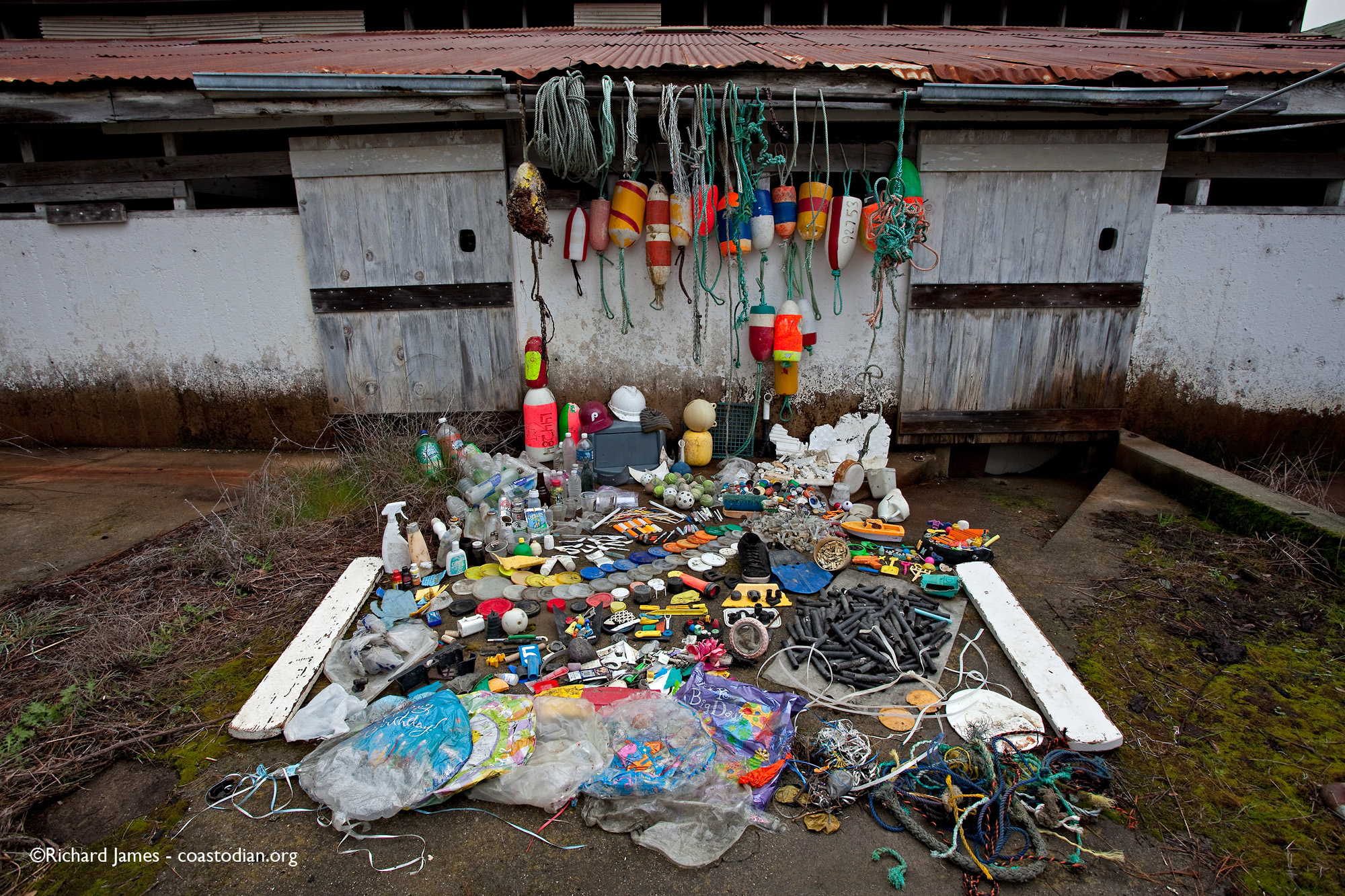
The debris shown in the images below was collected after the first big storm of 2012 in early February.

Over two days I spent 10 hours and covered about three miles of Drakes Beach and South Beach. Just imagine what all the beaches of Point Reyes were covered with from just one storm!

The plan was to have posted these images in February. Due to painful distractions, I am finally getting around to sharing what I hope you find are compelling images. That is, I hope they compel you to give some thought to all that happens in order to bring seafood to your table.
Tomorrow is the commercial crab opener of 2012. Thousands of crab pots have been dropped in the sea attached to miles and miles of petroleum based rope, foam floats and plastic bait jars. Much of this gear will be lost due to storm, propeller strike or other activities. While scraping and grinding along the bottom of the sea, or abrading on the beach sand, many thousands of pounds of plastic will be pulverized and deposited into the food chain.

Does society have any idea what is undertaken to put seafood on their table? The time, expense and effort of the fishermen, the vast amount of gear lost at sea each season, or stolen by unscrupulous crab fishermen? A local fishermen once told me, after sharing with me the many ways in which fishermen “do unto others” in not such golden ways, “Crab fishing makes ya crabby!”

Be sure to have a look at the last picture. There you will get a close look at about 75 oyster spacer tubes from Drakes Bay Oyster Company (DBOC) in the foreground. I have found well over 5000 of these in the last five years. From as far north as the tip of Tomales Point and south to Slide Ranch.

Click on image for bigger picture – Debris recovered over two days work, about ten hours effort

Click on image for bigger picture – Should the price of crab reflect the cost to the planet?

Click on image for bigger picture – Maybe some of this is yours?

Click on image for bigger picture

Click on image for bigger picture – Heroin, nicotine and caffeine….slower, faster, anywhere but here and now…

Click on image for bigger picture – If all dogs at the seashore are on leash….how come I find 100’s of tennis balls and ball tossers each year?

Click on image for bigger picture

Click on image for bigger picture – Each one of those orange tags represents about $200 in lost gear for a crab fisherman. What if they paid a deposit on each trap set? To offset the cost of picking up after all their gear that litters the ocean and beaches.

Click on image for bigger picture – Black PVC pipe oyster spacers used by Drakes Bay Oyster Company. You see 75 or so here. I have found over 5000 of these on Point Reyes beaches, as well as dozens oyster grow-out bags and the foam from inside grow-out bags.

All forms of commercial fishing take a huge toll on our planet.

Is it asking too much to set aside portions of the planet as areas we tread upon lightly, or tread upon not at all?

Many say we must do all we can to produce food locally, sustainably to feed the 7 billion humans on earth.

Others say we need to slow the growth of the human population, keep it more in line with the carrying capacity of earth.

This planet is fragile. Humans, only one of the many species on this blue sphere, have developed the means to do great good and great harm. As we ever more quickly modify our nest, it is less able to feed an ever growing population. Does this make sense? Does a growing family move into ever smaller and smaller housing?

I think The Dude said it best:

Tired of plastic on the beach

Click on the title of this post to read it and see a related header image.

A dozen or so tires wash up on the beaches each year at Point Reyes. Most of them on the rim which makes them very heavy. I usually move them up as high on the beach as I can in case someone more industrious than myself feels like packing them out. I’ve only packed out two that I can recall. The rest either washed back out, or someone came and got them.

There is a forty-eight inch diameter aircraft tire buried in the sand on Drakes Beach, sans rim. In case you feel inclined to go get it, park your car near the cafe, walk ~2 miles to the right(low tide a must), it is high on the beach. Bring a shovel or two.

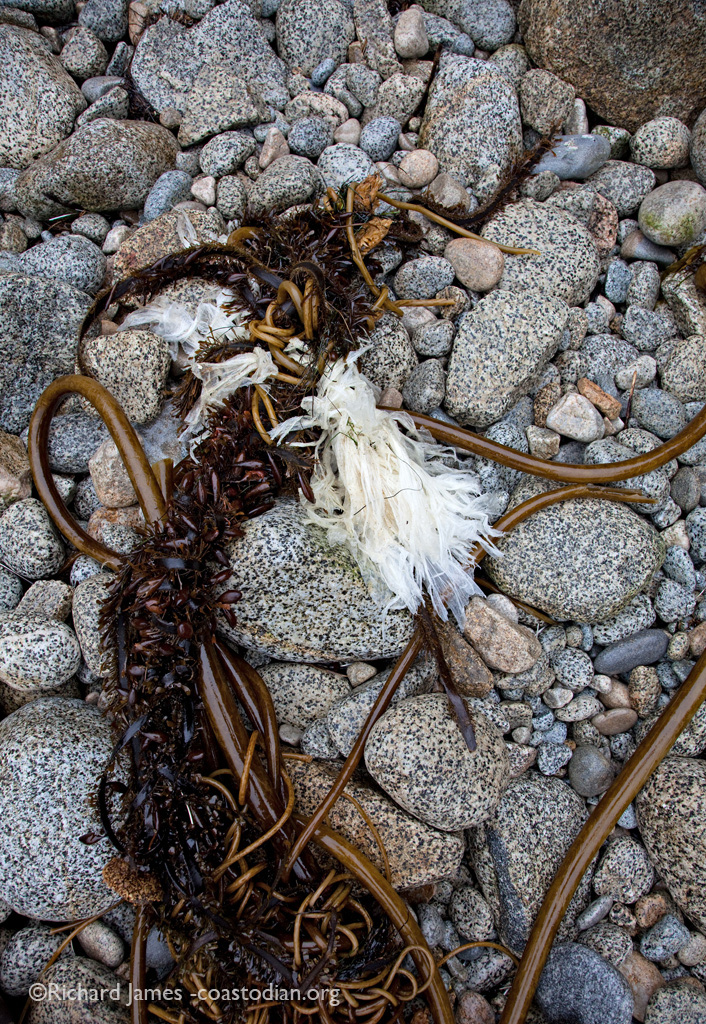
Shredded plastic wrap tangled in bull kelp and feather boa kelp

Bull kelp and feather boa kelp, minus the plastic

Tangled up and blue

Click on the title of this post to read it and see a related header image.

September, seductive winter light is coming on, beaches are covered deep in sand pushed ashore over the summer, making access easier. Not the high season for litter usually. Local fisherman have been plying the Marin coastline for months looking for crab, salmon, halibut and rockfish.

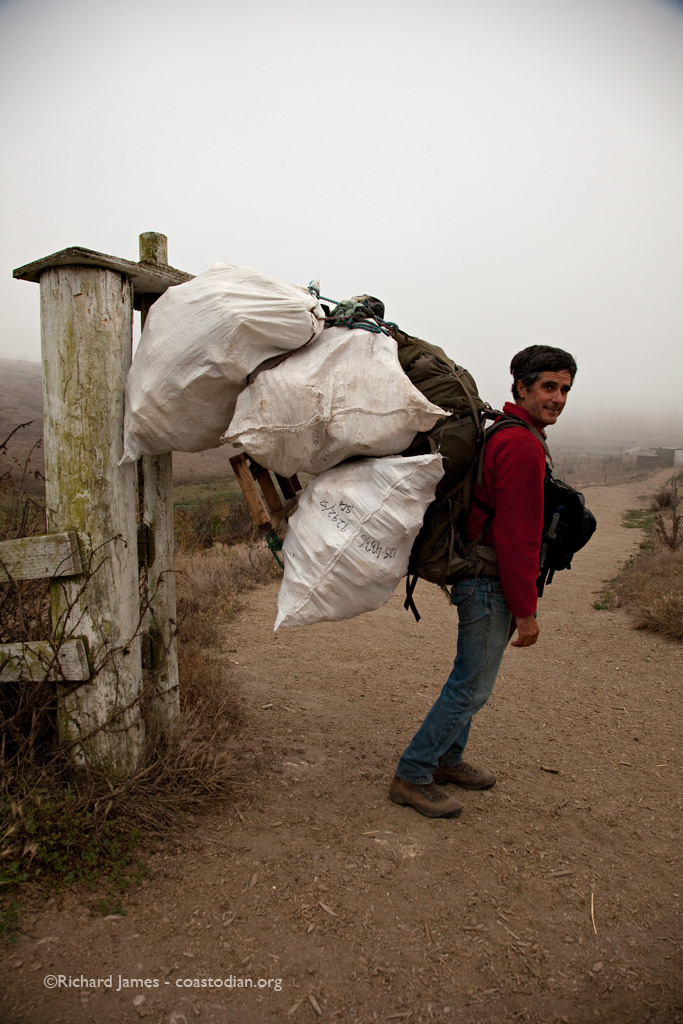
I can tell when they have been out. Beaches are covered in beer and soda cans, bait packaging, miles of plastic rope, hundreds of buoys and bait containers, snack wrappers and sometimes fishing poles or parts of boats. All blown or carelessly tossed overboard, then blown to shore. I pick it all up and pack it out on my back.

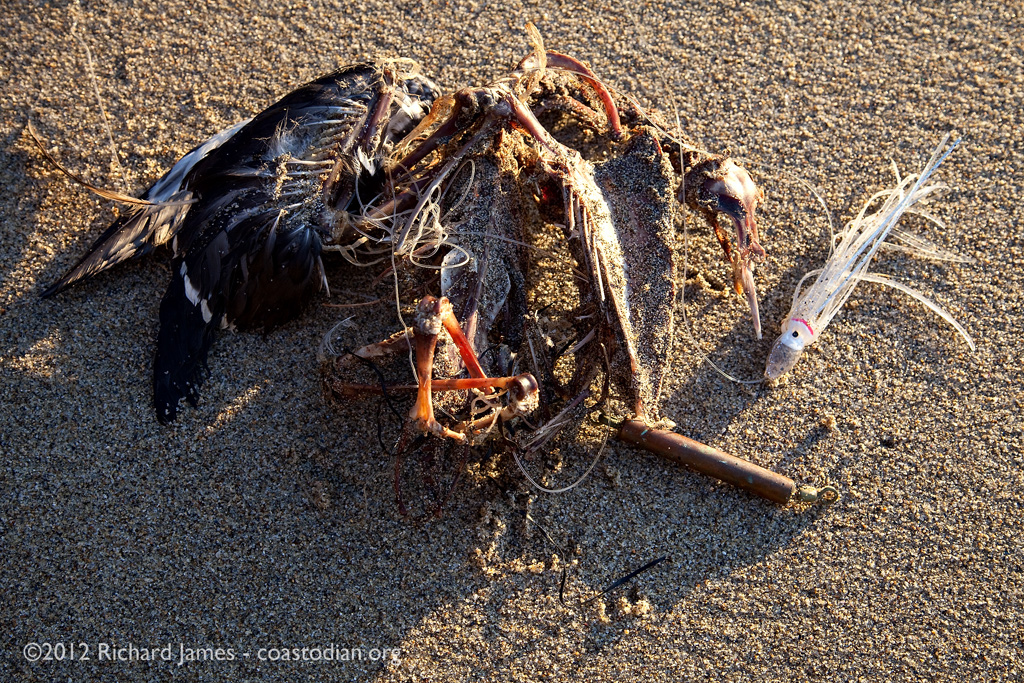
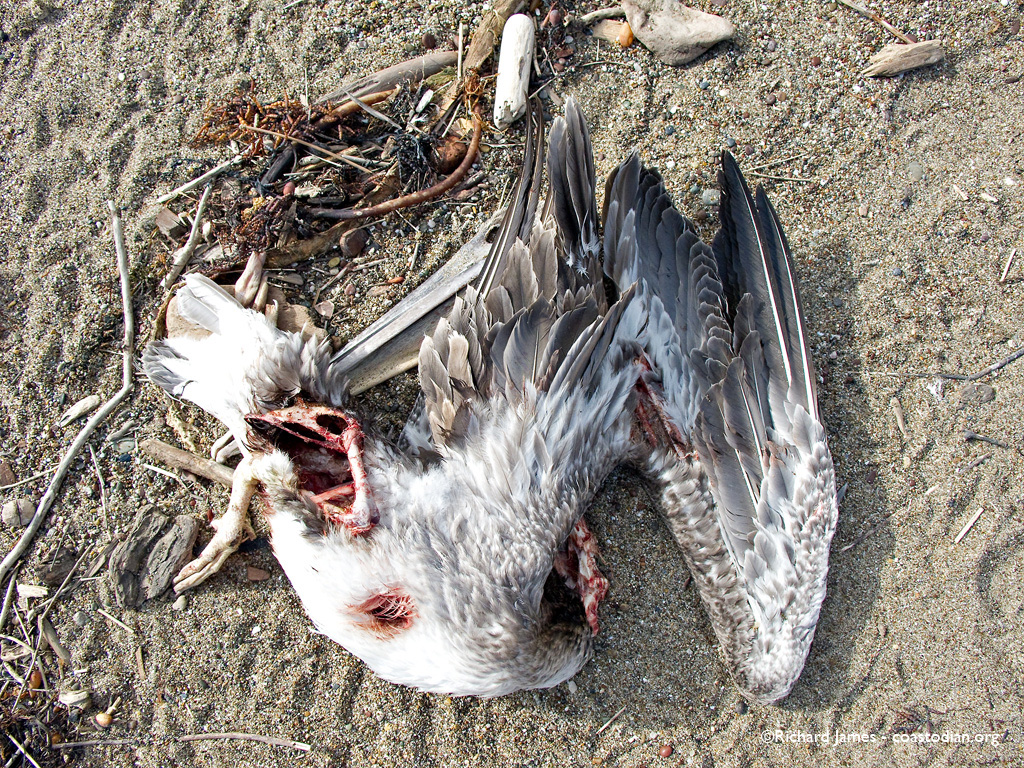
This evening a shiny flasher caught my eye in the wrack, I bent down to untangle it from the surf grass and other kelp. A long strand of mono-filament was threaded into the plants, a plastic hoochie, more line, a copper spring of some sort. Then I spied the scavenged body of a seabird, a murre or guillemot with a large nest of the mono-filament tangled around what was left of the wings and sternum.

NOTE: According to a bird expert I know, the bird is a common murre.

Had the bird seen a fish on the hook, swallowed it and died? Or had it surfaced and become tangled up in the line after diving perhaps 200 feet deep in search of a meal? I did not know. I only know that it was alive before coming into contact with this man-made trash, and now it was dead, wrapped in plastic.

Egg to bird to egg to bird and so on. Nothing in that cycle is toxic. All of it breaks down into something another creature uses for life.

Humans on the other hand have created all manner of clever tools. Tools made of plastic, which comes from oil. Plastic clothing, plastic fishing gear, plastic boats, plastic food wrappers. All of it so convenient for humans, for a moment that is. Once we are done with our “single-use” item, we generally toss it overboard, or into the land-fill, or the street, or out the window as we drive down the freeway.

None of this plastic breaks down or goes away or turns into something humans can eat.

What other creatures celebrate milestones in their life by releasing balloons into the air? Balloons made of nylon or latex that will fall back to earth eventually. Balloons that look like jellyfish and other forms of food to sea-life. Have a look here at the hundreds of images of balloons I found at the beach and in the High Sierra Nevada.

We are poisoning our nest, the nest of all the creatures on this planet, with our human conveniences.

Can we survive without so much plastic in our lives?

We survived until 1907 without any synthetic plastic.

From an article in the New York Times:

About 300 million tons of plastic is produced globally each year. Only about 10 percent of that is recycled. Of the plastic that is simply trashed, an estimated seven million tons ends up in the sea each year.

There, it breaks down into smaller and smaller fragments over the years.

The tinier the pieces, the more easily they are swallowed by marine life. (One study found that fish in the North Pacific ingest as much as 24,000 tons of plastic debris a year).

Duncan MacLean, please stop wrecking fishing boats

Click on the title of this post to read it and see a related header image.

I just now sent the following message to Zeke Grader by email. I hope he is able to keep Mr. MacLean from wrecking any more boats along our coast.

Mr. Grader is the Executive Director of THE PACIFIC COAST FEDERATION
OF FISHERMEN’S ASSOCIATIONS, and, as I understand it, a long time friend of Duncan MacLean.

Hello Mr. Zeke Grader,

I’d like to relate to you my day, so that you will do everything you can to stop Duncan MacLean from ever captaining another fishing boat.

It is 9 pm and I just stepped out of the shower and my eyes are still burning from the fuel that coated me today as I wrestled in the surf with the remains of the fishing vessel Sea Biscuit, captained by Duncan MacLean.

Yesterday I received word that help was needed to remove debris from Pinnacle Beach near Bodega Bay. A fishing boat had wrecked and people wanted to clear the beach before the holiday weekend.

I drove up around 3 pm, signed in with the Surfrider people and hiked down onto the beach. My large pack full of wetsuit, booties, mud boots, bags for debris.

For an hour or two I ferried loads around a rock point so that a truck could come get them. 20-30 others did the same.

Then, as the tide became low enough, along with a dozen others, I pulled all manner of cables, fuel lines, electronics, hull pieces, fishing line from the surf. All of it coated with fuel.

I am told a helicopter will be on site next week to extract the engine, fuel tanks and other large items.

For a week now, dozens of people have cleaned up after Mr. MacLean, AGAIN!

I was witness to the results of his grounding of the Barbara Faye on 12 May at Limantour Beach in Point Reyes National Seashore. That cost the NPS over $80,000 of tax payer money. The coast guard, fish & game and others paid too. The fuel was pumped off the boat that time, I heard at a cost of over $20,000. This time, the fuel leaked into the sea. I saw the colorful sheen on the water, I feel it stinging my eyes as I type this.

Mr. MacLean walks away, maybe handing out a dead salmon to those that give him shelter or a ride. He carries no insurance, expecting others to clean up after him. He usually fishes alone for days at a time, see below for an idea of how he manages to stay awake for so long by himself.

This is the second boat Mr MacLean has grounded at Point Reyes. His first was near the same spot at Limantour in 2000.

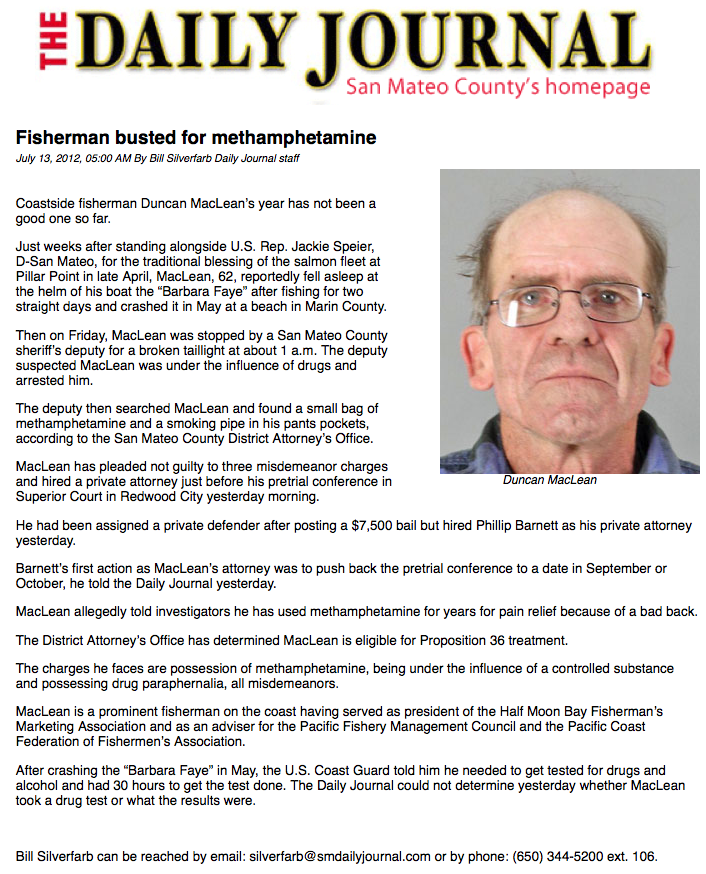
I heard today that he has wrecked 4, maybe 5 boats in his time. I also heard that he has a drug problem. I spent 30 seconds searching the internet and came up with the article seen on the enclosed image.

The other images are from the 12 May, 2012 grounding of the Barbara Faye at Limantour.

You know this man Mr. Grader.

Please do what you can to make sure he can never do this again.

We can find other ways to buy a salmon.

He can find other ways to earn a living.

Our planet cannot endure more of his irresponsible actions.

Clearly, piloting fishing boats is not his forté.

Thank you for your time.

Richard James
Coastodian.org

Barbara Faye, the second time Duncan crashed a boat by this name on Limantour beach.

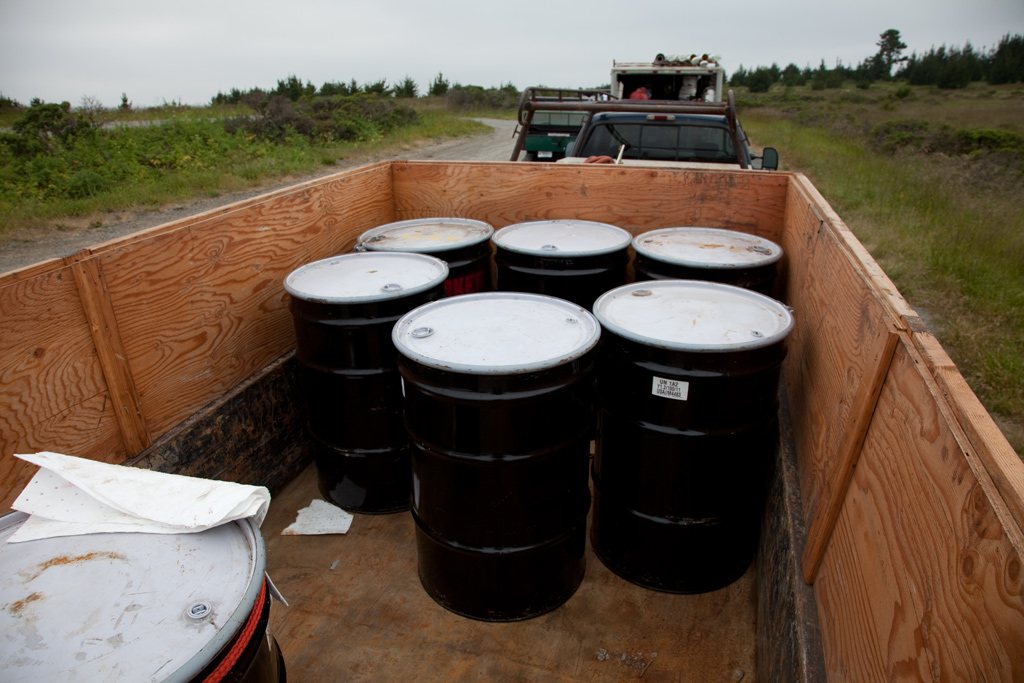
300 gallons of fuel that was pumped off the boat at great expense.

56 king salmon being hauled off the beach.

Some more images, these from Friday 31 August, 2012 as volunteers cleanup more from the wake of skipper Duncan MacLean.

And here is a link to many images showing the hard work citizens put in to clean up after Duncan.

Cea Higgins of Sonoma Coast Surfrider

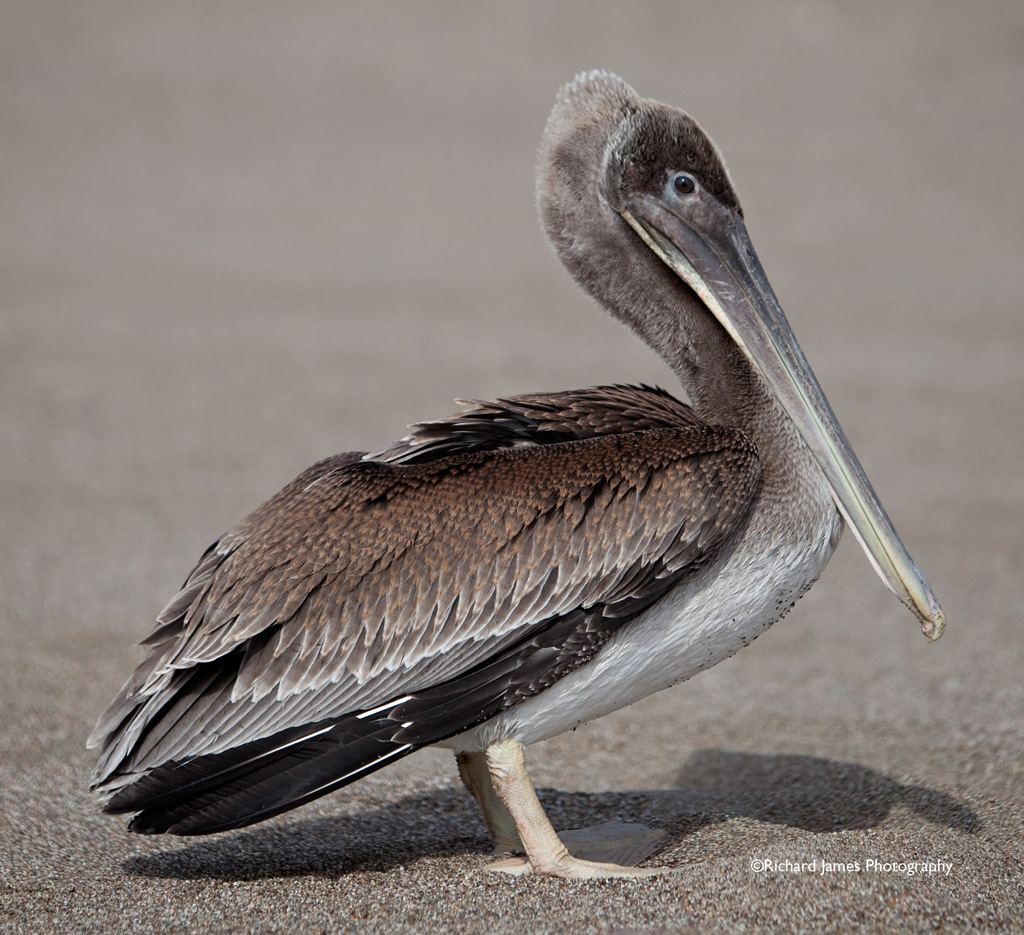
Sparky the brown pelican

Click on the title of this post to read it and see a related header image.

NOTE: The following events occurred May/June of 2011.

©2012 Richard James

As some of you know, because I called you for help as the following unfolded,
today while picking up the beach I came upon an injured brown pelican.

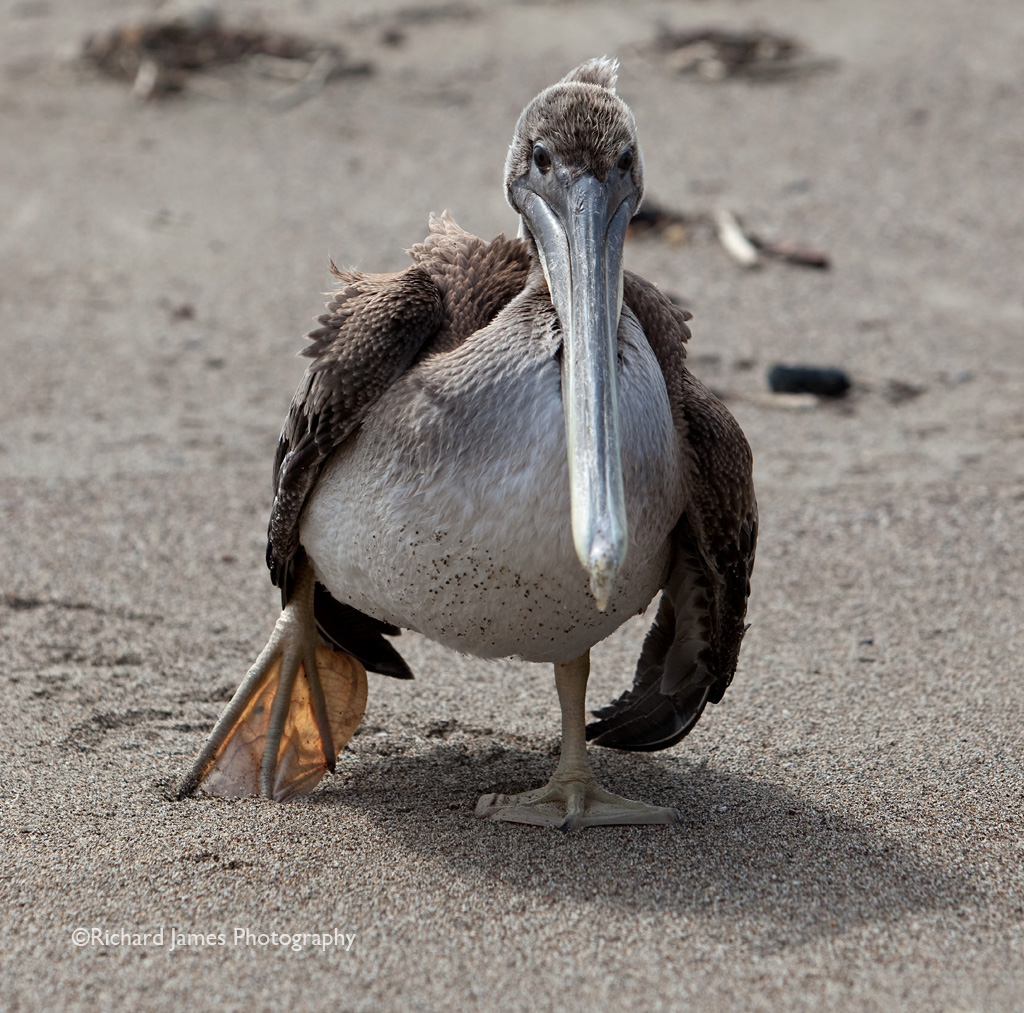
Sparky, wings dragging

Both wings were drooping a bit as it shuffled off when I first came upon it.

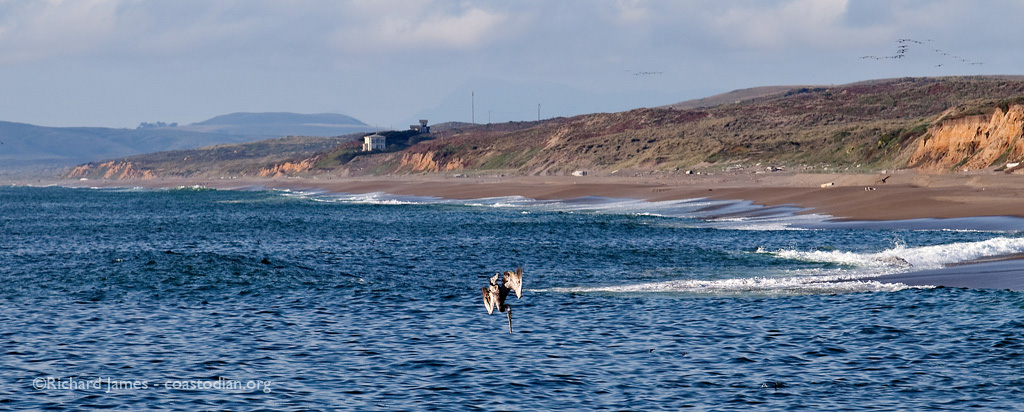
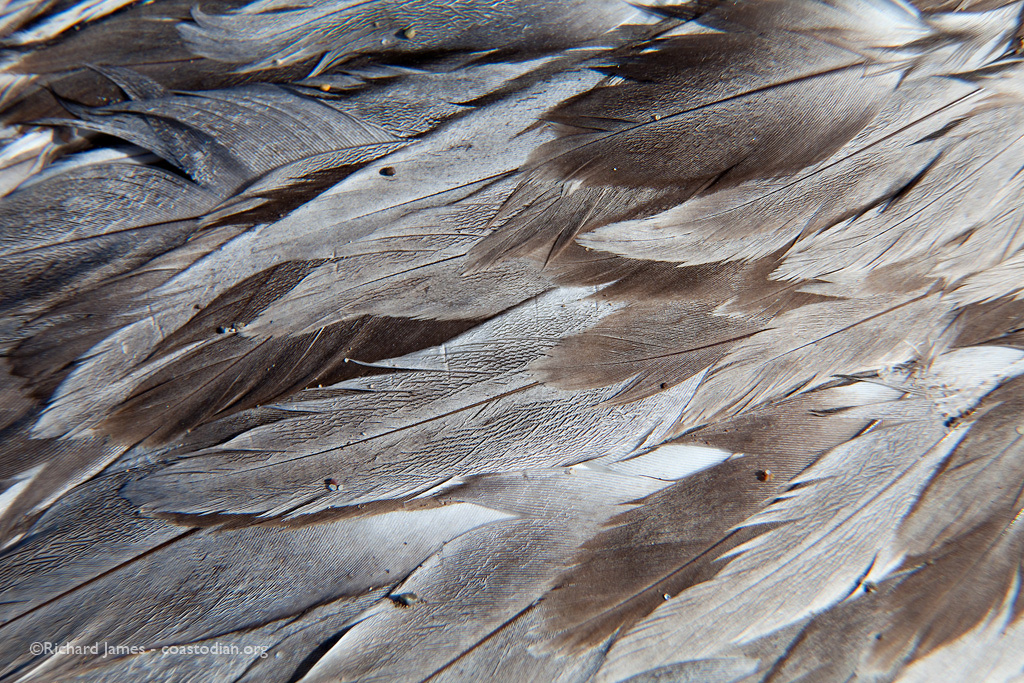
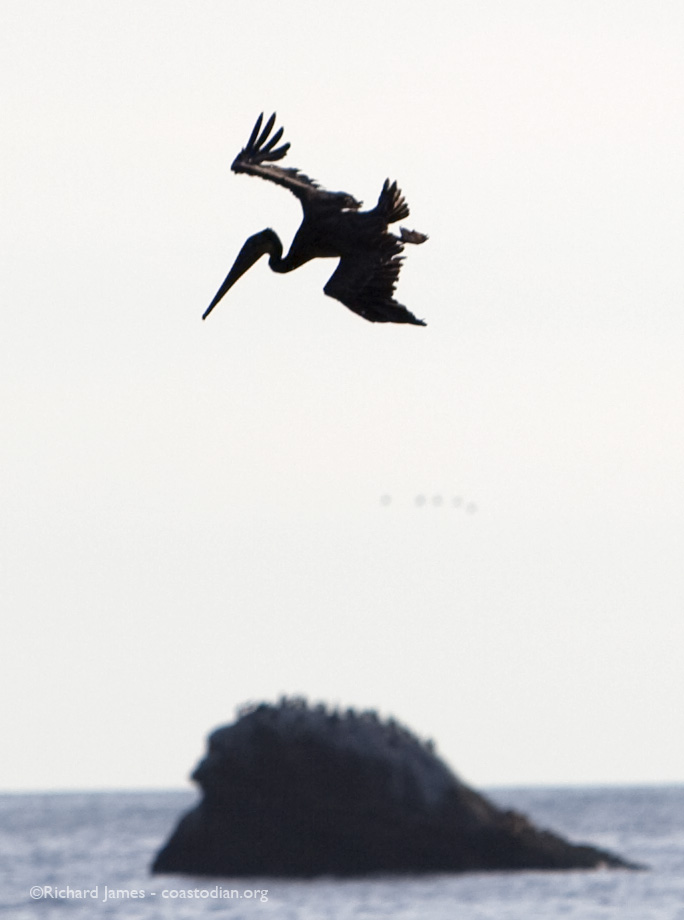
Pelicans soar over the water looking for fish. When a fish is spotted, wings are tucked back, beak out straight, they dive down and hopefully scoop up a meal in their over-sized pouch. If they are not so lucky, they miss, take off and try again. If they are really unfortunate, they hit the surface of the water at the wrong angle and break a wing or two, or their neck.

This bird was dry and other than the dangling wings (which I believe were broken) looked just fine as it eyed me crouching 30 feet away, admiring the gorgeous lines and feathers. I dropped my bags of trash, sorted out my camera gear and crawled around, awed by the beauty of this enormous bird and recorded images. After shooting pictures of it for about 15-20 minutes, I asked the bird out loud if it wanted me to leave it on the beach or get help. Without hesitation, the bird walked 10 feet towards me and stopped in front of me, staring, blinking, waiting it seemed.

Question answered.

I stashed the large debris I had collected above the high-tide line behind a large log and stowed my camera gear for the hike out. I pulled out one of the large white bags from my pack that I use to hold litter. After straightening the bag so I knew where the edges were, I stood up and eyed the bird before me. I’d have to move quick to secure it.

Up til now, the bird had been very docile during the photoshoot. Now, as I quickly strode towards it, I presented the biggest threat it had seen from me and raised both wings up high and opened its’ razor sharp beak. Closing the distance between us rapidly, I gently draped the entire bird, wings, sharp beak and all within the bag and closed down on it.

Carefully I tucked the wings into their natural closed state. With wings secure, I made sure the beak was closed and wrapped my hand gently around it, then tucked the bird under my right arm and walked to pick up my small bag of plastic rubbish.

Hmm, now to get to my car with a very large bird under my arm.

I could walk south, then east to my car, nearly 2 miles, or, I could walk north about a third of a mile to Ben Davis’ place. I decided to walk to Ben’s and see if he would give me a ride back to my car. If he was not there, I’d walk down his long driveway to the road and hitch a ride back to my car, I hoped.

After walking, occasionally stooping to pick up trash and re-cradling Sparky as I decided to call this bird, I reached Ben’s place. All the way down the beach, Sparky was quite relaxed under my arm, hardly moving. Only when I turned away from the sea to scale the bluff did it become active and struggle under my arm, trying to free itself.

Looking up towards the house, there was Ben, Pat and their nearest neighbor Ernie Spalleta at the bench having a beer, it was Memorial Day weekend.

As I walked up, Ben called out my name to see if it was me, I said yes and that I had a favor to ask.

I told him what I had under my arm and asked for a ride to my car.

He instantly got up and said sure.

Hos tiny dog hopped into the pickup with me as I sat down and sniffed my bundle. Sparky was none too happy about this. I suggested to Ben we leave the dog behind. He handed it to Pat and off we went down the long drive to Sir Francis Drake Blvd.

On the short ride to my car, Ben related that in days gone by, pelican feathers were coveted for fishing lures called “hoochies” and people would often shoot them to get these sought after plumes.

Back at my car I thanked Ben as he drove off and re-wrapped Sparky and packed my things. The bird rested on my lap so I could secure it while I drove back to my place. Sparky left several chalky white deposits on my lap, seat and center console. For a bird more at ease soaring inches off the waves, riding in this noisy metal box was likely not all that comforting. My several calls to friends in the know led me to a place where they rehabilitate wild animals. I hoped they would be able to help out this gorgeous bird. Tiny mites crawled all over me.

Once home, I placed Sparky in a large plastic tub I found on Kehoe last year, covering it with two plastic screens I had also found washed up on local beaches recently. I weighted it all down with a large piece of anthracite I found 2 years ago and got in the shower to wash the bugs off. Being sure to strip my bug infested clothes off while out on the deck where they still sit.

I checked on Sparky as I left for the event I had to attend and there he/she sat, quite calm.

After returning I have checked 2 more times to see the bird has moved to a new position each time and seems to be resting peacefully.

I’ll drive to Wild Care in the morning to drop Sparky off and hope for a speedy recovery.

======================================

Above is all I wrote that evening.

I continued to check on Sparky every 20-30 minutes. Each time all looked fine as it crouched in the large tub acting as home until I could get it to the bird care place the next morning.

At 12 midnight I came out to find Sparky was lifeless, head slumped down on the floor.
I reached in and found the body still warm, rigor had not set in.

Although not surprised, I was still sad. I had hoped to get this bird to where its’ wings could be mended and it could be released. No more.

I later learned that large birds like this, once they break wings, can never be released to the wild. So it is probably for the better. No animals belong in a zoo.

The next day I wrapped the pelican body in the same bag as before and hiked back to the spot I found it. I unwrapped it and left it for the scavengers and elements.

The next day I returned to see what had become of my friend.

Each evening and morning, raccoons, skunks, coyotes and bobcats roam the beach in search of food.

Nature is so beautiful, no lies, no hesitation, no waste, no greed.

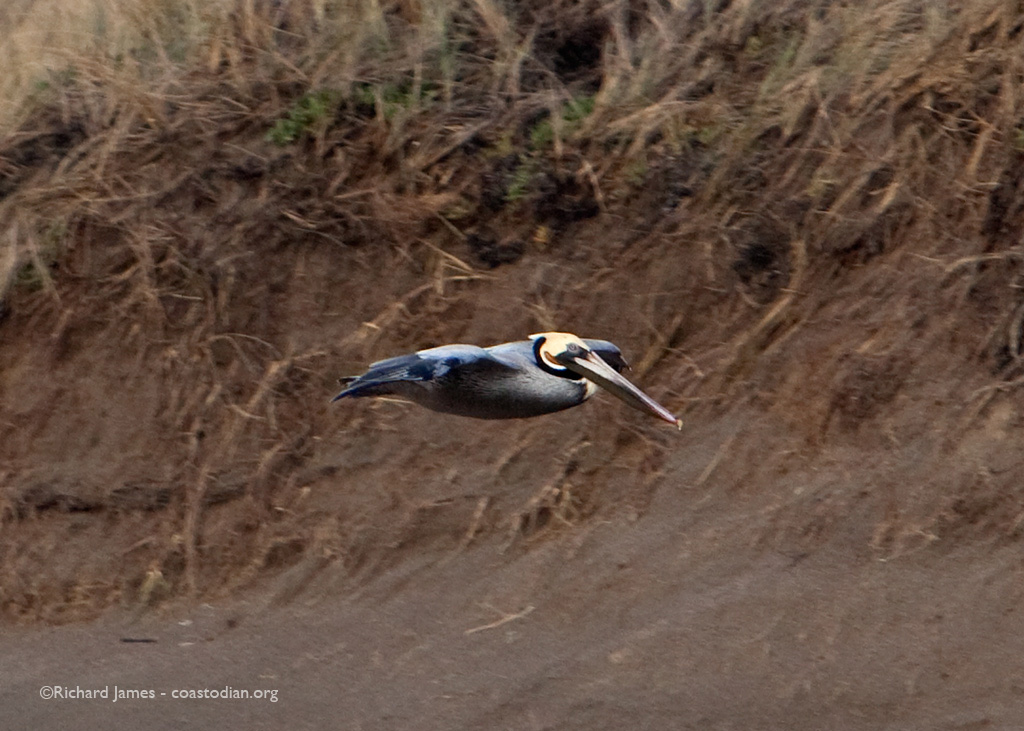
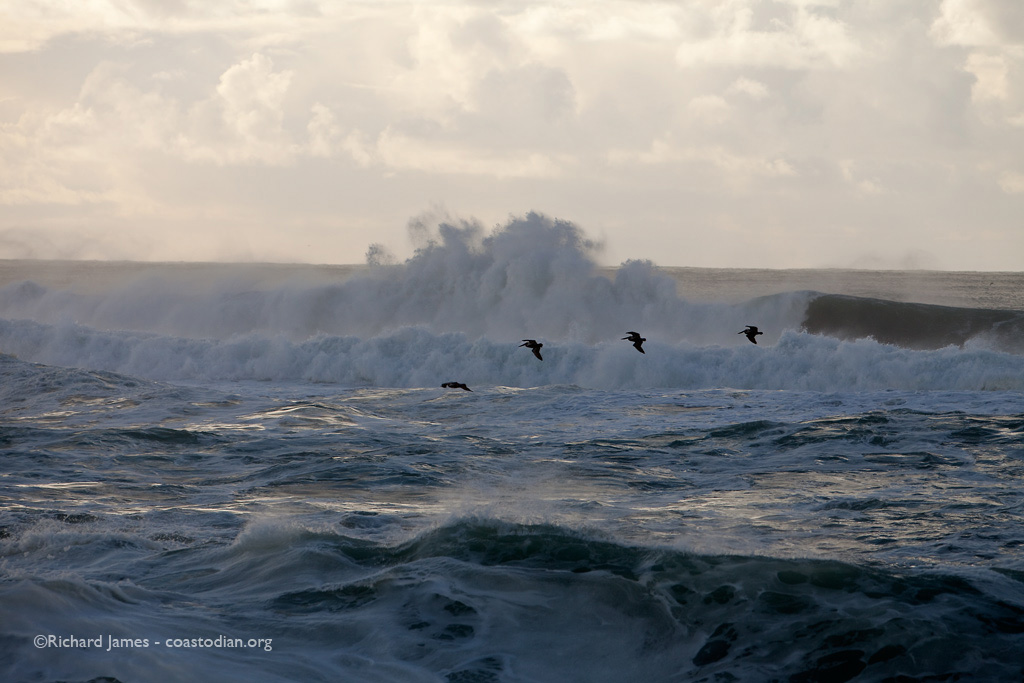
Below are some images of brown pelicans from over the years. Click on an image to see it larger.

For Kate

Mad ocean, foaming at the mouth

Click on the title of this post to read it and see a related header image.

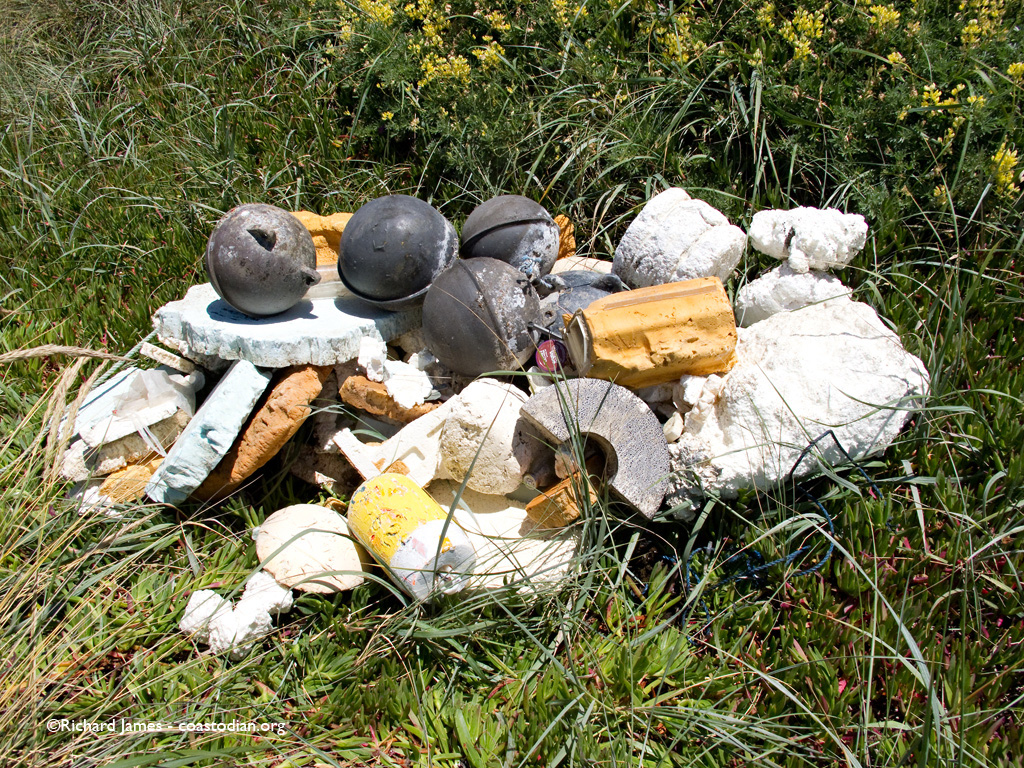
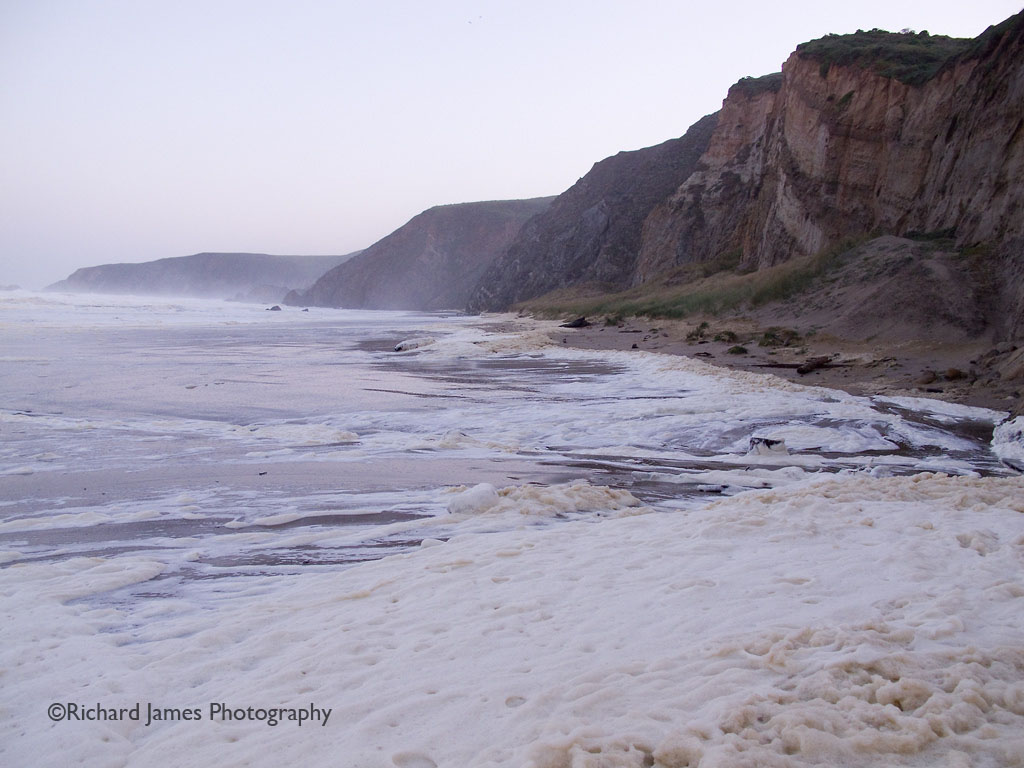
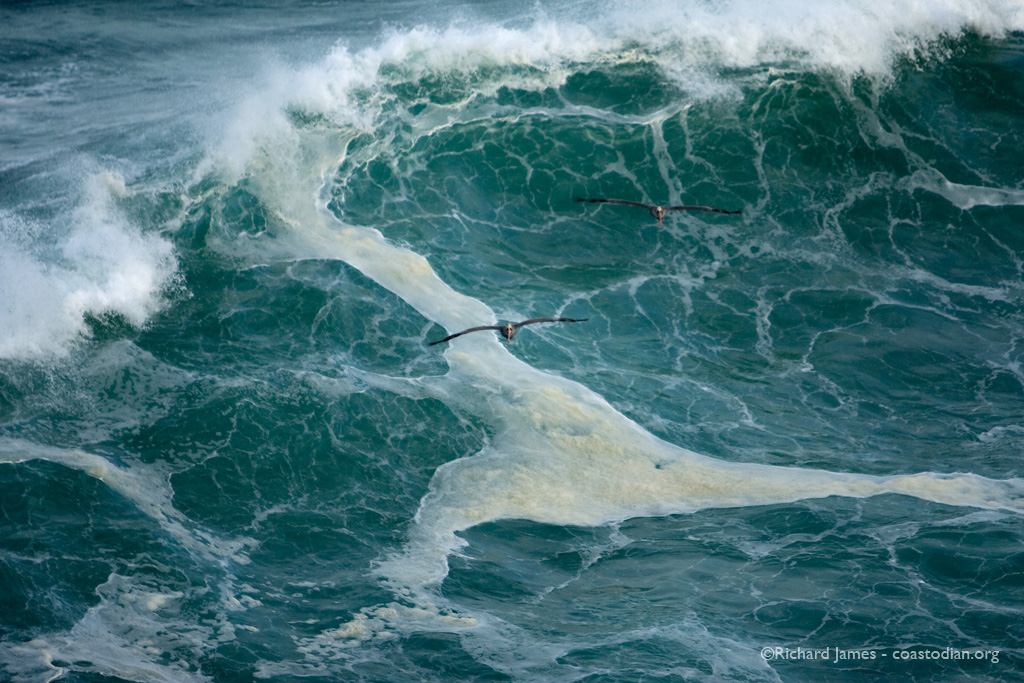
The past few months have brought a never-ending supply of foam to the beaches at Point Reyes. Mostly polystyrene, though other flavors as well, all petroleum based.

This pile has been growing and shrinking for several months. I add to it that which I am unable to haul out at the time, then return later to pack out what I can.

I strive to get foam off the beach as soon as possible. Birds peck at it looking for food, harming themselves in the process, as well as breaking it up into smaller pieces for other unsuspecting animals to attempt to snack on.

This young elephant seal is still trying to figure out how to feed itself now that mom and her high-fat milk is gone. I hope it quickly learned that foam is NOT food.

The rough water of winter storms grinds it up and pushes it into the drainages that meet the beach.

Such a lovely sight in a national seashore!

This scene is reproduced all over the world each and every winter.

I spent nearly 2 hours picking up most everything not wood or sand in this image.

Foam does not weigh much, but it is big and bulky. Forty-five pounds or so on one’s back is like a spinnaker. Thankfully I had the wind at my back on the hike out and made great time.

The next stop for this load of man-made mess is the dumpster at Point Reyes headquarters.

I wonder where the contents of the dumpster will end up?

Remember, on this tiny planet, there is no away.

Gray sky, gray whales

Click on the title of this post to read it and see a related header image.

This morning at 7, following a tip heard by me during restless sleep last night I made my way to McClures Beach.

My wipers slapped the condensed gray of the sky off my windshield as I drove north to see what was meant for me.

Crawling indelicately across the mussel and algae covered rocks protecting the north end of the cove between Elephant Rock and McClures Beach, oystercatchers announced my ungainly presence to the pelicans diving for breakfast and the cormorants filing past in long lines.

Not 150 feet offshore, two mottled gray, scar-covered backs broke the surface, one large, one small, attached at their waists it seemed, loud gasps announced their meeting the surface. Effortlessly they slid beneath the swell-less sea.

Again and again for 45 minutes I watched as they rose and dove in search of breakfast. I imagine a dozen or more, some far out, at least three, a cow-calf pair and a third made it to within 100 feet of me as I sat on the rocks enjoying this treat playing out before me.

Not once did I see any wrappers, cups or plastic bits usher forth as they devoured their morning meal.

I thought I heard one say to the other as they eyed me onshore, “See, there’s one of them. They think they’re so clever.”

These animals have more sense in one fluke than do 6 billion humans and all the smart-phones to ever be built.

Not me, I know I’m as dumb as a very big bag of plastic bottles.

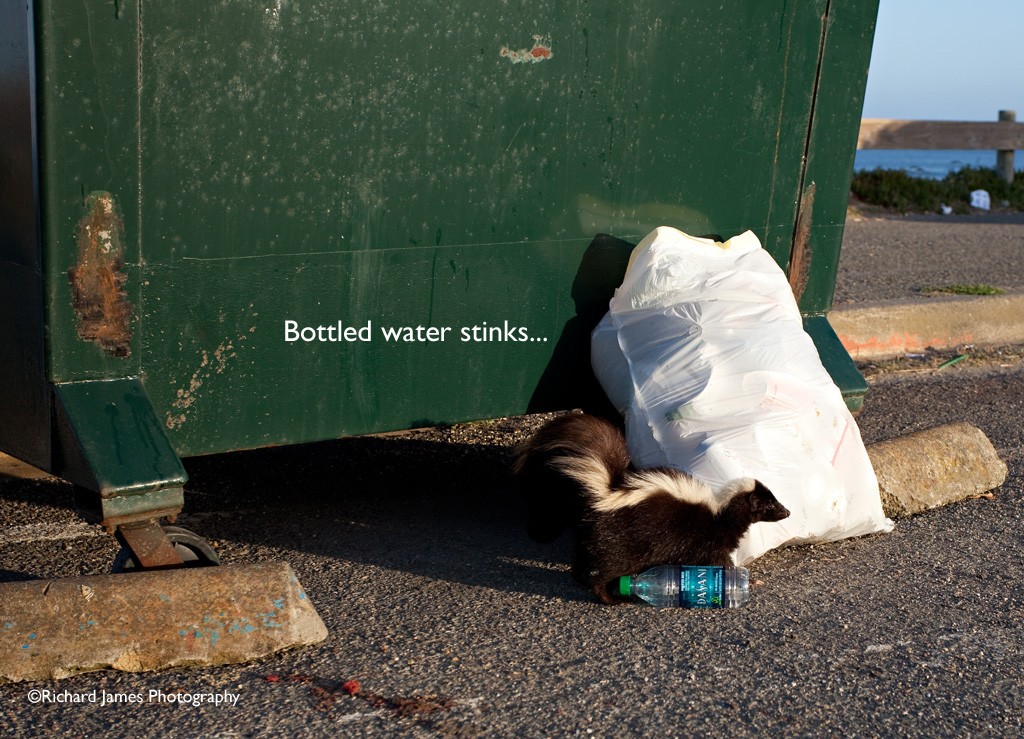
Bottled water stinks

Click on the title of this post to read it and see a related header image.

Bottled water stinks


In 2011 on the 4th of July, the NPS forgot to place a second dumpster at Drakes Beach, something I was later told is the norm. The masses and their hundreds of recyclable beverage containers, BBQ scraps, oyster shells and broken furniture/plastic toys overfilled the lone dumpster. This skunk chewed into the plastic bag you see and scattered debris far and wide. I spent a couple hours picking up after the skunk as well as the wind that had distributed all the items that did not fit into the lone dumpster.

Below is a short clip of one of the many visitors to the beach each morning, looking for a bite to eat. Notice this animal does not leave any wrappers or other trash after dining.

https://youtu.be/AAvZwQzGb6U

A long walk on The Great Ocean Beach – Point Reyes

I’ve not posted anything in a while.

My creative muse is on extended hiatus and my writing is not something I am overly fond of.

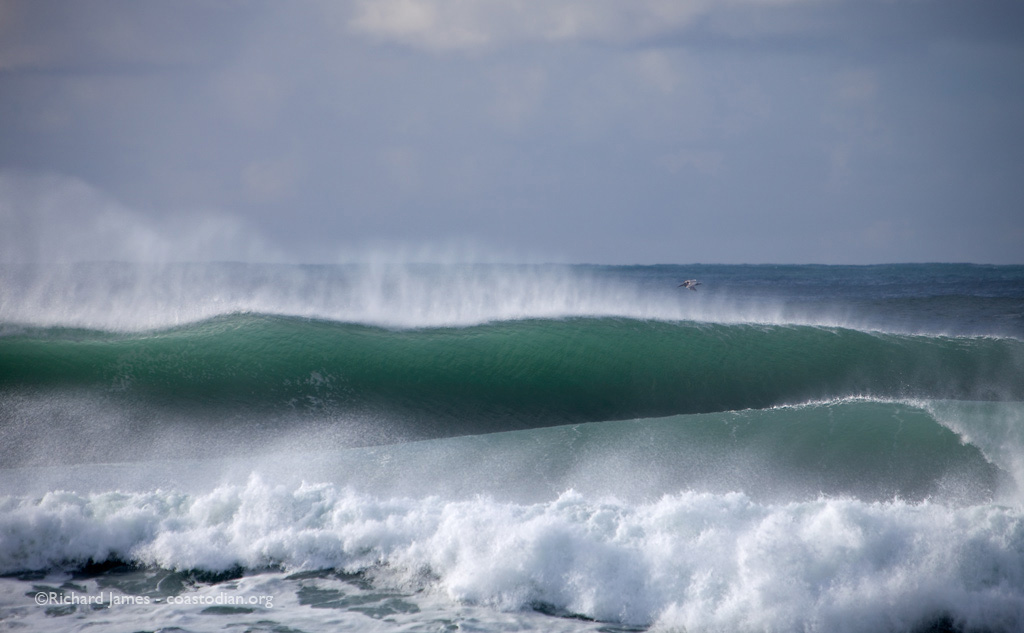
Last night the swell off Point Reyes was over 20 feet for an extended period of time, peaking at nearly 25 feet around 3:00 am. Big waves! Big fun.

I love being on the beach when the energy is high.

Last year I walked nearly the entire Great Ocean Beach with a few friends. We got a late start and grew tired, so we did not do the last mile.

Yesterday I decided to bag the whole enchilada. I packed food and drink, and all the clothes I might need. Without a car shuttle, I either needed to hitch a ride at the other end or do the walk twice. How would my legs hold out?

The blue line is my track - click to see a larger image

Got up at 5:00 am, drove to North Beach (the midpoint of the Great Ocean Beach, some call it ten mile beach, others twelve mile beach, I call it the outside beach, Drake/Limantour being inside) and stashed two liters of water. Then I drove up to Kehoe Beach and left the car at 6:19 am. After the short walk to the beach I was greeted with moderate winds and huge seas. The foam was deep and all the way up to the dune grass. Enormous waves crashed and pounded the beach.

To do the whole beach proper, I hiked north about two thirds of a mile to the wall. I had to dodge waves and deep drifts of thick foam all the way to the wall. Sea birds, wounded in the heavy surf littered the beach or swam in the foam/water, clearly not well. At the wall I set a waypoint and set off to the wall at the other end by the Lighthouse. It was 6:49 am.

All along the way I was serenaded with the sound and sight of enormous crashing waves. Waves twenty feet high crash long and loud, foamy spray shooting into the sky. The litter load was not as heavy as I would have thought. Lots of crab gear, some pelagic litter (from far away, coated with goose-necked barnacles and green slime) and the usual wrappers, bottles and broken patio furniture. One glass IV bottle showed up with Asian writing. As did a small brown glass vial for needle use. Only one hypodermic needle today.

Given my need for speed, I did not pick up everything in sight as is my usual MO. Plastic bottles, tennis balls, oyster spacer tubes, plastic brims from sports caps and the random toy made it into my several bags.

At one point I almost tripped over a Western Grebe. It immediately began kicking with one leg and crying out. The other leg was lifeless. I backed off a bit til it quieted down and watched it for a few minutes. It was terrified, unable to move except in a semi-circle as it kicked with one leg and cried. I pulled out my knife, said a short prayer, looked it in the eye and put it down.

Still miles from the other wall, I moved out, the lifeless, yet I hoped no longer suffering grebe foremost in my mind.

As I neared the North Beach parking lot, I noticed the heavy surf had knocked down a large portion of the rope fence put up to keep people out of Western Snowy Plover nesting areas. Walking along and resetting several posts, I hoped I had set it in the same location it was before.

By now I had about 35-40 pounds of trash with me, time to cache this and get some water and snack. One apple, some cheese and chocolate washed down with a liter of water and I was good to go.

Eventually I reached the South Wall at 1:07 pm and stopped for lunch. Legs sore and now facing a headwind, the idea of punting at either South Beach or North Beach on the way back crept into my fatigued mind. My third apple, 2 more ounces of cheese and some chocolate consumed, I set off into the quartering-headwind from whence I came.

By the time I reached North Beach again, my legs and feet held the floor and the vote was in, punt. Climbing over the bank, the parking lot was full of cars, surely one was headed to Kehoe eventually.

The nearest car’s driver had just hopped in and turned the key. I caught his eye and got him to roll his window down. “Hi, are you by chance headed to Kehoe Beach?” I asked.

“Well, I am making it up as I go today, where is Kehoe?”

“About twenty minutes north of here, I’ll show you the way and explain the sights as we go.”

“Great, hop on in.”

Daniel was visiting from the East Bay for the day, exploring beaches he had not visited in many years. He drove me right to my car. I and my feet thanked him profusely and we parted ways.

I popped three more ibuprofen and headed back to pickup the trash I had cached at both North and South beaches. I still have another cache to pickup further south and will do that later.

After 20.85 miles in soft, sloping sand, the hot shower felt wonderful.