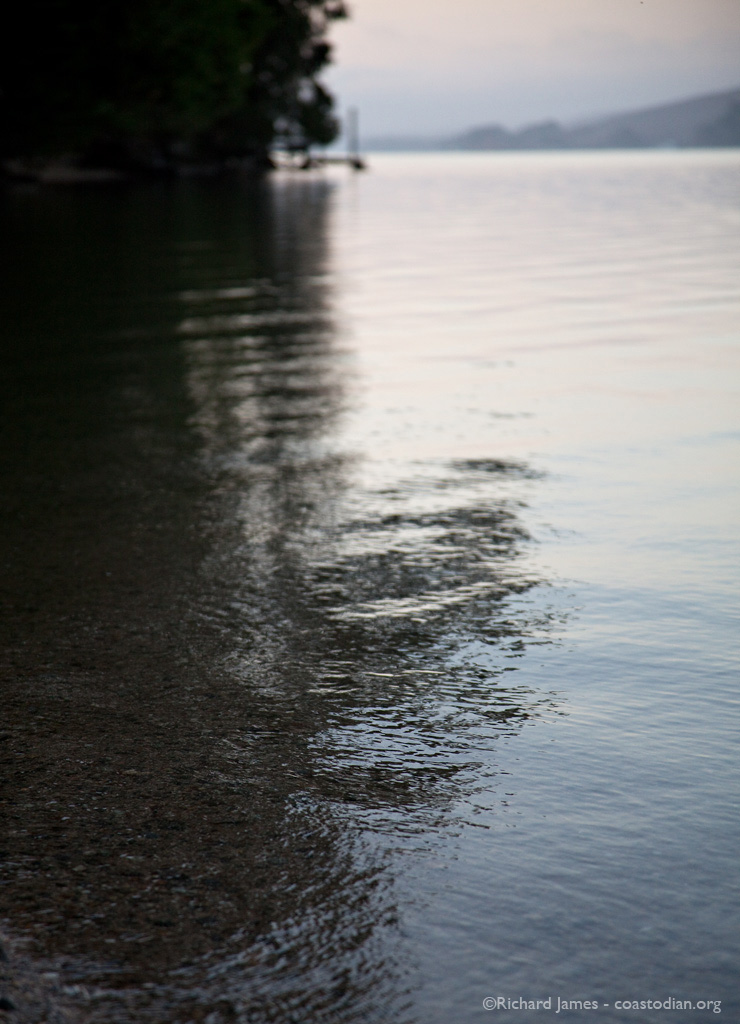
Save our Tomales Bay – part 8

Click on the words above “Save our Tomales Bay…” to see this post as it was meant to be seen.

This past weekend the weather was superb. Nearly zero wind, flat water and perfect temperatures made for a sublime day on the bay.

I’ve several posts from days gone by to publish, but time is sparse and they need more than I have just now, so this will have to do for now.

It is raining hard as I write this, the lights have flickered twice which means the salmon and steelhead are about to make their return journey to natal streams whence they emerged into being 3-4 years ago. As I paddle across the shallow Tomales Bay, with each dip of the blade into water, I look down and think of the thousands of miles these fish have traveled since they left as 100 mm smolts 1100 days ago.

Today with water so flat and tide so high, I venture to the east shore of the bay to have a look and see how the shore is being treated by local commerce. Oyster farmers in particular.

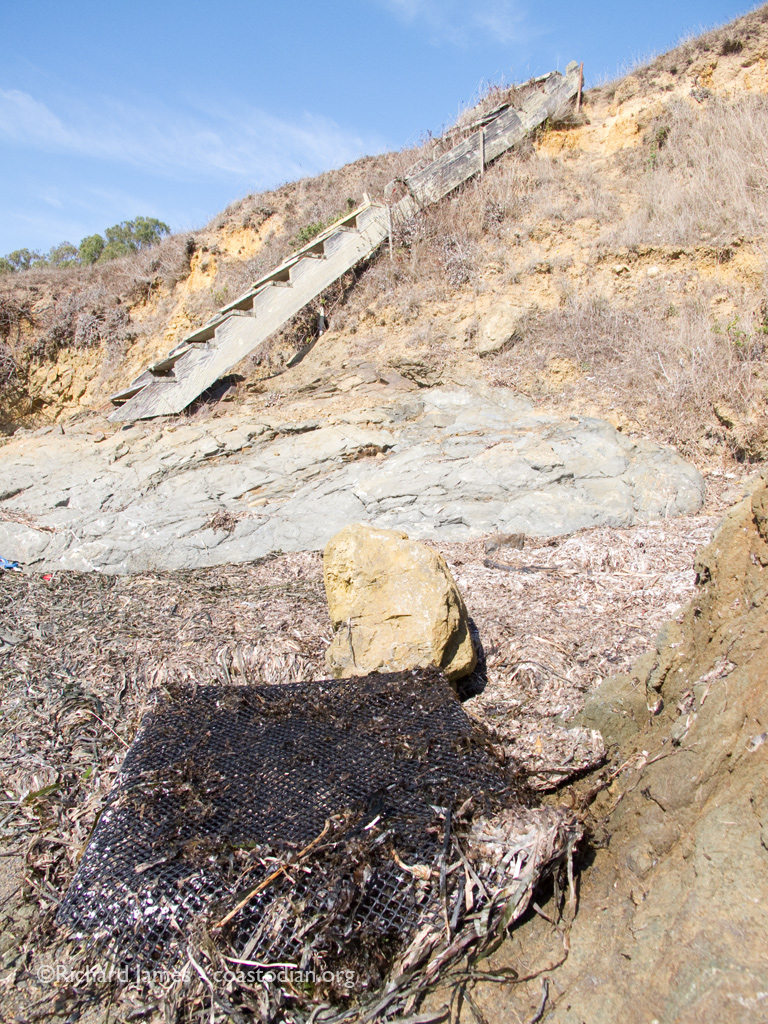
I’ve been pretty forthcoming about what I see as their shortcomings in terms of policing up the tools of the trade they have chosen. It is with pleasure I report that they seem to have gotten the message (unlike other oyster farmers in the area, see here for more on that) and are picking up after themselves.

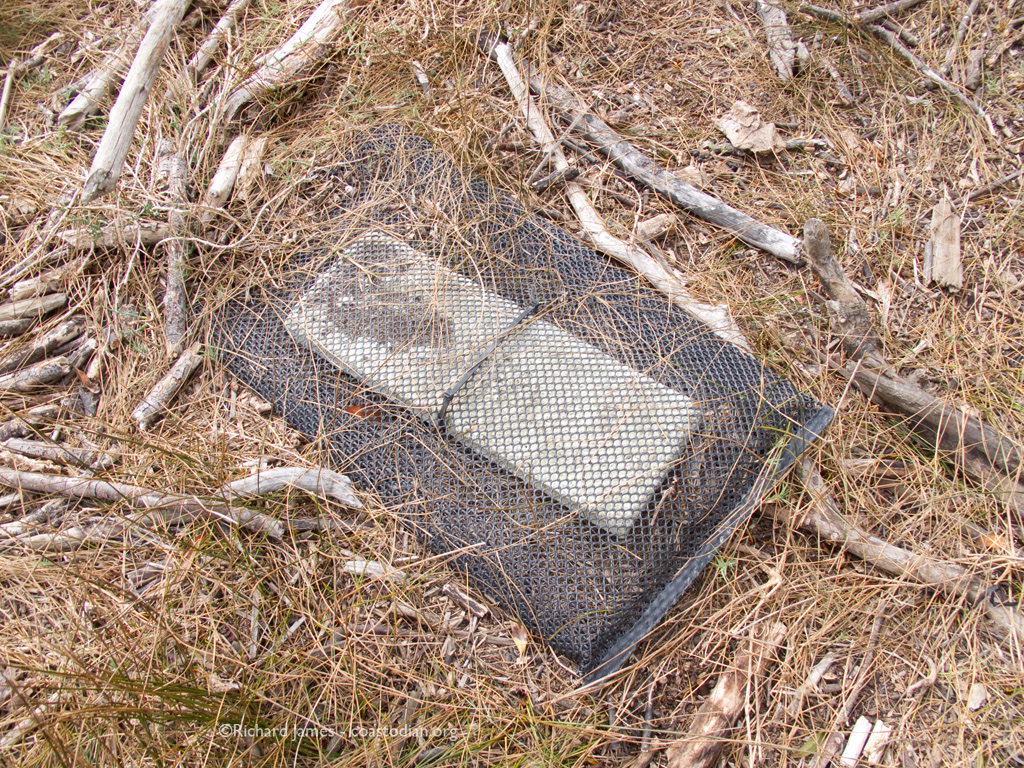
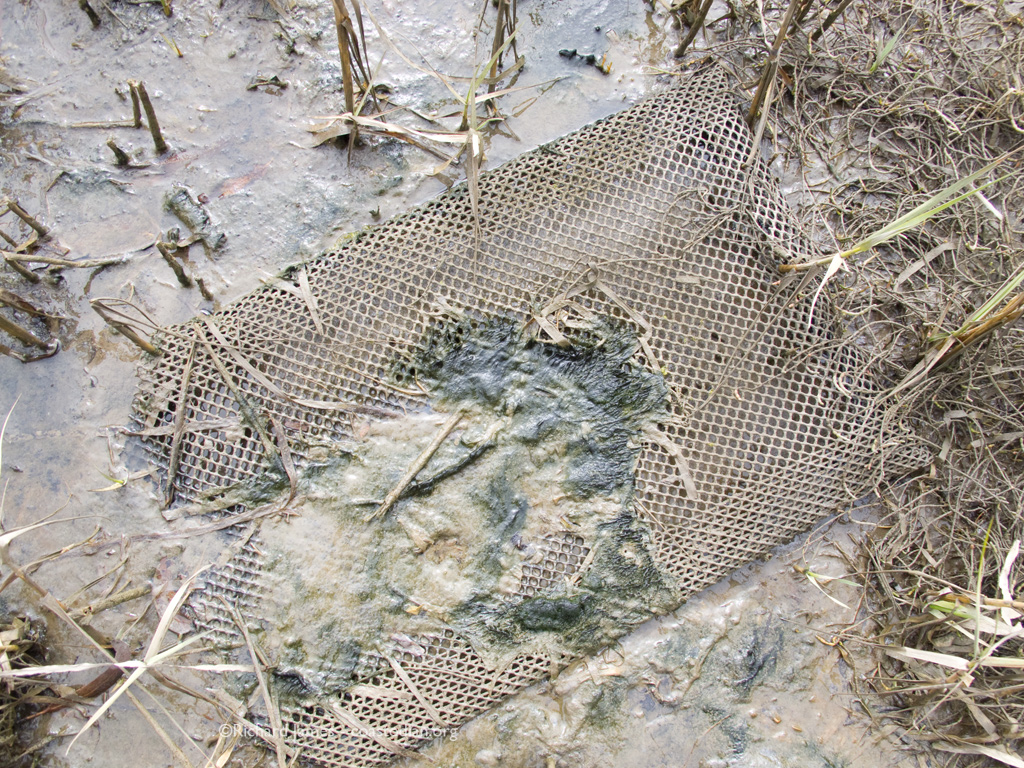
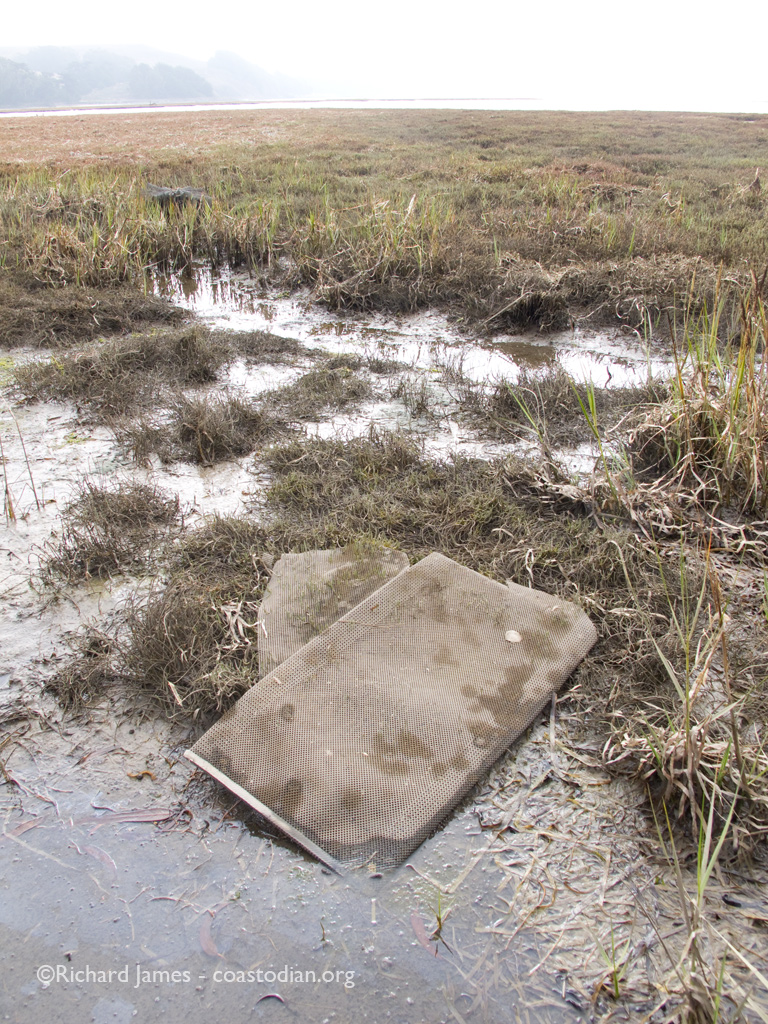
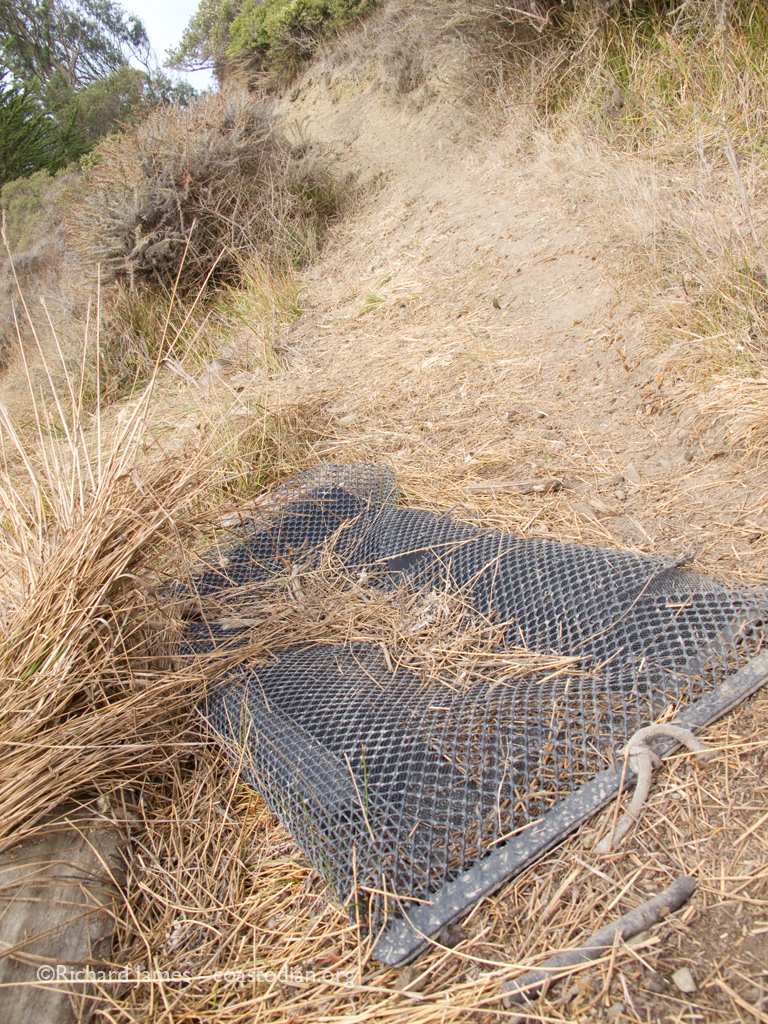
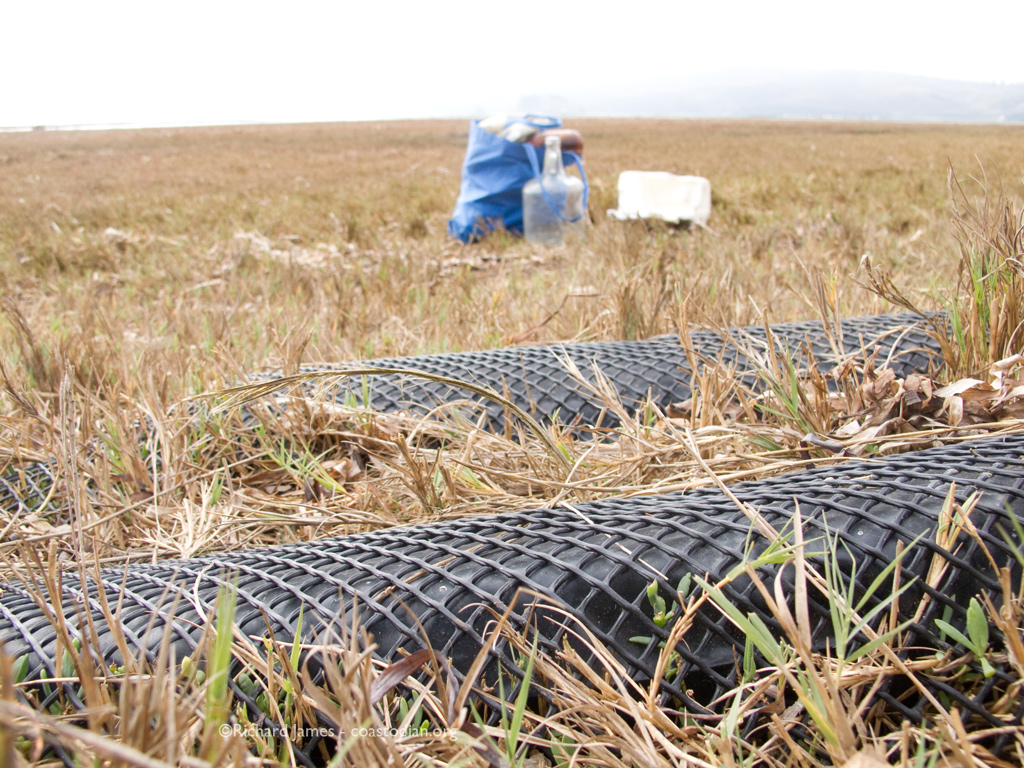
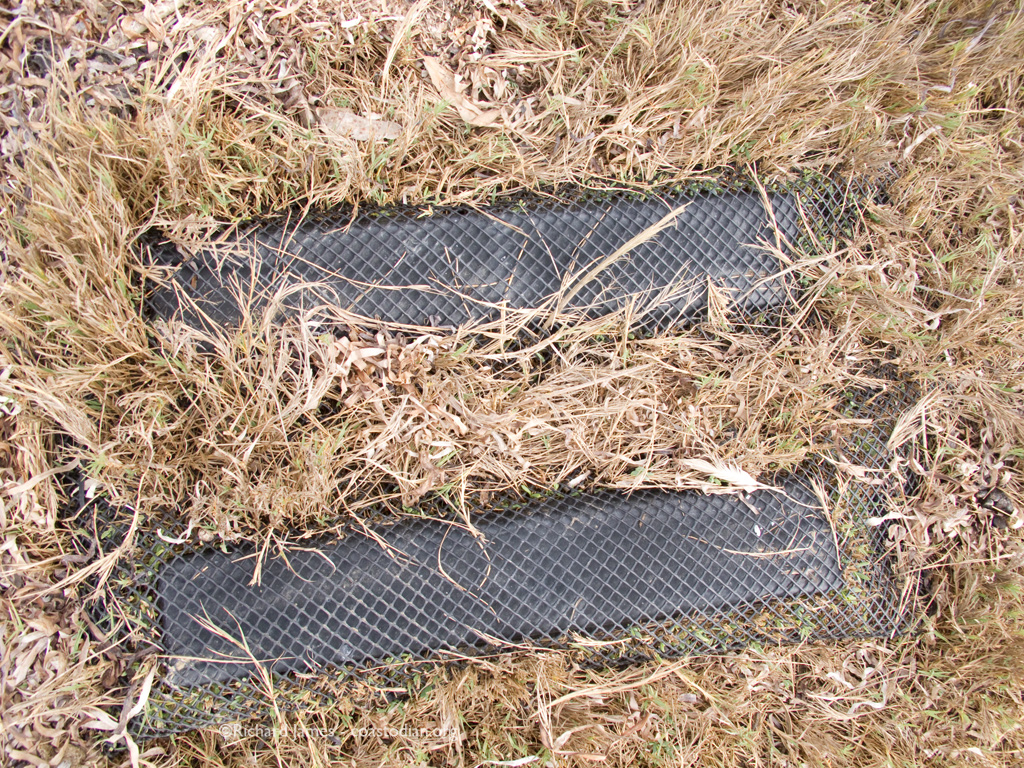
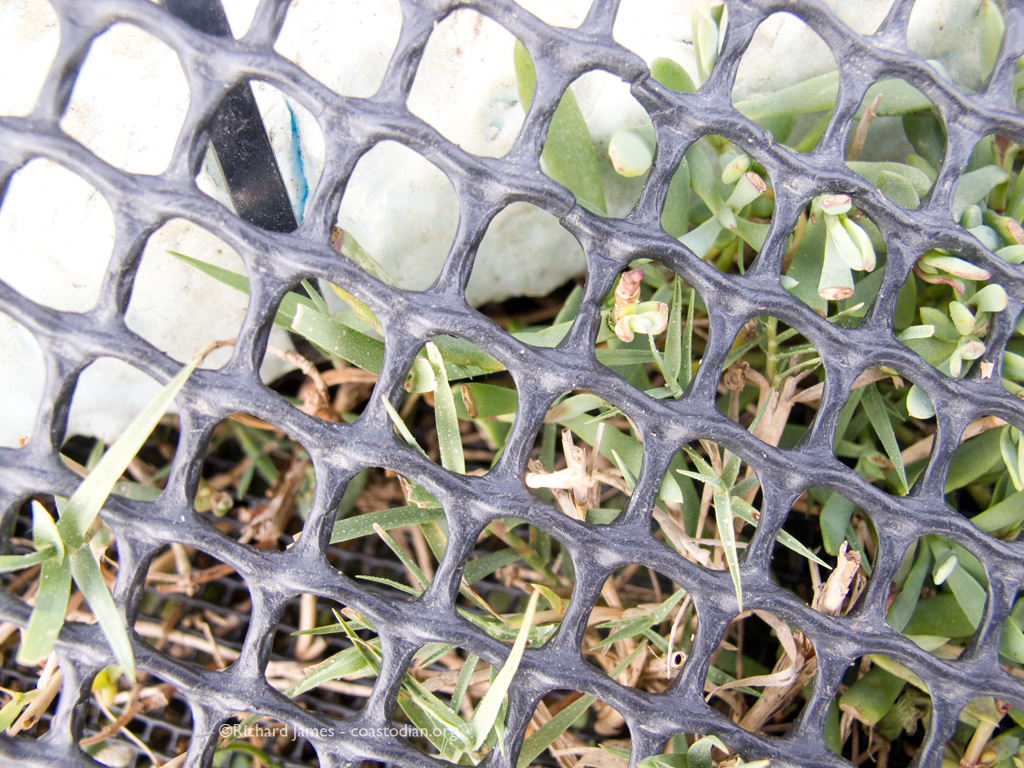
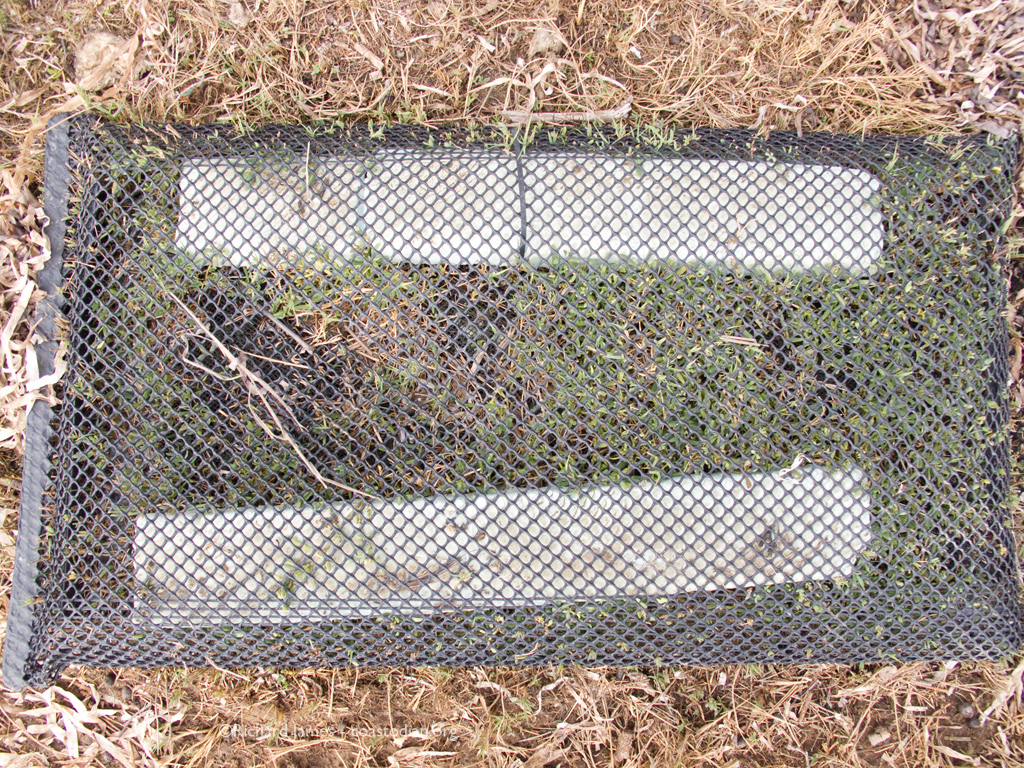
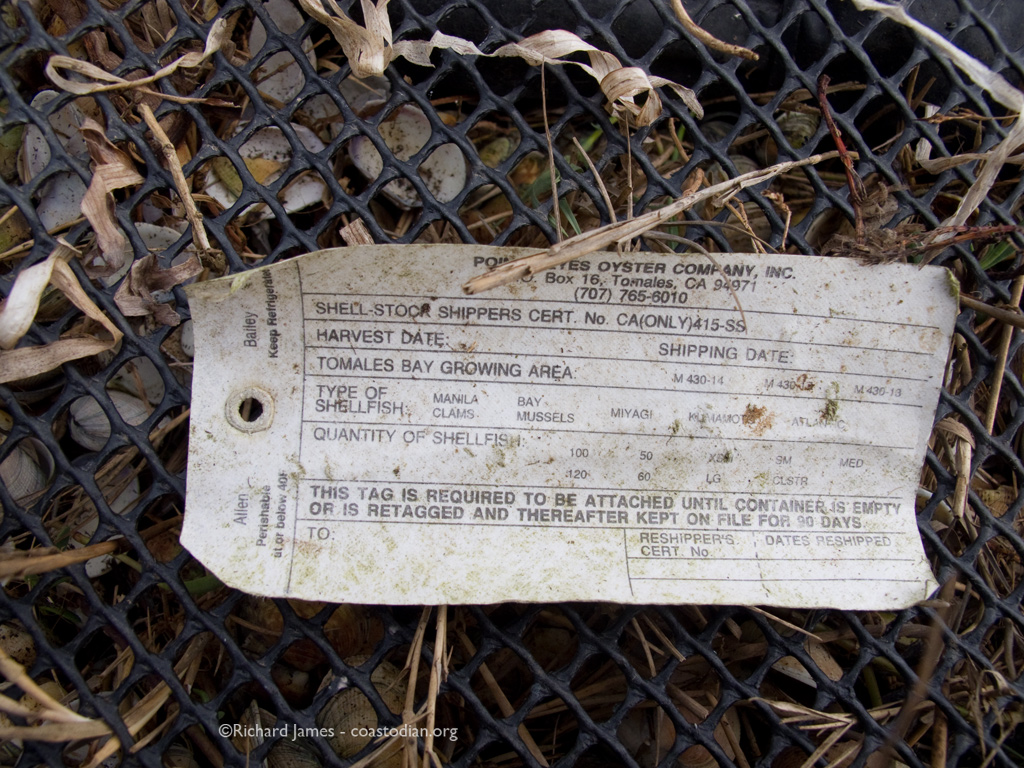
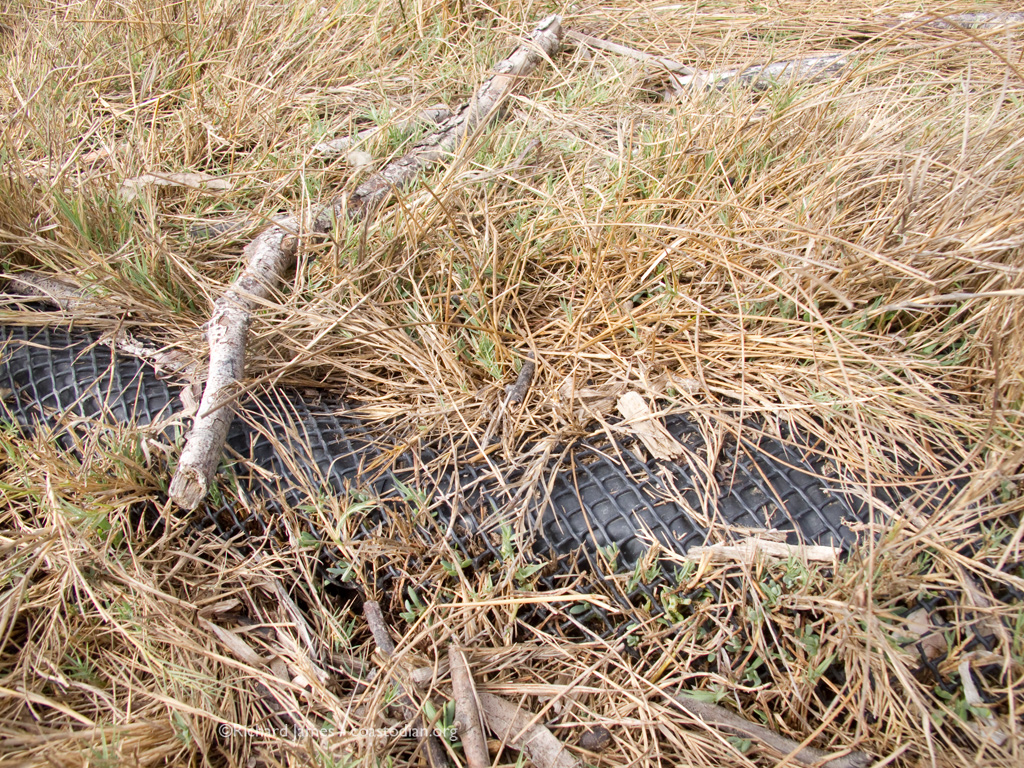
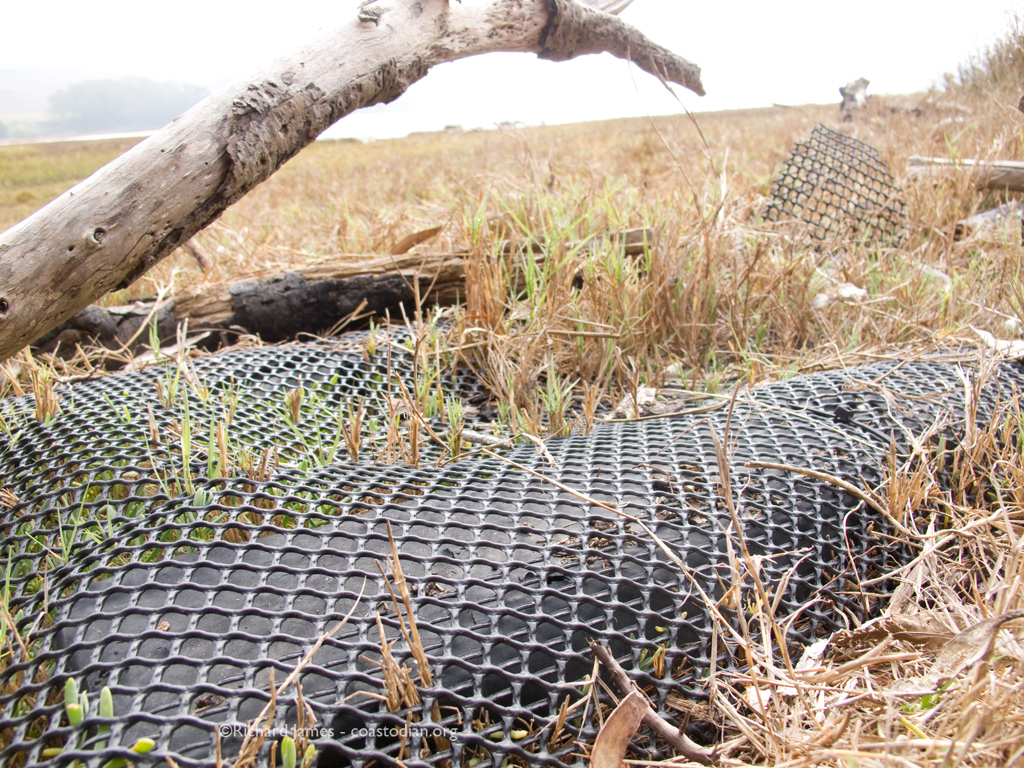
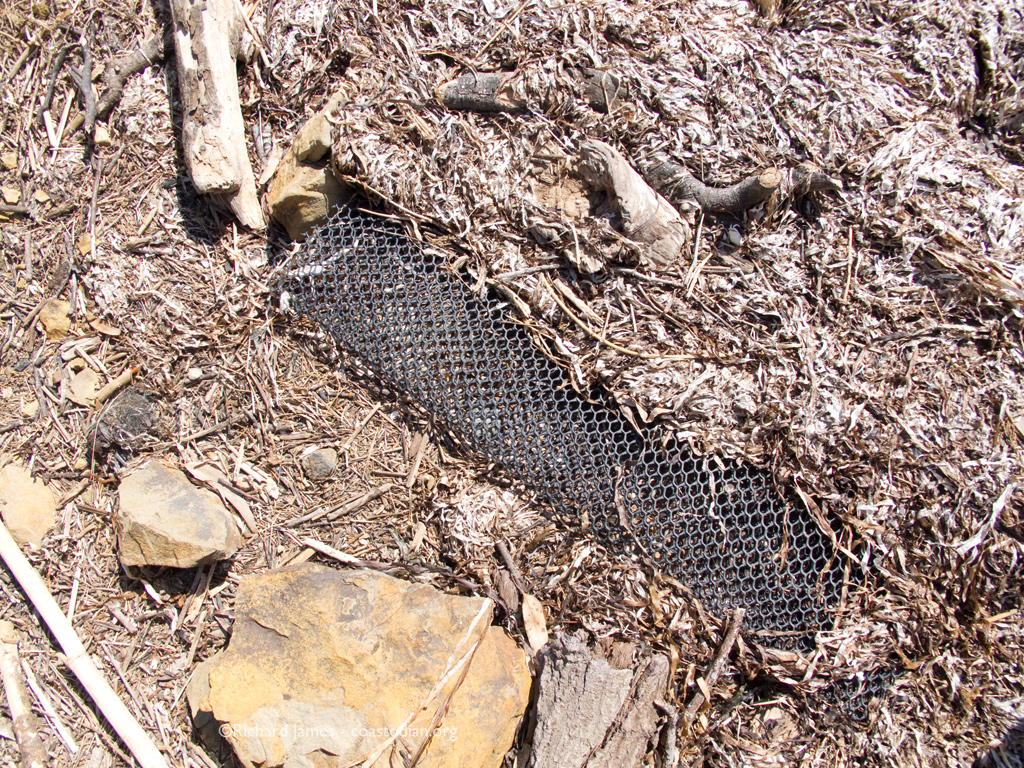
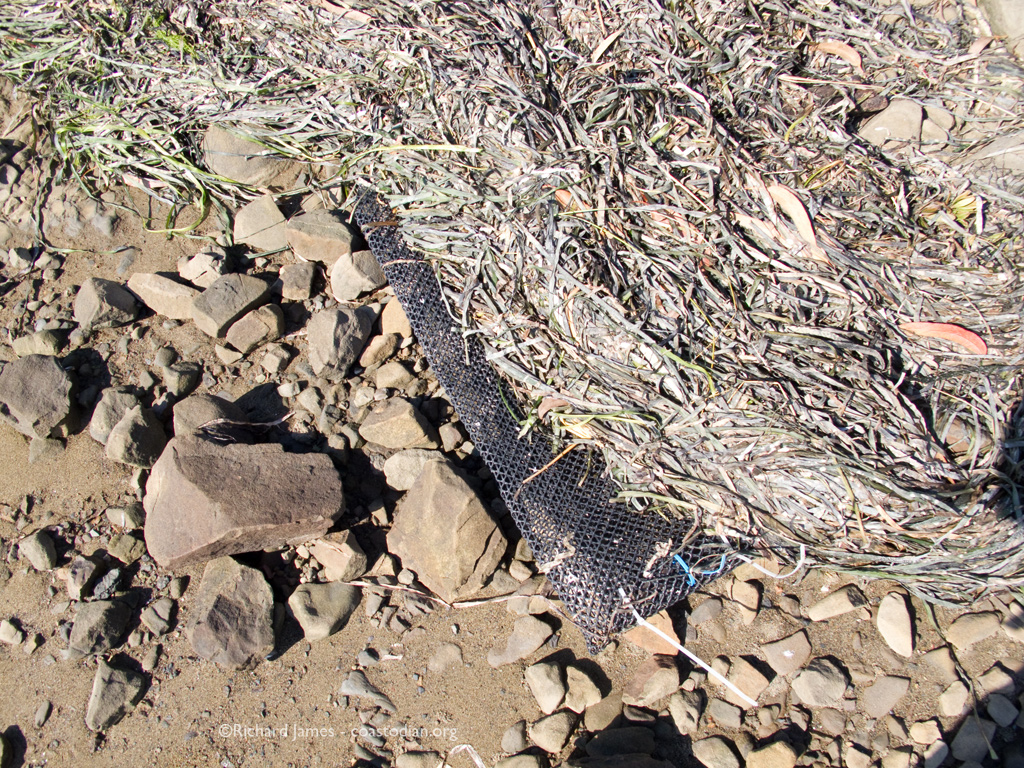
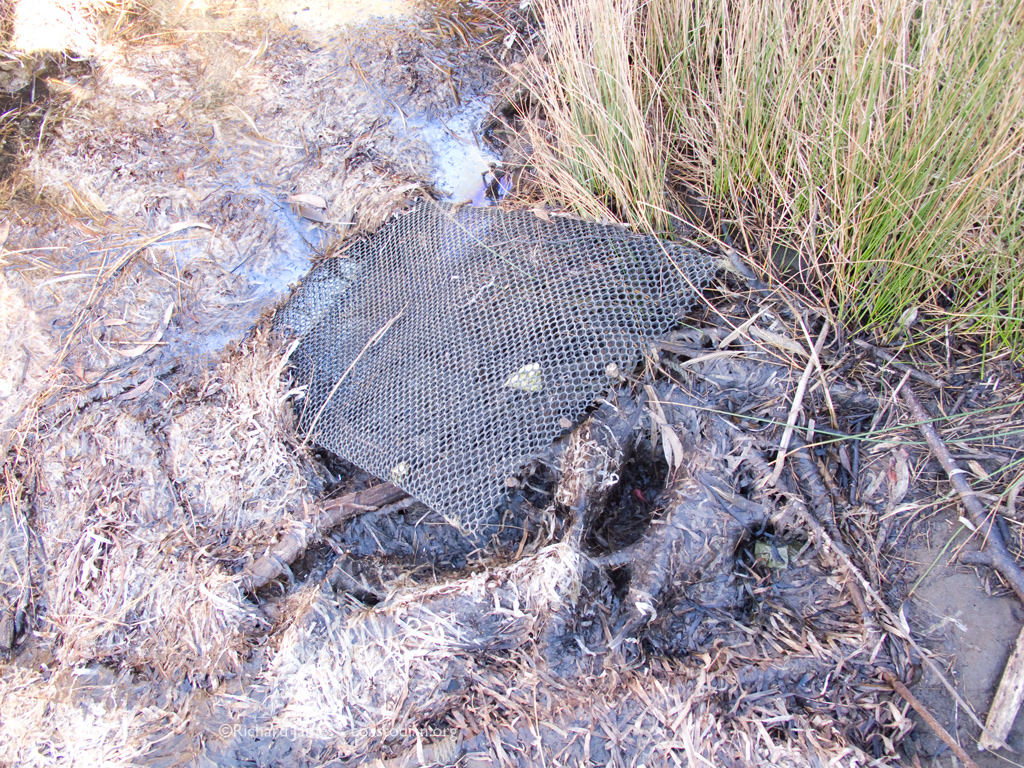
In the past I’ve found dozens, hundreds of grow out bags littering the shore and inter-tidal region. Along with dozens of the tags from the bags they buy from Washington State and have shipped down to resell.

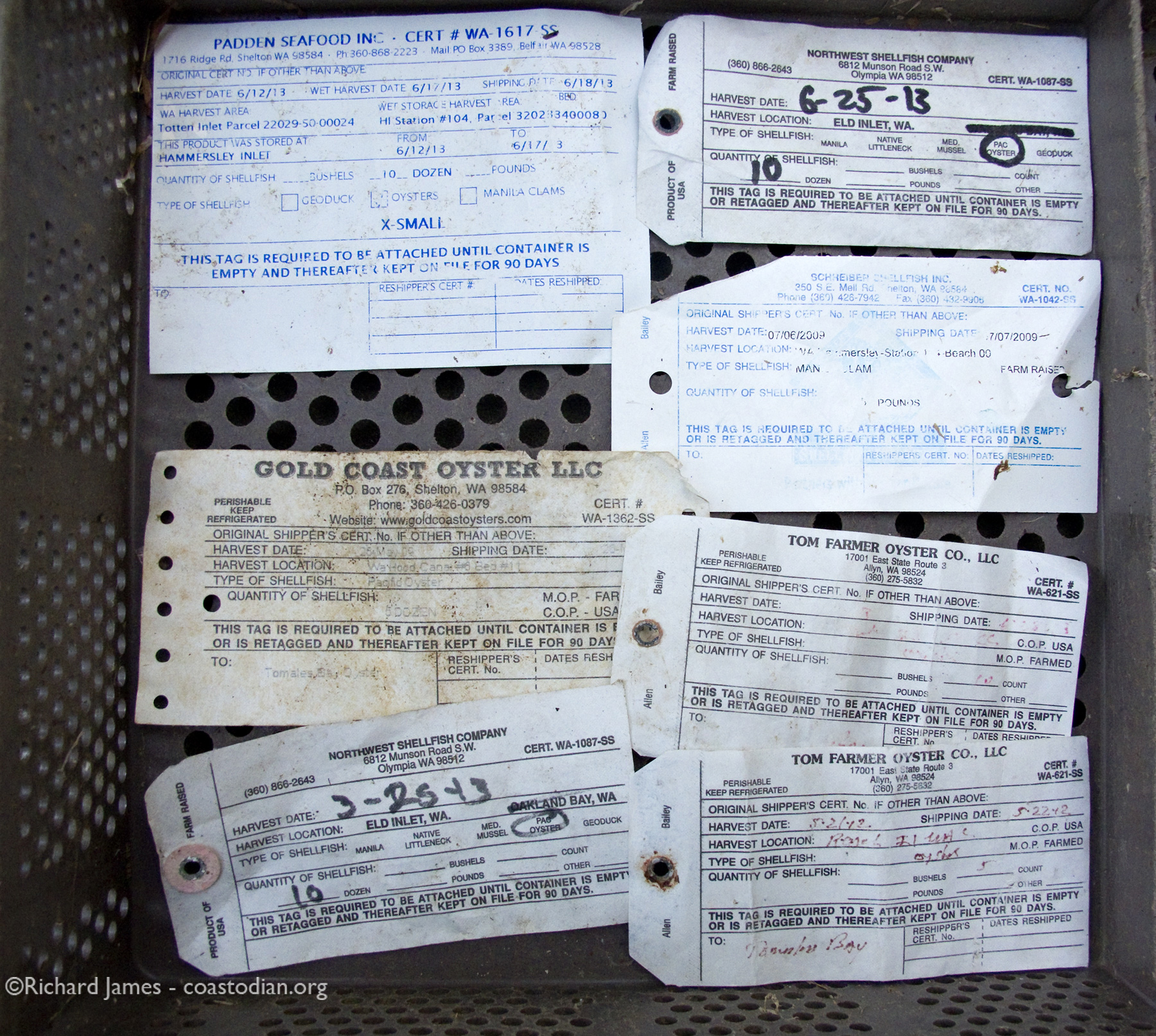
Hey California, call your oyster farmer. The numbers are right there on the tags. As always, click on the image to see a larger version.

Hey California, call your oyster farmer. The numbers are right there on the tags.
As always, click on the image to see a larger version.

That trip I only found a few bags and 8 tags. And I had to look hard for them too. Seems someone (TBOC?) is out picking up their trash. Thank you to whoever is getting it. If you do this regularly, I won’t be finding stuff washed way up high in the bushes and buried by plants for years. Or worse, it won’t be washing out to sea where it harms animals, and eventually is ingested by animals, including humans that eat said animals.

So here I am on this gorgeous day, thinking I am not going to find much mariculture debris littering the shore. I take advantage of the high tide and ride the incoming tide into an area I later learn is known by some as Tomasini Lagoon. It is a triangular shaped region just below route 1, separated from Tomales Bay by a dike.

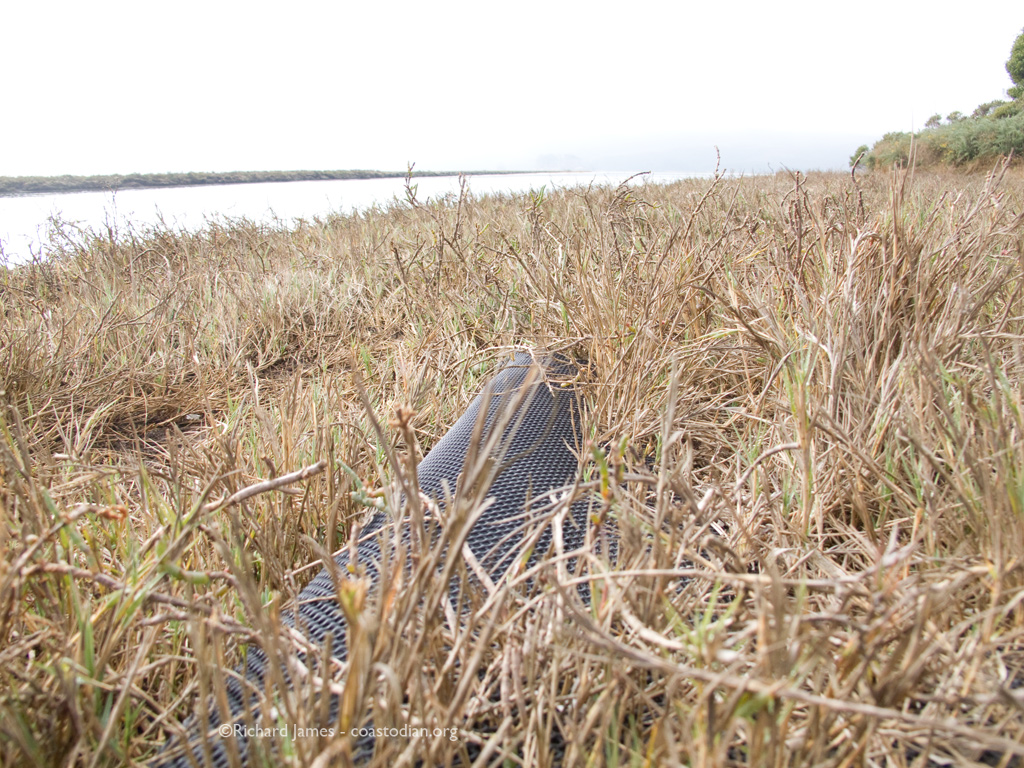
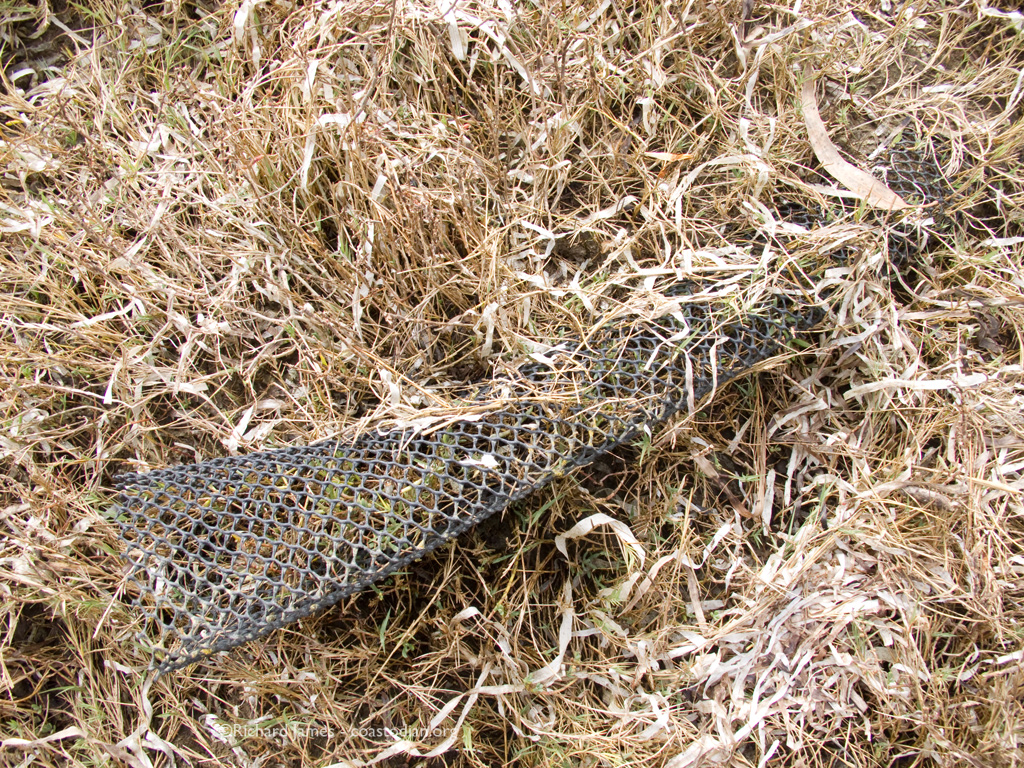
Once inside I begin to paddle close to shore in a counter-clockwise fashion, letting the tide push me along. Suddenly the silence is broken by a shriek I know. I look overhead and a peregrine is soaring above me, letting me know whose lagoon this is. As I make my way along one side of this watery triangle, the first grow-out bag comes into view and I must beach the boat and go get it. This is repeated over and over again as I pass one vertice and begin to traverse the second side.

Soon I am greeted by a couple in a canoe. I’ve not seen them before and their first words to me as they look at my garbage covered kayak are “Thank you for doing this. We were out last friday doing the same thing up north of here.” I learn they are Bridger and Katherine and they have boated the area for years. After a brief visit, they head on their way and I continue on mine. Later, I see them outside the triangle on-shore with something. When I get close I see they’ve discovered and propped up 2 grow out bags I had missed so that I can get them on my way out, which I do.

Here you can see my path inside the lagoon and the locations of the 22 bags I found and two bags found by B&K.


24 oyster grow out bags left abandoned on Tomales Bay. Click image to see a larger version.

24 oyster grow out bags left abandoned on Tomales Bay.
Click image to see a larger version.


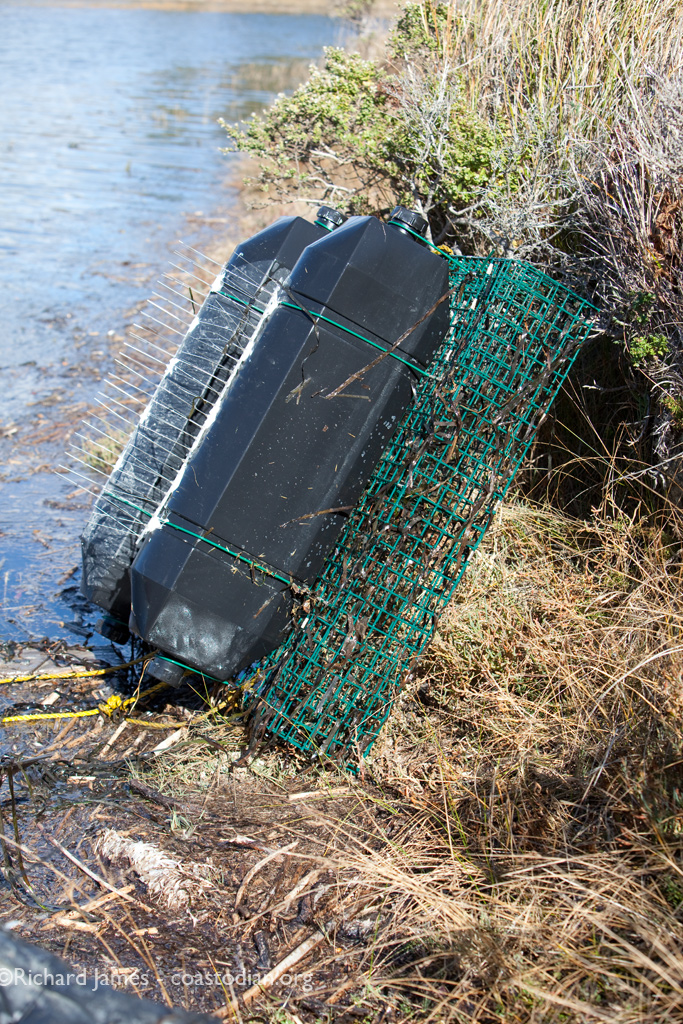
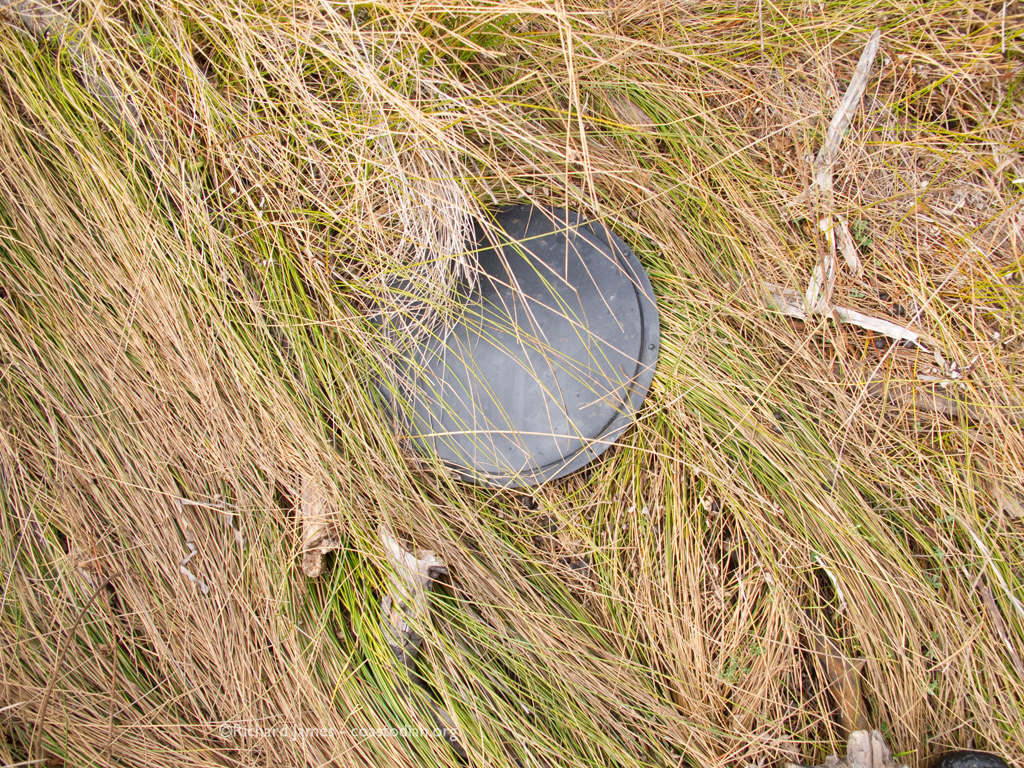
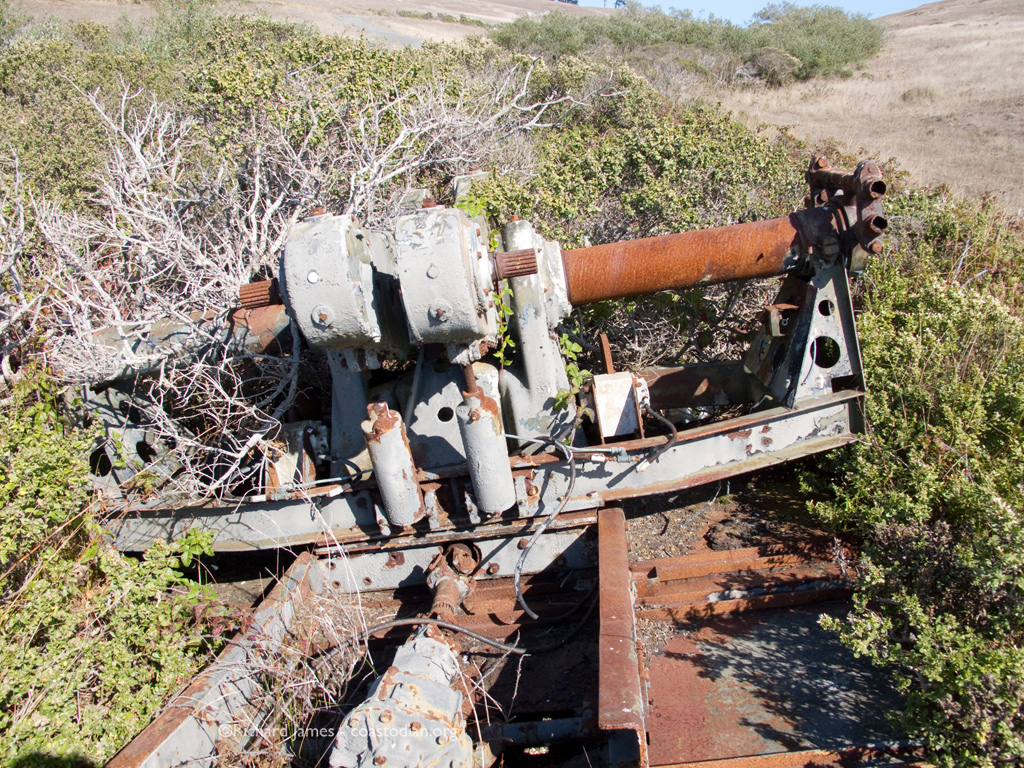
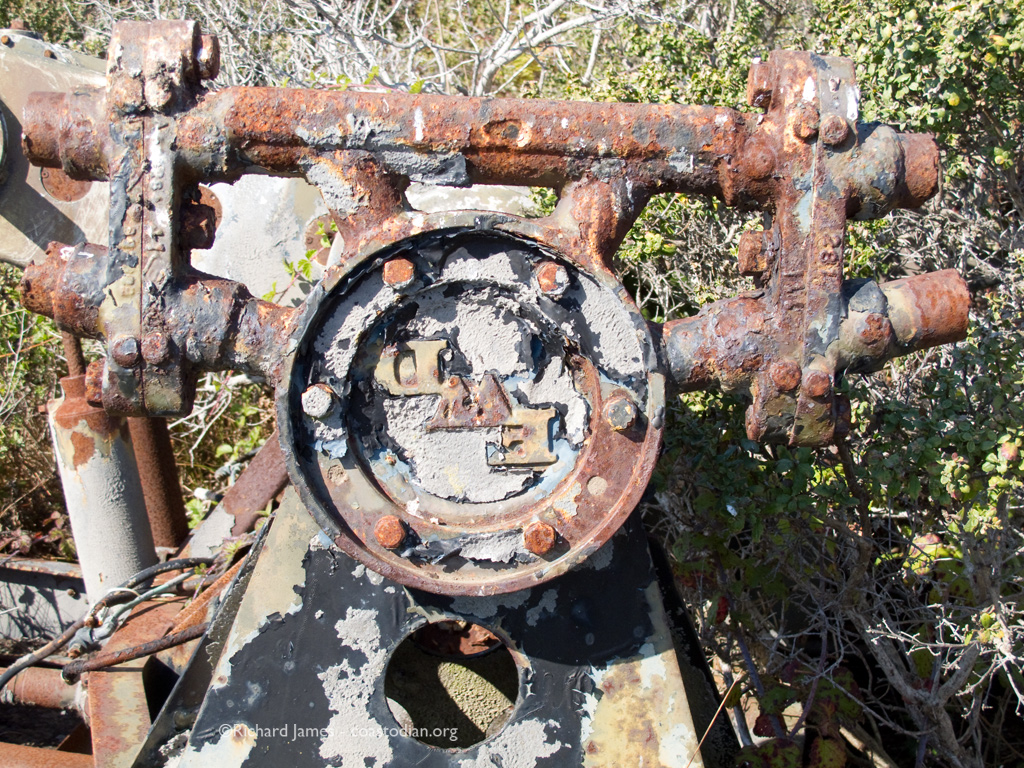
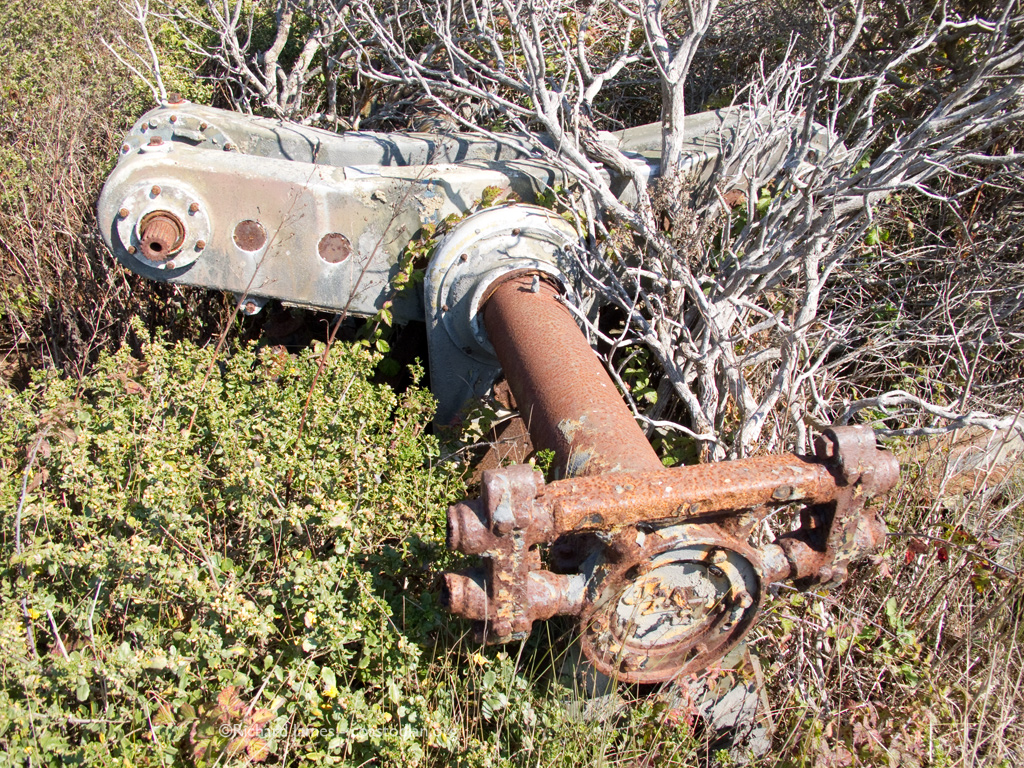
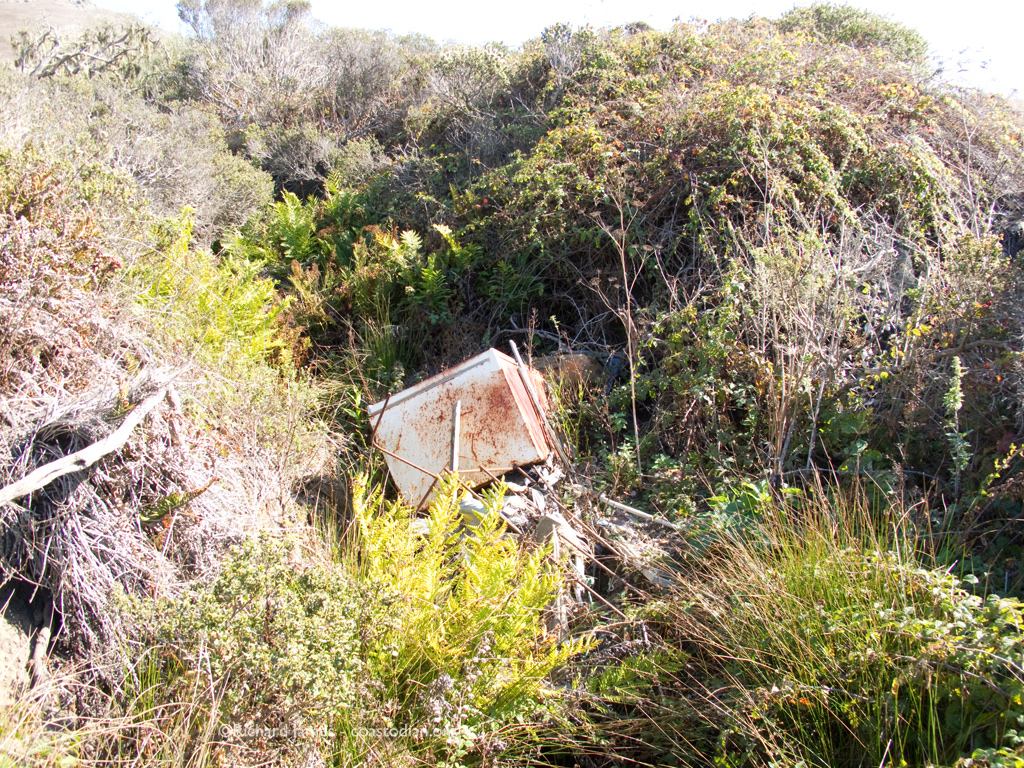
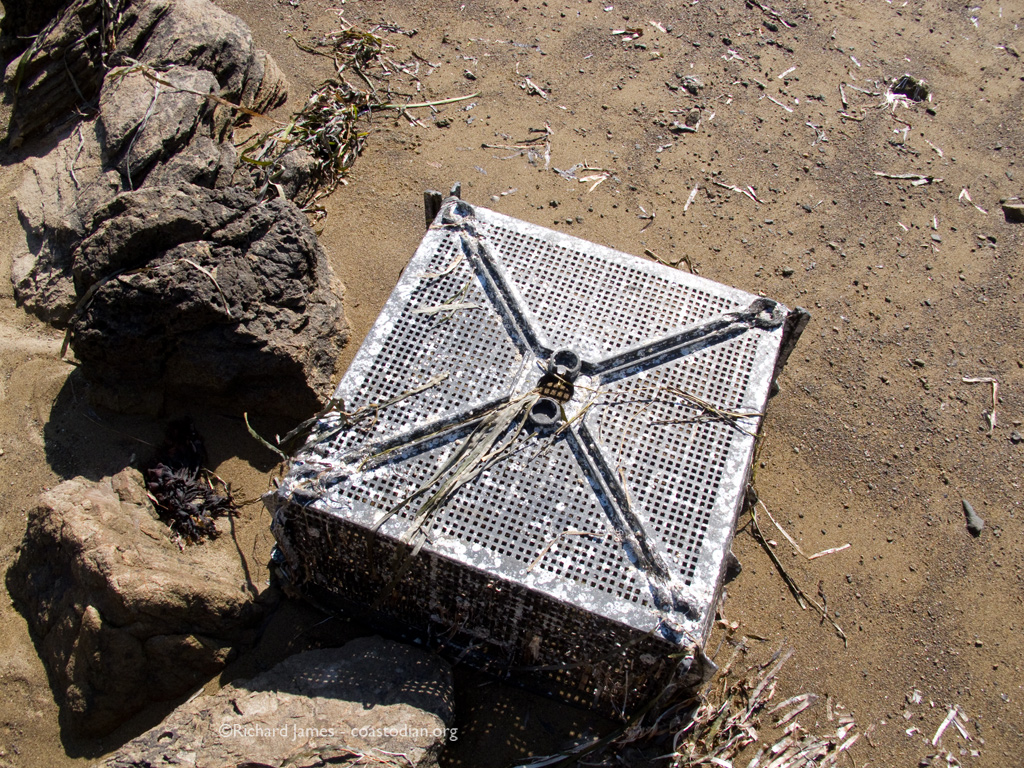
Here is a device I have never before seen. It looks expensive. Who can tell me what it is? Or whose it is and why they left it here?

Tell me whose it is and I'll tell you where you can go get it. Click image for a larger version

Tell me whose it is and I’ll tell you where you can go get it.
Click image for a larger version


Tell me whose it is and I'll tell you where you can go get it. Click image for a larger version

Tell me whose it is and I’ll tell you where you can go get it.
Click image for a larger version


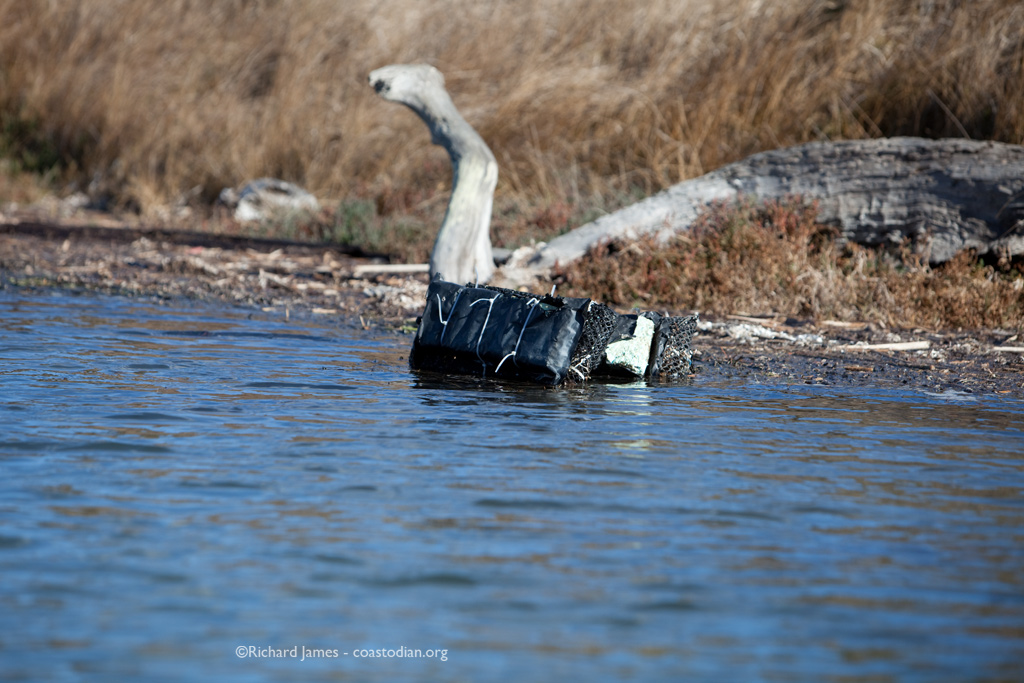
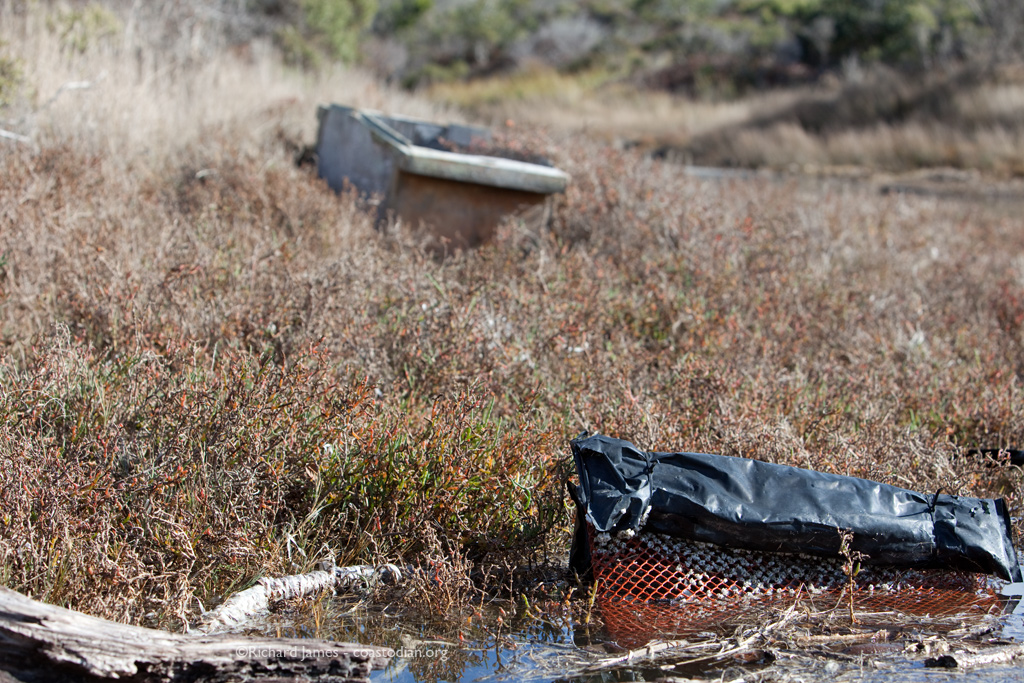
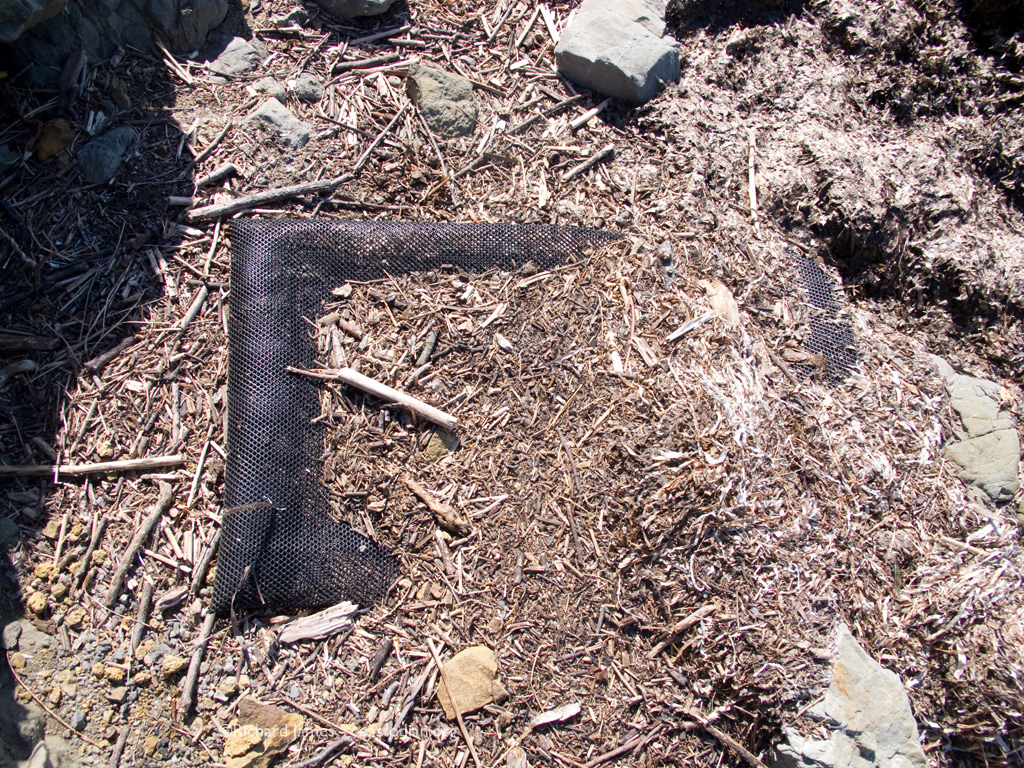
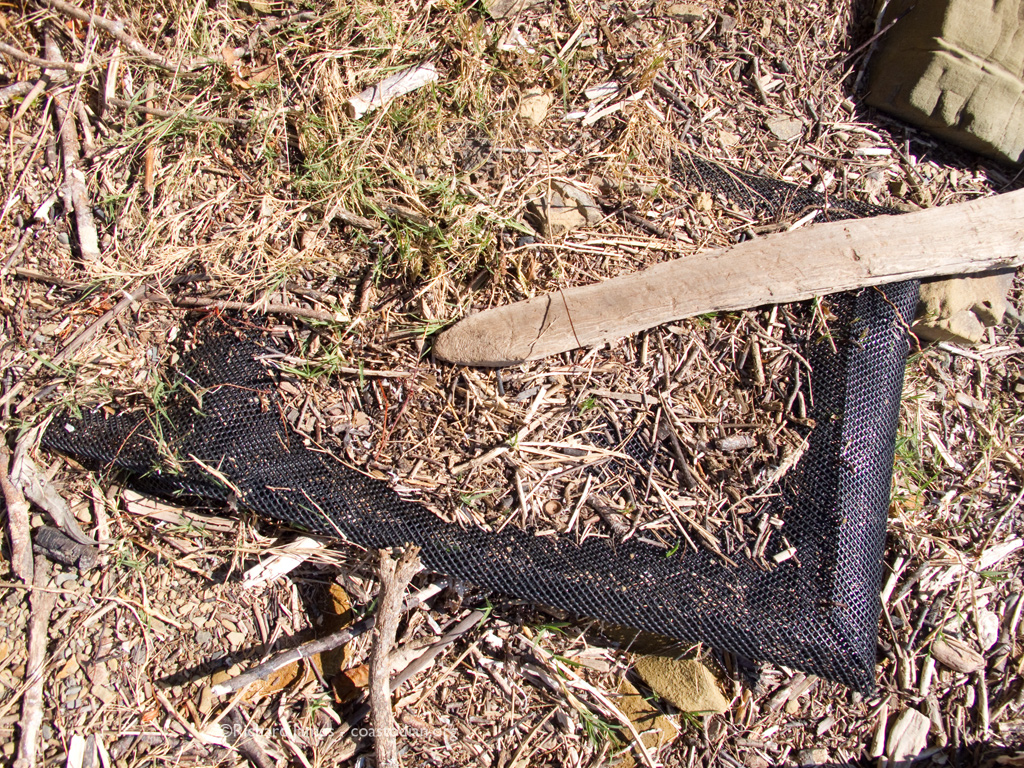
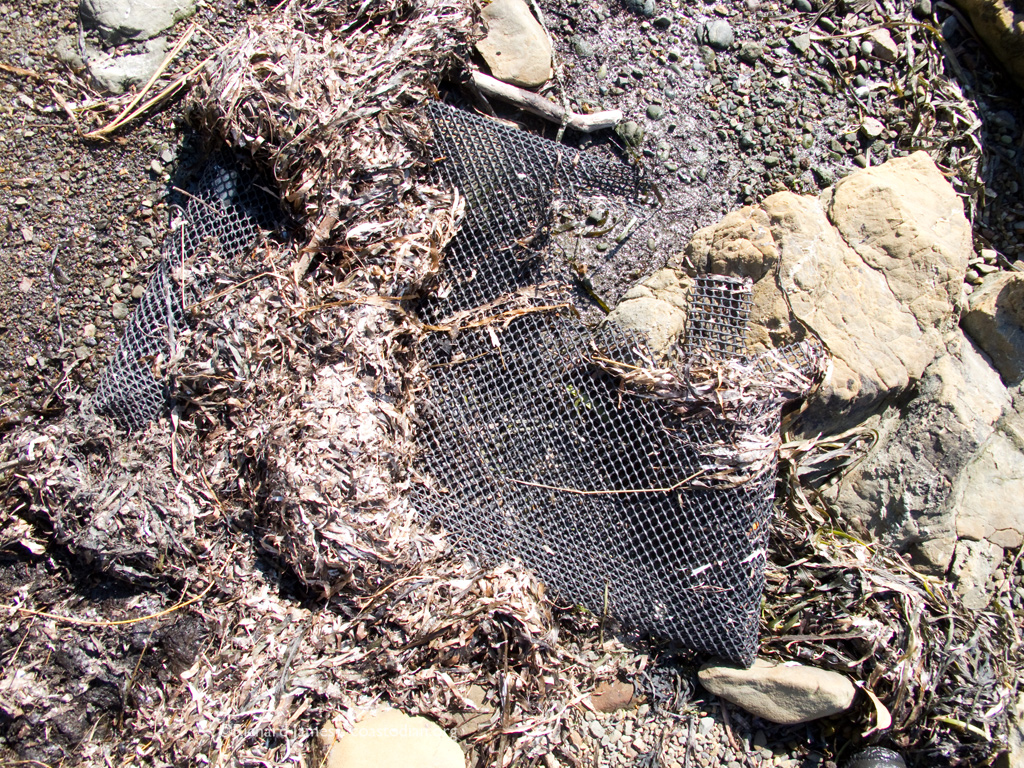
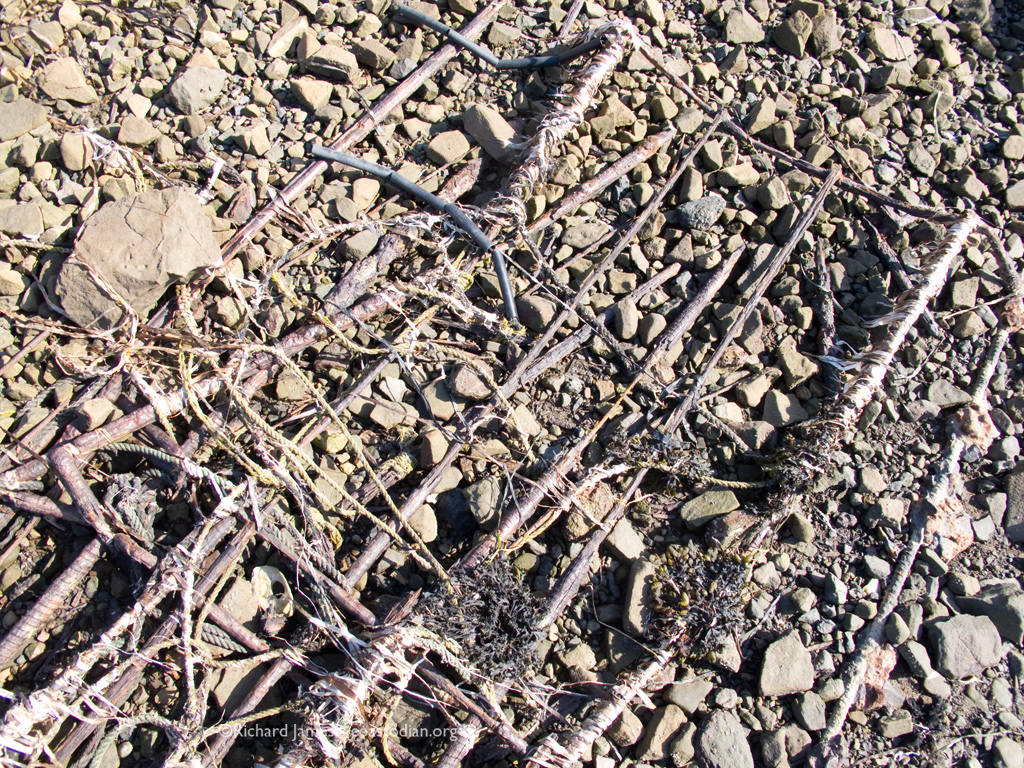
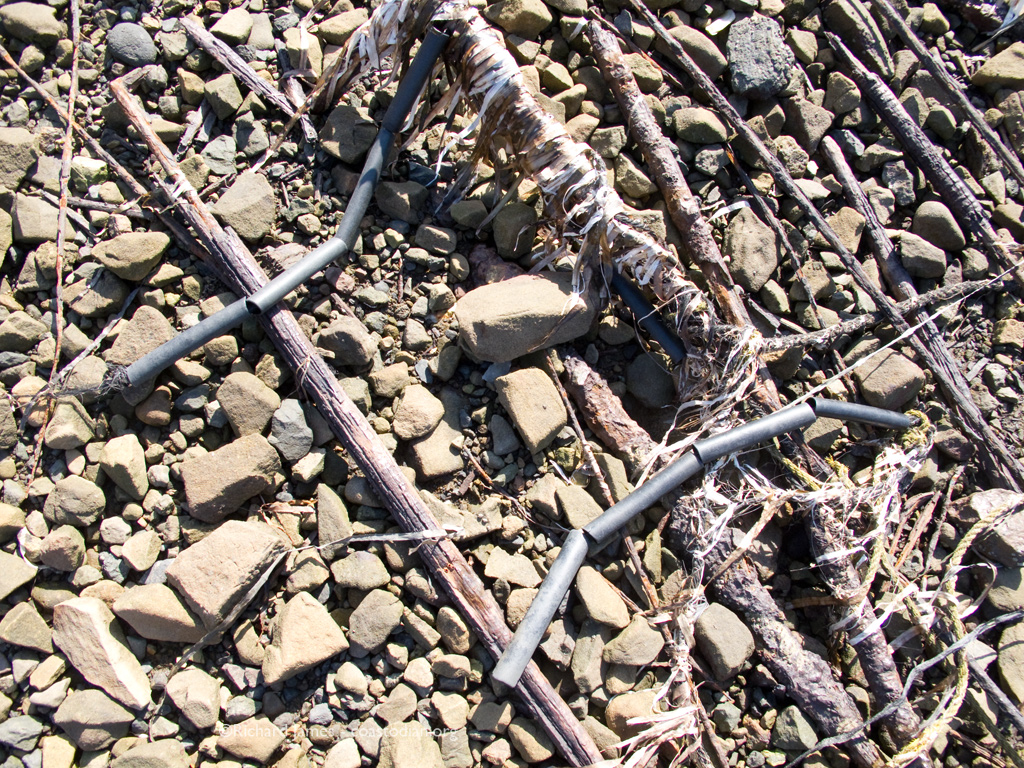
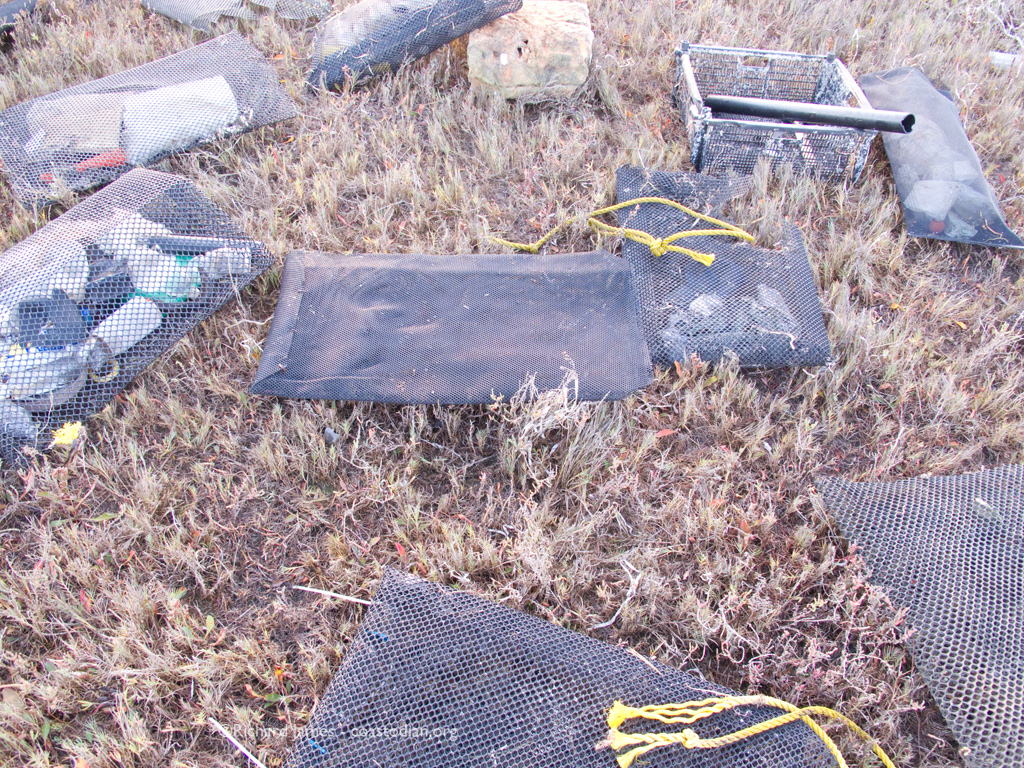
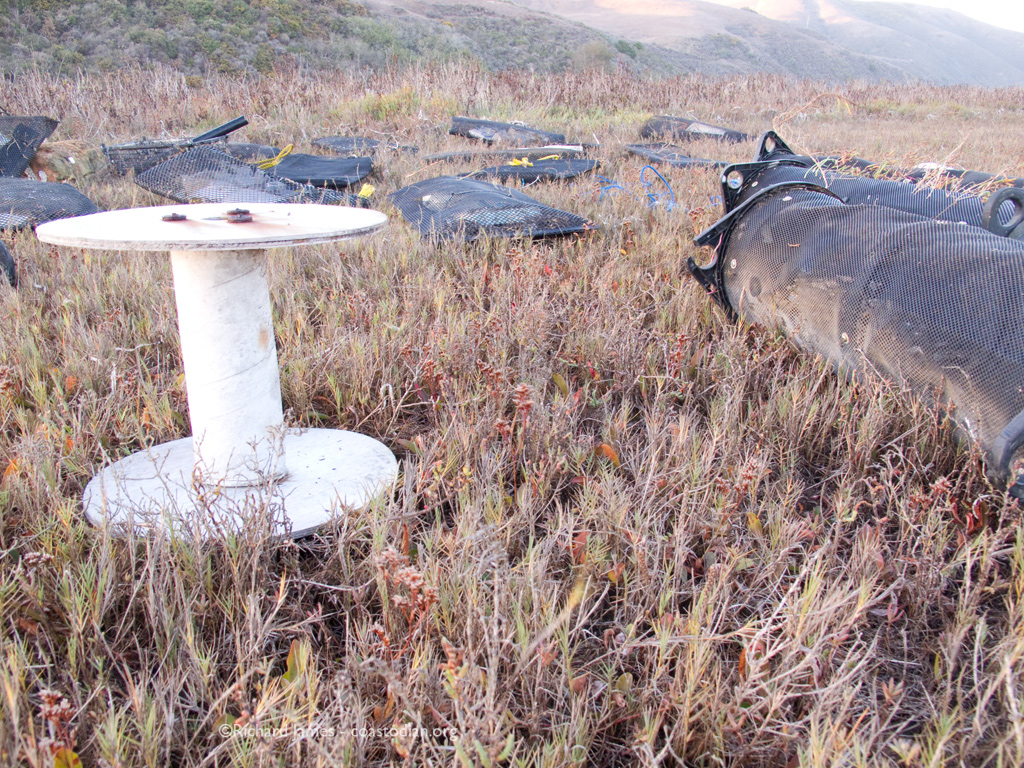
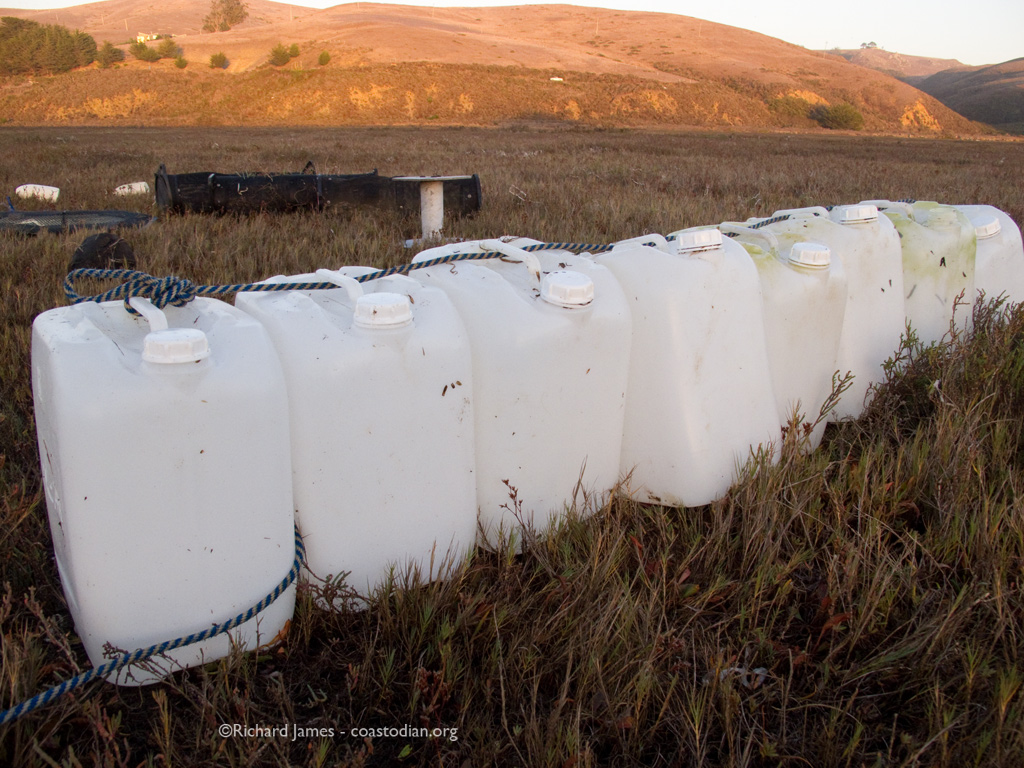
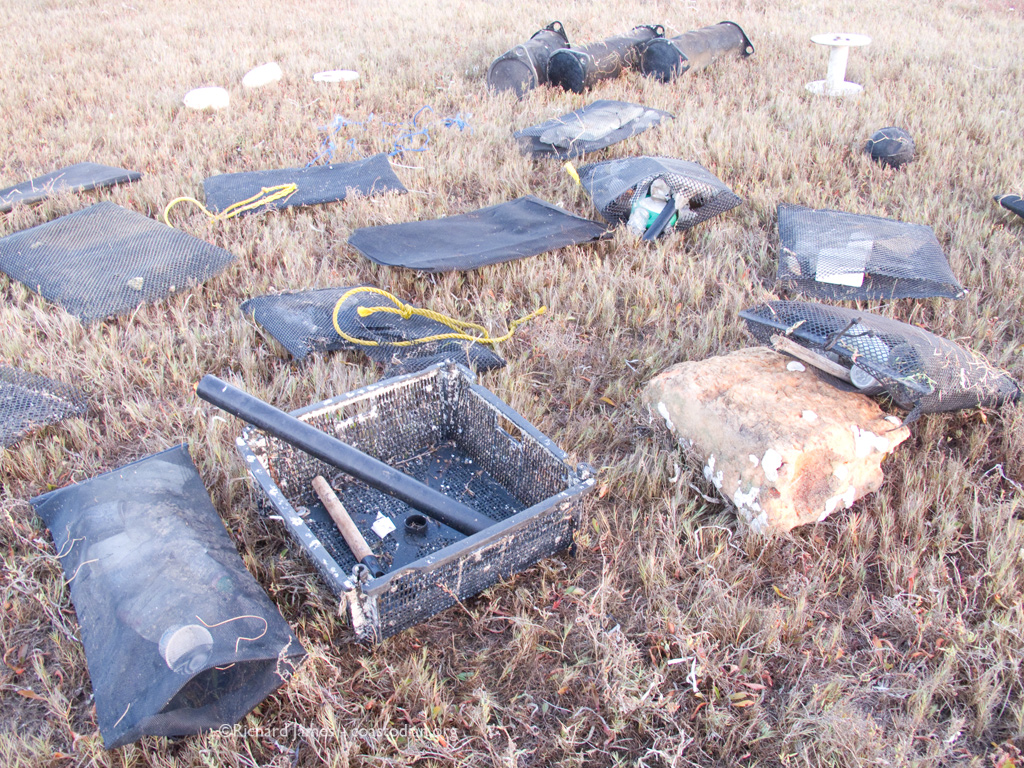
The rest of the images show some of the garbage I picked up on my paddle through nature.

On my way back, I met another fellow, Dan, also out for a paddle on this perfect day. He too thanked me for my efforts and then paid a visit to this blog. You can read about his day on the water here. He teaches kindergarten in Sonoma and loves to get out on the water whenever he can.

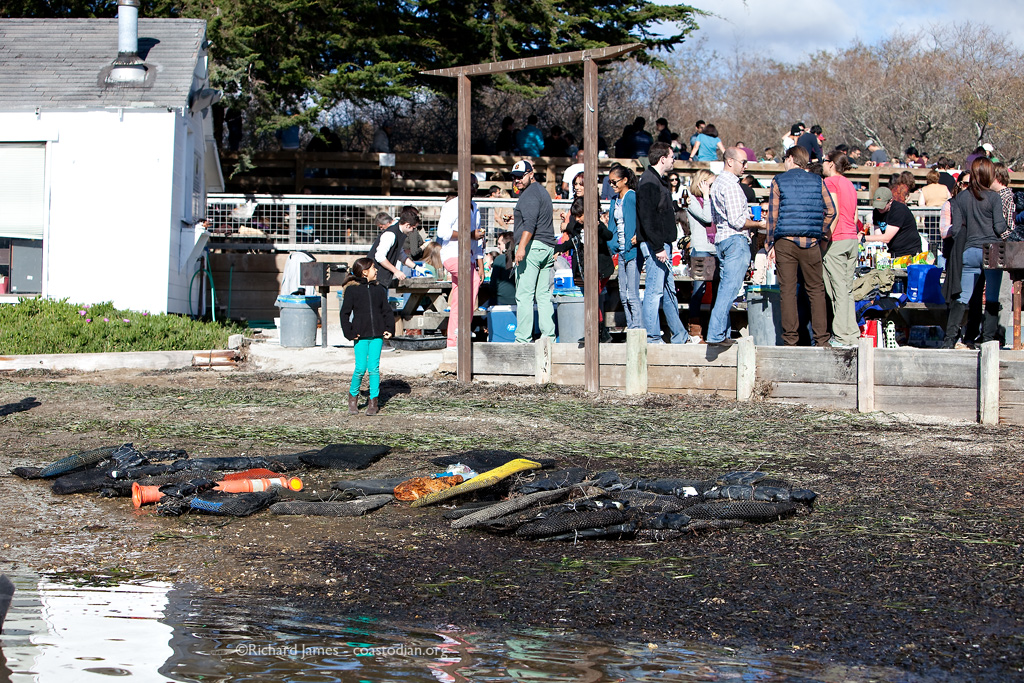
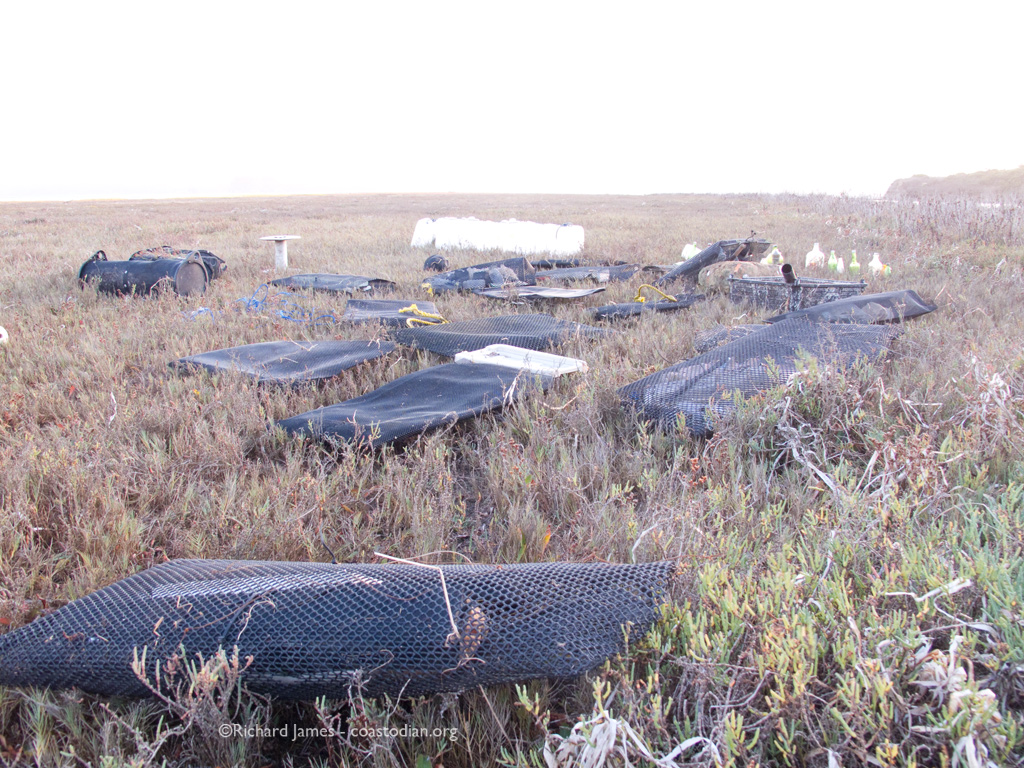
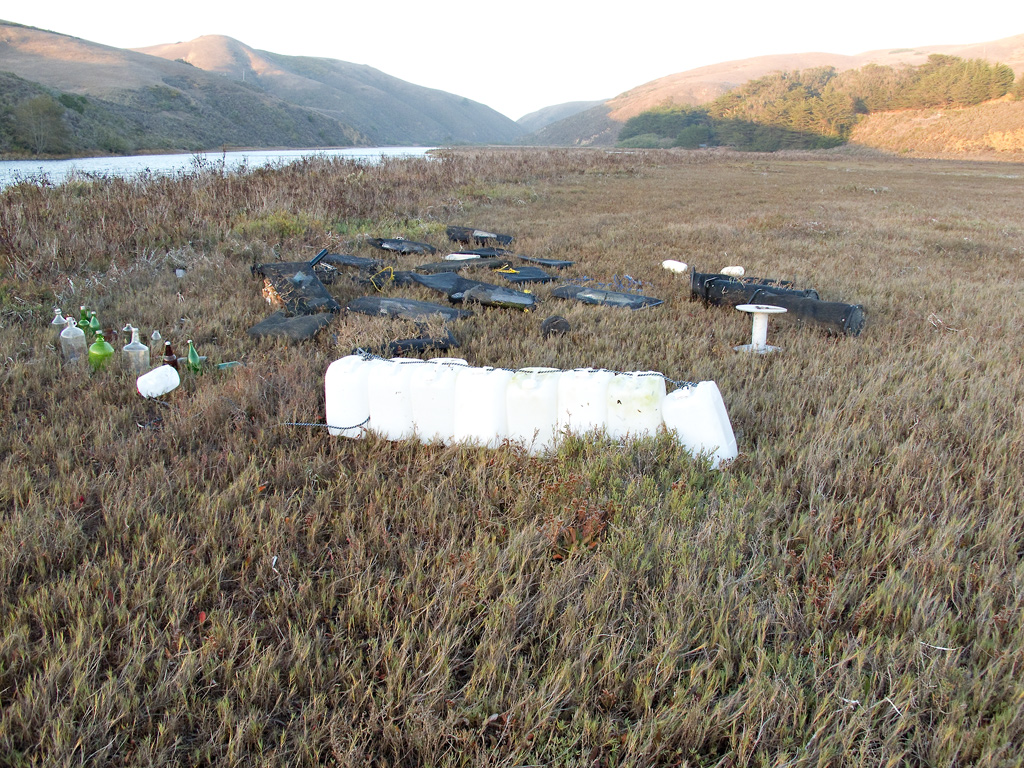
The last image below, as well as the header image show the beach where I placed all the oyster gear I found. It is at Tomales Bay Oyster Company. There is little doubt where this trash came from. Have a look at the google earth image above and you can see how close to the retail operation the triangle lagoon is.

It was a busy day there, yet only a couple people came down to ask me what this stuff was and why I was dumping it on the beach. You can be sure that I explained in detail what it was and where I had found it.

Both people asked me if I worked for the oyster place. No, was my reply. Do they pay you? Again, no was my reply. One asked me why the oyster place did not pick up the trash. I don’t know was my reply, raising one hand and rubbing two fingers and my thumb together as I said so.

They took a sip of their beer and returned to the festivities.


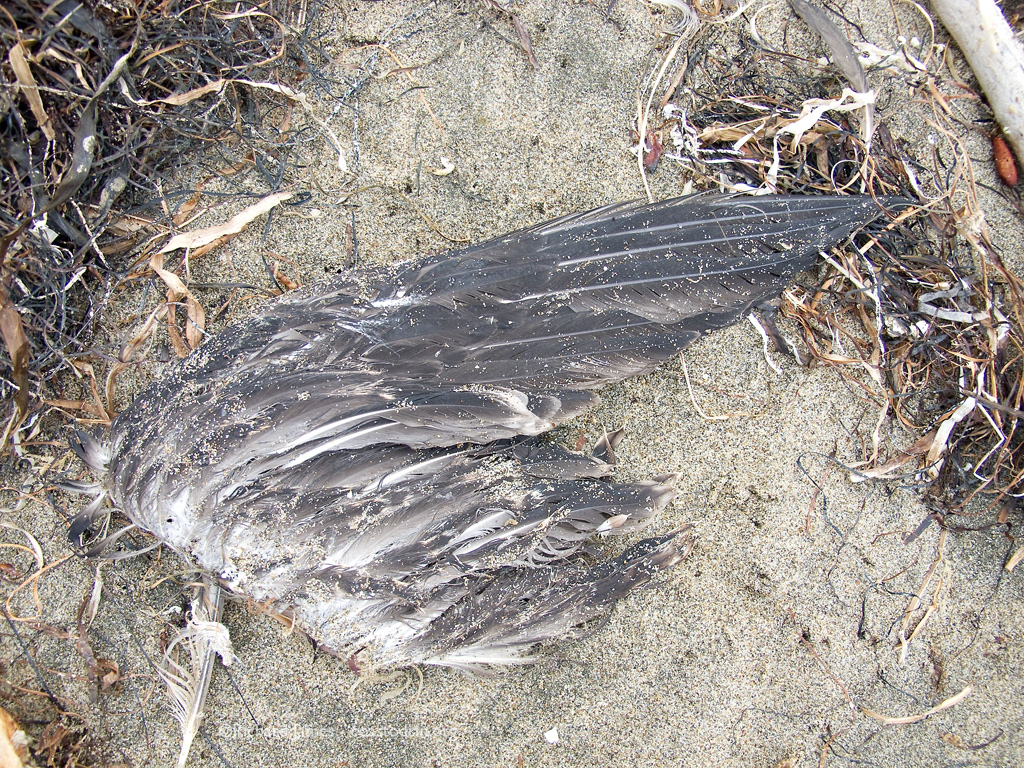
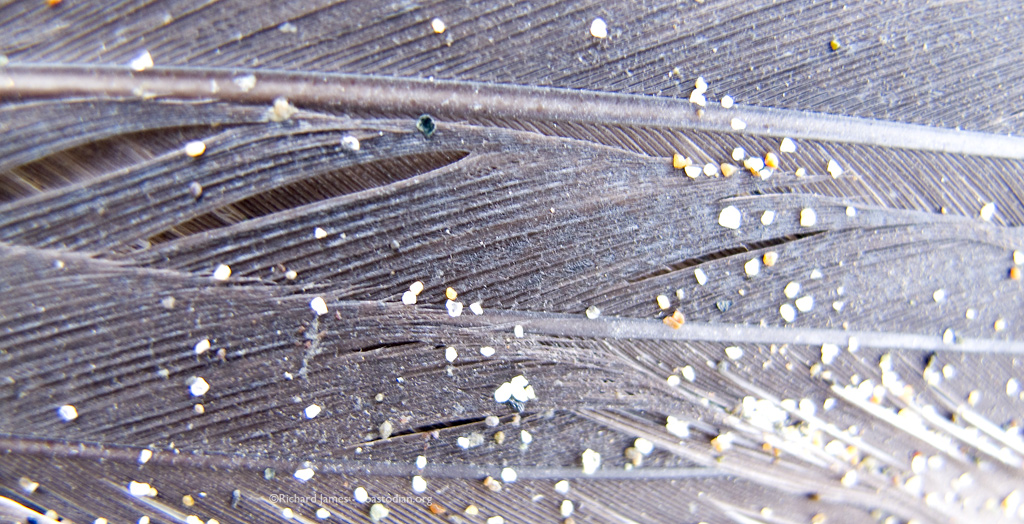
Dead loon in the wrack

Dead loon in the wrack


RJames.IMG_6358


RJames.IMG_6362


RJames.IMG_6363


RJames.IMG_6364


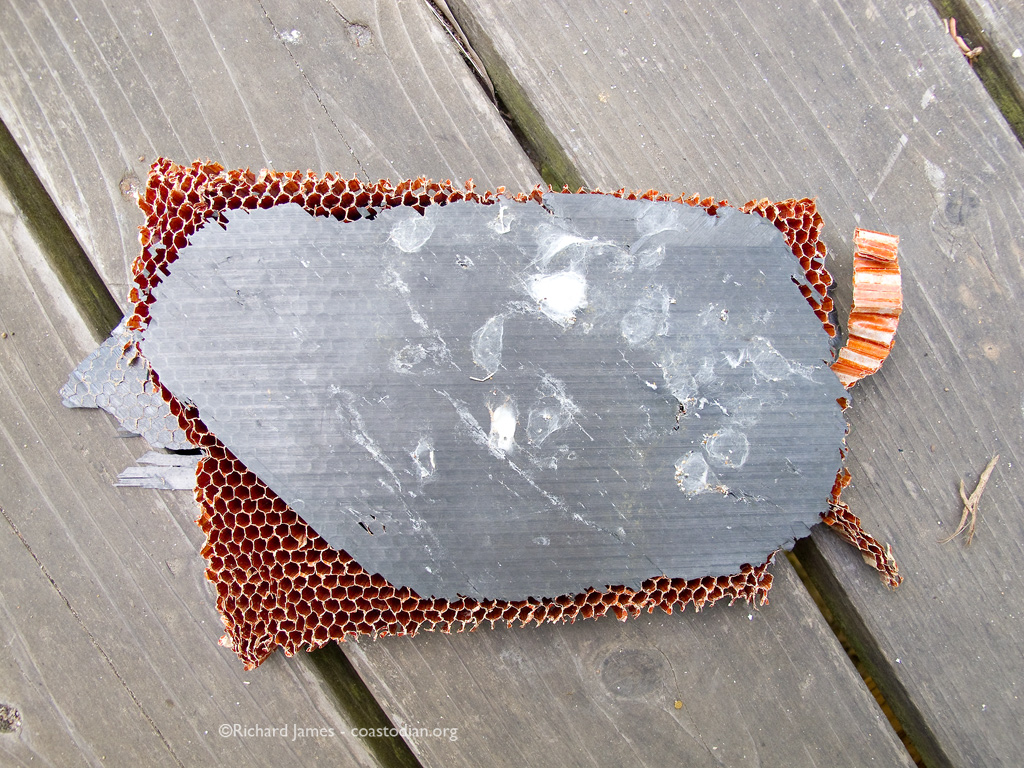
I found a kayak! OK, not the whole thing, only the label.

I found a kayak! OK, not the whole thing, only the label.


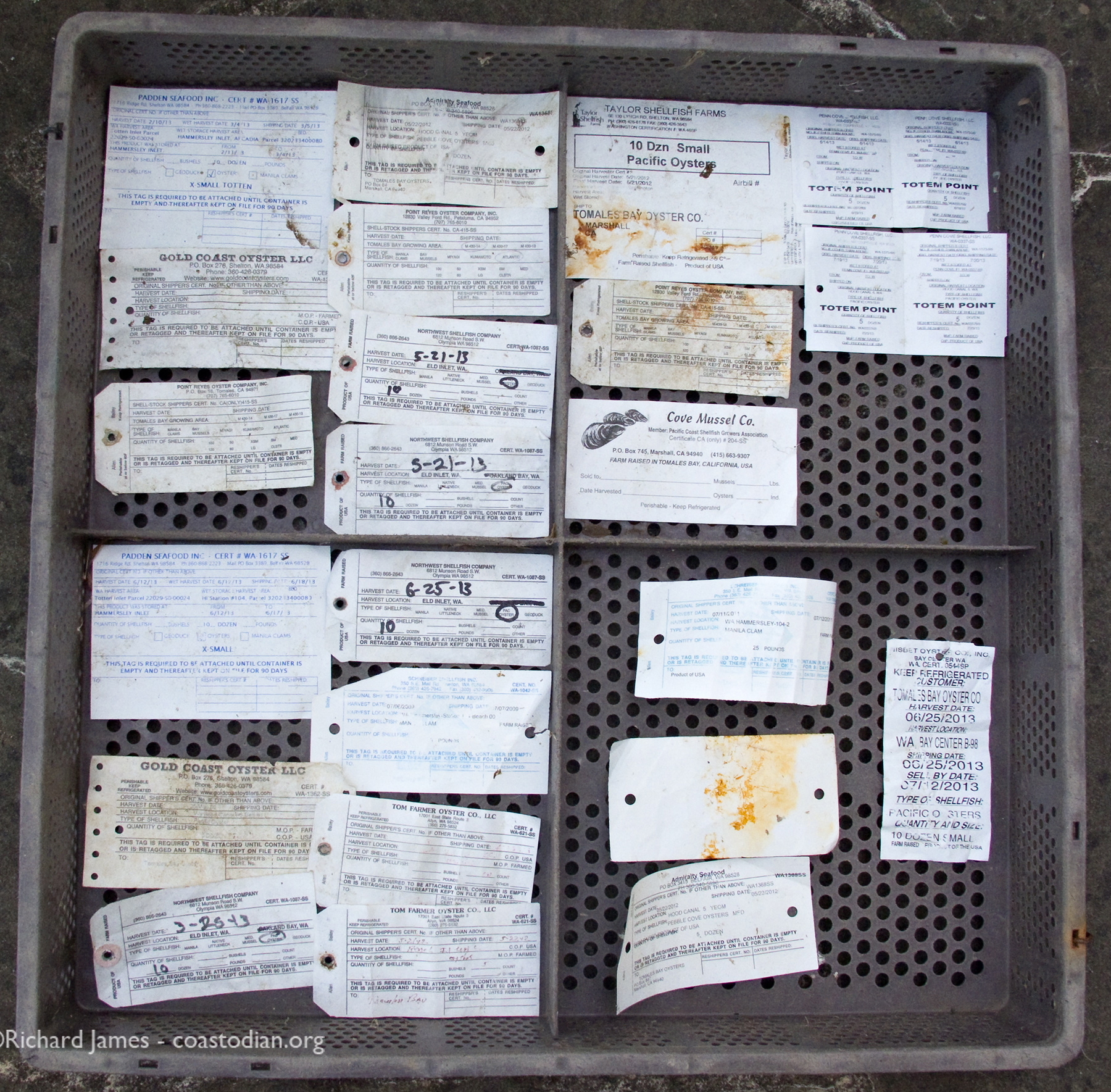
Tags from bags of shellfish, shipped from Washington State to Marin.  All found on 17 November, 2013 along the shore near Tomales Bay Oyster Company. Check out the dates on those tags... Click image for a larger version. Know your farmer, call them up!

Tags from bags of shellfish, shipped from Washington State to Marin.
All found on 17 November, 2013 along the shore near Tomales Bay Oyster Company. Check out the dates on those tags…
Click image for a larger version. Know your farmer, call them up!


RJames.IMG_6366.cc.cw


IMG_0955


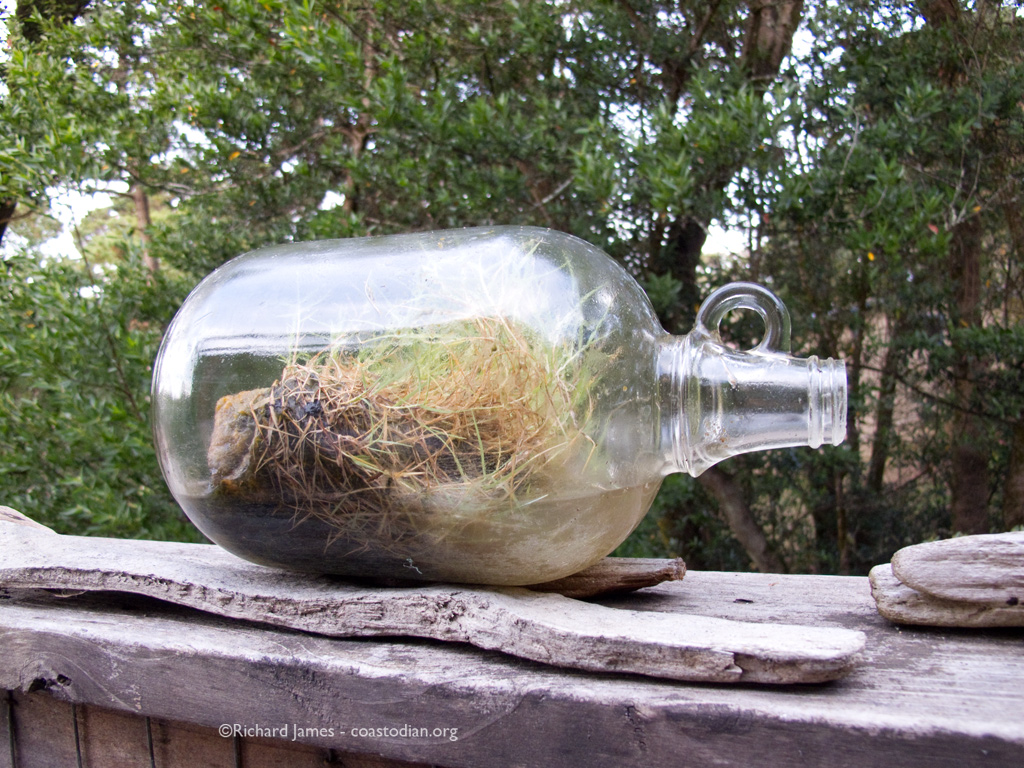
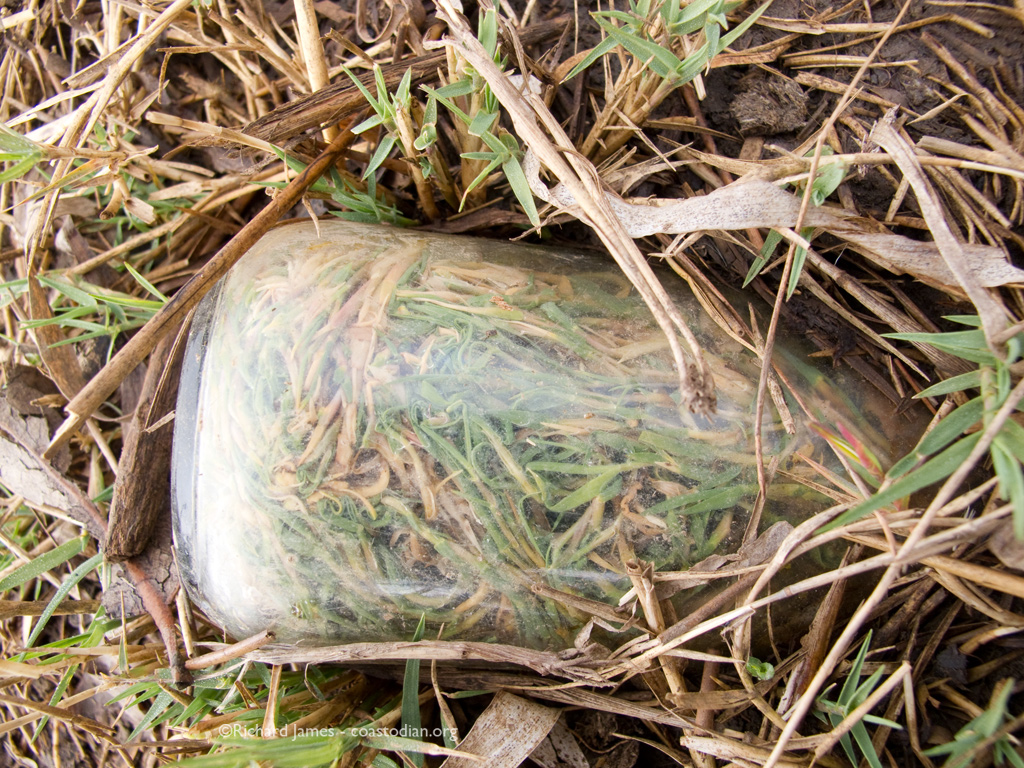
The earth is not so very different from the gallon wine jug with grass growing inside it.
A limited amount of space in which to grow.

When will humans figure out that we have to take good care of this vessel on which we live?

Damn it, shut the gadgets off and get outside with someone you love, look at this place we call home.

Before it is gone.


RJames.IMG_6369.cc

.

Next related post may be found here.

Previous related post may be found here.

See the first post in this series “Save our Tomales Bay” here.
Save our Tomales Bay – part 7

Click on the words above “Save our Tomales Bay…” to see this post as it was meant to be seen.

Historic-Oyster-Trash

I’ve been boating the waters and walking the shore of Tomales Bay the past few months to see what the impact of oyster farming is on this body of water.

You can see my first post on this topic here.

You can see what I collected over 3 years from the soon to be closed oyster farm on Drakes Estero here.

Until recently I have only visited the area around Tomales Bay Oyster Company in the southern reaches of Tomales Bay.

There was so much debris to collect, it took me a while to get to other areas. And, as I said I would, I finally got up to the Walker Creek area to have a look at how the oyster growers in that area clean up after themselves.

More than one local told me that the folks at Hog Island expended great effort to clean up the mess that is inevitable when one tosses thousands of oyster filled bags into the bay for years at a time. The wind and waves wait for no one. Gear is blown all over the place, some, who knows how much, is sucked out to the open sea for the animals to contend with.

So, after loading my boat and gear onto my car, off I went to the north end of Tomales Bay.

I’ve made three visits to this area, this post will show what I found after visit number two.

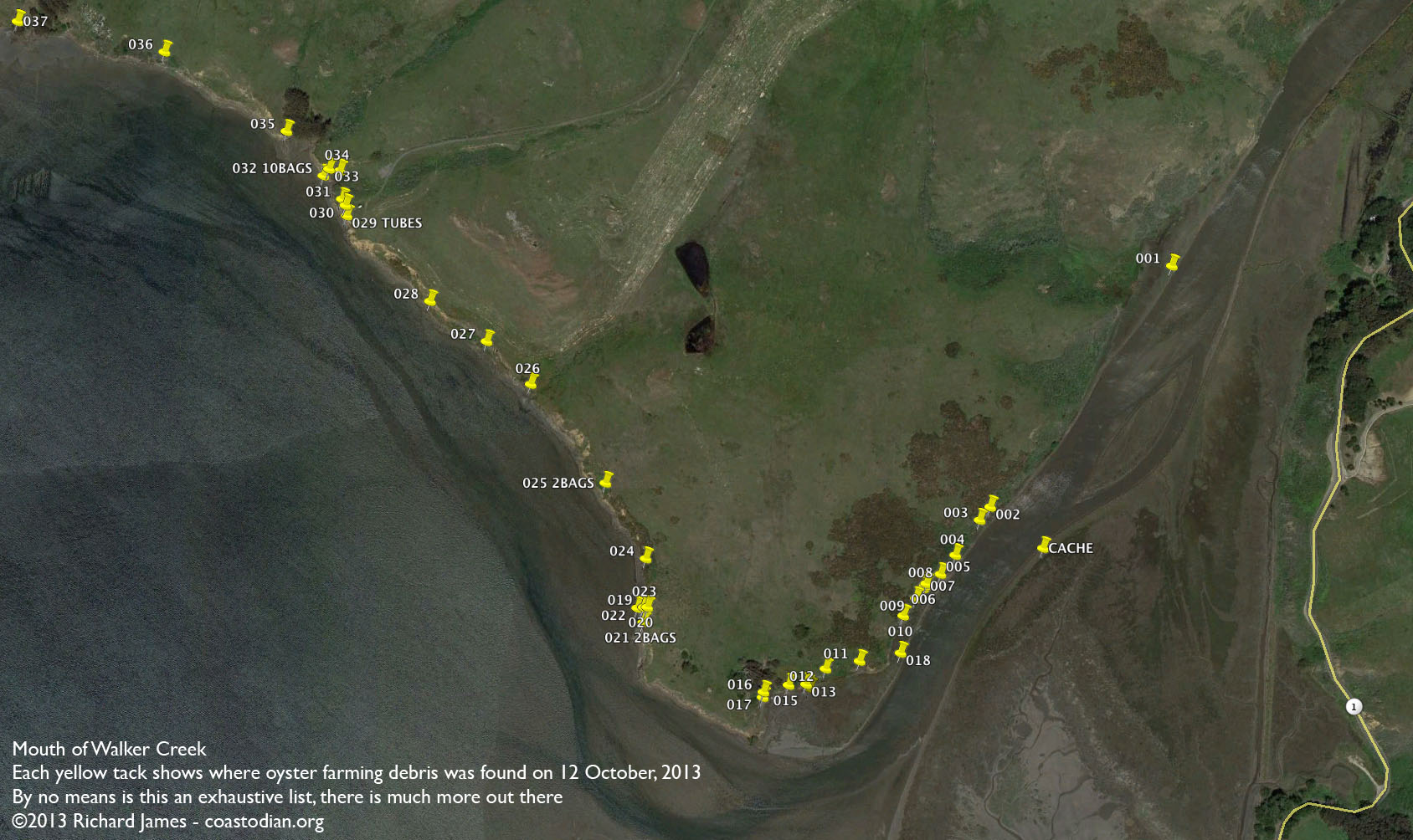
This first image is from Google Earth. Each yellow pin shows where I found one or more grow out bags or other oyster debris.

Map of Walker Creek mouth area showing oyster farming debris locations. Click for a larger image.

Map of Walker Creek mouth area showing oyster farming debris locations. Click for a larger image.

The next 60+ images show what I found at each yellow pinned location.

Tired of making many, many trips with my tiny boat to haul this garbage from others back to my car. Even more tired of destroying my car by hauling all of this trash belonging to those making a profit from public lands in my car, I had an idea. I was going to pile this trash where anyone driving by on route 1 could see it.

The last few images of this post will show the beginning of the monument to oyster profits for a few over a clean environment for all.

A future post will go into more details on this monument, and how it was received.

As you peruse these images, ask yourself if what I was told by a long time Hog Island worker and a parent of a Hog Island worker is true. That is, we take better care of the environment than do our colleagues to the south of us.

Did you see the monument to oyster profits for a few over a clean environment for all as you drove by? Please send me a note, or picture you made.

As always, click on an image to see a larger version.

RJames.IMG_0723

This first pile is what I collected as I drifted down Walker Creek. I hauled it up to the side of route 1 for collection later, where I found the following…

RJames.IMG_0724

Someone decided that the right thing to do with this artwork and materials was to toss it over the side of the road. Does anyone recognize that painted fabric?

RJames.IMG_0729

RJames.IMG_0728

RJames.IMG_0727

RJames.IMG_0726

RJames.IMG_0730

RJames.IMG_0745

RJames.IMG_0744

RJames.IMG_0743

RJames.IMG_0742

RJames.IMG_0741

RJames.IMG_0740

RJames.IMG_0739

RJames.IMG_0738

RJames.IMG_0736

RJames.IMG_0735

RJames.IMG_0734

RJames.IMG_0733

RJames.IMG_0732

RJames.IMG_0731

RJames.IMG_0746

RJames.IMG_0747

RJames.IMG_0748

RJames.IMG_0750

RJames.IMG_0751

RJames.IMG_0752

RJames.IMG_0753

RJames.IMG_0754

RJames.IMG_0755

RJames.IMG_0756

RJames.IMG_0757

RJames.IMG_0759.1

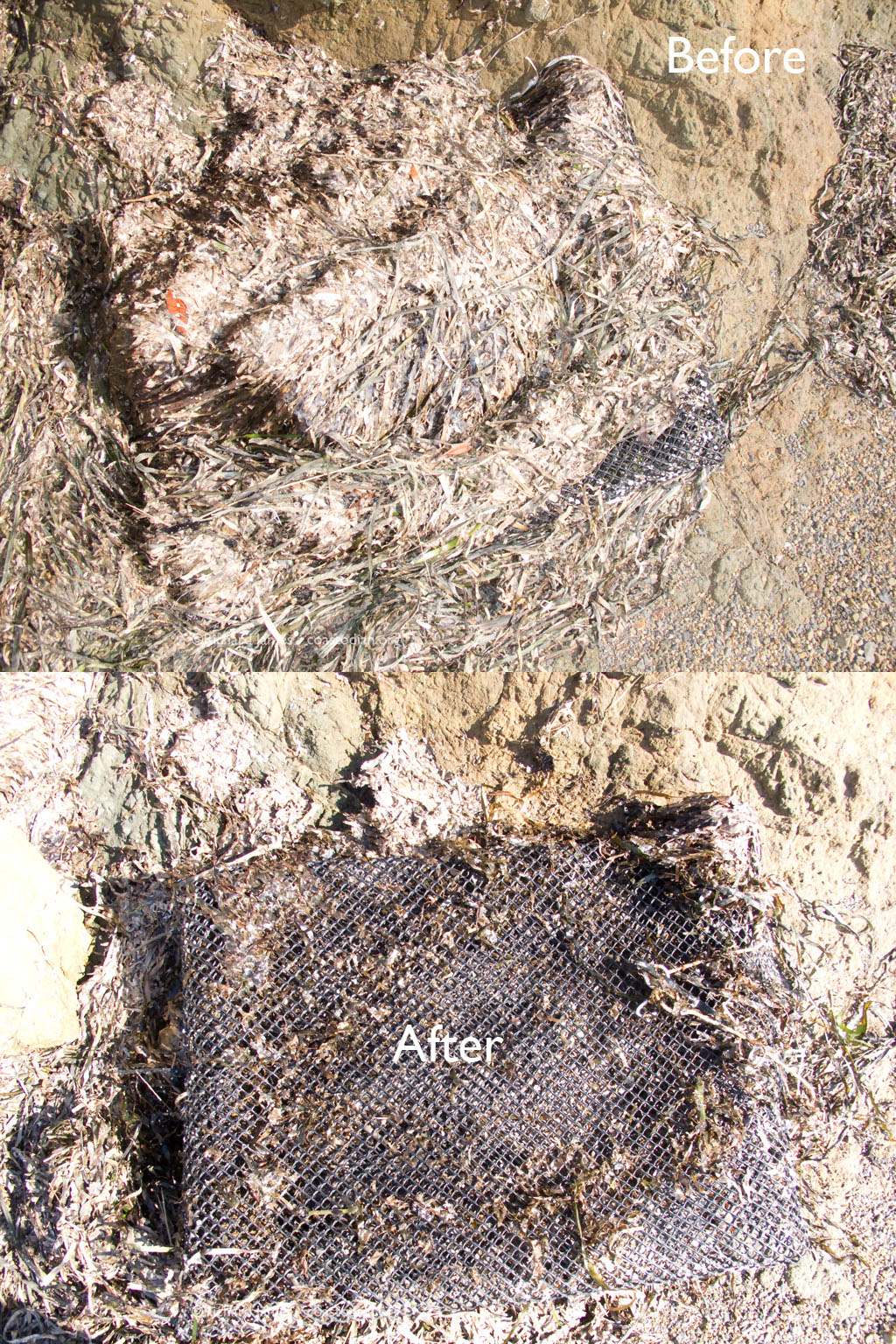
Above is what it looks like as I found it. After flipping it over to remove the eel grass camouflage is seen below.

RJames.IMG_0760

RJames.IMG_0762.1

Above is what it looks like as I found it. After flipping it over to remove the eel grass camouflage is seen below.

RJames.IMG_0763

RJames.IMG_0764

A short video showing a high density of oyster grow out bags abandoned on the shore of Tomales Bay.


Historic-Oyster-Trash

The next few images of heavy machinery are, I was told by a long-time West Marin resident, from oyster farming operations of long-ago.

Leaving a mess seems to run in the DNA of oyster farmers.

RJames.IMG_0770

RJames.IMG_0779

RJames.IMG_0781

RJames.IMG_0784

RJames.IMG_0787

RJames.IMG_0789

RJames.IMG_0790

RJames.IMG_0791

RJames.IMG_0792

RJames.IMG_0793

RJames.IMG_0794

RJames.IMG_0795

RJames.IMG_0796

RJames.IMG_0802.cc

My boat loaded down with as much as I dare take on such a windy day as this one was.

The following images are of the debris where I hauled it to make the monument to oyster profits for a few over a clean environment for all.

RJames.IMG_0803

RJames.IMG_0804

RJames.IMG_0805

RJames.IMG_0806

RJames.IMG_0807

RJames.IMG_0808

RJames.IMG_0809

RJames.IMG_0811

RJames.IMG_0812.cc

RJames.IMG_0813

RJames.IMG_0814

RJames.IMG_5384.cc

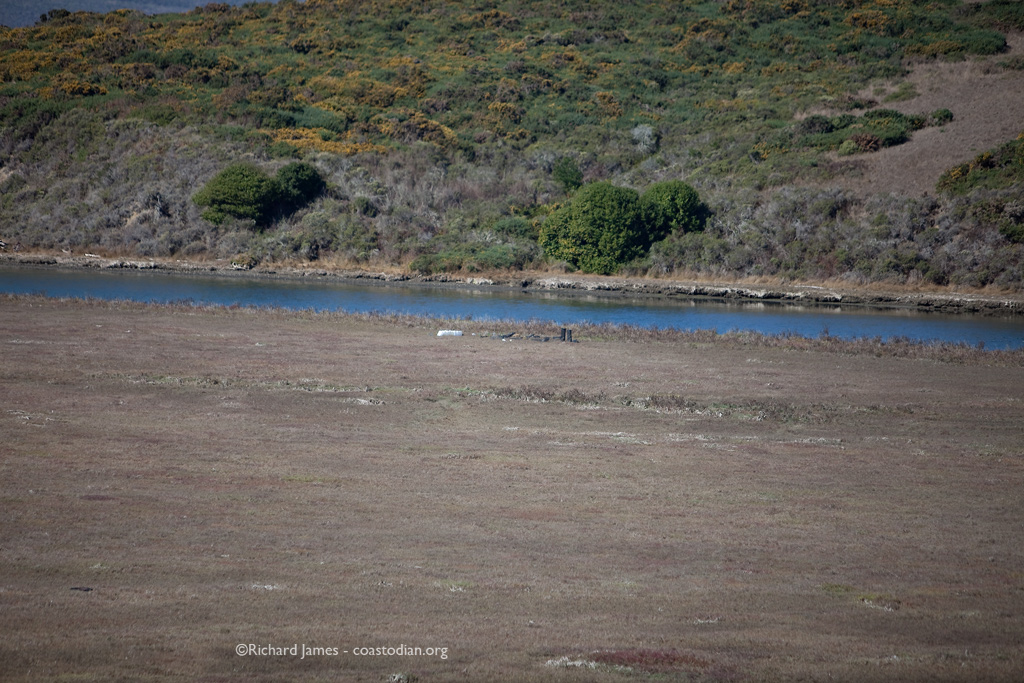
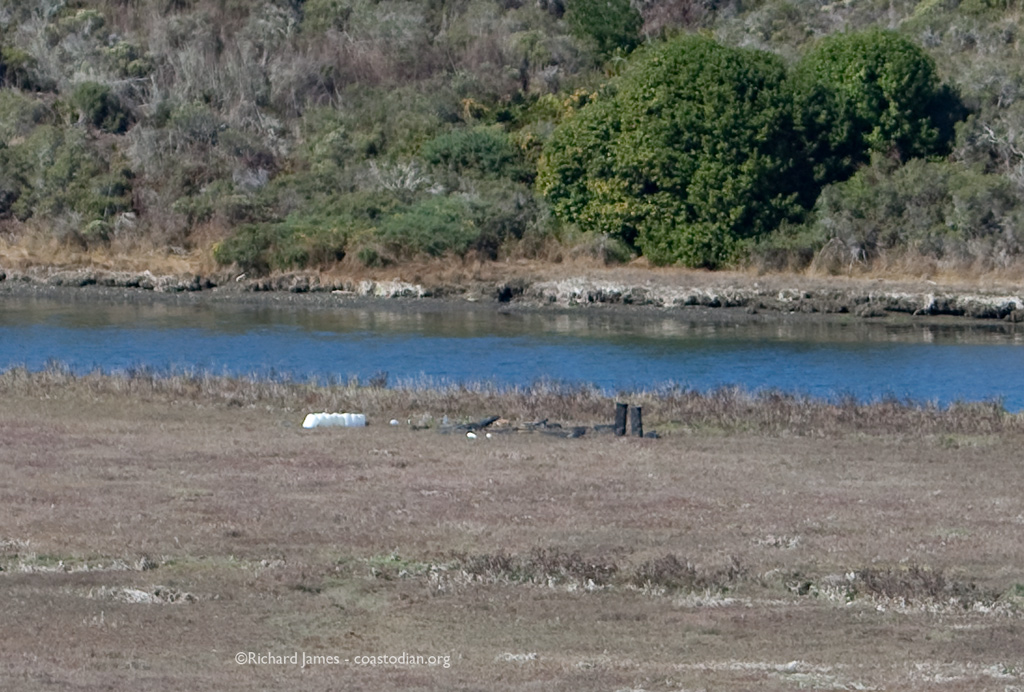
As you can see in this image taken from the side of route 1, even at 200 mm magnification, the monument is too far away to make an impact on even the most unusual of tourists that may make the effort to get out of their car before taking the iconic picture of nature.

RJames.IMG_5385.cc

I could move the oyster farming debris closer to the road for ease of viewing, but no, that would make it harder for the oyster farmers to come pick up their trash on their own. Even after doing the heavy lifting and long walking, I figured I needed to make this easy if they were going to clean up after themselves.

Stay tuned for the next exciting installment of “Save our Tomales Bay”, or “How to get the mess makers to clean up after themselves, or better yet, not make a mess in the first place…”

Those of you that made it this far are rewarded with the main reason I visit the wild places of California as often as I can.

This is why we all need to do our utmost to protect the environment that many, many species besides humans call home.

Black Turnstones on the wing. Click for a larger image.

Black Turnstones on the wing. Click for a larger image.

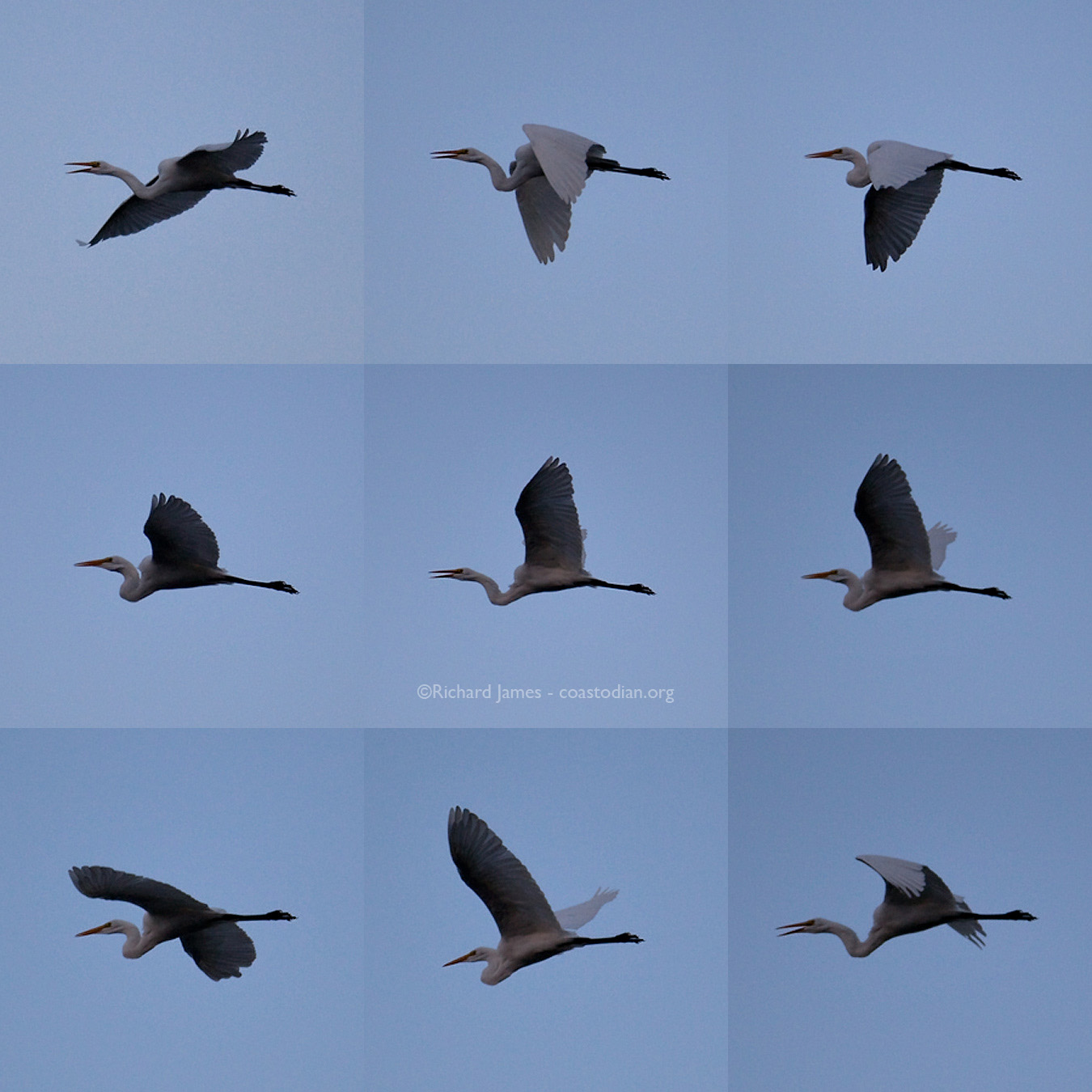
Egrets on the wing. Click for a larger image.

Egrets on the wing. Click for a larger image.

.

Next related post may be found here.

Previous related post may be found here.

See the first post in this series “Save our Tomales Bay” here.

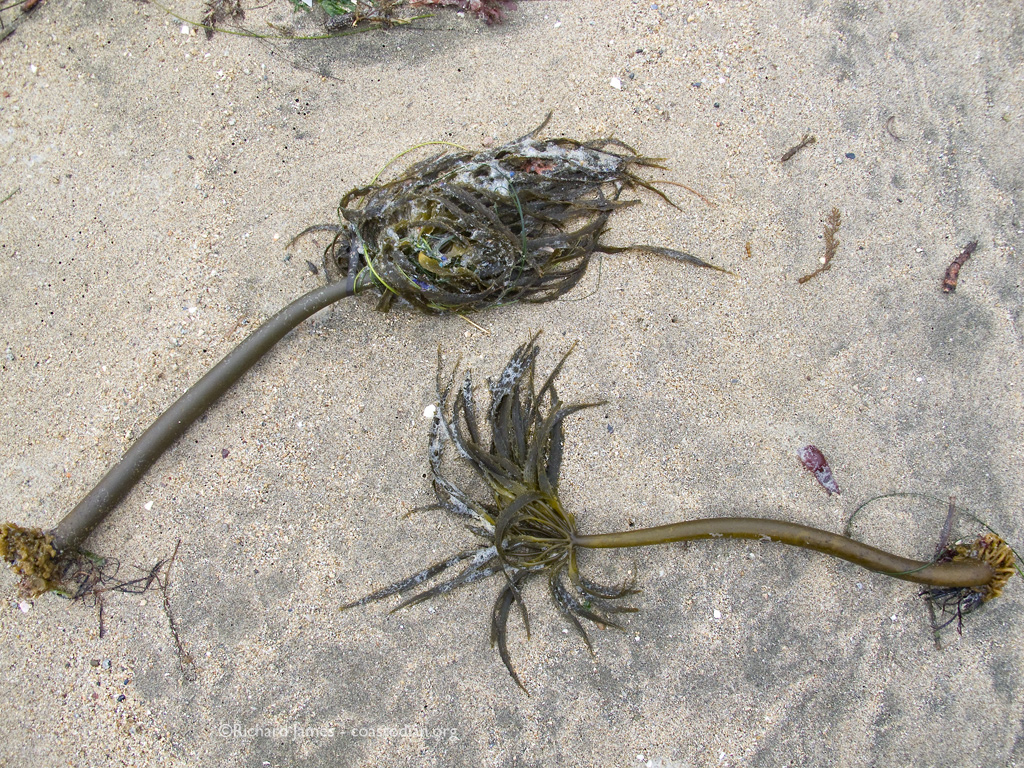
Elephant aground in Tomales Bay

Click on the words “Elephant aground in Tomales Bay” above to see the pachyderm up close…

We had super strong winds Sunday evening.

As I was observing this trimaran in an unlikely location, a gentleman showed up and said he had heard this same boat (Ganesh) had previously been tied to a mooring whose anchor chain was a fraction of its original thickness.

I have found (and packed out) many, many pieces of boat in my shore wanderings (boat bits i call them).

This is the largest boat bit I’ve ever come across.

I think I’m gonna need a bigger backpack.

Click image to see a larger version.

Ganesh.cw

The bat flew off

Click the words above “The bat flew off” to see this post how it was meant to be seen.

Driving back from Abbott’s Lagoon as dusk settled the air was thick with mist. I motored down Ottinger Hill slowly, those turns are tight and delicate when dry. The fog had coated the road with a slick coating of condensed ocean that had come in from the Pacific that day. Looking up as I negotiated the turns, the sky was filled with bats, flying in their spastic dance of chasing bugs. Wham! One of them slammed into my windshield and bounced over the car onto the road behind me.

I pulled over quickly and grabbed my small documentary camera, it was all I had. I did not feel like lugging the fancy camera that day – too heavy. Walking a short distance up the road, there it was in the middle of the road, spread out like the symbol on batman’s tight-fitting top. A tiny brown fuzzy-mouse of a body with two leathery wings on each side, laid out as if a museum curator had prepared it for display. No cars in either direction. I crouched down in the middle of the road, turned on the camera, placed it into macro-mode, set the ISO to 200 (it was dark and misting) and pressed the shutter half-way to meter as I composed the shot of this bat I and my car had just killed.

It was so dark the camera strobed the flash a brief moment so it could find some edges and focus. The bat closed up it’s wings and rolled over. Click went the shutter. It was still alive! But now those gorgeous, gossamer, leathery wings were all balled up. I walked to the side of the road to find a sturdy stick to try and spread them once more and record their beauty. As I gently nudged the wings to try to open them up, the bat took stock of the situation, rolled over, looked at me and began flapping those same wings and flew off. It continued on as before, this way and that, looking for bugs to have for bat dinner.

A car was coming so I walked back to the side of the road and tossed the stick in the ditch. As it whooshed by in the heavy mist, I watched the tires trace a path exactly where that bat had just laid.

IMG_0666.cc
Me and my car stunned it, knocking it out of the sky.

Me and the stick awoke it from certain death.

I keep poking the stick at my image in the mirror as the sound of the car approaches.

Will my legs flap once more?

Such that I might continue to gather bugs and generate guano a while longer.

Waves & foam & kelp & human debris

Click the words above “Waves & kelp & foam…” to see this post how it was meant to be seen.

For those of you not able to visit the coast, here is 3.5 minutes of waves and foam on a remote beach at Point Reyes National Seashore

RJames.IMG_0677.cc

RJames.IMG_0679.crop.cc

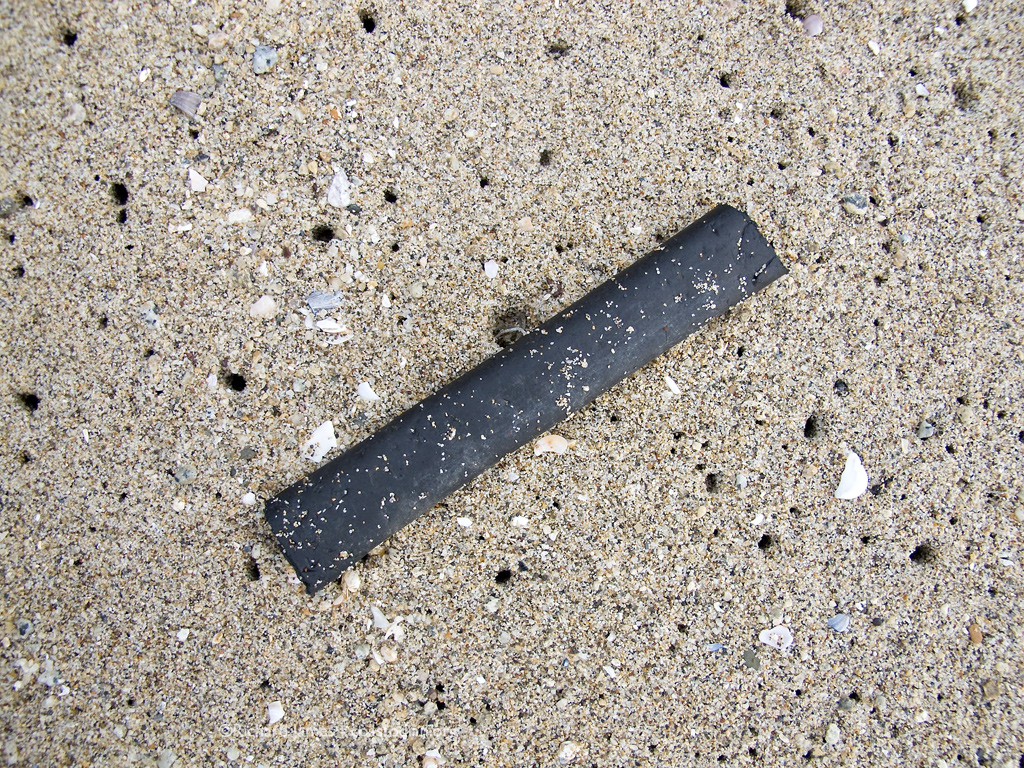
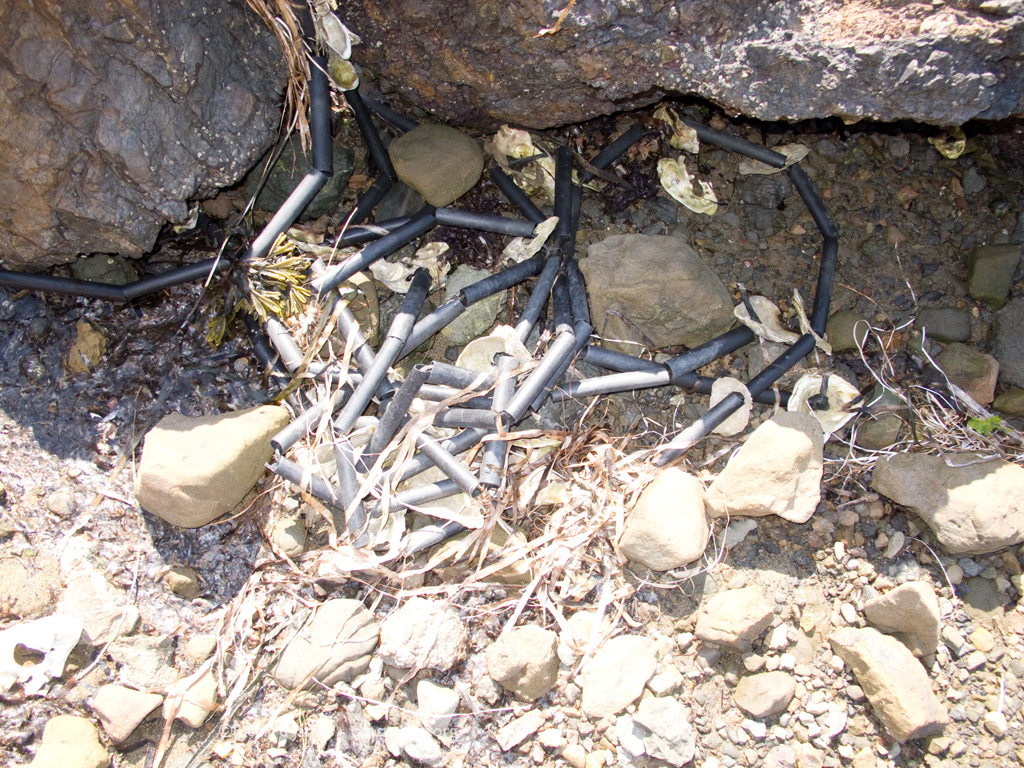
Yet another black plastic oyster tube spacer from the Drake Bay Oyster Company. I found 6 this day. I wonder how may were found by pelagic birds and picked up as food?

Yet another black plastic oyster tube spacer from the Drake Bay Oyster Company. I found 6 this day. I wonder how may were found by pelagic birds and picked up as food?

RJames.IMG_0682.cc

RJames.IMG_0695.cc

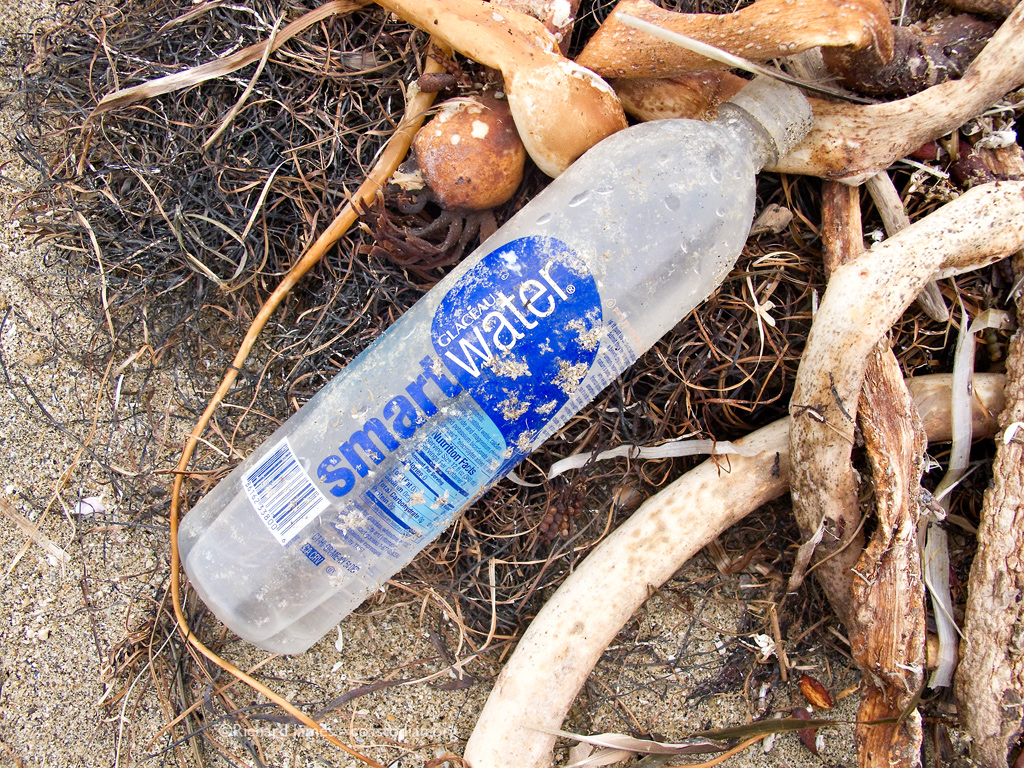
Drinking water for people with more dollars than sense. Nothing smart about this water.

Drinking water for people with more dollars than sense. Nothing smart about this water.

RJames.IMG_0701.cc

RJames.IMG_0703.cc

RJames.IMG_0705.cc

RJames.IMG_0707.cc

The court has spoken

Click the words above “The court has spoken” to see this post how it was meant to be seen.

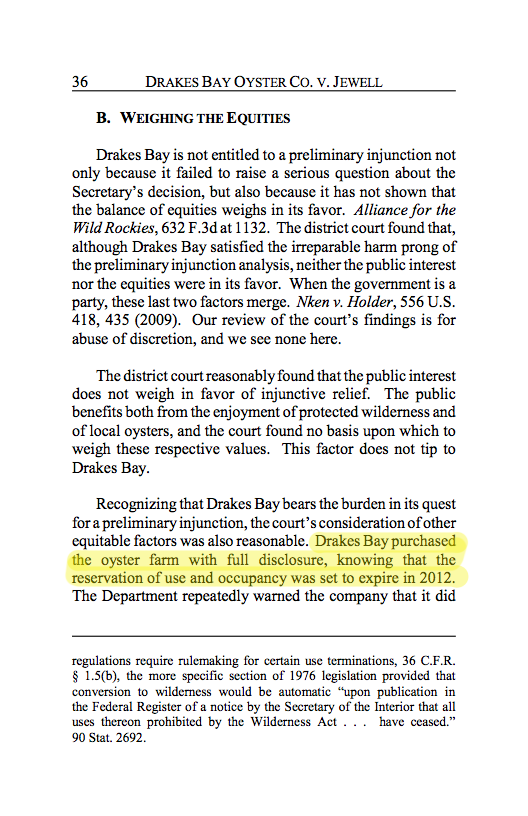
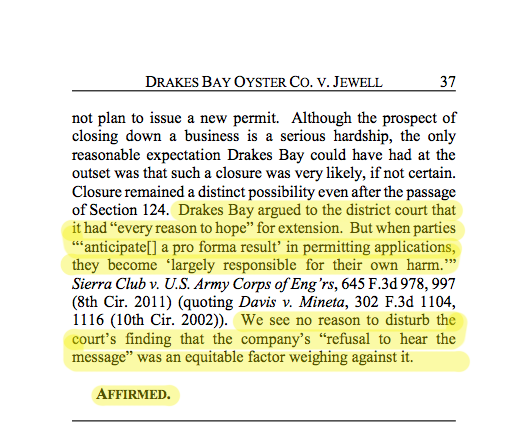
The following are excerpts from the Ninth Circuit opinion published this morning which can be found here.

Knowing full well

Affirmed

Several weeks ago, I overheard someone responsible for the oyster farm entry in the Western Weekend Parade comment “I wanted to do something good for them, they’ve been through so much.”

The phrase “largely responsible for their own harm” comes to mind.

A few weeks ago, someone closely involved with this ordeal said to me, “Regardless of the outcome, I hope Kevin Lunny invests just as much time healing this community as he did dividing it.

I agree with this comment.

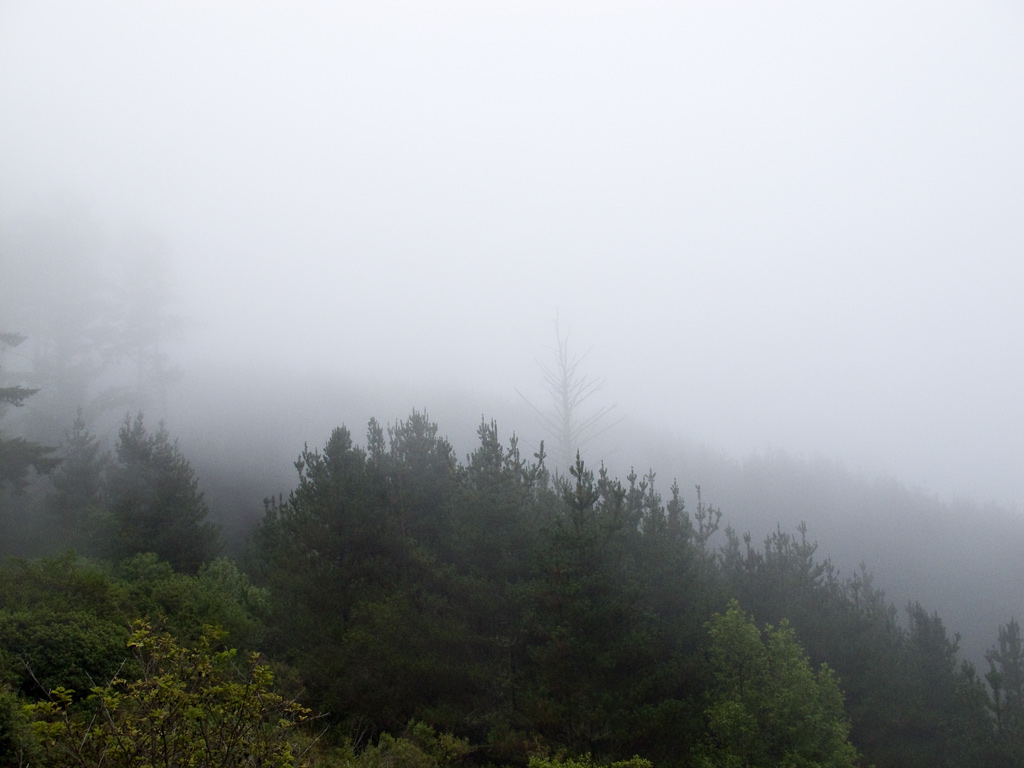
Inverness Ridge, into the fog

Click the words above “Inverness Ridge, into the fog” to see this post how it was meant to be seen.

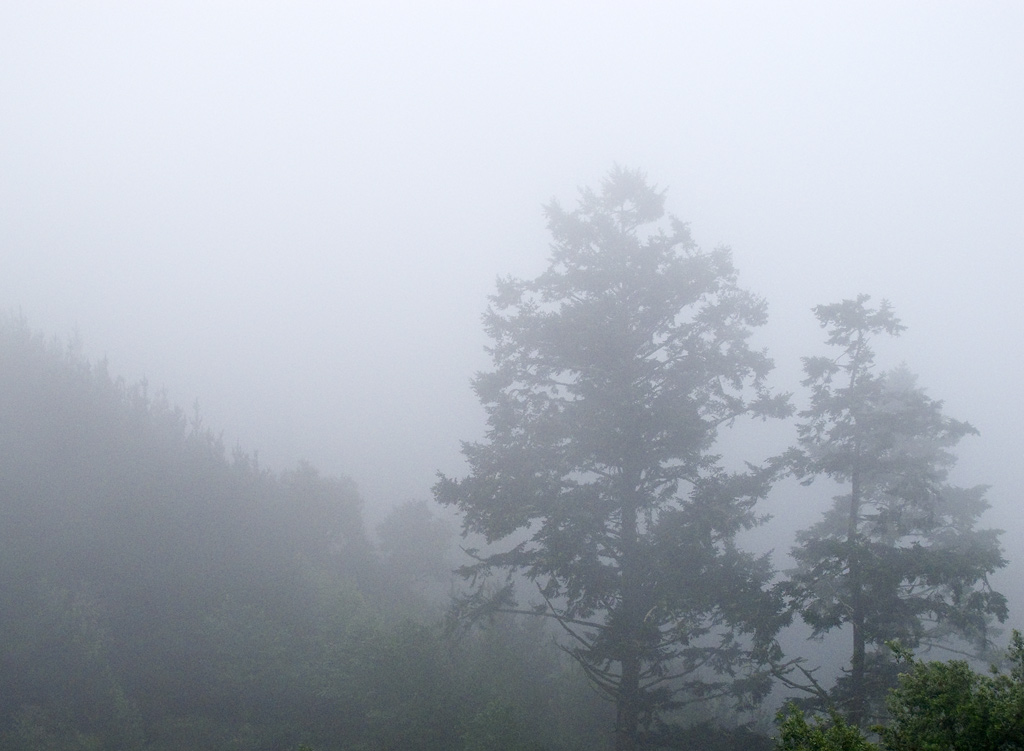
Riding a bike (or walking) the road to Limantour Beach on a foggy day is a great way to experience the magic of this place so many love.

Condensed fog drips from the branches of fir and pine, providing a delayed rain drop to refresh your face and dampen your clothes. The scent of damp earth fills the air with memories past. The sounds of ravens and jays punctuate the steady whoosh of the wind as it blows over the ridge and across my face while I pedal.

IMG_0609.cc_1

IMG_0608.cc_1

IMG_0607.cc_1

America’s Cup continues to deliver – Marine Debris

As the spectacle that are AC72 boat races continue inside SF Bay, the pieces of Larry Ellison’s big-boy toy that pitch-poled last October keep washing ashore on the beaches of Point Reyes.

This piece had been laying out on the sand so long, spiders have been using it for nest building.

IMG_0665.cc

Go Larry!

Go out and pick up after yourself that is.

Save our Tomales Bay – part 6

Click on the words above “Save our Tomales Bay…” to see this post as it was meant to be seen.

Oyster bags, oyster tags, what a drag!

Not only do the oyster farmers of Tomales Bay leave the tools of their trade all over the environment, they leave the tags from the bags shipped here from Washington State.

IMG_0656.cc

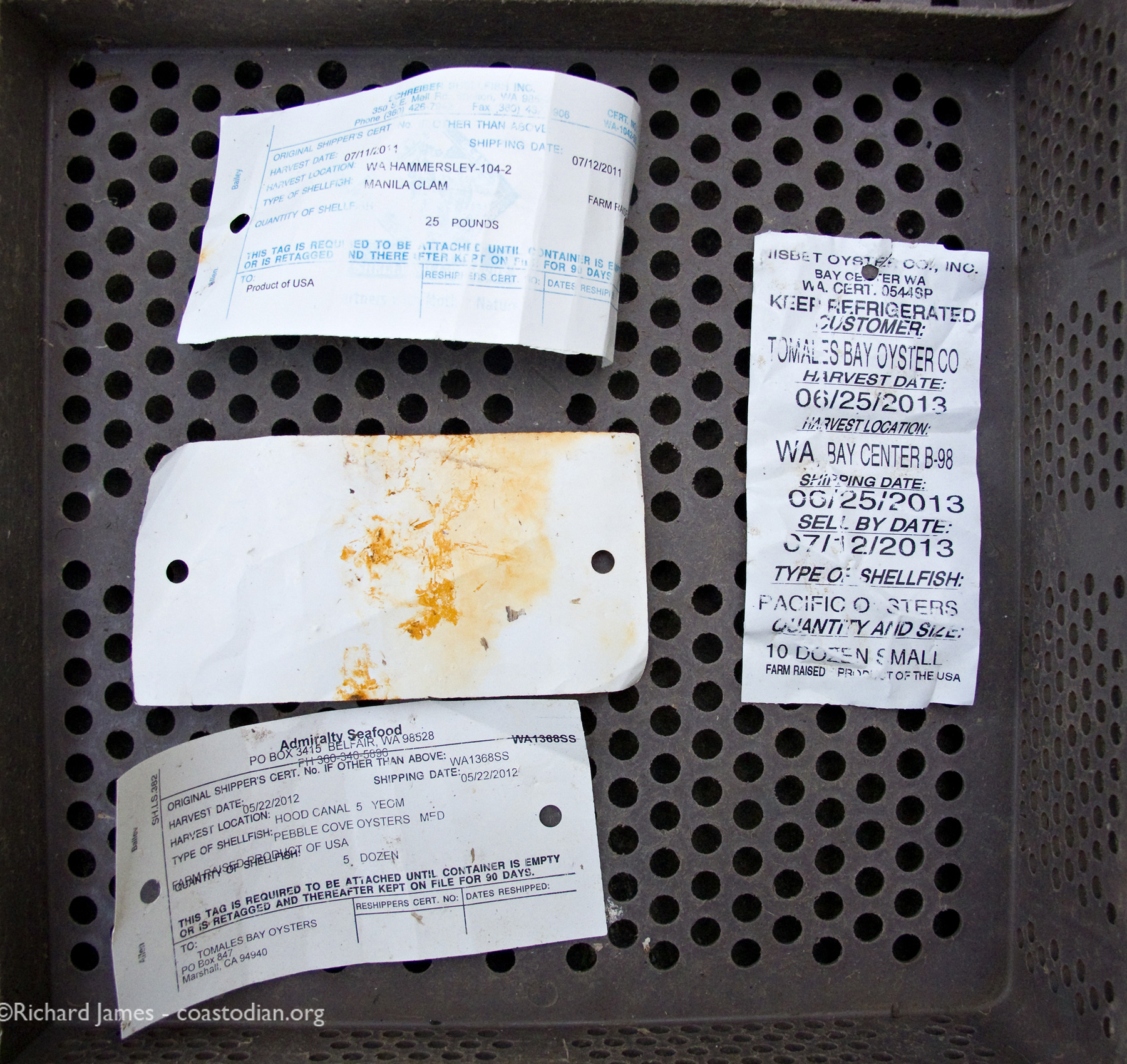
Let’s have a closer look at those tags

IMG_0657.banner.cc

It says, “This tag is required to be attached until container is empty or retagged and thereafter kept on file for 90 days.

90 days from May 21st would be August 21st. Yet, I found these tags littering the shore (along with hundreds of grow out bags) in June, July and August. Does keeping tags on file in the oyster business mean scattering them to the winds to be deposited on the shores of Tomales Bay and Point Reyes Seashore?

There is so much to learn about this local, sustainable, easy on the land business of growing, er shipping from Washington, oysters.

Do you know your oyster farmer? Call them, all the Washington numbers are there on those tags you can see better below.

Does it make sense to ship oysters so far to sell them? Maybe farming what local, non-protected waters can support is the wiser course in the long run. If the local waters can only support X pounds of oysters per year, harvest X pounds.

Either way, picking up after yourself is a given. Why is it accepted that these mariculture operations can leave such a mess in the waters and on the shore? The Leysan Albatross and other pelagic birds that scoop up all the plastic garbage humans dump in the sea, and feed it to their chicks who then die, they have no seat at the table where decisions are made by those in power, those extracting a profit. Who speaks for the animals of the sea?

West Marin oyster farmers want to greatly expand the number of acres in Tomales Bay where they can practice their trade.

From what I have seen so far in my many days on the water and along the shore picking up after them, they don’t deserve to farm the acres they mis-use now. If these farmers sent two people out one day each week, or even every other week to clean up THEIR mess, I’d have nothing to write about. More importantly, the animals of the sea would be less likely to die by ingesting our waste.

This farming can be done responsibly if the farmers are willing to act in a manner many talk about. Are short-term profits going to fog the eyes of these business people such that they are blind to the damage being done?

I hope not.

As always, to see a larger version of the following images, click on it.

IMG_0657.cc

IMG_0660.cc

IMG_0658.cc

IMG_0659.cc

IMG_0662.cc

.

Next related post may be found here.
Previous related post may be found here.
See the first post in this series “Save our Tomales Bay” here.