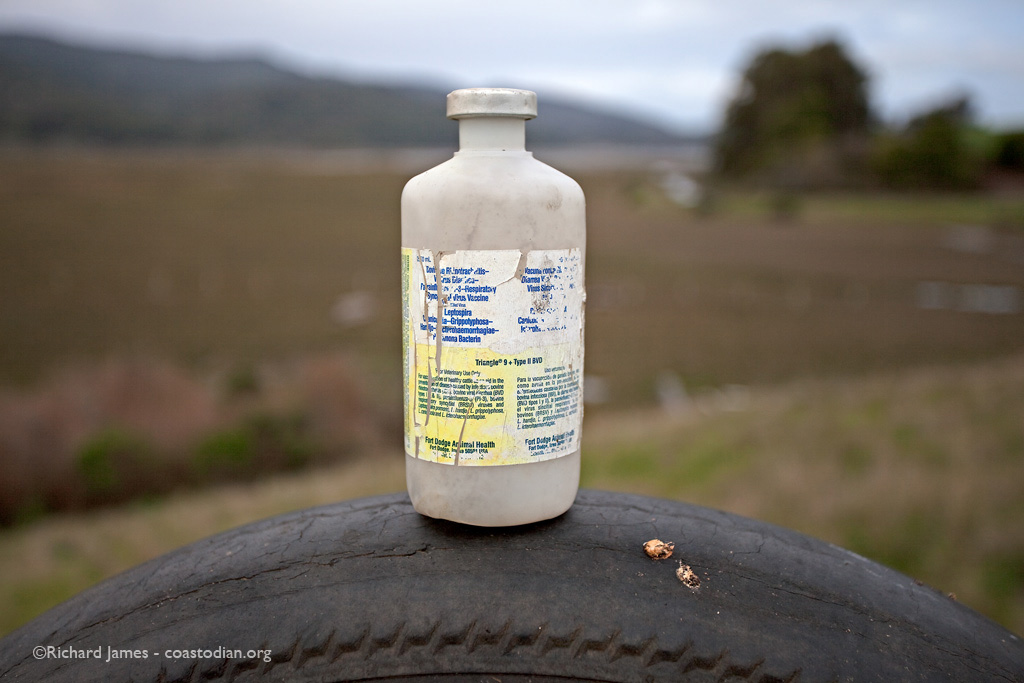
For Veterinary Use Only For vaccination of healthy cattle as an aid in the prevention of disease caused by infectious bovine rhinotracheitis (IBR), bovine viral diarrhea (BVD types I & II), parainfluenza-3 (PI-3), bovine respiratory syncytial (BRSV) viruses and Leptospira pomona, L. hardjo, L. grippotyphosa, L. canicola and L. icterohaemorrhagiae. This product contains BVD Types I and II.
Triangle 9 gives the local seafood that “je ne sais quoi”
Click on the title of this post to read it and see a related header image.
The weather today was fine for a paddle on Tomales. Provided one got on the water in time to use the tide and beat the wind.
I did some of the former and little of the latter.
A late start also means the light is gone, unless there is a heavy cloud layer which there was not.
So I headed east to an area I had not walked before in search of human trash.
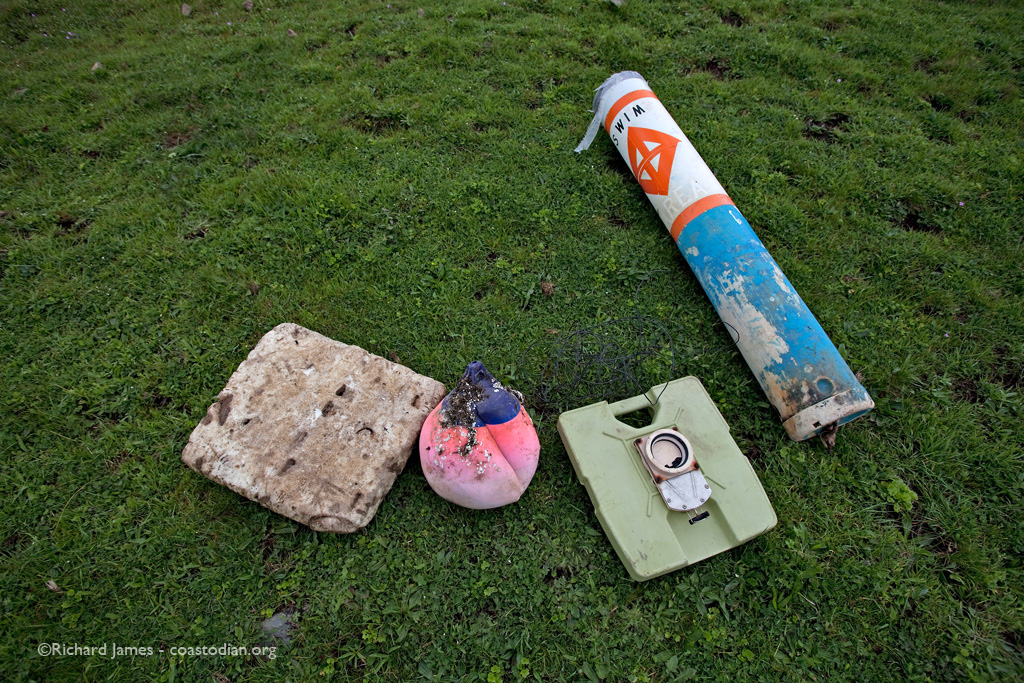
The usual suspects were in great abundance – plastic bottles, glass bottles, tennis balls, food wrappers, shotgun shell wads and tires. Nine of them.
I pulled three of them out of the deep dark muck that is the bottom of parts of the bay. Sinking up to my knees at times, I quickly became covered in dark, black, smelly mud. With my hands and most of the rest of me covered in mud, there are not many pictures from today.
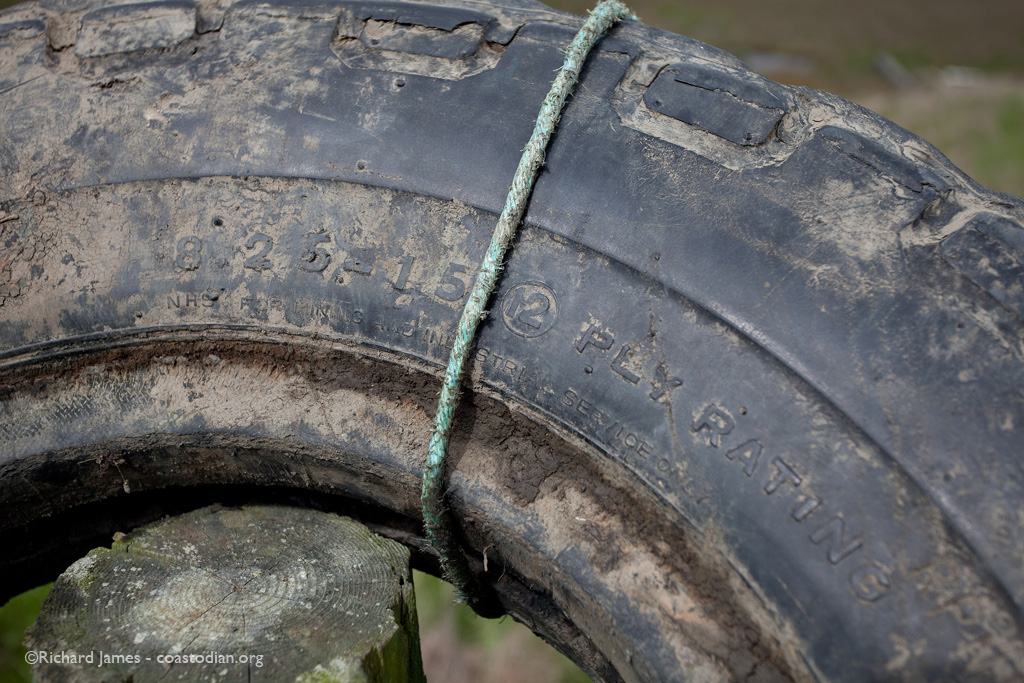
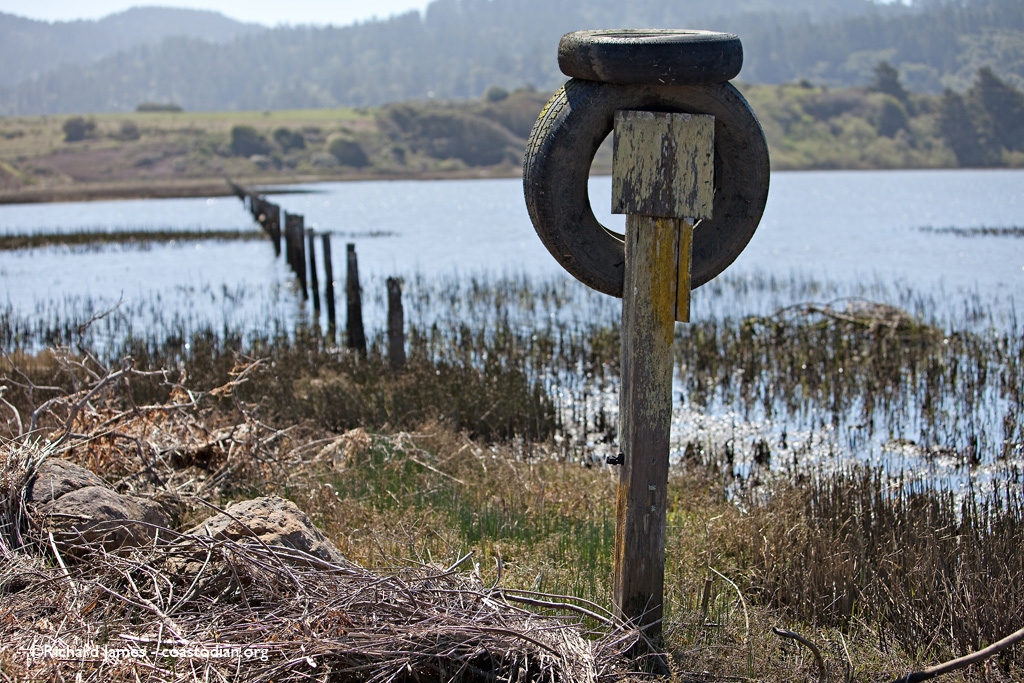
Two of the tires adorn an old post as you see in the photo below.
One was too heavy with mud to haul very far, so I pulled it up as high above the highest wrack for future efforts. Another still on the rim got the same treatment. Five others adorn a newer fence up closer to the highway.
Oh, the broken in the title of this post refers to my side-view mirror.
As I pulled my kayak off my car at the end of the day, it slipped and slid to the ground, shearing off the mirror as it went.
No good deed goes unpunished some say.
Maybe I will get a little better gas mileage without that appendage hanging off the side.
Click on the title of this post to read it and see a related header image.
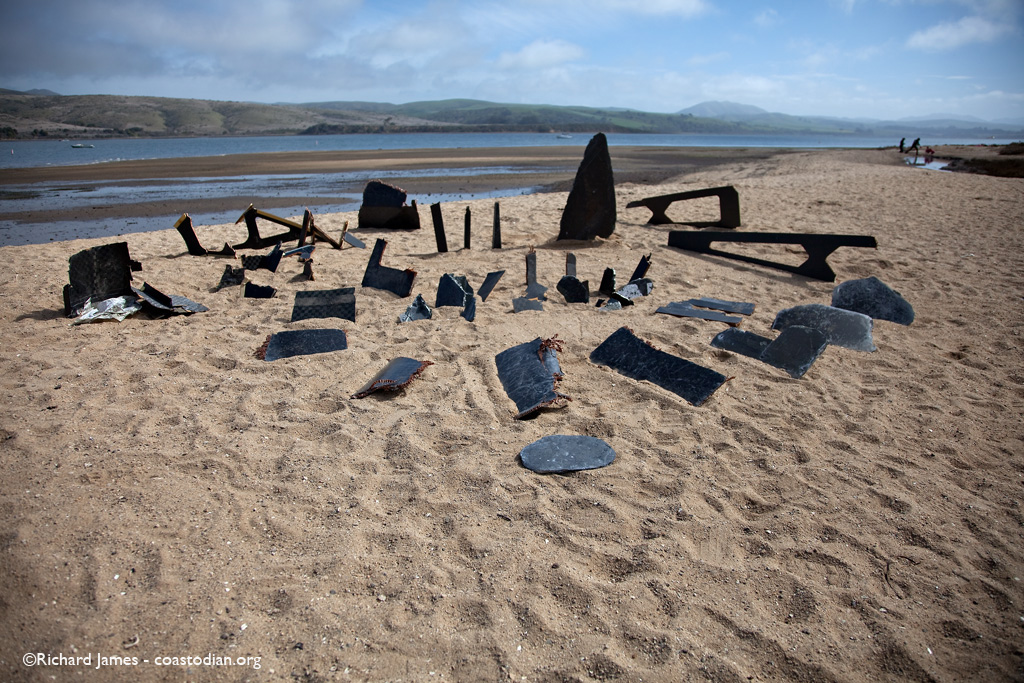
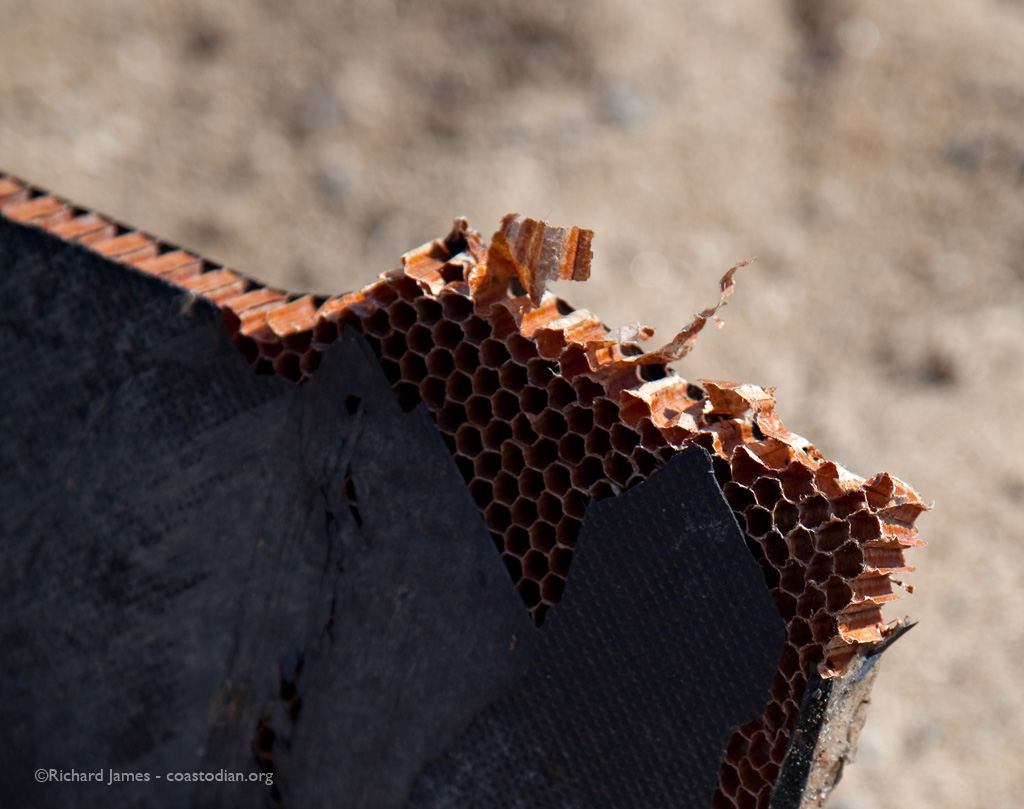
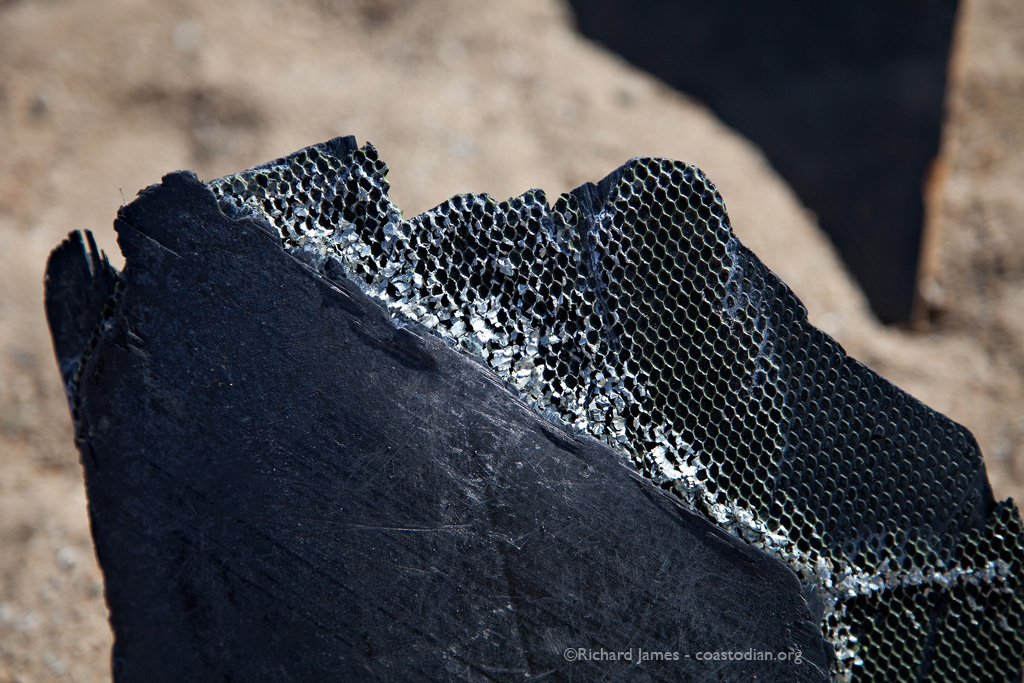
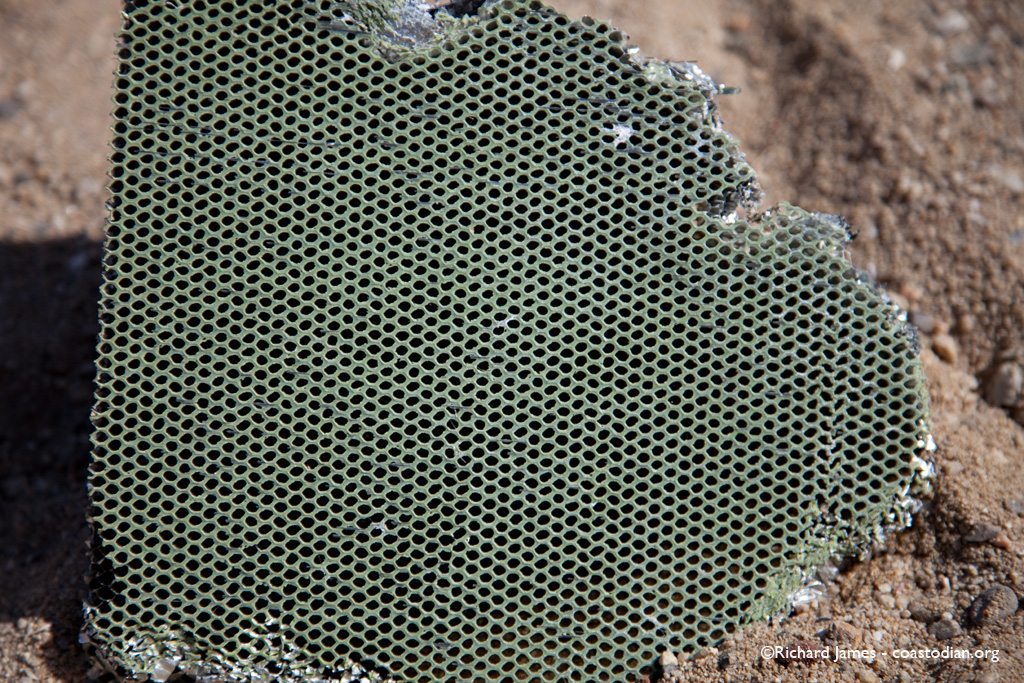
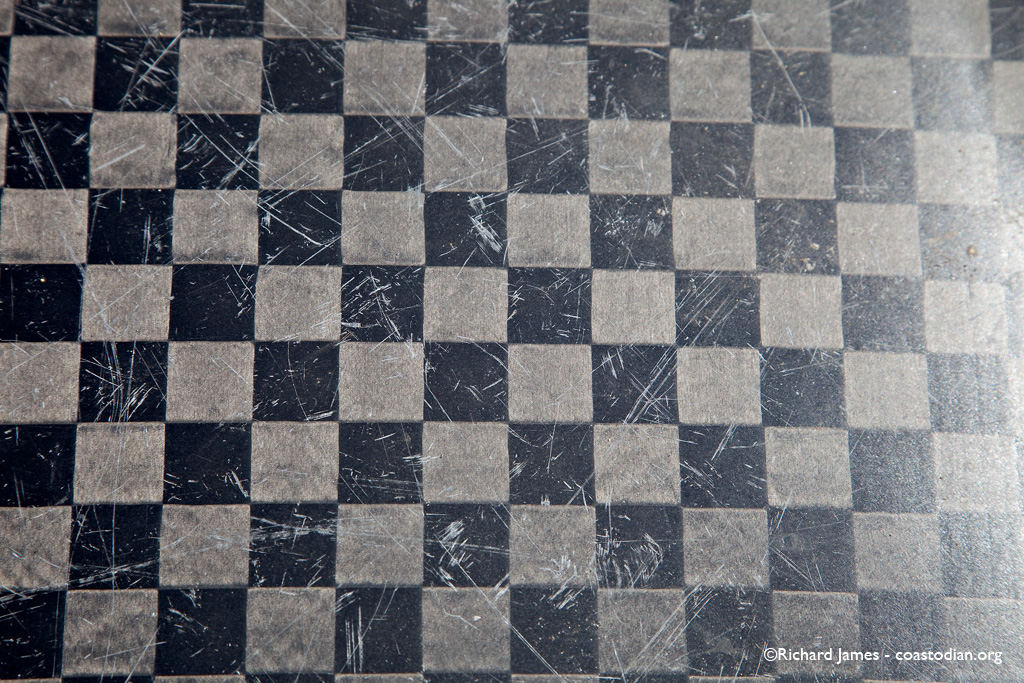
On 17 October, 2012, a boat owned by the Oracle/BMW racing group capsized as it was sailing on San Francisco Bay. Much of the resulting debris was recovered by those who created the mess. Shortly afterwards, the California Coast from Daly City, north to Point Reyes was awash in very expensive boat-bits.
I collected dozens of shards of carbon-fiber laminated aluminum and wood-fiber.
A group of Oracle people did come up once to Point Reyes to help recover debris left by another errant sailor, Duncan MacLean as well as pick up what they could find of their mess. I applaud their efforts and thank them for compensating me for the many hours I spent picking up after their fun went awry. I continue to find pieces of their boat on Point Reyes beaches.
Have a look at what a $9 million boat is made of.
From May thru September of 2013 the California Academy of Science – whose mission includes exploring, explaining and protecting the natural world – will host a display entitled “Built for Speed”. Oracle will have on display a smaller version of the boat that disintegrated on San Francisco Bay. There will also be on exhibit the orca that washed ashore at Point Reyes in Nov. of 2011. See more about that orca here.
—
A few months ago I attended an art opening at the Marine Mammal Center in Sausalito. It was sponsored by PG&E, among others.
The Marine Mammal Center is a nonprofit veterinary research hospital and educational center dedicated to the rescue and rehabilitation of ill and injured marine mammals.
PG&E had a plan that calls for towing a quarter-mile-wide array of underwater “air cannons” that emit 250-decibel blasts into the ocean every 15 seconds for 12 straight days. This was to map the sea-floor to understand earthquake faults near the Diablo Canyon nuclear power plant.
I wonder how many marine mammals that testing would have killed and injured?
Thankfully the permit for this testing was denied.
—
It has been said that politics makes strange bedfellows.
It seems that practice carries over into science as well.
Does the end justify the means? I do not think it does.
Click on the title of this post to read it and see a related header image.
Since the high litter season is upon us, I am out on Drakes gathering the man-made debris washing in with the strong southern winds of late.
Near to where the northern fur seal found me just over a week ago (turns out it is a female and very feisty as well as still alive), I came around a corner just as a juvenile red-tailed hawk lifted off the sand with an injured, but still very alive northern fulmar. It was slowly climbing and headed straight towards me with the struggling pelagic payload in its’ talons.
I dropped down to the ground to cut a smaller profile as I watched the hawk flapping and flapping, yet gaining altitude like an overloaded Bonanza at noon in august at Truckee. That is, it had a positive rate of climb, barely.
The fulmar was flapping and struggling under the hawk which probably did not help matters much.
As the pair was about to be overhead and about 70-80 feet up, the hawk jettisoned the fulmar and floated upwards with ease. The fulmar dropped like, well, a rock. SPLATT! Onto the hard sand with about 1 inch of water. The dazed bird looked around, not sure if this was better than being pierced by talons and flown away to be eaten.
I sat crouching for a couple minutes to see if the hawk planned to return and try again. It did circle us a few times but eventually flew off to find a smaller bird.
After walking east a few hundred meters and picking up oyster spacer tubes and tampon applicators by the dozens, I turned around and found the floundering fulmar being swept back and forth in a slowly rising tide. I dropped my bags of plastic and went over to see if I could move it to a less hectic place. Even after all it had been through, this bird was very capable of defending itself. I barely was able to grasp its’ wings and keep my hands away from the sharp end trying to peck me. I carried it up to where a pile of logs had been pushed up against the wall and laid it in a protected spot in which to die without the tide and raptors interrupting.
I wonder what that crab fisherman was expecting to attract with a bait bag full of tampon applicators?
Squid egg masses
I learned today from the folks at The California Academy of Science that these egg masses are likely from the Common Market Squid (Doryteuthis opalescens)
Still tired of all the man-made debris washing up.
Did they pack all that sand and eel grass? Was Drakes Beach their final destination?
Marc from France – A photographer touring California for the first time. He has two small children back home and was happy to find a frisbee for them. I gave him the football I had just found for his 9 year old son Isaac. Marc was in love with the light and the Point Reyes area. I offered some travel tips for his next 12 days.
Click on the title of this post to read it and see a related header image.
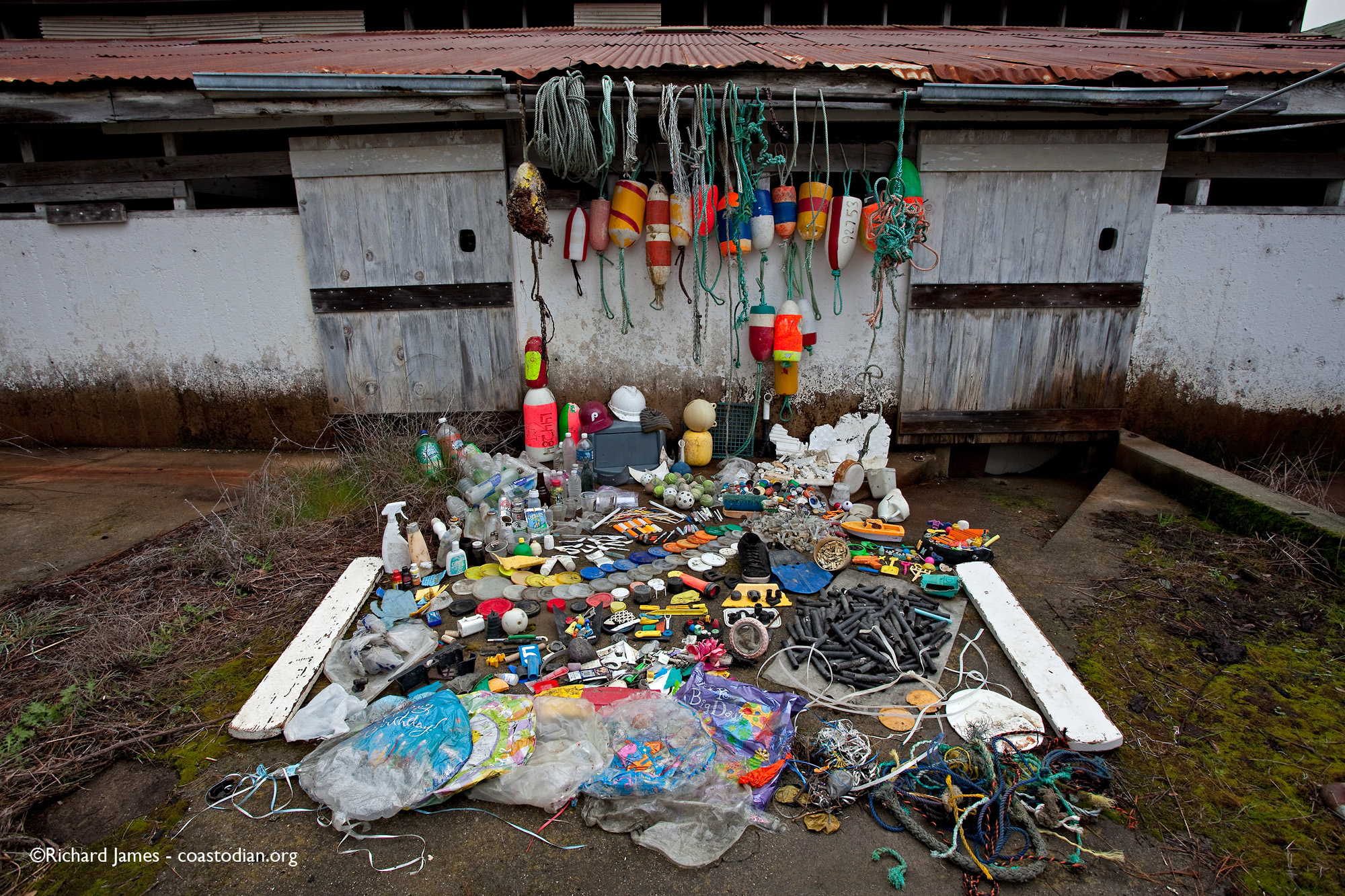
The debris shown in the images below was collected after the first big storm of 2012 in early February.
Over two days I spent 10 hours and covered about three miles of Drakes Beach and South Beach. Just imagine what all the beaches of Point Reyes were covered with from just one storm!
The plan was to have posted these images in February. Due to painful distractions, I am finally getting around to sharing what I hope you find are compelling images. That is, I hope they compel you to give some thought to all that happens in order to bring seafood to your table.
Tomorrow is the commercial crab opener of 2012. Thousands of crab pots have been dropped in the sea attached to miles and miles of petroleum based rope, foam floats and plastic bait jars. Much of this gear will be lost due to storm, propeller strike or other activities. While scraping and grinding along the bottom of the sea, or abrading on the beach sand, many thousands of pounds of plastic will be pulverized and deposited into the food chain.
Does society have any idea what is undertaken to put seafood on their table? The time, expense and effort of the fishermen, the vast amount of gear lost at sea each season, or stolen by unscrupulous crab fishermen? A local fishermen once told me, after sharing with me the many ways in which fishermen “do unto others” in not such golden ways, “Crab fishing makes ya crabby!”
Be sure to have a look at the last picture. There you will get a close look at about 75 oyster spacer tubes from Drakes Bay Oyster Company (DBOC) in the foreground. I have found well over 5000 of these in the last five years. From as far north as the tip of Tomales Point and south to Slide Ranch.
Click on image for bigger picture – Debris recovered over two days work, about ten hours effort
Click on image for bigger picture – Should the price of crab reflect the cost to the planet?
Click on image for bigger picture – Maybe some of this is yours?
Click on image for bigger picture
Click on image for bigger picture – Heroin, nicotine and caffeine….slower, faster, anywhere but here and now…
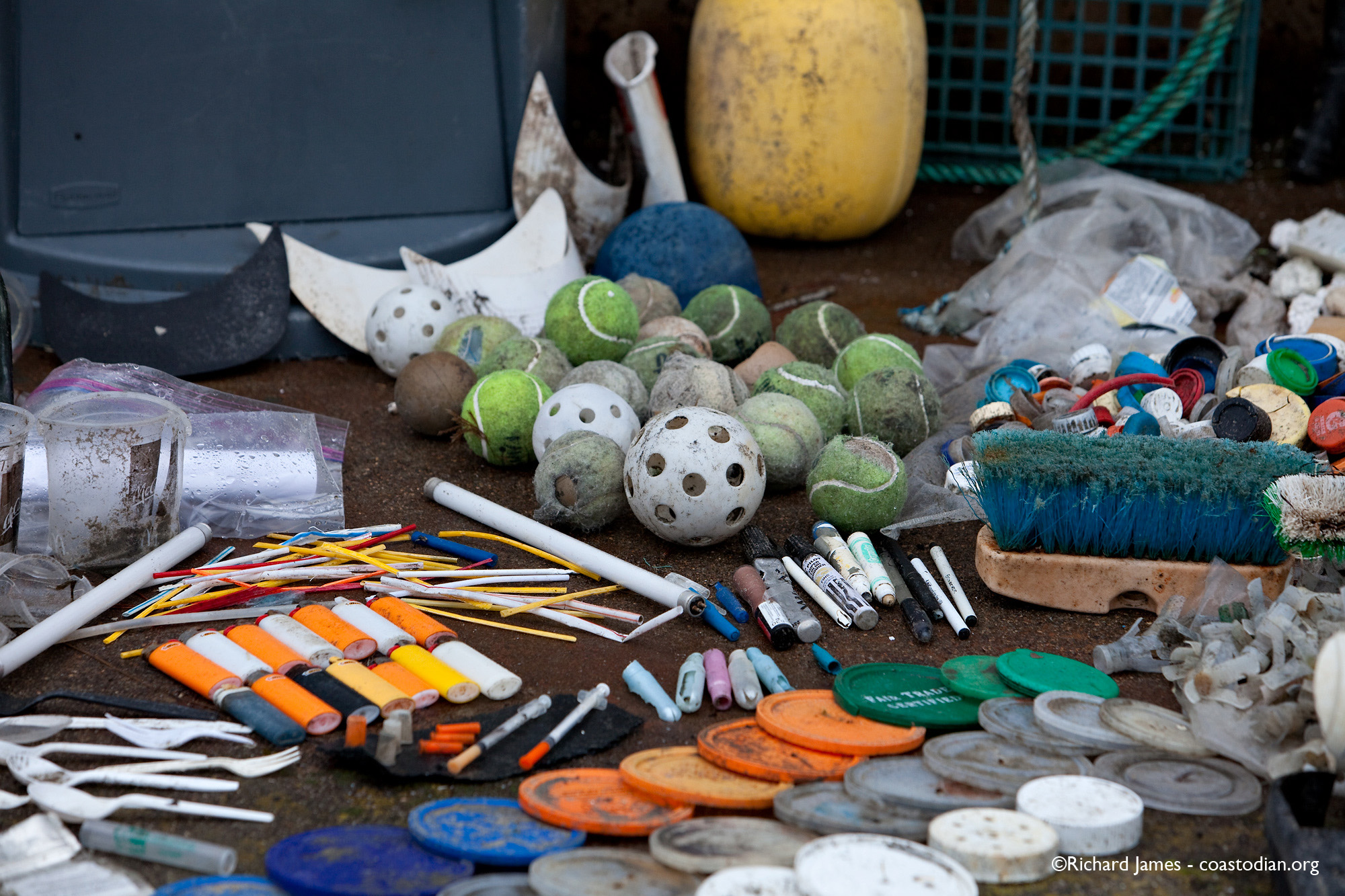
Click on image for bigger picture – If all dogs at the seashore are on leash….how come I find 100’s of tennis balls and ball tossers each year?
Click on image for bigger picture
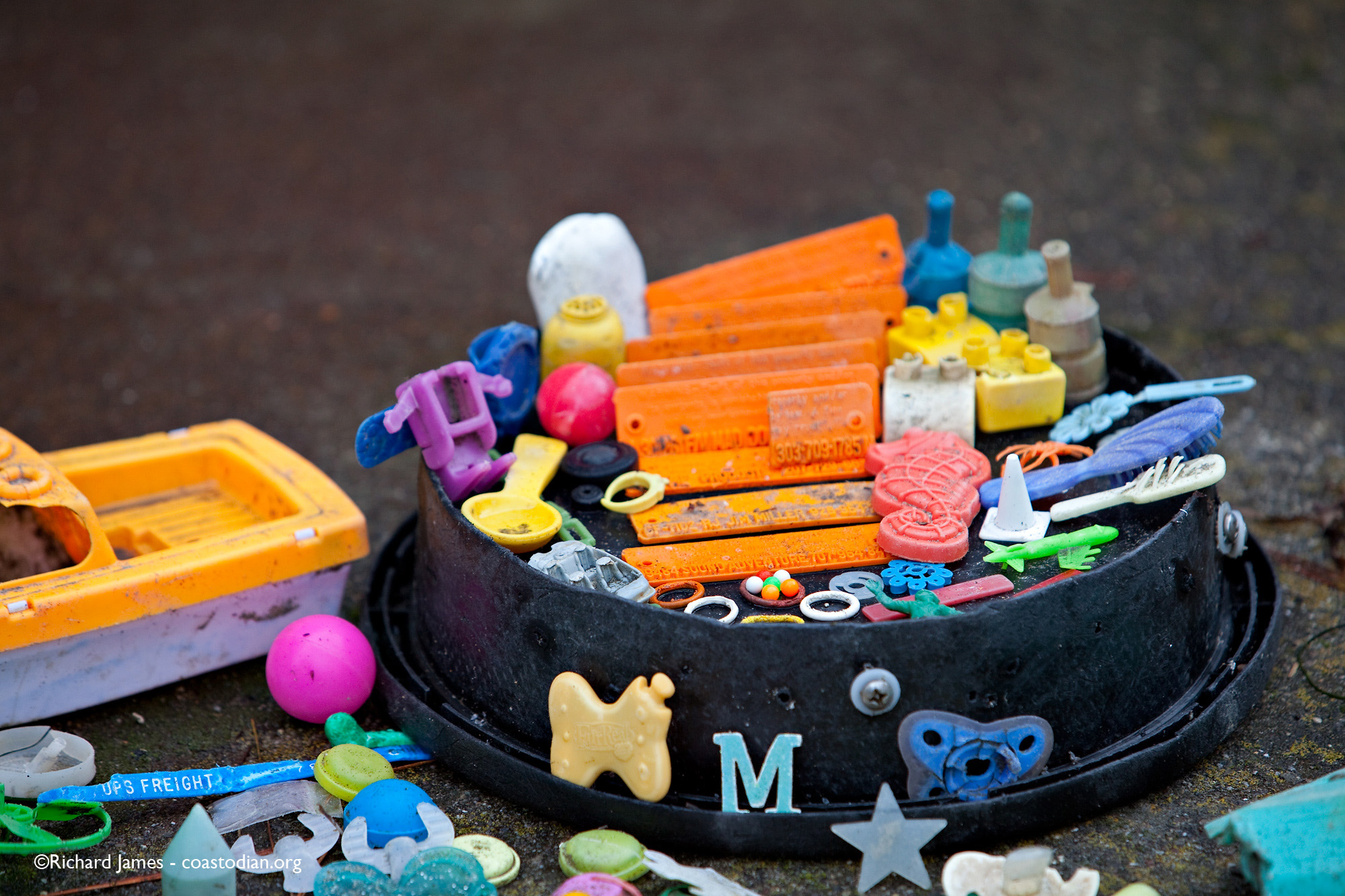
Click on image for bigger picture – Each one of those orange tags represents about $200 in lost gear for a crab fisherman. What if they paid a deposit on each trap set? To offset the cost of picking up after all their gear that litters the ocean and beaches.
Click on image for bigger picture – Black PVC pipe oyster spacers used by Drakes Bay Oyster Company. You see 75 or so here. I have found over 5000 of these on Point Reyes beaches, as well as dozens oyster grow-out bags and the foam from inside grow-out bags.
All forms of commercial fishing take a huge toll on our planet.
Is it asking too much to set aside portions of the planet as areas we tread upon lightly, or tread upon not at all?
Many say we must do all we can to produce food locally, sustainably to feed the 7 billion humans on earth.
Others say we need to slow the growth of the human population, keep it more in line with the carrying capacity of earth.
This planet is fragile. Humans, only one of the many species on this blue sphere, have developed the means to do great good and great harm. As we ever more quickly modify our nest, it is less able to feed an ever growing population. Does this make sense? Does a growing family move into ever smaller and smaller housing?
Click on the title of this post to read it and see a related header image.
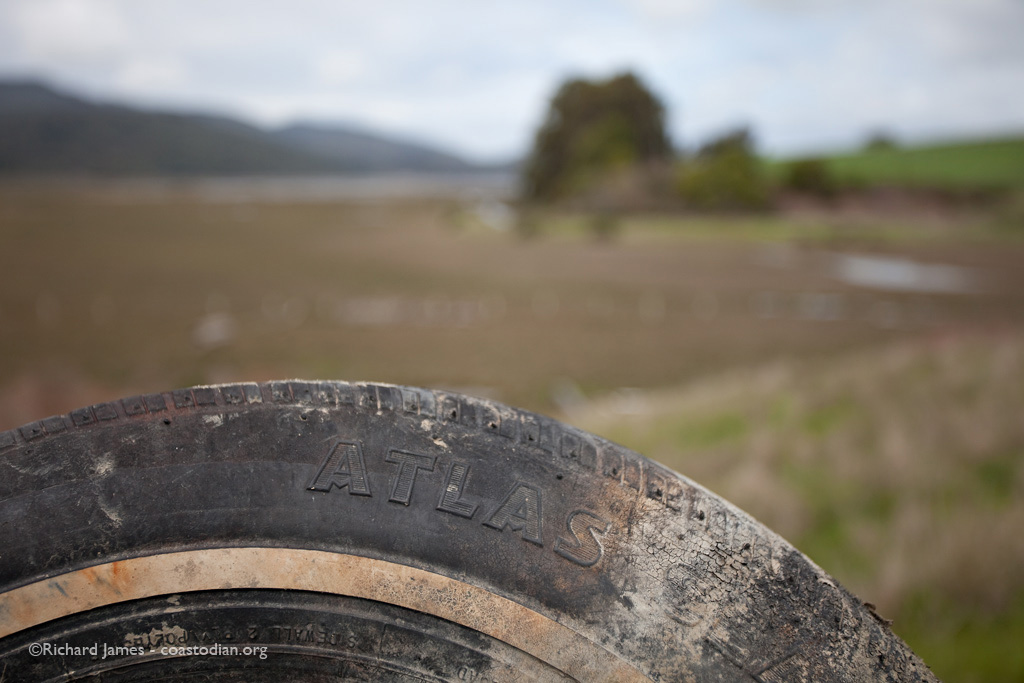
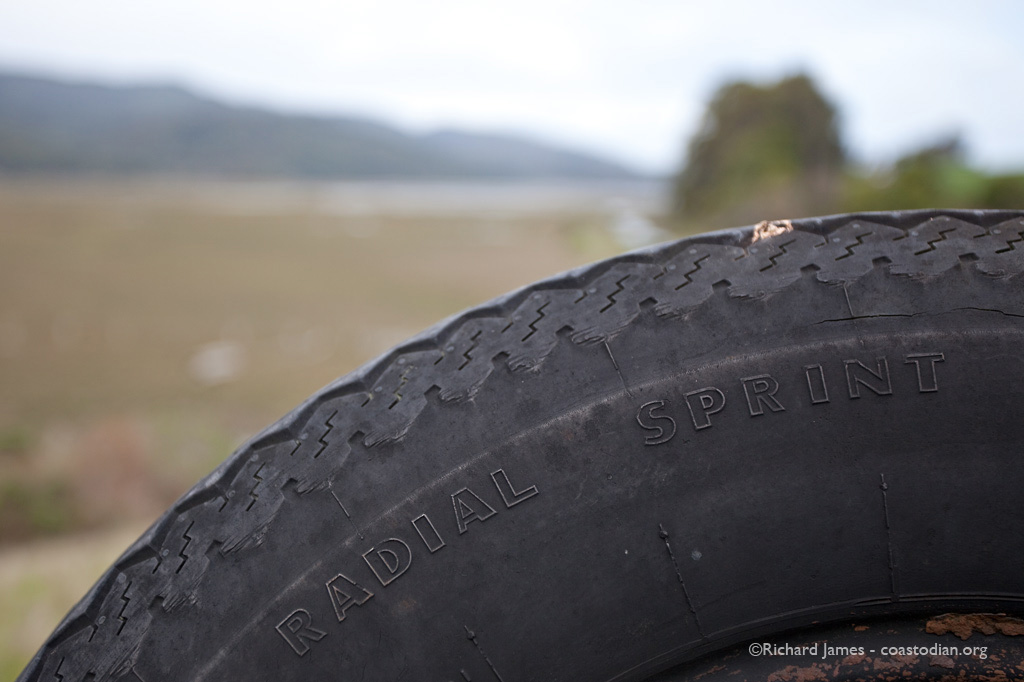
A dozen or so tires wash up on the beaches each year at Point Reyes. Most of them on the rim which makes them very heavy. I usually move them up as high on the beach as I can in case someone more industrious than myself feels like packing them out. I’ve only packed out two that I can recall. The rest either washed back out, or someone came and got them.
There is a forty-eight inch diameter aircraft tire buried in the sand on Drakes Beach, sans rim. In case you feel inclined to go get it, park your car near the cafe, walk ~2 miles to the right(low tide a must), it is high on the beach. Bring a shovel or two.
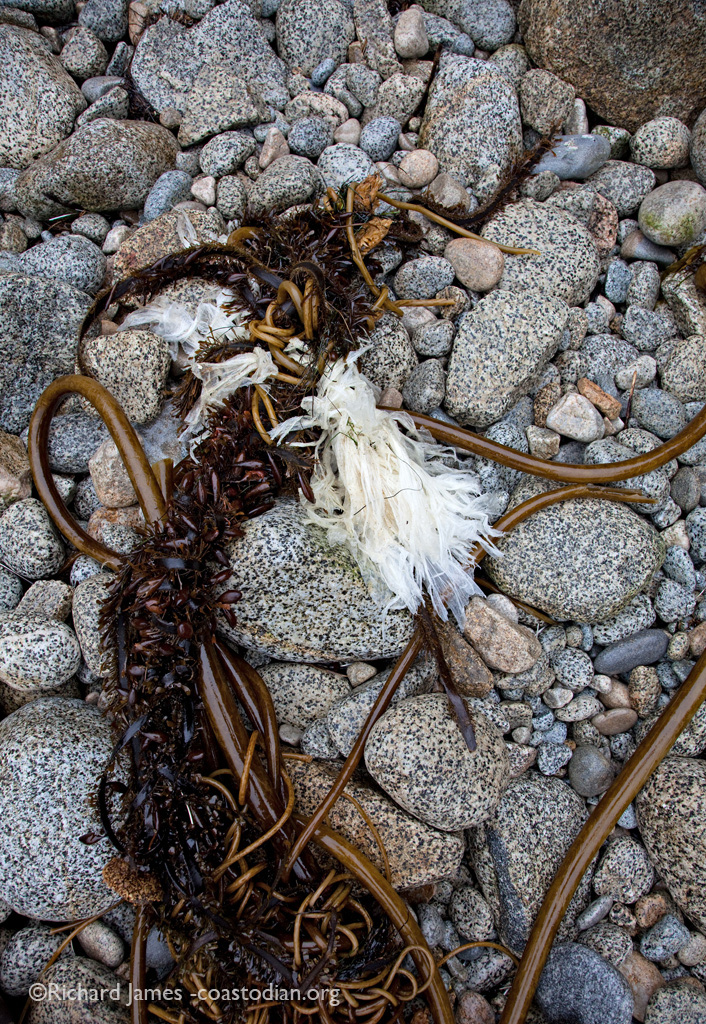
Shredded plastic wrap tangled in bull kelp and feather boa kelp
Click on the title of this post to read it and see a related header image.
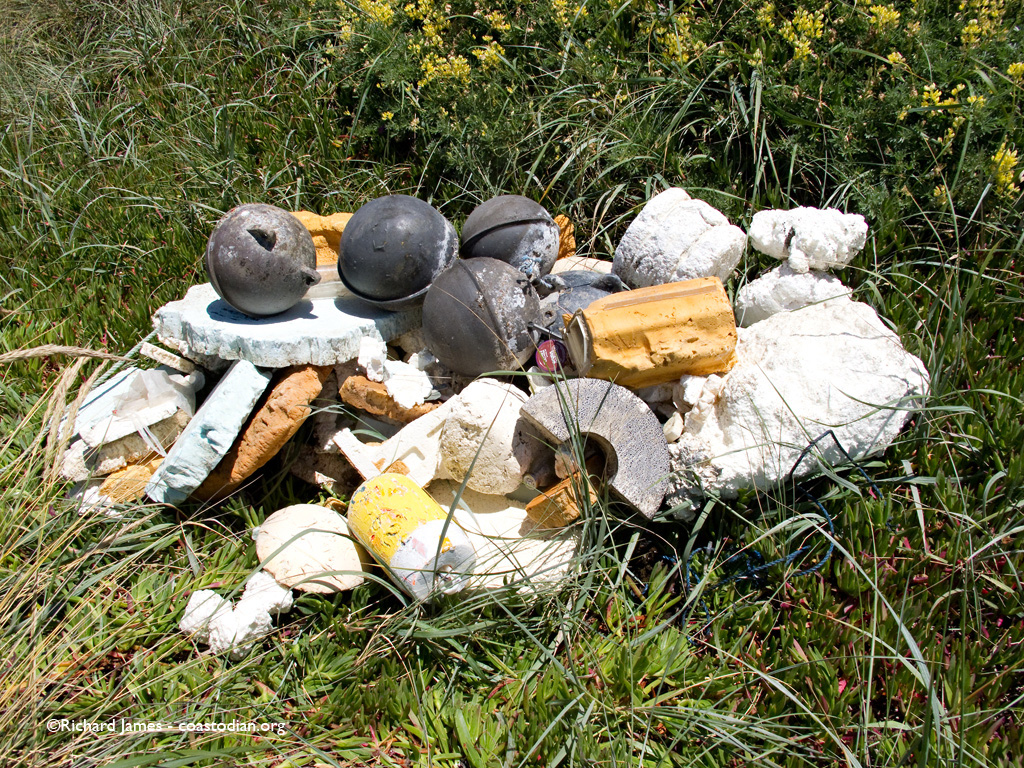
The past few months have brought a never-ending supply of foam to the beaches at Point Reyes. Mostly polystyrene, though other flavors as well, all petroleum based.
This pile has been growing and shrinking for several months. I add to it that which I am unable to haul out at the time, then return later to pack out what I can.
I strive to get foam off the beach as soon as possible. Birds peck at it looking for food, harming themselves in the process, as well as breaking it up into smaller pieces for other unsuspecting animals to attempt to snack on.
This young elephant seal is still trying to figure out how to feed itself now that mom and her high-fat milk is gone. I hope it quickly learned that foam is NOT food.
The rough water of winter storms grinds it up and pushes it into the drainages that meet the beach.
Such a lovely sight in a national seashore!
This scene is reproduced all over the world each and every winter.
I spent nearly 2 hours picking up most everything not wood or sand in this image.
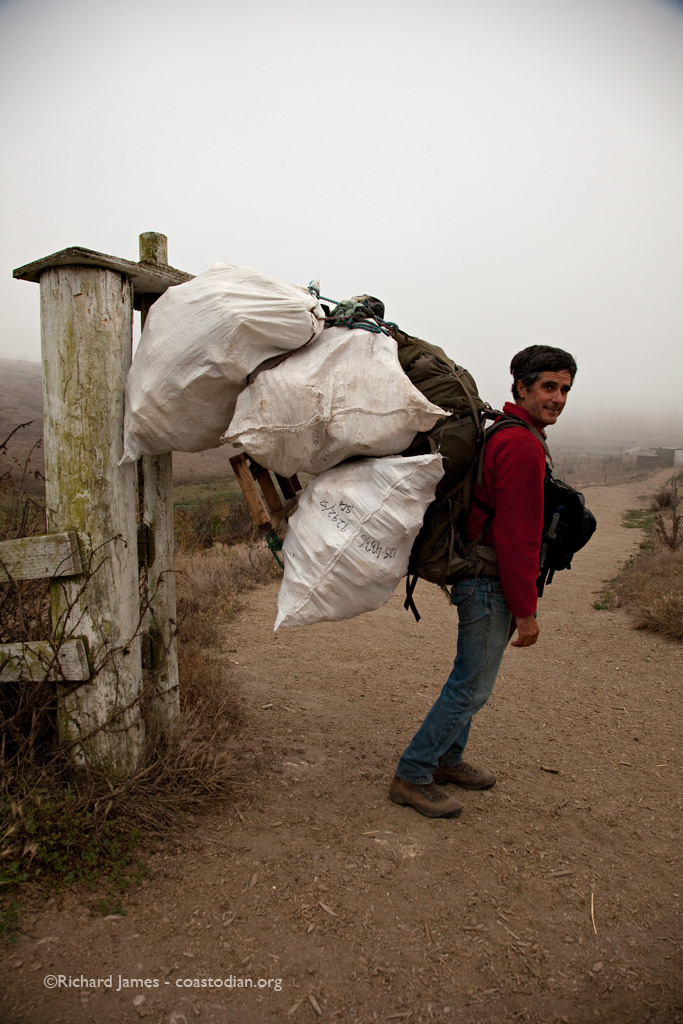
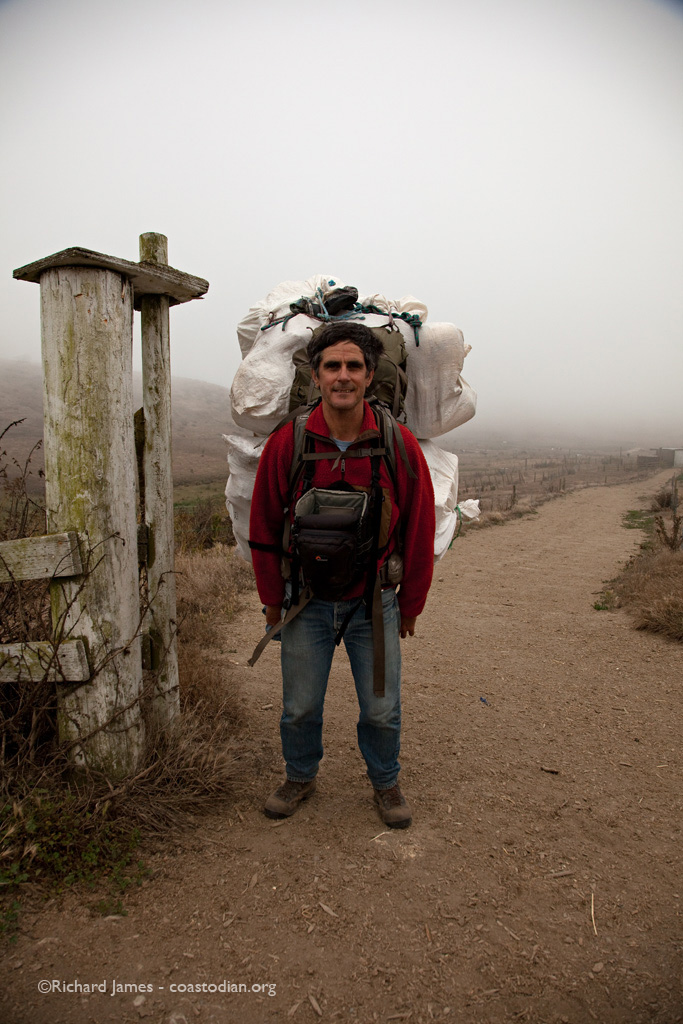
Foam does not weigh much, but it is big and bulky. Forty-five pounds or so on one’s back is like a spinnaker. Thankfully I had the wind at my back on the hike out and made great time.
The next stop for this load of man-made mess is the dumpster at Point Reyes headquarters.
I wonder where the contents of the dumpster will end up?
Four artists’ work is on display at the Stinson Beach Library until 31 January, 2012.
Richard James has two of his large meta-bottles on the patio along with 49 jellyfish I made out of Korean fishing-net floats and crab-fishing rope.
Lina Jane Prairie has baskets made from kelp and the same rope I use for tentacles.
John Norton is showing a few of his collections of similar items found on the beach.
Tess Felix has created two mermaids and a few portraits, mosaics actually, all from the bits of petroleum-based plastic we humans discard every minute of every day which wash ashore on the world’s beaches and are eaten by birds and fish the world over every minute of every day.