Jenner by the sea – Same as it ever was

Click the words above “Jenner by the sea – Same as it ever was” to see this entire post.

Once in a lifetime may we all see such beauty as Drakes Estero at dusk, surrounded by hundreds of godwits. Serenaded by a single loon. In this respect my life is complete.

On the first day of 2015 I was blessed with the beauty of Drakes Estero sans mariculture.

1 January, 2015 - Black Turnstones over Drakes Estero. ©Richard James

1 January, 2015 – Black Turnstones over Drakes Estero. ©Richard James

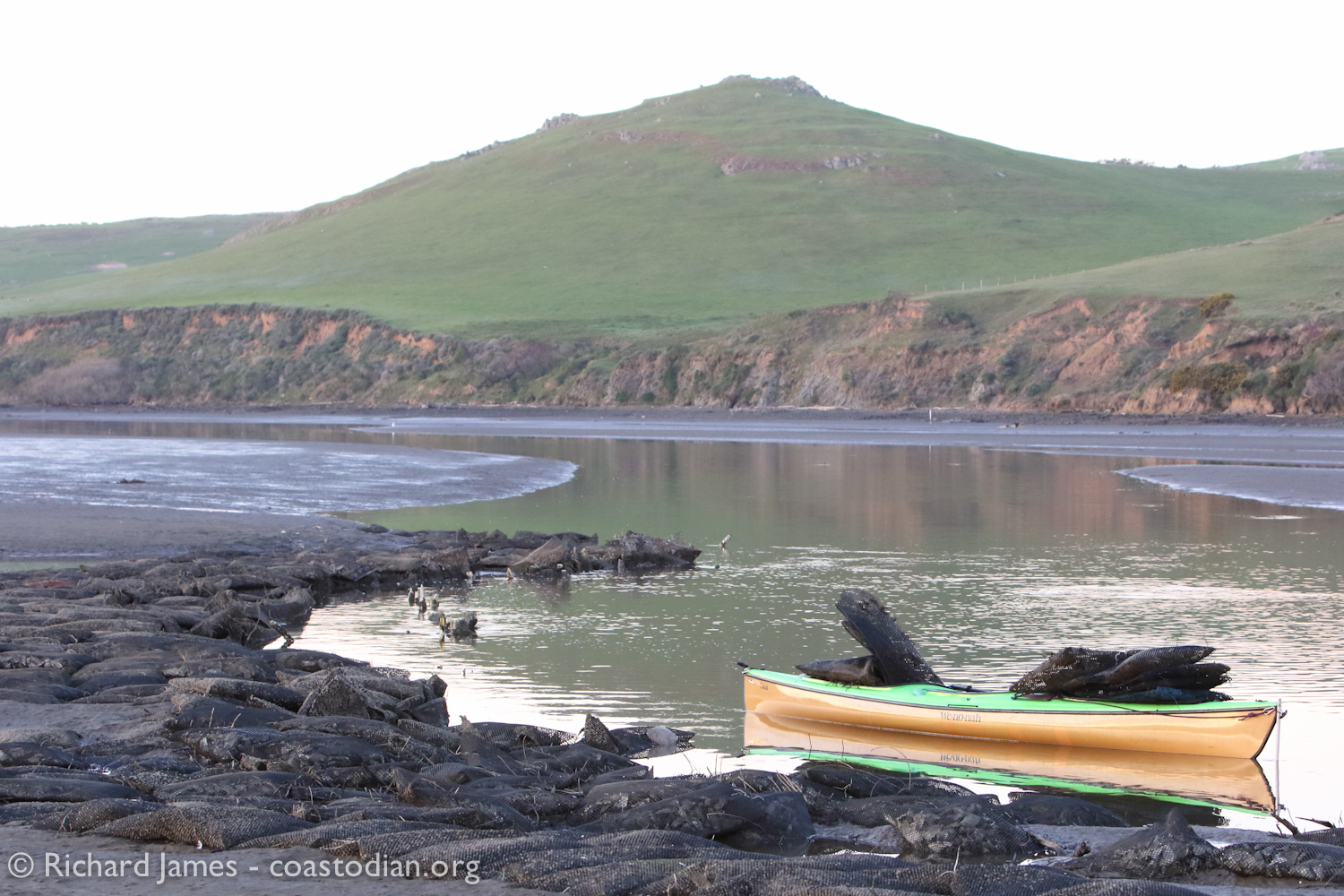
On the last day of 2015, I had the company of Dan Gurney, fellow boater and nature aficionado as we toured the estuary at the mouth of the Russian River.

This is a common venue for Dan and my first trip to these calm waters.

We put in at the boat ramp near the visitor center and made our way towards the mouth, careful not to venture out to the sea. Our boats and skills not suited for the crashing waves.

Besides enjoying the birds, seals and sounds, our destination was the beach north of the mouth, covered with driftwood and countless pieces of plastic, bottles and other mindless items. Inquisitive harbor seals swam close to us, noses in the air, inspecting us for food or threat, then silently sliding back beneath the cloak of the sea-surface.

We beach our boats, bags in hand we set off to the north, ready to return the scene to a more fitting state, free from out trash. Though we would later learn we had not pulled our boats far enough out of the rising waters.

Dan and I had previously met 2-3 times on Tomales Bay, he with a larger group of boaters, and I out walking the shores, filling my boat with trash, oyster farming debris and derelict drifting duck decoys. This was the first time he and I had boated and walked the shore, intent on cleaning up the place.

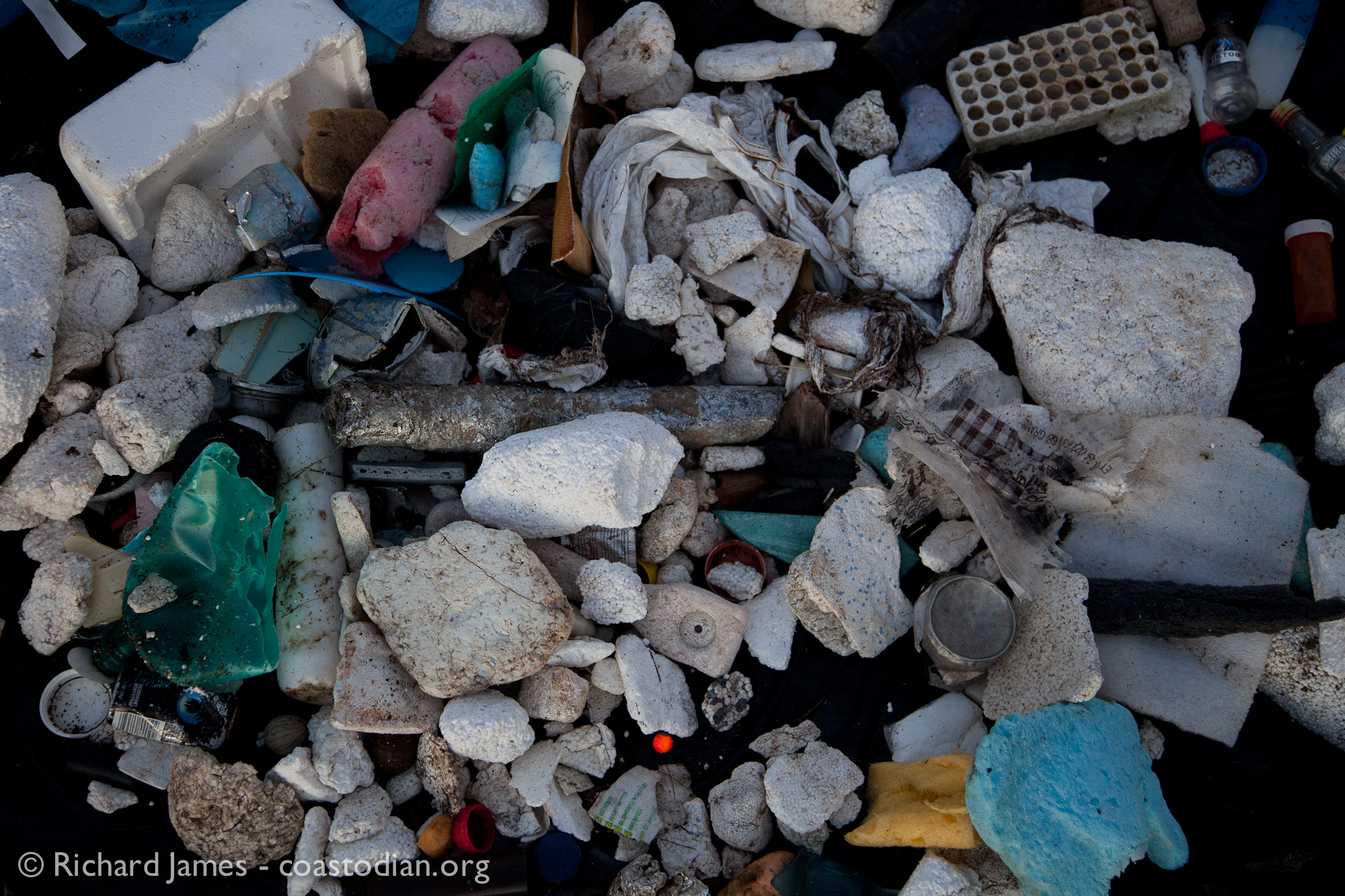
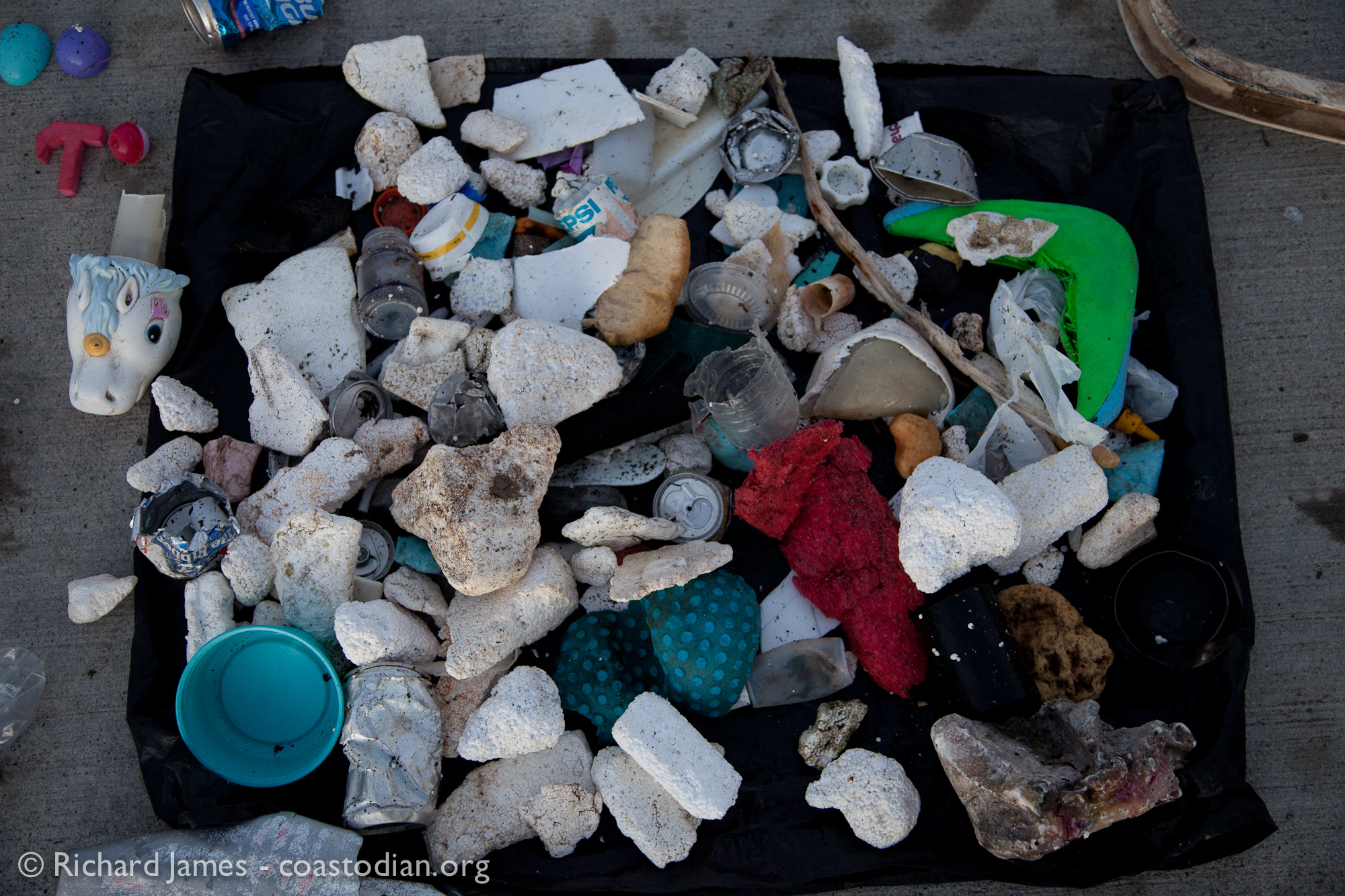
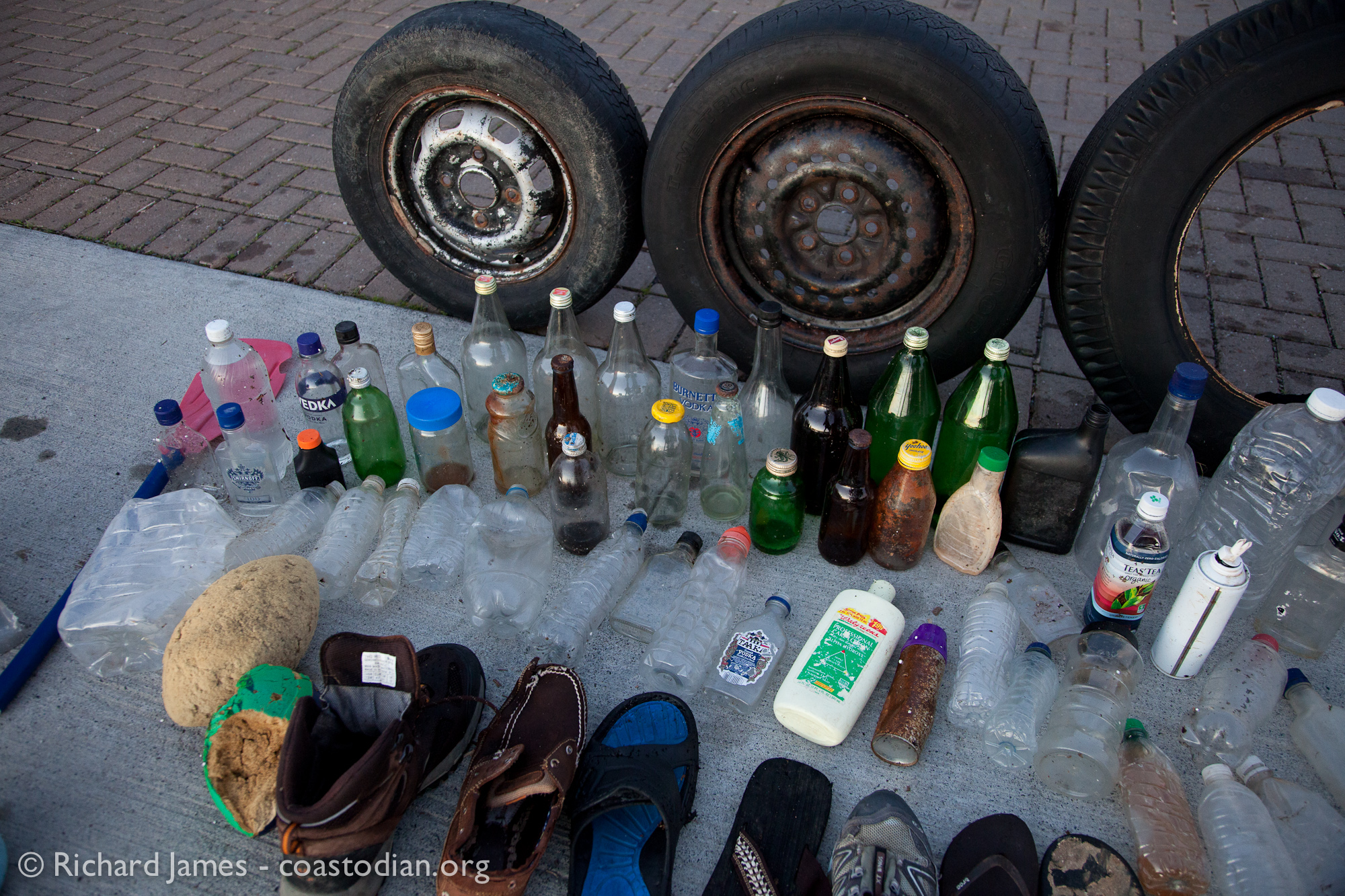
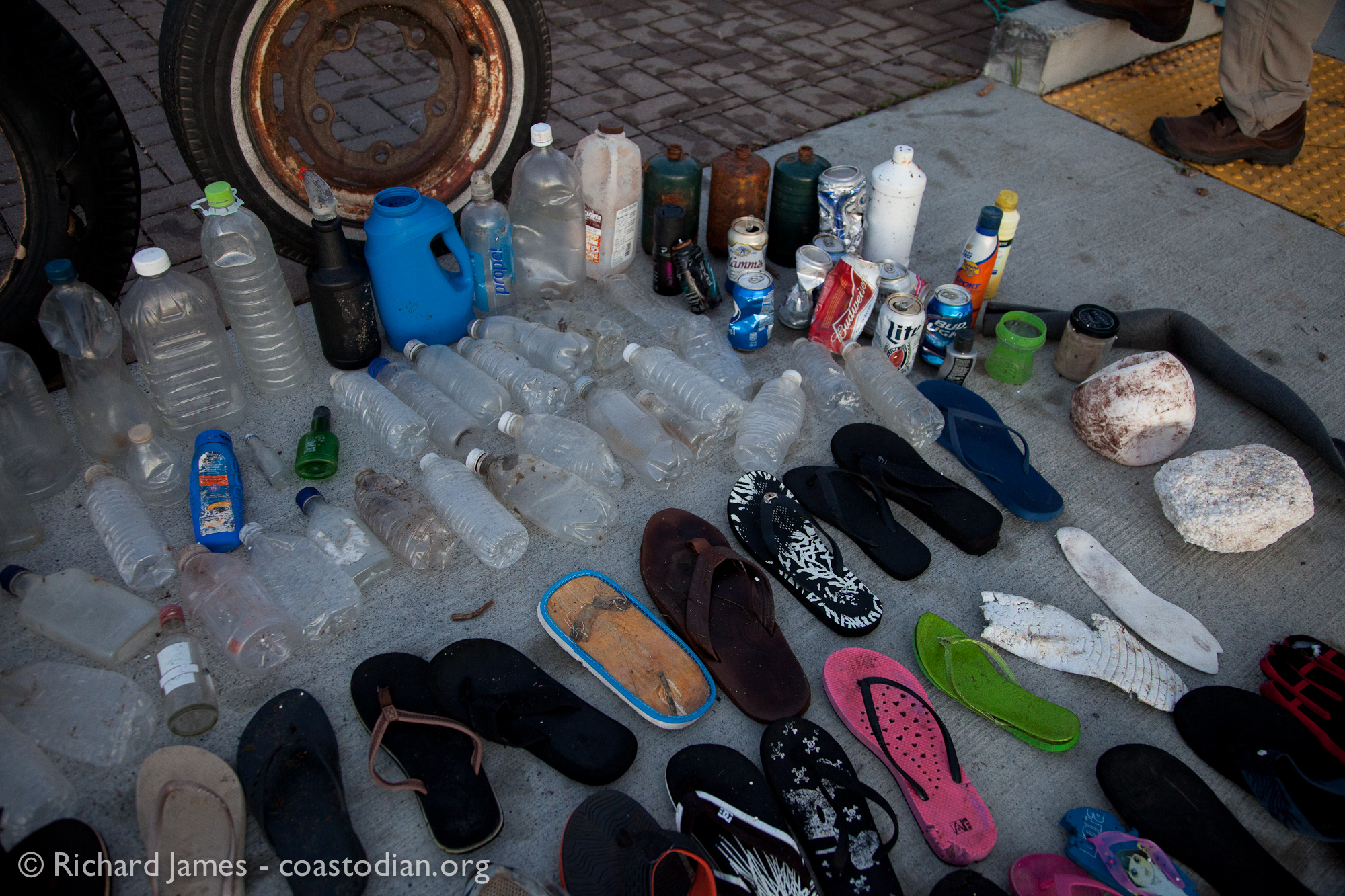
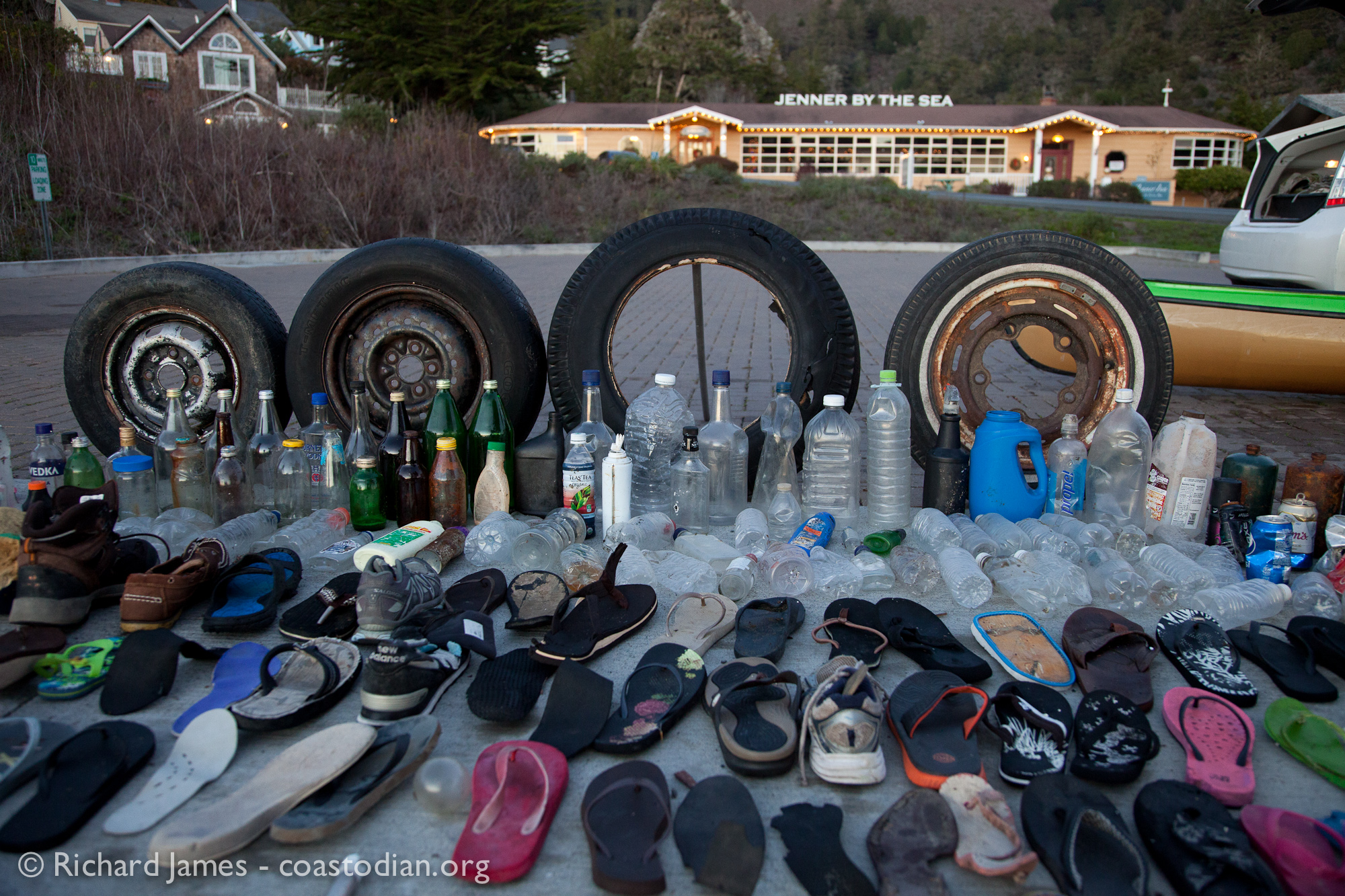
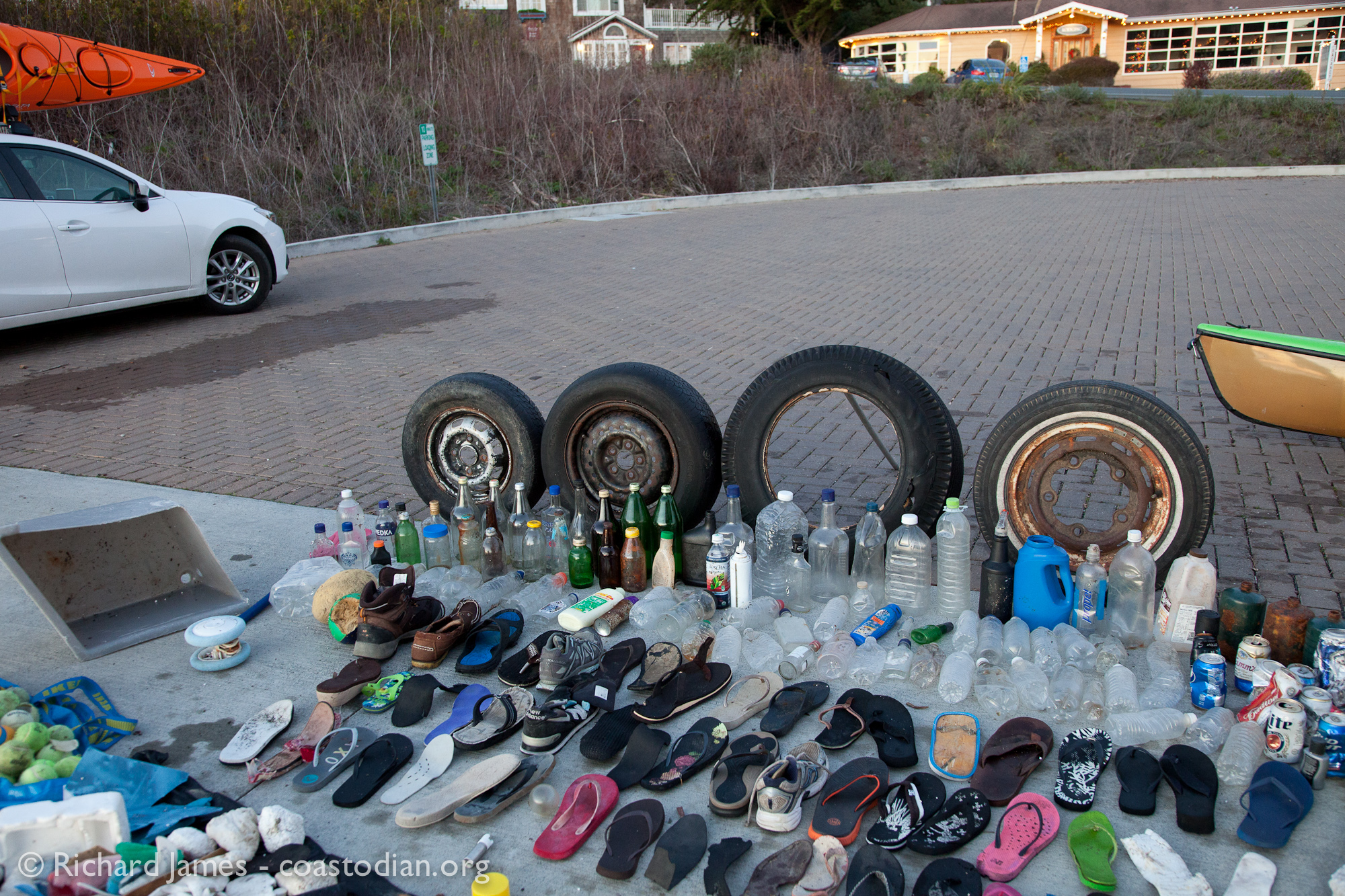
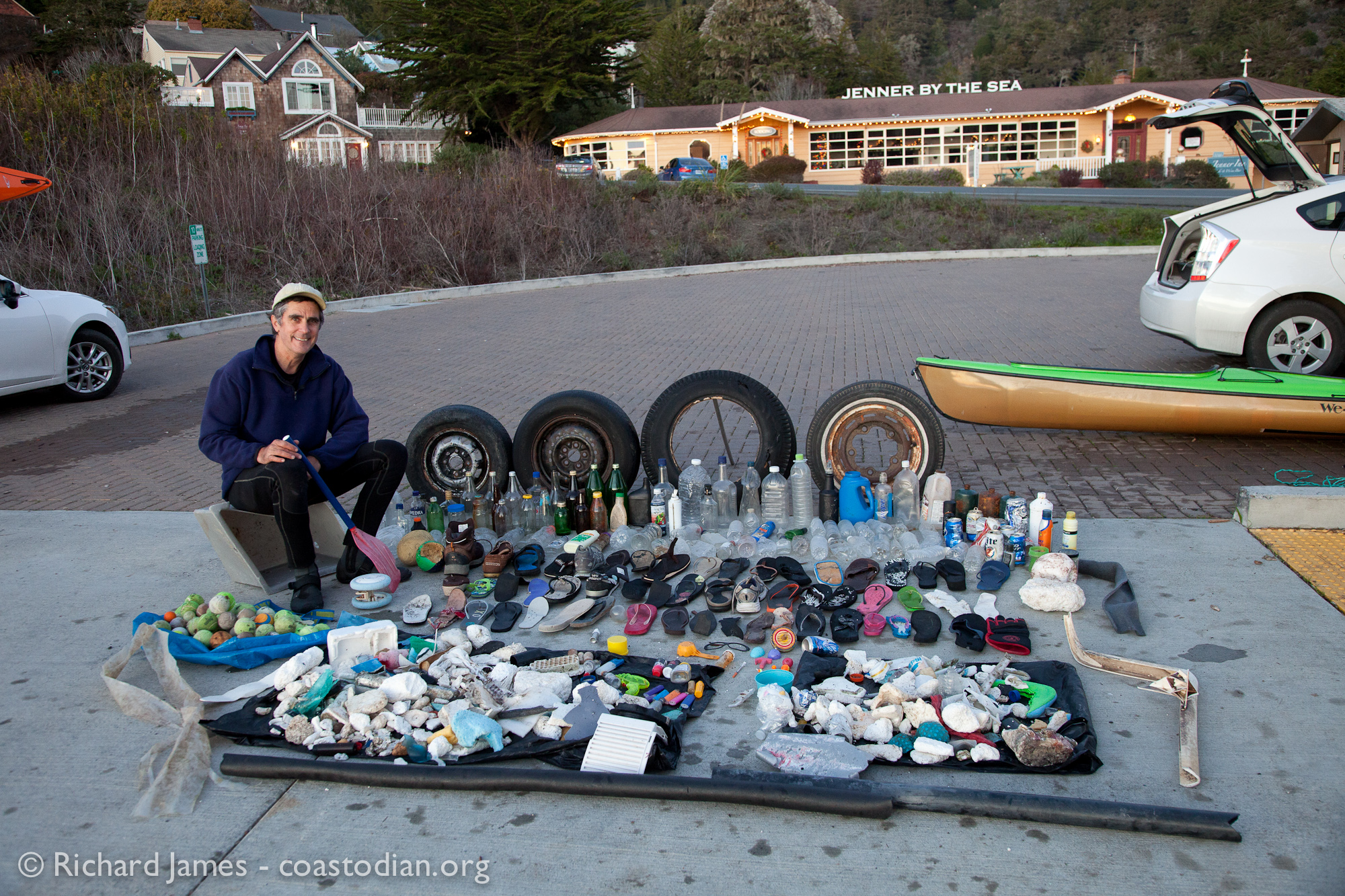
Instead of 10-15 minutes and back in the boat to paddle up to Penny Island for a bite to eat, we spent the next 90 minutes gathering foam bits, tennis balls, plastic and glass beverage containers and this lone steelhead.

A large meal, unnoticed by gulls, vultures and eagles. The all white gums of this fish told me it is a steelhead, chinook are all black, coho are black & white.

A large meal, unnoticed by gulls, vultures and eagles. The all white gums of this fish told me it is a steelhead, chinook gums are all black, coho gums black & white.

Perhaps the sand coating had sealed in the scent sufficiently to hide this meal from being discovered. I carried it out to the surf and the gulls and vultures quickly took notice.

Dan was a bit worried, as we had left our boats unattended for quite a while (and had not secured them very well either)

After piling up trash into caches for retrieval later, we hustled back to find our boats swirling in an eddy, off-shore, being herded by Dan’s good friend Bob. Bob boats here nearly every day and knows the land, as well as the boats. He was kind enough to push them to shore where we secured them and spent a while talking about all manner of seaside topics.

After returning to our caches to recover them, lashing everything (except one large truck tire we left up high for another caring individual to pack out), we carefully made our way to Penny Island for a late lunch.

Dan was nice enough to share his sandwich, for I had only arrived with drinks and pastries from Tomales Bakery. We devoured our meal as buffleheads and mergansers floated by.

Once the sun had dipped behind the ridge, the temp dropped and my wet wetsuit became downright chilly. (the day started out quite chilly, the drive up from Inverness was on ice-coated roads. My usual put-in along Walker Creek was occupied by Cheda’s tow truck hoisting the Hog Island Oyster delivery van from the creek, a sheepish driver pacing the shoulder)

Dan and I quickly paddled to the boat ramp to disgorge our discoveries and load boats back on to cars for the drive back.


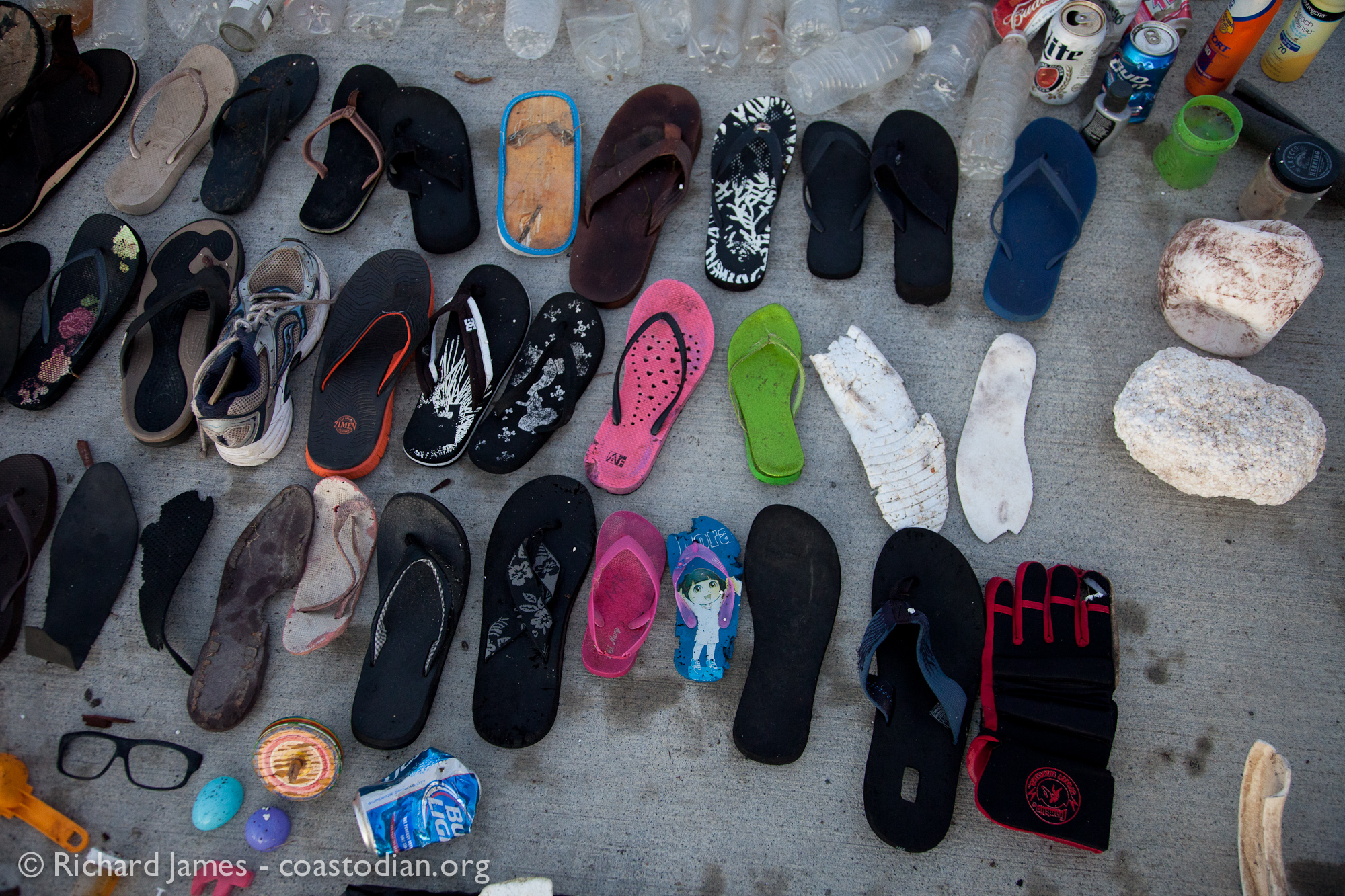
See below what washes down the Russian River on a daily basis.


Same as it ever was…Same as it ever was…Same as it ever was…
Same as it ever was…Same as it ever was…

Water dissolving…and water removing
There is water at the bottom of the ocean
Carry the water at the bottom of the ocean
Remove the water at the bottom of the ocean!

Letting the days go by/let the water hold me down
Letting the days go by/water flowing underground
Into the blue again/in the silent water
Under the rocks and stones/there is water underground.

Letting the days go by/let the water hold me down
Letting the days go by/water flowing underground
Into the blue again/after the money’s gone
Once in a lifetime/water flowing underground.
 

IMG_0993

IMG_0981

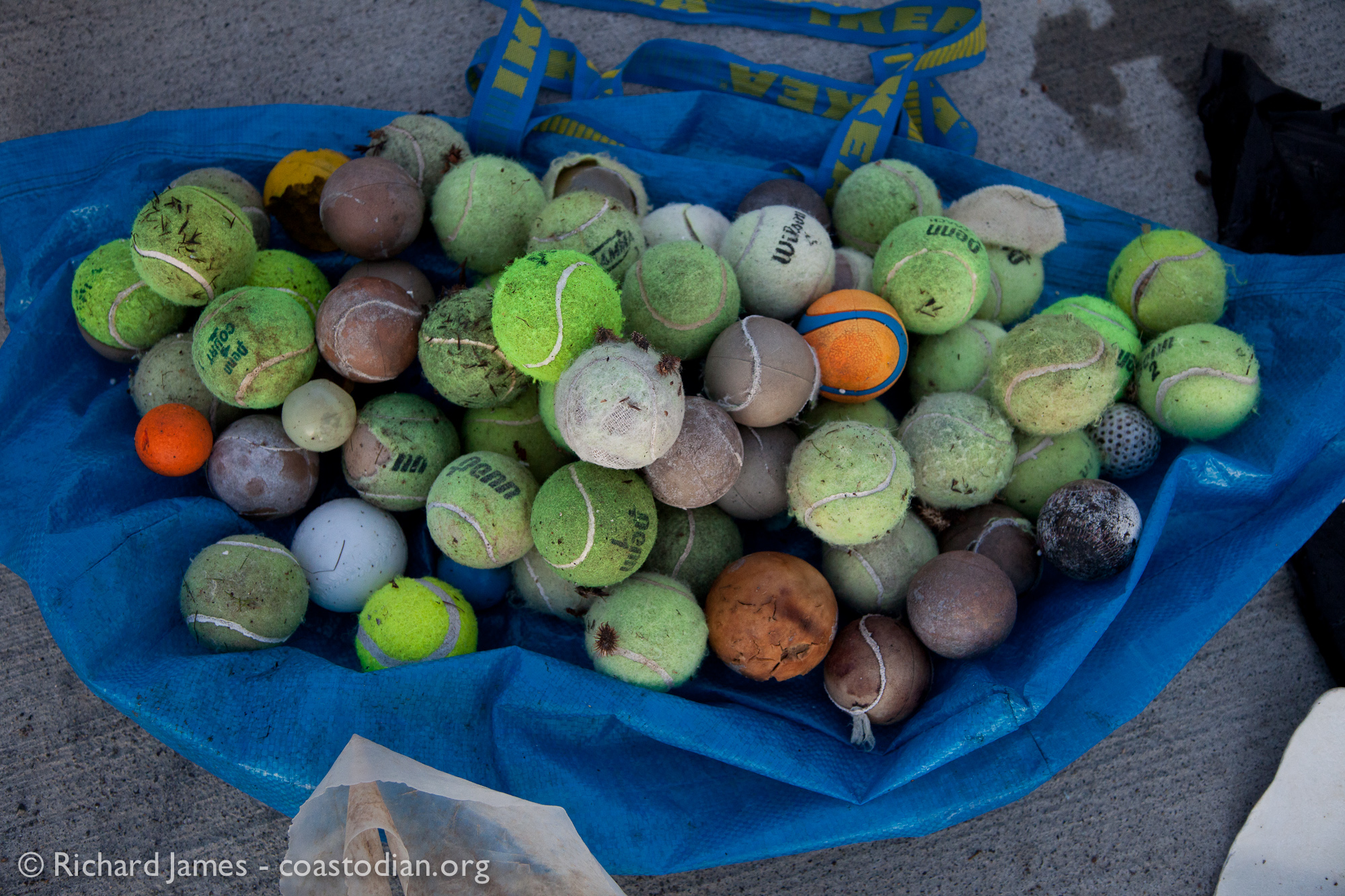
56 tennis balls on second ever ikea bag. This one in great shape, sure to help haul hundreds of pounds of trash off many beaches.

IMG_0987

56 shoes, soles or footbeds

IMG_0985

Second syringe of the litter season.

IMG_0984

First ever unicorn.

IMG_0982 IMG_0983 IMG_0986 IMG_0988 IMG_0989 IMG_0990 IMG_0991

.


Save our planet – Ho ho ho, Nestlé’s got to go!

Here is another post from the people at “The story of stuff”. They are doing a great job and I want to share this with all of you.

Please have a read then take action!


This is an exciting time for The Story of Stuff Project. Last year, after nearly half a million people worldwide signed our petition calling on Nestlé to stop privatizing public water, we knew it was time to turn this Community’s passion into action. Since then we’ve seen these efforts pay off in a big way.

Thanks to support from Story of Stuff Community members like you, we made a film and filed a lawsuit to stop Nestlé from illegally pumping water from California’s drought-scarred San Bernardino National Forest. In doing so we grabbed worldwide news headlines and the attention of Nestlé Waters’ CEO Tim Brown, who reached out to our Campaigns Director to request a meeting.

In the weeks after we launched our campaign in San Bernardino, we heard from communities across North America that are fighting their own battles against Nestle’s water privatization agenda. From California, Oregon, Maine and Pennsylvania to British Colombia and Ontario, one thing has become crystal clear: these brave folks on the front lines of efforts to protect our public water need our support to hold Nestlé accountable.

Will you help us make a movie about the communities worldwide fighting Nestlé, so that their stories go viral until Nestle cleans up its act?

By talking to concerned citizens all over the world, we’ve learned a lot about how Nestlé operates. The company has interfered with local politics, aggressively tried to elect Nestlé friendly officials to change zoning laws, and even attempted to bribe townships with “community development funds” and donations of…yup, bottled water!

But while the communities fighting Nestlé on the ground are all too familiar with these tactics, there is a world full of Nestlé consumers who are unaware they’re supporting these bad practices. By telling this story, we can bring unprecedented visibility to these local struggles, and harness the power of public opinion — and our Community — to curb Nestlé’s unethical business practices.

We’ve already been in touch with two communities whose stories we think are worth telling:

Story 1: In Cascade Locks, Oregon, Nestlé has proposed to bottle over 100 million gallons of water per year from Oxbow Springs, a publicly owned water source in the Columbia River Gorge National Scenic Area. Local activists and tribespeople have united together to defend this water, on which the region’s fishing, tourism and farming industries rely. These activists not only want to stop Nestlé from drawing water in the Columbia River Basin for bottling and sale, but to pass a law to stop all future water exports from their beautiful state, creating an example for people worldwide.

Story 2: In Kunkletown, Pennsylvania, dozens of local residents are fighting Nestlé’s attempt to draw hundreds of thousands of gallons of water daily from a well in the town for its Deer Park bottled water brand, a proposal they fear will permanently alter the quality of life. According to these residents, zoning laws have been changed to accommodate Nestlé without the proper degree of public oversight or comment. These residents want to defend their democracy against Nestlé’s interference, and we want to help.

Community members are excited to work with us on this project: “I’m thrilled that The Story of Stuff Project wants to make a film about our experience in Oregon,” says Aurora with the Local Water Alliance in Oregon, “The increased exposure from the film can help us win against Nestlé, and I hope that we can in turn show communities around the world how they can defend their local resources.”

Will you chip in to help give larger visibility to the communities fighting Nestlé, so that our movies result in real change in these communities and worldwide?

Thanks to the support of our Community members, we’ve accomplished great things this year. We’ve made two new movies that have inspired Changemakers to action. We’ve banned polluting plastic microbeads in California, and our national legislation is on the way to winning. We’ve also made real strides in holding Nestlé accountable for bottling water in National Forests during California’s drought, by launching a lawsuit with our partners from Courage Campaign and the Center for Biological Diversity.

Now with your help, we can make the holidays in the communities fighting Nestlé a little brighter by showing them that people around the world care about their story. With our support they can win in the fight to protect their public water against Nestlé, and inspire more people to get involved worldwide.

Whether it’s protecting watersheds in the drought stricken North American West, or working to protect small towns from corporate meddling, we’re building power and solidarity so that all communities fighting Nestlé’s water grab speak with one voice against corporate greed. By telling these important stories, we can create a movement like no other.

Are you in?

Yes, I’ll pledge $10

Yes, I’ll pledge $25

Yes, I’ll pledge $50

Yes, I’ll pledge $100

Yes, I will pledge another amount

Thank you for all you do!
Michael O’Heaney
Executive Director
The Story of Stuff Project

Save our Planet – Tell Nestlé Waters’ CEO to stop violating public laws

Story of Stuff Project

Nestlé’s CEO says he cares what Story of Stuff Community members think.
Let’s tell him loud and clear: stop violating public laws to privatize our water!

TAKE ACTION!

Dear Reader,

When we announced that we were suing to stop Nestle from taking water in California’s San Bernardino National Forest during the drought, even Time Magazine couldn’t wait to get its hands on the story.

Now the US Forest Service’s deadline to respond to our lawsuit is less than two weeks away, and Nestlé is getting nervous. Initially, the CEO of Nestlé Waters North America, Tim Brown, was unfazed by public criticism of his California operations. Last summer, when a journalist asked Brown if he would stop bottling water during California’s record-breaking drought, he replied that he would increase it if he could. But outcry from The Story of Stuff Project’s global community of over one million members has begun to change his tune.

Following our petition calling on Nestlé to cease taking water from public lands altogether, Nestlé’s CEO responded to us directly:

“The feedback and constructive criticism that Nestlé gets from groups like Story of Stuff is important, even when we disagree. In fact, we have used input like this on many occasions globally to adapt our operations… One thing I would appreciate is some perspective on how we might do it better in the eyes of your constituents.”

Nestlé hoped to schedule a private meeting with our staff. But the truth is that the problems in San Bernardino are part of a larger pattern of Nestlé’s repeated disregard for public laws and resources. To ensure Nestlé receives the message that it’s time to change the way it does business everywhere, we think that Nestlé’s CEO deserves to hear from the public directly.

Will you join us in e-mailing Nestlé Waters North American CEO Tim Brown to demand accountability today?

Our demands for Nestle are simple:

  • Stop bottling water from the San Bernardino National Forest and other protected lands
  • Withdraw from all sites where communities are protesting the privatization of their water, including Cascade Locks OR, Kunkletown PA, Mt. Shasta, CA, Fryeburg, ME, and Vancouver, BC
  • Pay to cleanup the waste generated by polluting plastic products. Stop pushing the cost of cleanup onto taxpayers.

The water that Nestlé has taken from the San Bernardino National Forest since its permit expired is estimated at over 1,838,451,342 gallons. This water would cost a regular California citizen millions of dollars. Yet Nestlé has paid the government a fraction of that cost to bottle the public’s resources. The lawsuit filed by The Story of Stuff Project, Center for Biological Diversity and Courage Campaign has gotten Nestle’s attention in California, but public action is what will result in lasting, global change.

Join us now in responding to Nestlé CEO’s request for input, by sending him an e-mail explaining why you think water should be a public resource, NOT a source for private profits.

Thank you for all you do!
Emma Cape, Campaigns Manager, on behalf of The Story of Stuff team

Save our Tomales Bay – Part 32 roadside fishermen trashing Tomales Bay continues

Please click on the words above “Save our Tomales Bay – Part 32 roadside fishermen trashing Tomales Bay continues” to see this entire post.

Two months ago I wrote about the mess left by roadside fisher-people along route 1 near Tony’s Seafood.

Since then the place has been pretty clean, no large bait boxes or smashed beer bottles to speak of, a great improvement.

Last weekend on my way north to document the removal of the unpermitted structures built by oyster farmers in the Bay, I stopped and went after the small, but no less toxic items, cigarette butts and fishing line.

Picked up 346 butts or filters and enough line and hardware to hook a striped bass (I did not say land one).

If you know people that fish in the area, please ask them kindly to be sure and take away all the items they bring with them to enjoy our lovely coastal environment. Leaving it on the shore is disrespectful, illegal and pretty damn rude. Shall we visit their home and dump trash on their cherished spaces? Ok then!

Leaving this mess degrades the very beauty they come for, and causes great harm to the non-human animals that call Tomales Bay home.

This same logic applies to the boat launch area at Miller Park (Nick’s Cove).

There are thousands of pieces of micro-trash left behind by fishermen, boaters and others who use this public space to recreate.

See what happens to small pieces of plastic that humans dump in the sea, or litter the land with, only to be washed to the sea….

Dead Albatross, killed by ingesting plastic -  by Chris Jordan - where disposable lighters end up.

Dead Albatross, killed by ingesting plastic – by Chris Jordan – where disposable lighters end up.

.

The dumpster area is routinely besieged by ravens, crows and raccoons who scour the open dumpster for food, then paint the hillside with plastic bags, food wrappers, fish bait etc.

As always, click on an image to see a lager version.

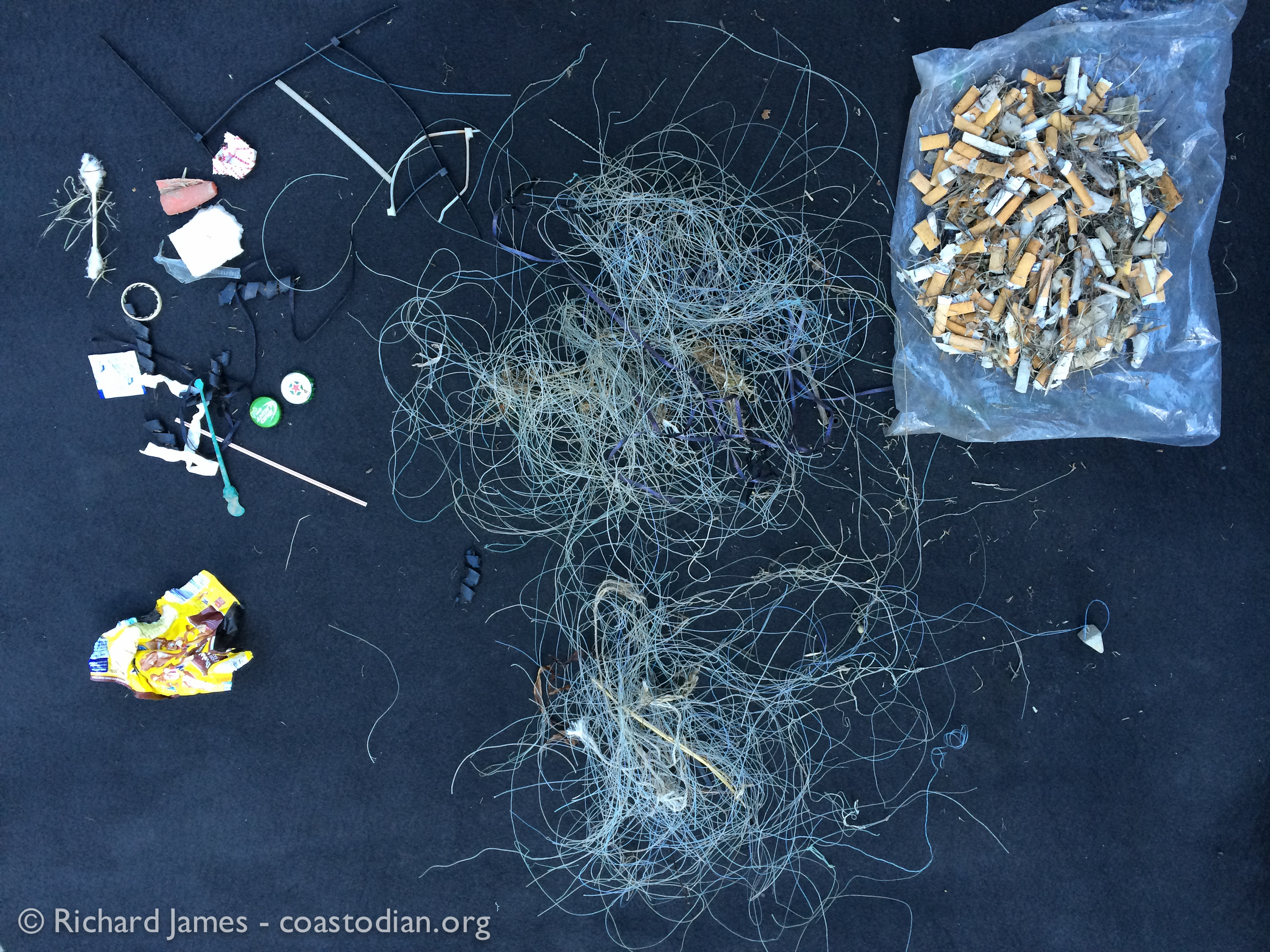
346 cigarette butts, fishing line, beer bottle caps, food wrappers left by fishermen near Tony's Seafood.

346 cigarette butts, fishing line, beer bottle caps, food wrappers left by fishermen near Tony’s Seafood.

.

Fishing line left at Nick's Cove boat launch area

Fishing line left at Nick’s Cove boat launch area

.

Fishing line left by fishermen near Tony's Seafood along route 1.

Fishing line left by fishermen near Tony’s Seafood along route 1.

.

Comfy, though questionable seating installed at Marconi Cove, along with beer can and oyster shucker packaging. C'mon people, pick up after yerselves!

Comfy, though questionable seating installed at Marconi Cove, along with beer can and oyster shucker packaging. C’mon people, pick up after yerselves!

.

Next related post may be found here.

Previous related post may be found here.

See the first post in this series “Save our Tomales Bay” here.

Save our planet – Nestle pays next to nothing to take your water and make millions!

Click on the words above “Save our planet – Nestle pays next to nothing to take your water and make millions!” to see this entire post.

In the midst of California’s historic drought, Nestle Waters—the largest bottler of water in the world—is drawing millions of gallons of water a year from the San Bernardino National Forest. Nestle’s permit to remove this precious resource expired in 1988, at which point the Forest Service should have turned off the spigot.

In this four-minute documentary, experts and activists explain the impact Nestle’s operation is having on the forest and demand that the company and our government ensure this shared public resource is protected for future generations.

Visit the folks at The story of stuff, who made this video here

.

Nestlé’s permit to transport water through a pipeline across southern California’s San Bernardino National Forest expired in 1988. But the U.S. Forest Service, which is charged with ensuring public land resources are well managed, has bowed to pressure from Nestlé to allow the corporation to continue pumping water.

Every year, Nestlé has paid $524 to the Forest Service to operate its pipeline, nowhere near what the water it removes is worth. Nestlé then turns around and sells that water back to Californians and others in plastic bottles, making millions in the process.

And while California residents and businesses have significantly reduced their water use to combat the drought, Nestlé has refused to do its part. In fact, when asked if Nestlé Waters would consider stopping its bottling operations in California, CEO Tim Brown told KPCC public radio, “Absolutely not…In fact, if I could increase it, I would.”

Nestlé is feeling the pressure from the hundreds of thousands of people around the world who’ve spoken out through petitions and other actions. Now it’s time to up the stakes, and send a message to Nestlé’s corporate headquarters. That’s why we’ve filed suit: to force the Forest Service to stop Nestlé’s illegal operation and undertake a full review of its permit once and for all.

Save our planet – say no to Nestle privatizing our water

This came to me recently and is important enough to share with you all.

Please take action and sign this petition.

Don’t let a private company take control of the world’s water.

Nestlé is locking up local sources of water around the world, pumping them dry to get rich at locals’ expense.

Across the globe, Nestlé is pushing to privatize and control public water resources.
Nestlé’s Chairman of the Board, Peter Brabeck, has explained his philosophy with “The one opinion, which I think is extreme, is represented by the NGOs, who bang on about declaring water a public right. That means as a human being you should have a right to water. That’s an extreme solution.”

Since that quote has gotten widespread attention, Brabeck has backtracked, but his company has not. Nestlé is bullying communities around the world into giving up control of their water. It’s time we took a stand for public water sources.

Tell Nestlé that we have a right to water. Stop locking up our resources!

At the World Water Forum in 2000, Nestlé successfully lobbied to stop water from being declared a universal right — declaring open hunting season on our local water resources by the multinational corporations looking to control them. For Nestlé, this means billions of dollars in profits. For us, it means paying up to 2,000 percent more for drinking water because it comes from a plastic bottle.

Now, in countries around the world, Nestlé is promoting bottled water as a status symbol. As it pumps out fresh water at high volume, water tables lower and local wells become degraded. Safe water becomes a privilege only affordable for the wealthy.

In our story, clean water is a resource that should be available to all. It should be something we look after for the public good, to keep safe for generations, not something we pump out by billions of gallons to fuel short-term private profits. Nestlé thinks our opinion is “extreme”, but we have to make a stand for public resources. Please join us today in telling Nestlé that it’s not “extreme” to treat water like a public right.

Tell Nestlé to start treating water like a public right, not a source for private profits!
Thanks for all you do!

Emma Cape, Campaigns Manager, on behalf of The Story of Stuff team

———————————————————————-
Sources and further reading:
Nestlé: The Global Search for Liquid Gold, Urban Times, June 11th, 2013
Bottled Water Costs 2000 Times As Much As Tap Water, Business Insider, July 12th, 2013

Save our Tomales Bay – Part 25 Why?

Click the words above “Save our Tomales Bay – Part 25 Why?” to see this entire post.

Over the years I’ve packed thousands of pounds of trash off the beaches of Point Reyes National Seashore and Tomales Bay, one question asked of me often is:

Where does this stuff come from?

Initially, when I found a plastic water bottle labeled “Made in China”, I thought that it had floated from China to make landfall on Pierce Point for me to find and remove.

Then something happened that changed my mind.

During 2010, the craziest year for trash I have ever seen, I cleaned the 2+ mile portion of Point Reyes Beach between North Beach parking lot and South Beach parking lot.

I cleaned it not once, not twice, but three days in a row.

Each day it looked as bad, if not worse than the day before.

On the third day, I found two identical, pristine water bottles from China. By pristine, I mean they looked as if someone had just come from Palace Market, drank the water, then dropped them on the beach.

Brand new.

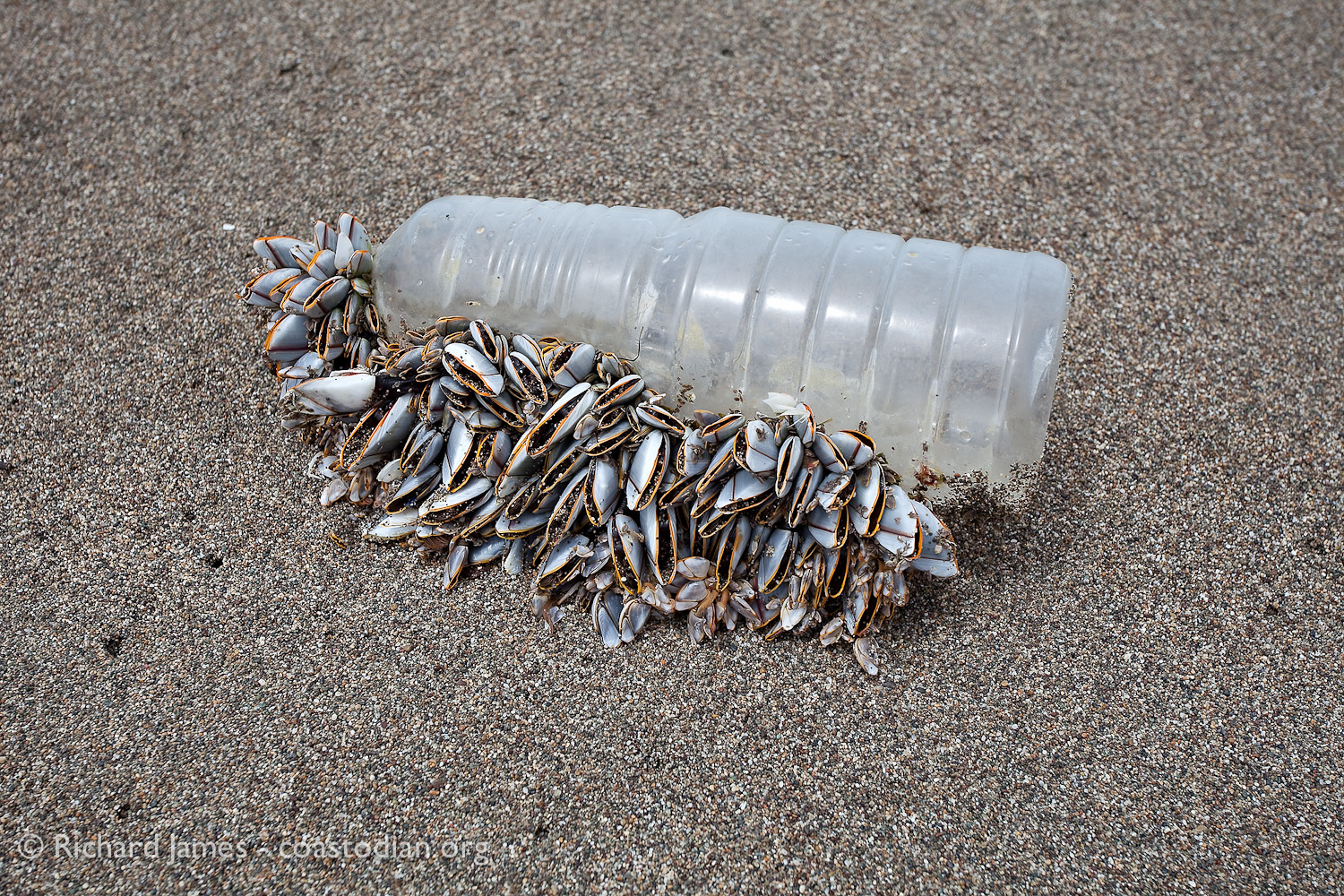
Not covered with goose-neck barnacles or bryozoan as would a bottle that had spent months or years bobbing around the Pacific Ocean.

Gooseneck barnacle encrusted plastic water bottle - South Beach, 7 June, 2010

Gooseneck barnacle encrusted plastic water bottle – South Beach, 7 June, 2010

These new bottles I’d found hadn’t drifted over from China on their own.

They had likely been tossed overboard by a crew-member of one of the thousands of container ships that bring countless millions of tons of cheap diversions to the world each year.

After contacting the Port of Oakland, I learned the following about container ships visiting Oakland:

       Only 19 hours or less to unload and load all the containers from one enormous ship.
       See here for a time lapse video of the loading of 18,000 containers.

       Less than 20 crew, most from the Philippines.

For a few months I tried to get my “Thirsty” image of 5 large meta-bottles hung in the room where this crew stays during unloading/loading. The woman with whom I spoke at the Port of Oakland really wanted to do this, but her superiors got in the way and in the end I failed in my attempt to educate the crews of these ships to not toss their trash into the sea.

BUT

I learned something that day.

I never really now where the litter I find comes from, I only know where it ends up.

Which is mostly true.

Mostly, because I know where the 6000+ black plastic spacer tubes I have picked up came from (Drakes Estero – oyster farming operations)

I know where the oyster grow-out bags come from.

Abandoned grow-out bags from Tomales Bay Oyster Company returned to them.

Abandoned grow-out bags from Tomales Bay Oyster Company returned to them.

.

©Richard James - coastodian.org Abandoned Hog Island Oysters grow-out bags collected adjacent to lease M-430-15 on 22 March, 2015

©Richard James – coastodian.org
Abandoned Hog Island Oysters grow-out bags collected adjacent to lease M-430-15 on 22 March, 2015

.

I know where the thousands upon thousands of plastic zip-ties and lengths of plastic coated copper wire and plastic floats pecked by hungry birds that are discarded into Tomales Bay come from.

TBOC oyster bag float, pecked by birds looking for food. Zip-ties, blue foam bits of all sizes and the black plastic cover can be found by the thousands all around Tomales Bay.

TBOC oyster bag float, pecked by birds looking for food.
Zip-ties, blue foam bits of all sizes and the black plastic cover can be found by the thousands all around Tomales Bay.

.

Small fraction of the zip-ties (en español: los cinchos) collected from leases of TBOC

Small fraction of the zip-ties (en español: los cinchos) collected from leases of TBOC

.

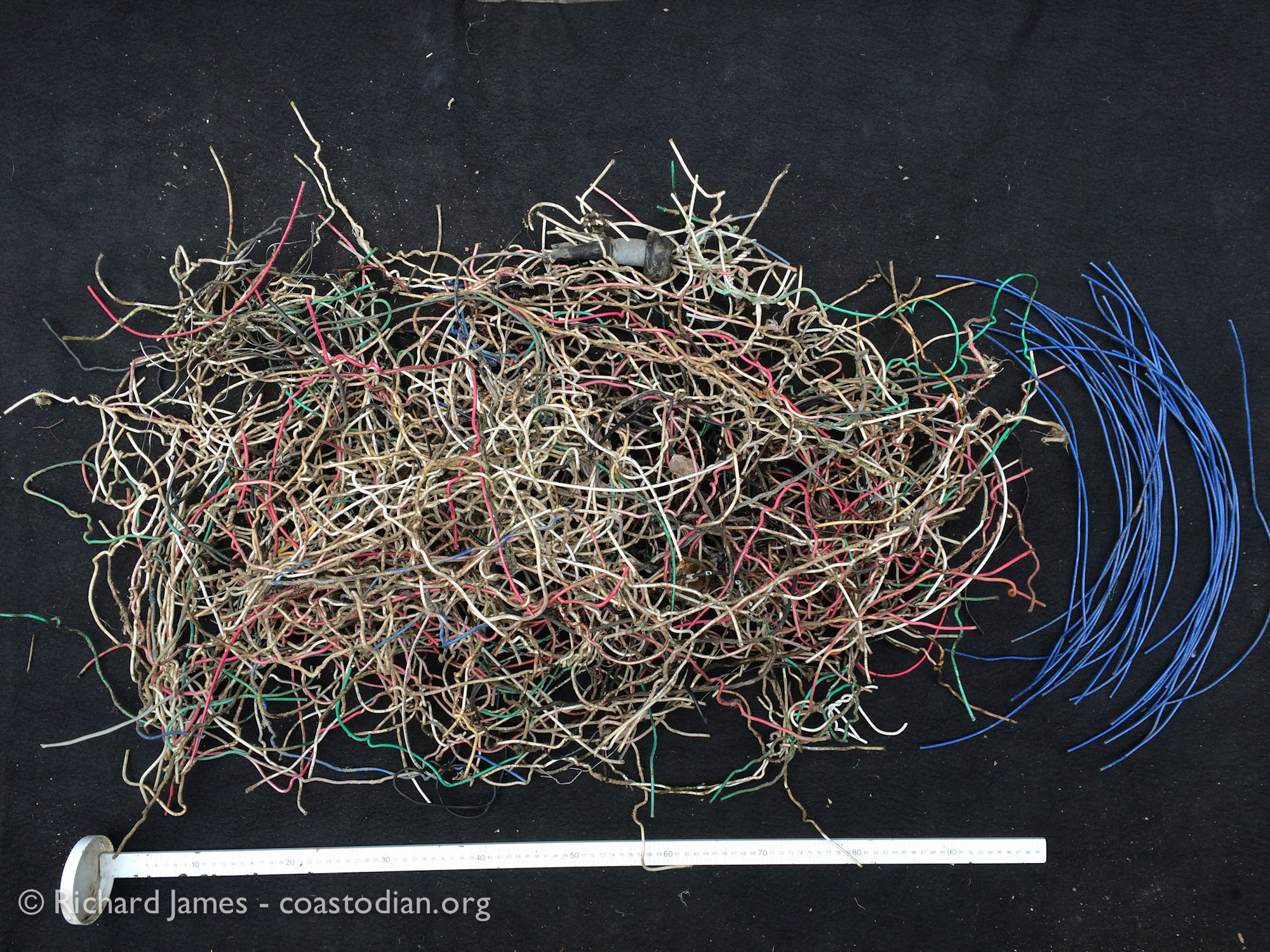
Small fraction of the plastic coated copper wire (en español: cables) collected from leases of TBOC

Small fraction of the plastic coated copper wire (en español: cables) collected from leases of TBOC

.

Tiny fraction of the discarded PVC pipes and pipe shards left by TBOC in Tomales Bay

Tiny fraction of the discarded PVC pipes and pipe shards left by TBOC in Tomales Bay

They come from the growers of oysters, clams and mussels in Tomales Bay.

I may not be able to stop the people around the world from polluting our planet.

But I will do all I can in my local area to stop the rampant disregard for the Tomales Bay by local oyster, clam and mussel growers.

And until these growers stop polluting the earth with their trash,

until the Fish & Game Commission takes its responsibility as the “landlord” of these public waters seriously,

I’ll continue to boat the bay and walk the shore, picking up their mess and reporting on it, just as I found it.

If, when I go boating on the bay, all I see are godwits, dowitchers and willets, that is what I’ll share with photos and words.

The true "owners" of Tomales Bay.

The true “owners” of Tomales Bay.

So growers, if you don’t wish to read about your mess, stop making one.


Three leases are coming up for renewal soon. Leases that, as written are pretty loose in terms of holding these companies responsible for the mess they make on a daily basis.

It will end up costing US tax payers more than a few million dollars to clean up the mess left by Johnsons / Drakes Bay Oyster Company in Drakes Estero.

The escrow fund language used in the current leases is over 25 years old. We need a contract worthy of the land it is designed to protect!

If you’d like to see the leases re-written so that growers pay fines if they leave a mess,

If you’d like to see the Fish & Wildlife Department more actively monitor the activities of growers that have made a mess of Tomales Bay for over a hundred years

If you’d like to take an active role in protecting the environment of West Marin

Write Sonke Mastrup, the Executive Director of the California Fish & Game Commission and tell him so.

You can reach him here:

Mr. Sonke Mastrup
Executive Director, Fish and Game Commission
fgc@fgc.ca.gov
phone 916-653-4899

California Fish and Game Commission P.O. Box 944209, Sacramento, CA 94244-2090

Please also ask him when he plans to hold the public meeting in West Marin so that the public can weigh in on how the public lands are being treated (mistreated).

.

Next related post may be found here>.

Previous related post may be found here.

See the first post in this series “Save our Tomales Bay” here.

Save our planet – Support AB 888, which bans plastic microbeads

According to Save the Bay, 417 million plastic micro-beads enter San Francisco Bay every year. This flow of non-biodegradable plastic is unnecessary and threatens the integrity not only of our marine ecosystems but also of our own personal health, as these beads can find their way into the food web, eventually reaching fish that we consume.

Ask your legislator to VOTE YES ON AB 888 to ban plastic microbeads by clicking here.

Read what the folks at 5 Gyres have to say about the dangers of plastic microbeads here.

Steve Mosko has written an excellent article on the problems with micro-beads, read it here.


Presenting salvage vessel Deep Respect

Click on the words above “Presenting salvage vessel Deep Respect” to see this entire post.

I am proud to announce the acquisition of a new salvage vessel.

With much thanks and gratitude to those who have donated to help me with my coastal cleanup work (see link above), along with some funds earned from my work cleaning Tomales Bay, I acquired a sleek, light and fast canak from the kind folks at California Canoe & Kayak.

The owner of CCK purchased this boat with the intention of running The Green River back in 2011. Well, life happened in other ways and that trip has not yet happened, though I am sure it soon will. So he put the Canak by Wenonah Canoes up for sale. After one morning paddling her in the Oakland Estuary, I knew she’d be a great boat for recovering the never ending supply of garbage found in Tomales Bay. While testing her out I picked up a large amount trash, no surprise that, eh? I may find a lot of trash in Tomales Bay, but let me tell you, The Oakland Estuary far surpasses in breadth and nastiness.

This boat is light enough to carry on one shoulder. The open deck allows me to fill it with abandoned oyster grow out bags, bits of rope, zip-ties, copper wire, blue foam bits, gloves, water bottles etc. Last weekend I packed 23 bags in her with room to spare. I plan to make deck attachments to allow for easy stacking of oyster grow out bags, as there are hundreds, if not thousands of abandoned bags waiting to be recovered from the bottom and shores of Tomales Bay.

.

As always, click on an image to see a larger version.

And remember, if you want to directly help keep the coast of California clean, click that “Donate” link up above. Your generous donation will be put to work undoing the damage we humans continue to inflict on our only home, earth.

.

560A9558.cw

.

560A9554.cw

Save our Tomales Bay – part 18.1, Walker Creek mess, construction

Click the words “Save our Tomales Bay…..” above to see this entire post.

Yesterday I paid a visit to the mouth of Walker Creek where it enters Tomales Bay.

There are 4 growers that extract profits in the form of oysters in this area.

Storms regularly rip their equipment out and paint it all over Tomales Bay, and the entire ocean.

These bags become lodged in the mud and pickleweed and are buried, to be ground into plastic bits forever.

The farmers must walk these areas every month, if not more often, to ensure the mess they make gets cleaned up before being buried in the mud and pickleweed.

The regulating agencies must exercise their authority and ensure that laws are being observed, fining those that continue to break the laws enacted to protect the environment.


This post will be updated, so come back to see more of the damage caused to our fragile planet by oyster farming.

Volume warning, turn your sound down

.

.

.

.

Next related post may be found here.

Previous related post may be found here.

See the first post in this series “Save our Tomales Bay” here.