River otters

Click on the words “River otters” above to see this entire post.

While visiting a favorite area today, I came upon a troop of river otters.

I’ve seen one or two here before, never this many.

How many can you see?

As each one came down to the pool of fresh water, it performed a brief ritualistic dance, relieved itself, then slipped in for a bath. Each successive otter smelled the ejecta of the prior otter before commencing its own dance.

Learn more about river otters here

Enjoy

Hello Portosan, please come pickup the port-o-pottie….

Click the words above “Hello Portosan, please come pickup the port-o-pottie….” to see this entire post.

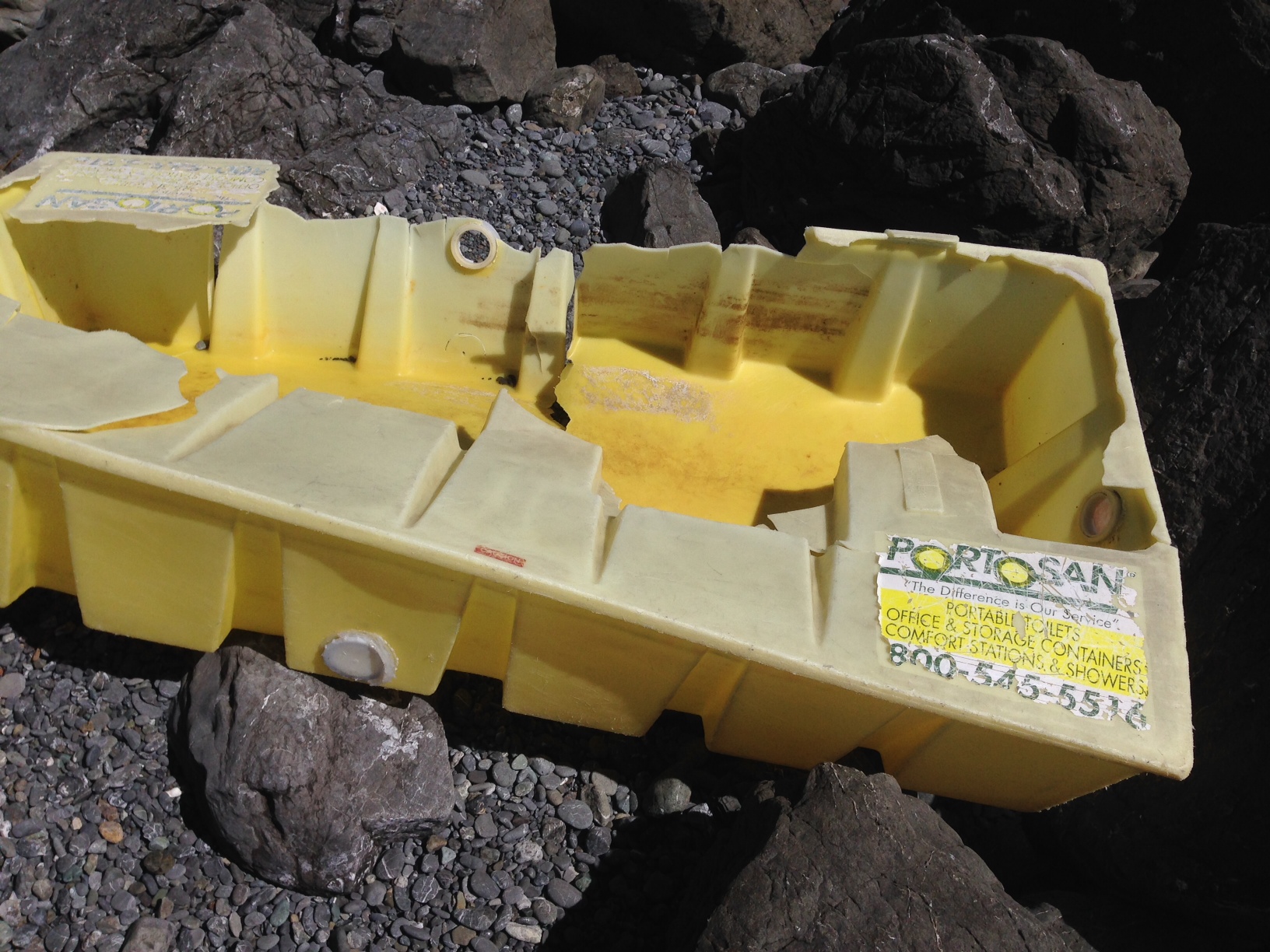
While cleaning a remote beach south of Stinson today, I came across this discarded port-o-pottie tank.

PortoSan1


PortoSan2


I’ll give them a call in the morning to come pick it up.

GPS waypoints and a trail-head should be good enough.

Don’t you think?

UPDATE: After sending the company that owns this garbage a note containing pictures, maps and the exact location, asking for them to come pick it up, (Nicole, how come you never called me back?), I have heard nothing. This huge mess is likely still laying on the beach near Stinson Beach, being ground into fine yellow plastic fish food by the surf and rocks.

Memorial Day in West Marin

Click the words above “Memorial Day in West Marin” to see this entire post.

Blessed are we that live near to the coast
Rhythmic surf soothes our souls
Peregrine, osprey, pelican fill the sky
Five white sharks swim free in the sea

Cursed are we that live near to the coast
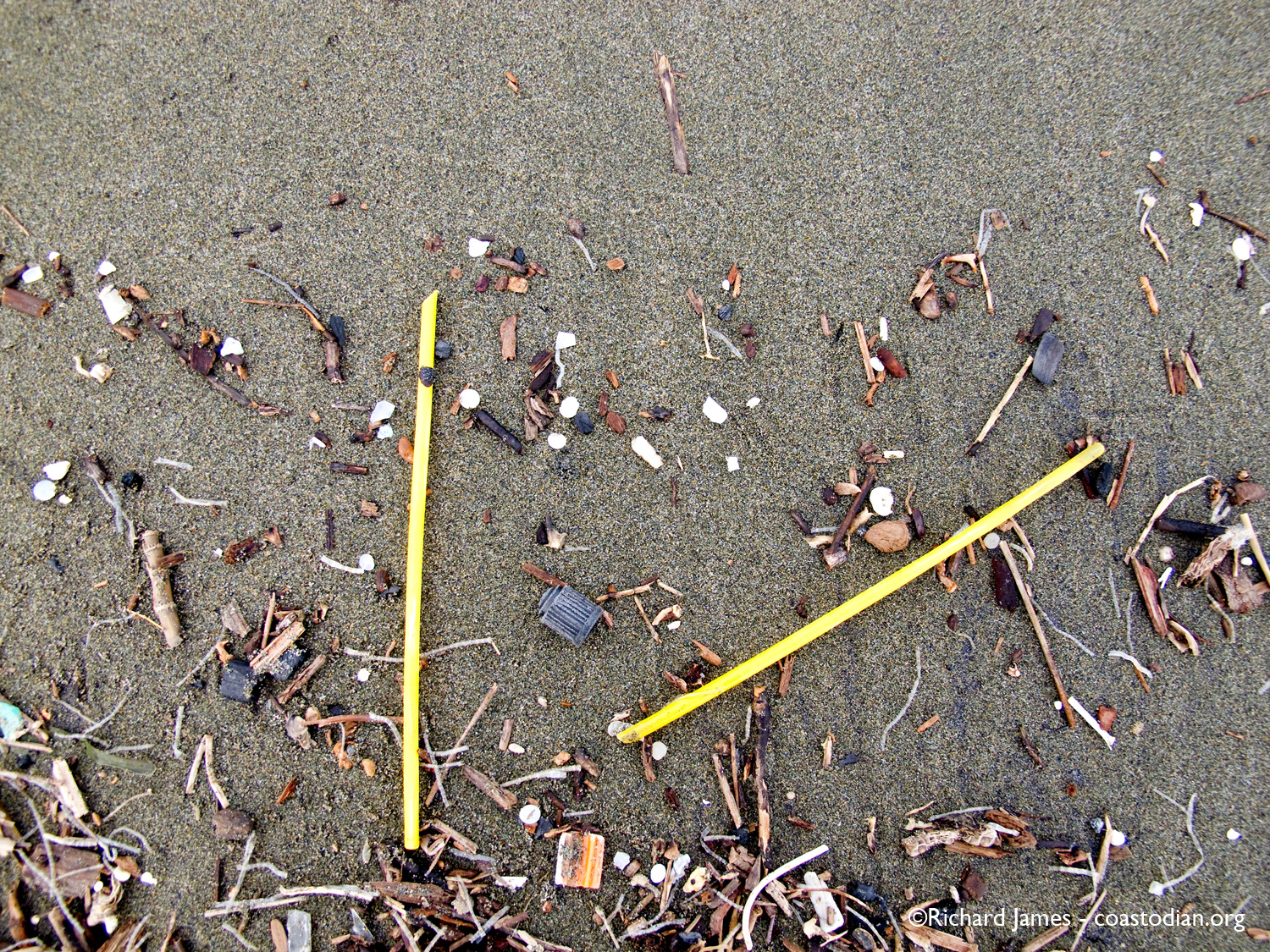
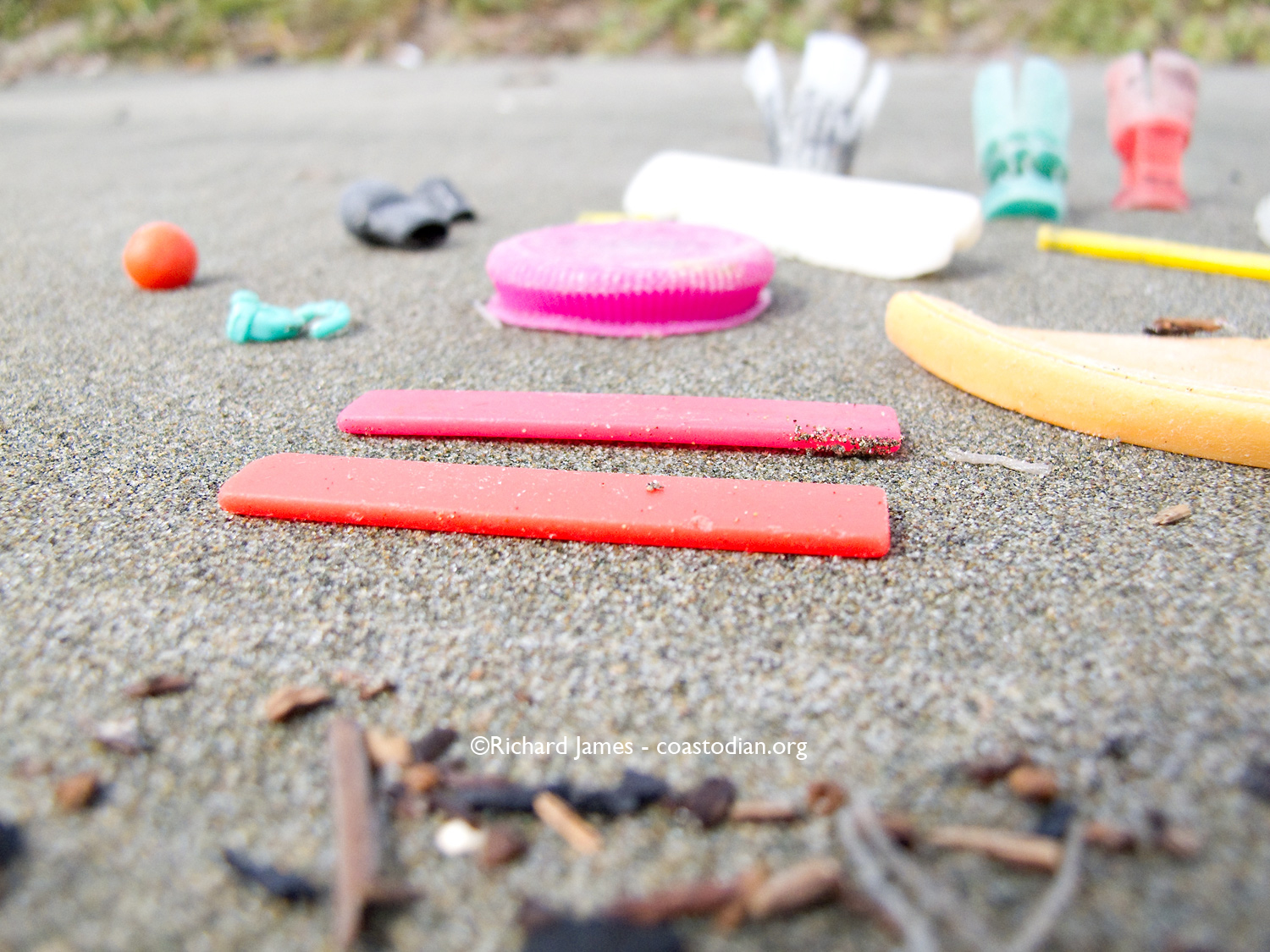
Explosions of plastic remind us our folly
Blanket the beach needlessly with pretty poison

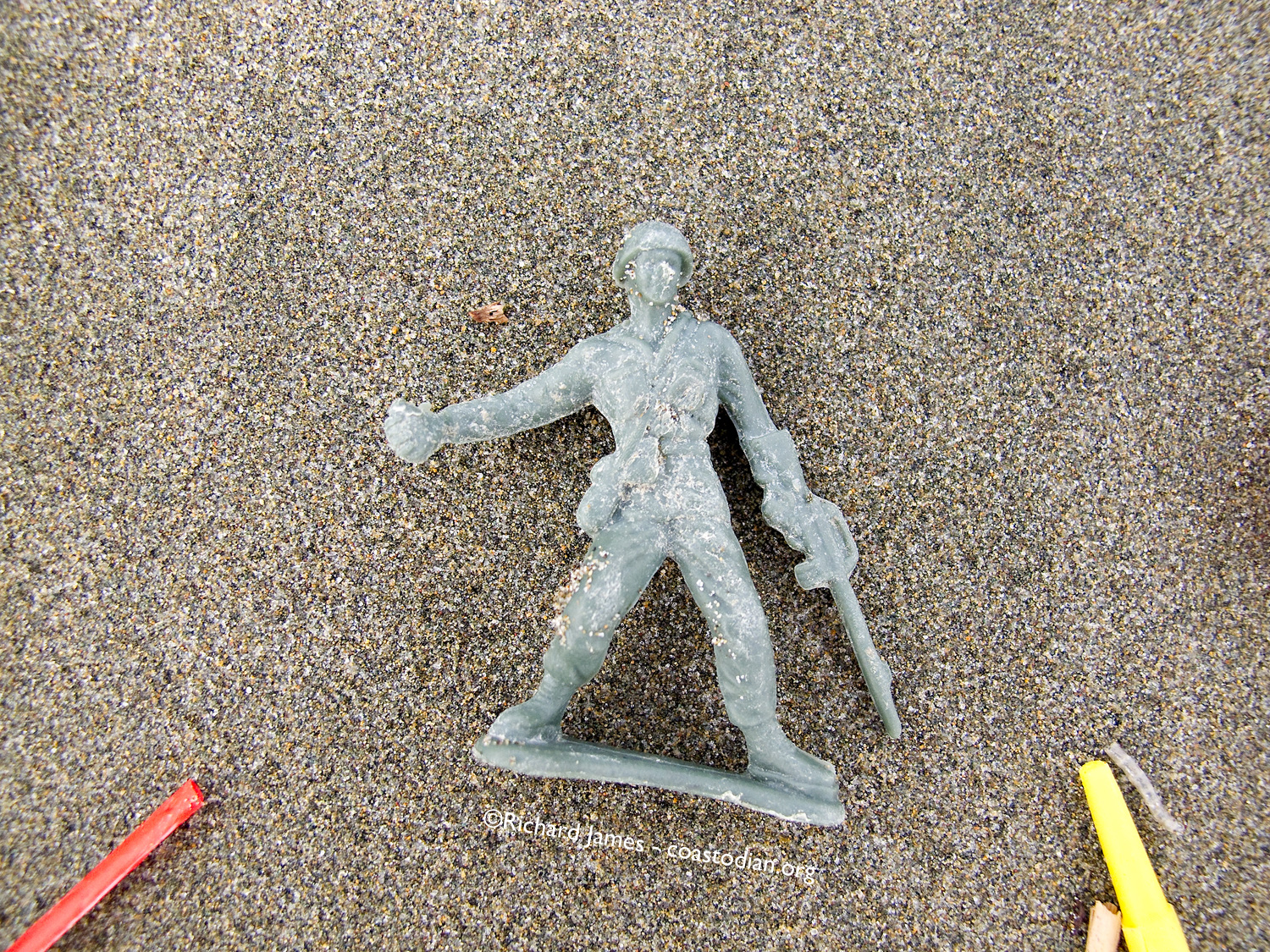
Soldiers travel the world
To protect us from evil empires
Who to protect us from our convenient plastic poison?


As always, click on an image to see a larger version

Last year on this day

IMG_1223.cc.cw


IMG_1222.cc.cw


IMG_1226.cc.cw


IMG_1229.cc.cw


IMG_1228.cc.cw

Save our Tomales Bay – part 16 Weekly pickup after TBOC – preview

Click the words above “Save our Tomales Bay – part 16 Weekly pickup after TBOC – preview” to see this entire post.

I had hoped to publish this weekend images of the garbage I picked up near Tomales Bay Oyster Company over the past four months. Shooting images and fiddling with a video editing program makes for slow going.

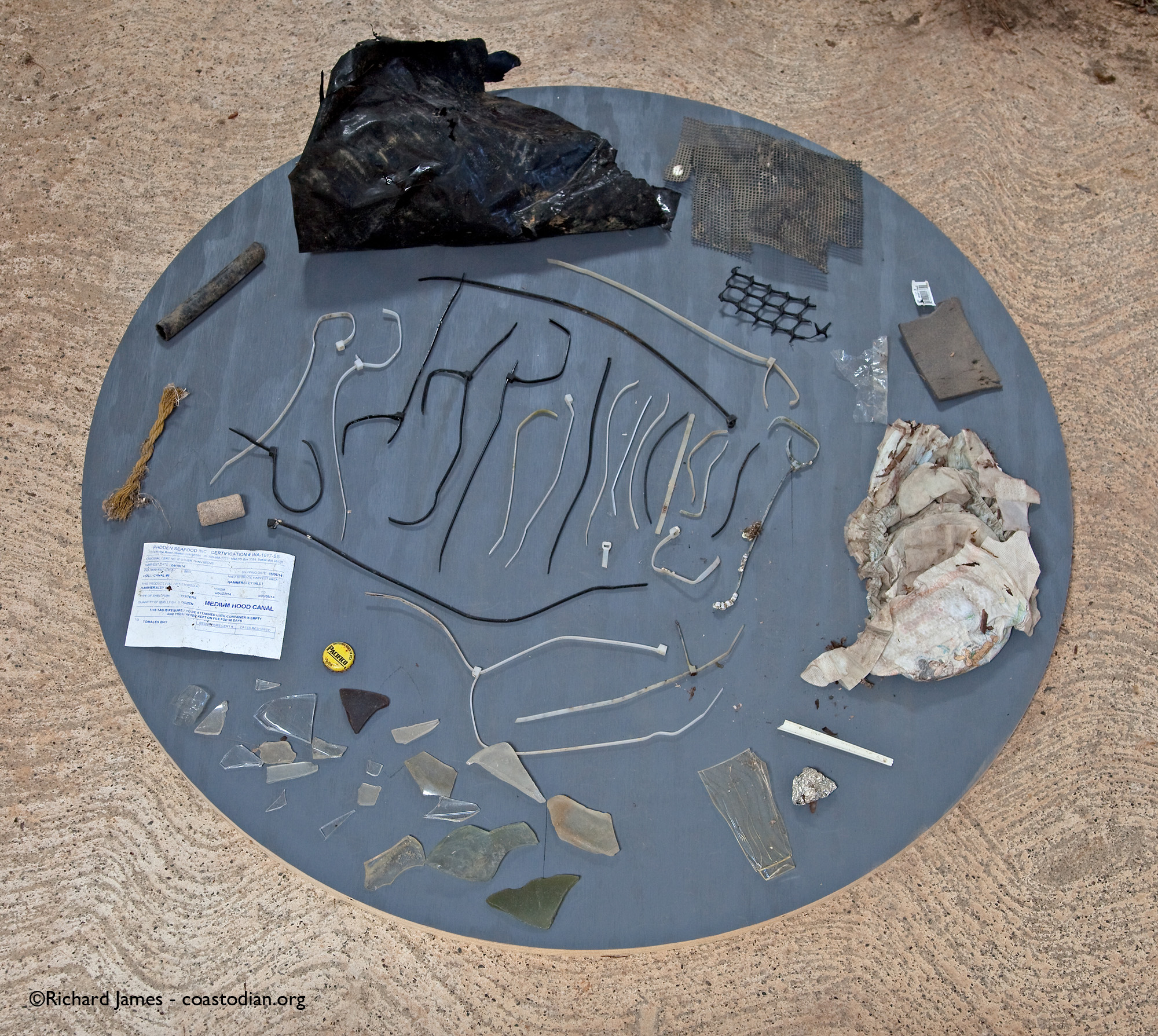
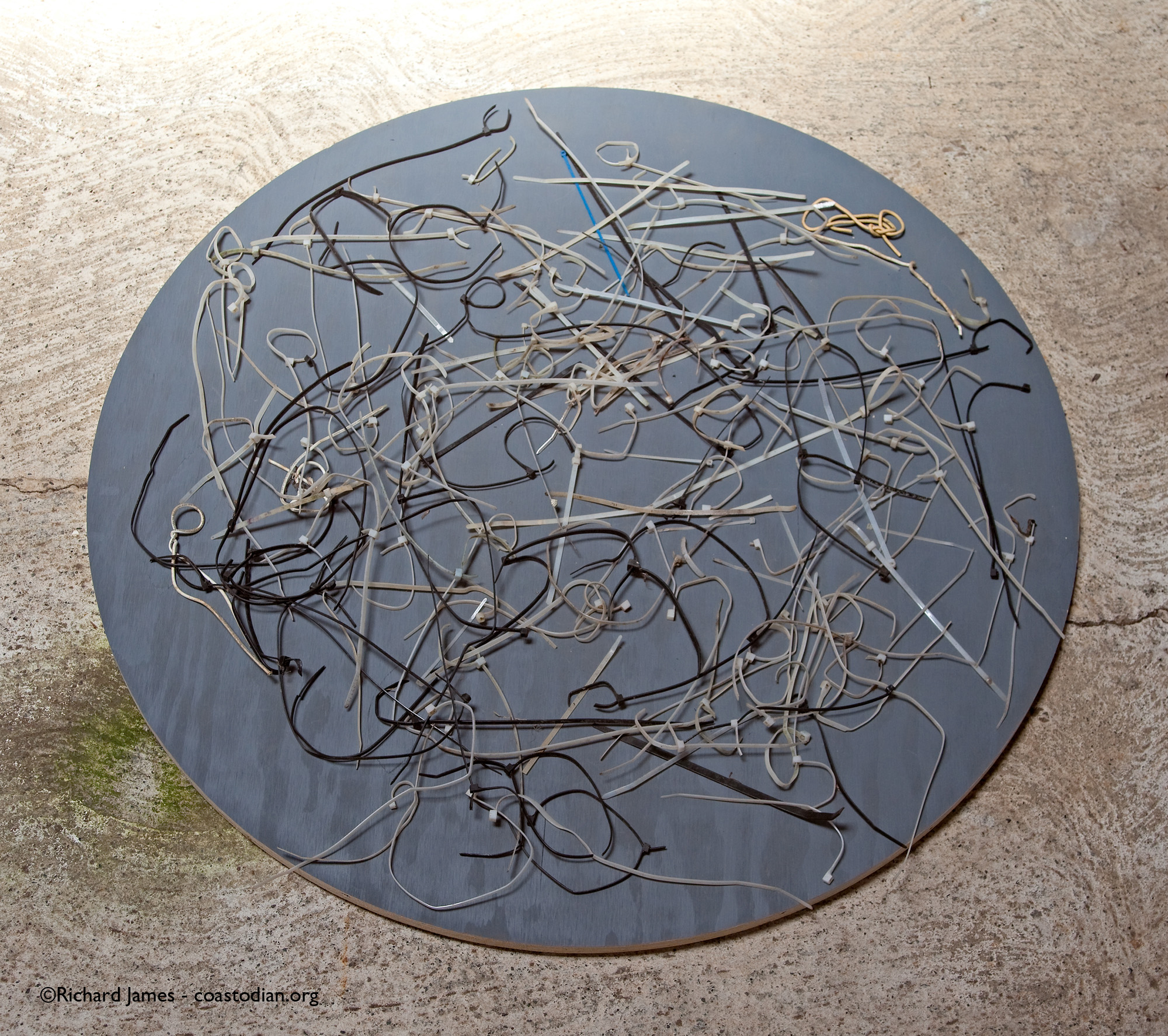
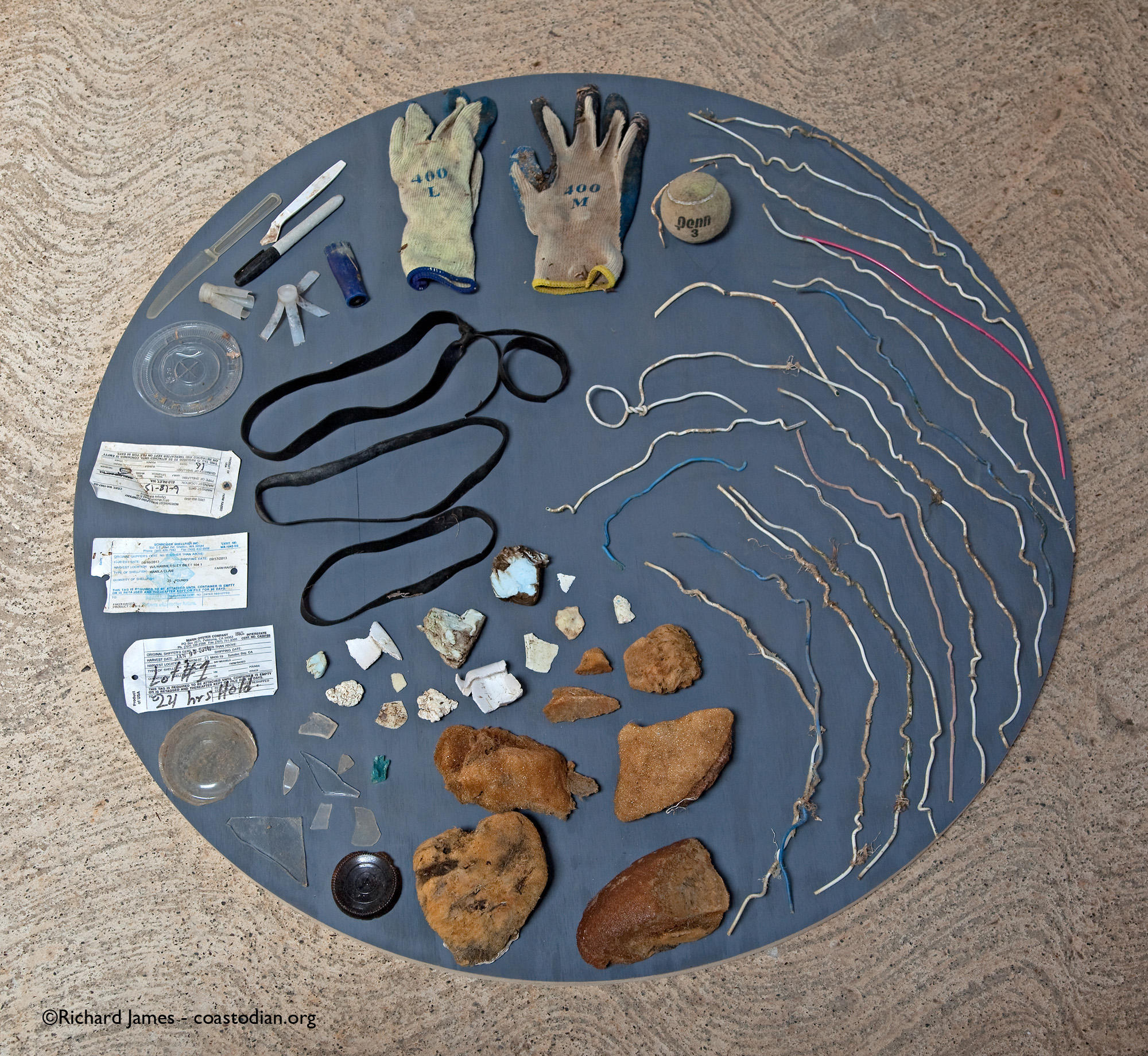
So here are three images showing a subset of what I picked up on three different occasion.

I’ll get the entire set of images up as soon as I can.

The gray disk in the image is 35 and 3/4 inches across.

I have been in touch with Todd at Tomales Bay Oyster Company. He assures me that he is taking serious the issues my images of his trash in Tomales Bay bring up. He told me he pulled out 1700 PVC pipes from the area I visit often. I stopped by this weekend to see how it looked, the tide, swell and murky water prevented me from seeing the fruits of his labors. I’ll check next weekend and report back.

25 zip-ties, black plastic from oyster bag, oyster bag bits, and yes, that is a disposable diaper found on the shore of Tomales Bay.

25 zip-ties, black plastic from oyster bag, oyster bag bits, and yes, that is a disposable diaper found on the shore of Tomales Bay.


click image to see an enormous version

Workers cut the zip-tie securing the bag to the anchoring rope during harvest and simply let the plastic go into the bay. Sounds like they went to the Charlie Johnson school of oyster farming. Thankfully that school is now closed.

Workers cut the zip-tie securing the bag to the anchoring rope during harvest and simply let the plastic go into the bay.
Sounds like they went to the Charlie Johnson school of oyster farming.
Thankfully that school is now closed.


click image to see an enormous version

Oyster worker gloves, oyster bag tags, copper wire used to tie oyster bags closed, broken glass, blue foam from oyster bags, brown foam from work platforms, shot shell, shot shell wads and the ubiquitous tennis ball.

Oyster worker gloves, oyster bag tags, copper wire used to tie oyster bags closed, broken glass, blue foam from oyster bags, brown foam from work platforms, shot shell, shot shell wads and the ubiquitous tennis ball.

.

Next related post may be found here.

Previous related post may be found here.

See the first post in this series “Save our Tomales Bay” here.

Save our Tomales Bay – part 15 Tomales Bay Oyster Company stuck in the mud, along with all their trash

Click the words “Save our Tomales Bay…” above to see this post in its entirety.

Nearly two months ago I wrote about a chance meeting with the owner of Tomales Bay Oyster Company on the beach near his operation on the shore of Tomales Bay. This was not the first time I had spoken with Tod about the mess his company makes in Tomales Bay.

You can read that post here.

I thought he had finally come to see the error in his methods and was going to instruct his employees to quit throwing trash into Tomales Bay, make simple changes to some of his processes and reduce the amount of plastic his business knowingly dumped into the bay.

How wrong I was.

Since January I have walked a quarter mile section of coastline adjacent to his business each week and picked up anything that did not belong. Plastic bags, hundreds of plastic zip-ties, ropes, glass, rubber gloves etc. The vast majority from the oyster company, but not all of it.

For months, I had been gathering a large bag of this trash each week and putting the date on it. A few times I packed out numerous large grow out bags as well, full of dead oysters.

Then, after speaking with Tod, three weeks in a row I found barely more than a handful. Woo hoo I thought. They are going to stop polluting so much, maybe even pick up their own trash.

Alas, my excitement was short-lived. The trash was back, same volume as before.

WTF I thought to myself. Their boss and I talked. The workers see me week after week, knowing I am telling the world of their selfish littering, and still they dump their mess in Tomales Bay.

Well, enough is enough. In the coming week, I’ll show you what I have gathered from the shore where they farm oysters at Tomales Bay Oyster Company. You decide if this is the type of operation that should be expanded up and down the coast of California. The California Department of Fish & WIldlife (DFW) is pushing the “California Shellfish Initiative”. If this is what they are selling, I want no part of it. And neither should anyone else. (Except perhaps a company more interested in short-term profits over a clean environment for those that come after us)

For now, you’ll have to enjoy what appears to me to be a failed experiment left to rot in Tomales Bay.

The images that follow show what I have seen laying in the mud for years – out of sight to all but a fool such as myself, barely 500 meters from the tables filled to capacity each weekend with oyster eaters, ignorant what is being done to the planet to put shellfish on their table and money in the pockets of a few hard-working, yet uncaring, selfish shellfish individuals.

Feast your eyes on the carnage wrought by Tomales Bay Oyster Company, then call them and ask that they stop trashing Tomales Bay. (415) 663-1243.

All of the following images were made on 19 April, 2014 between 8:24 am and 9:12 am.

Click any image to see a huge version

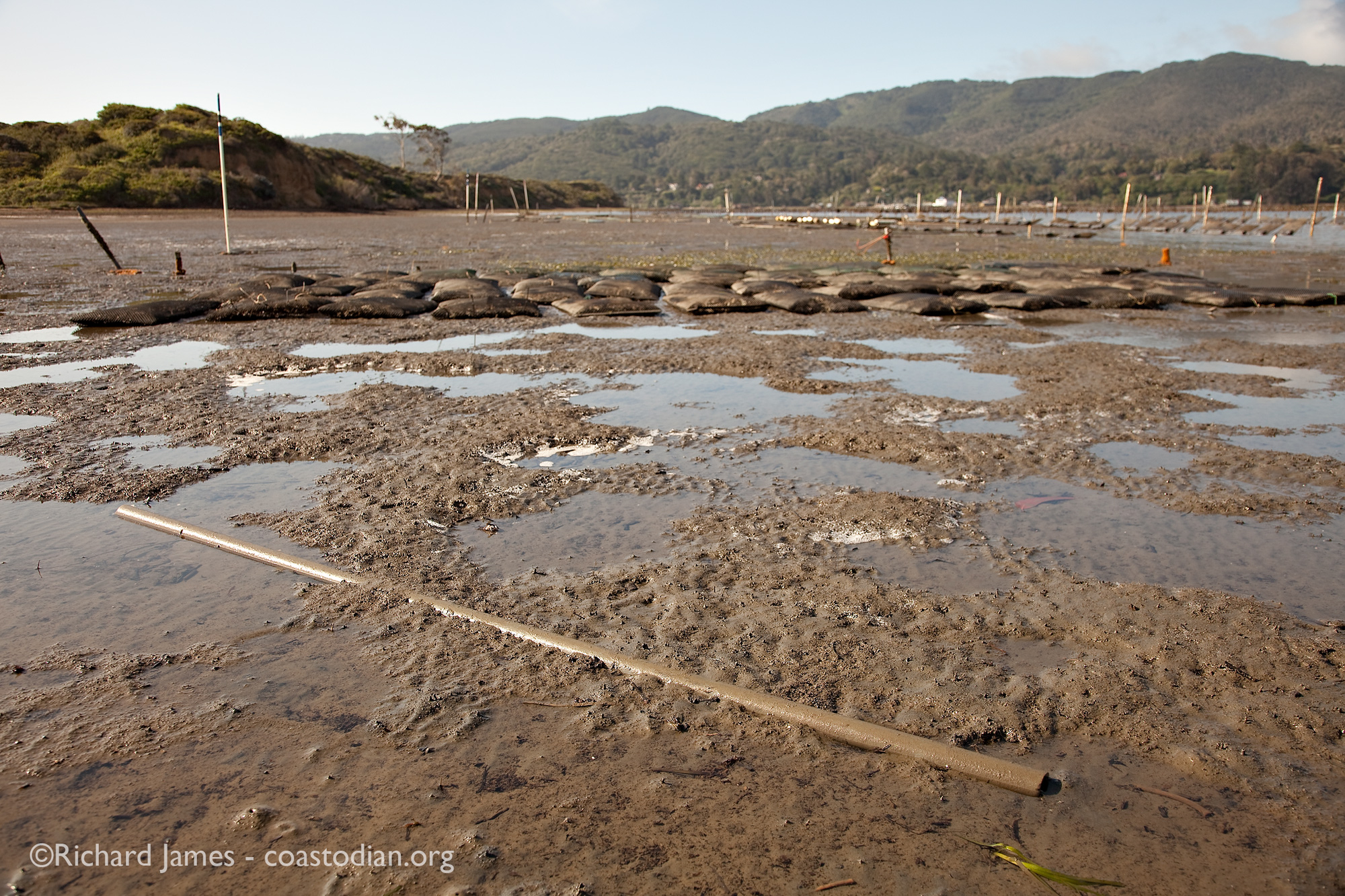
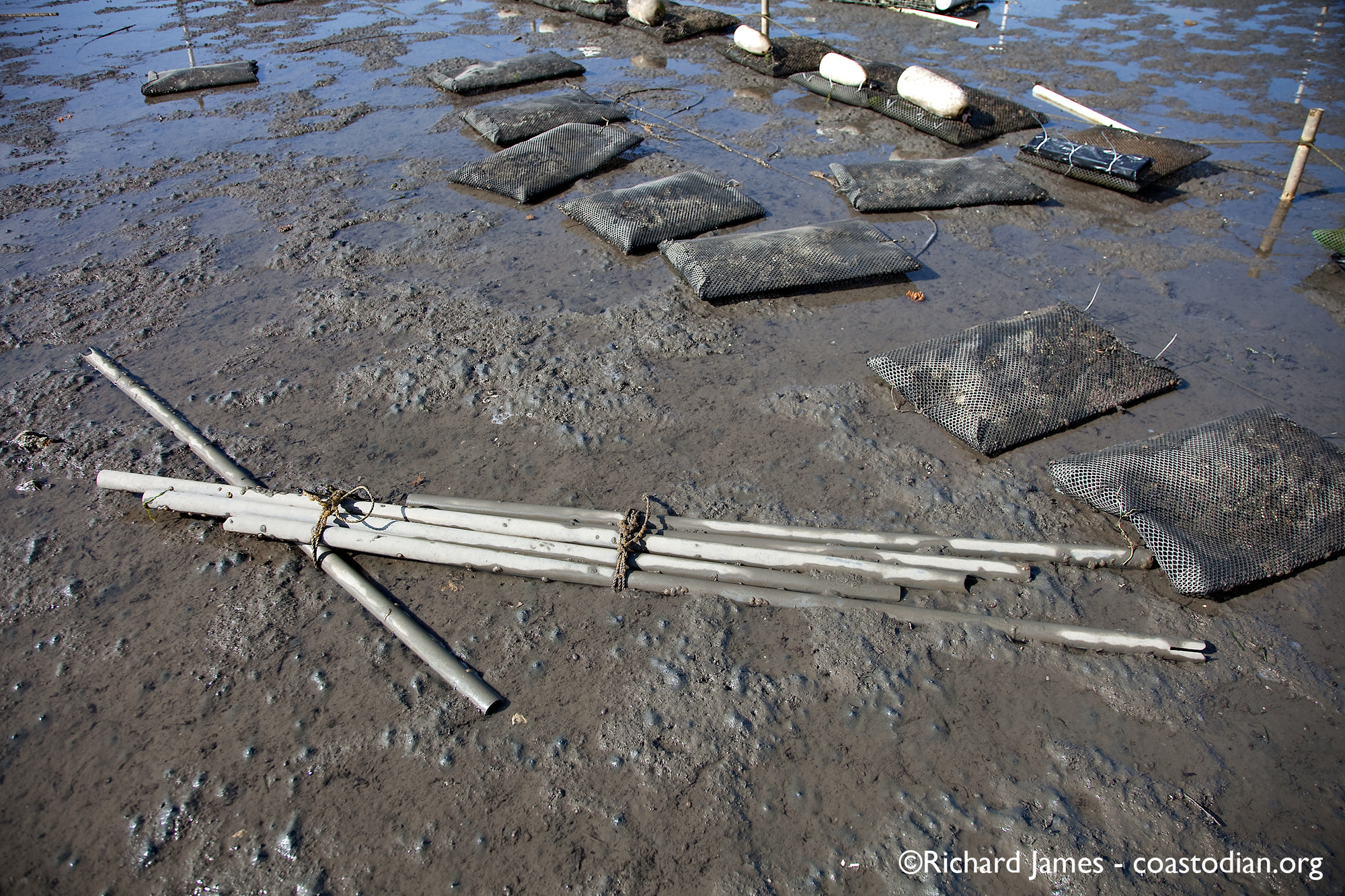
abandoned PVC pipes  - Tomales Bay Oyster Company

abandoned PVC pipes – Tomales Bay Oyster Company
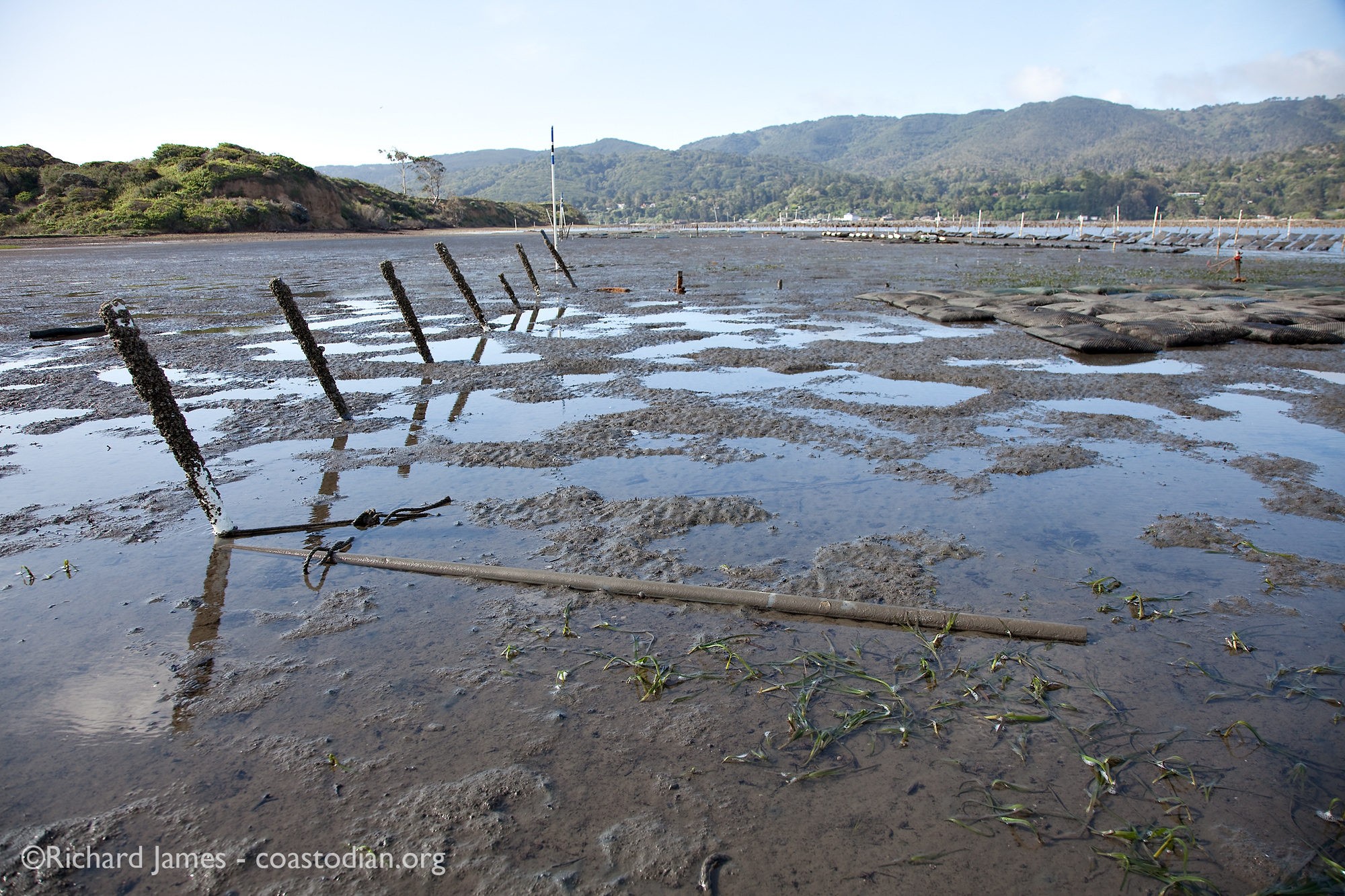
abandoned PVC pipes  - Tomales Bay Oyster Company

abandoned PVC pipes – Tomales Bay Oyster Company

Click any image to see a huge version

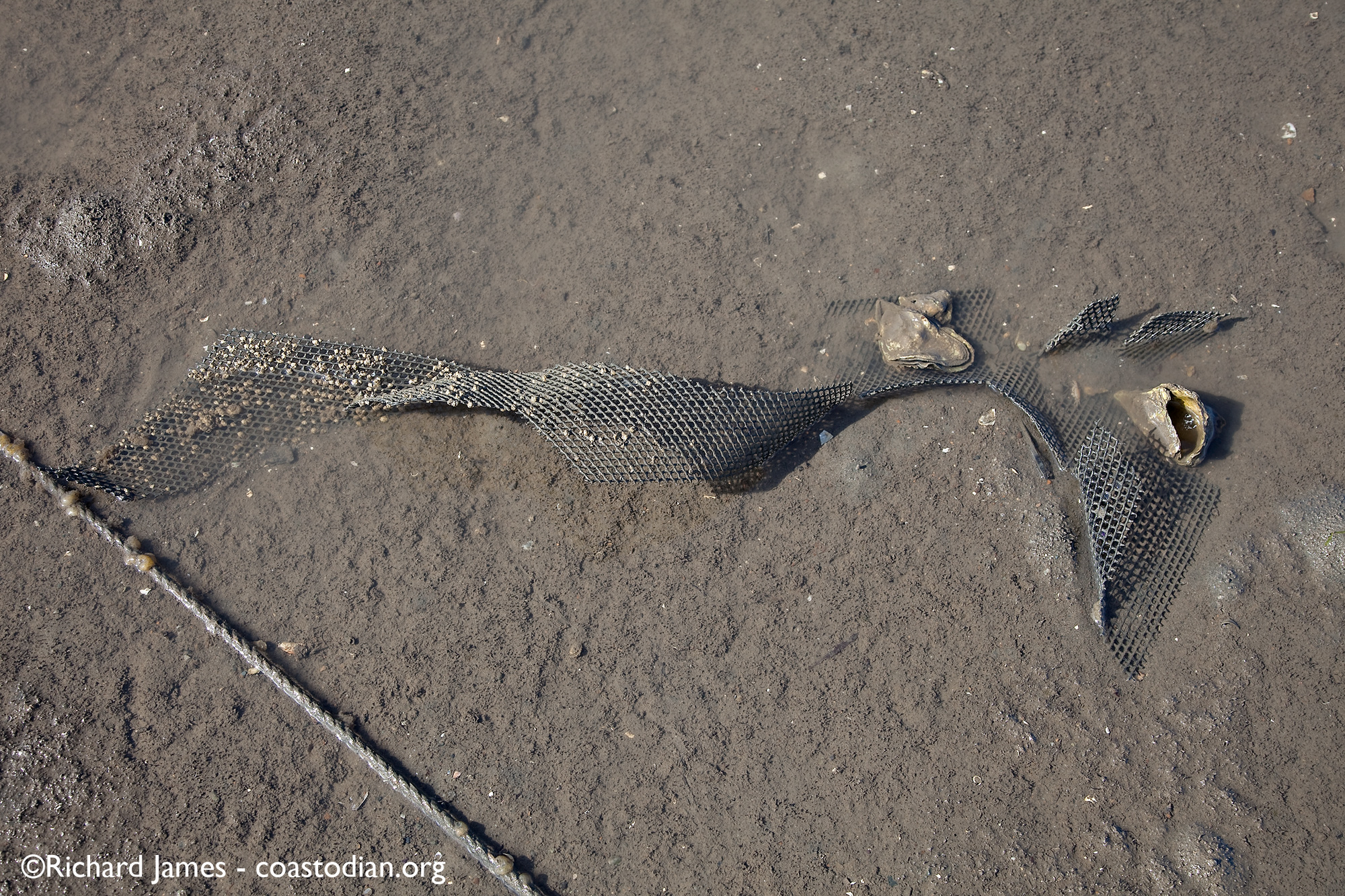
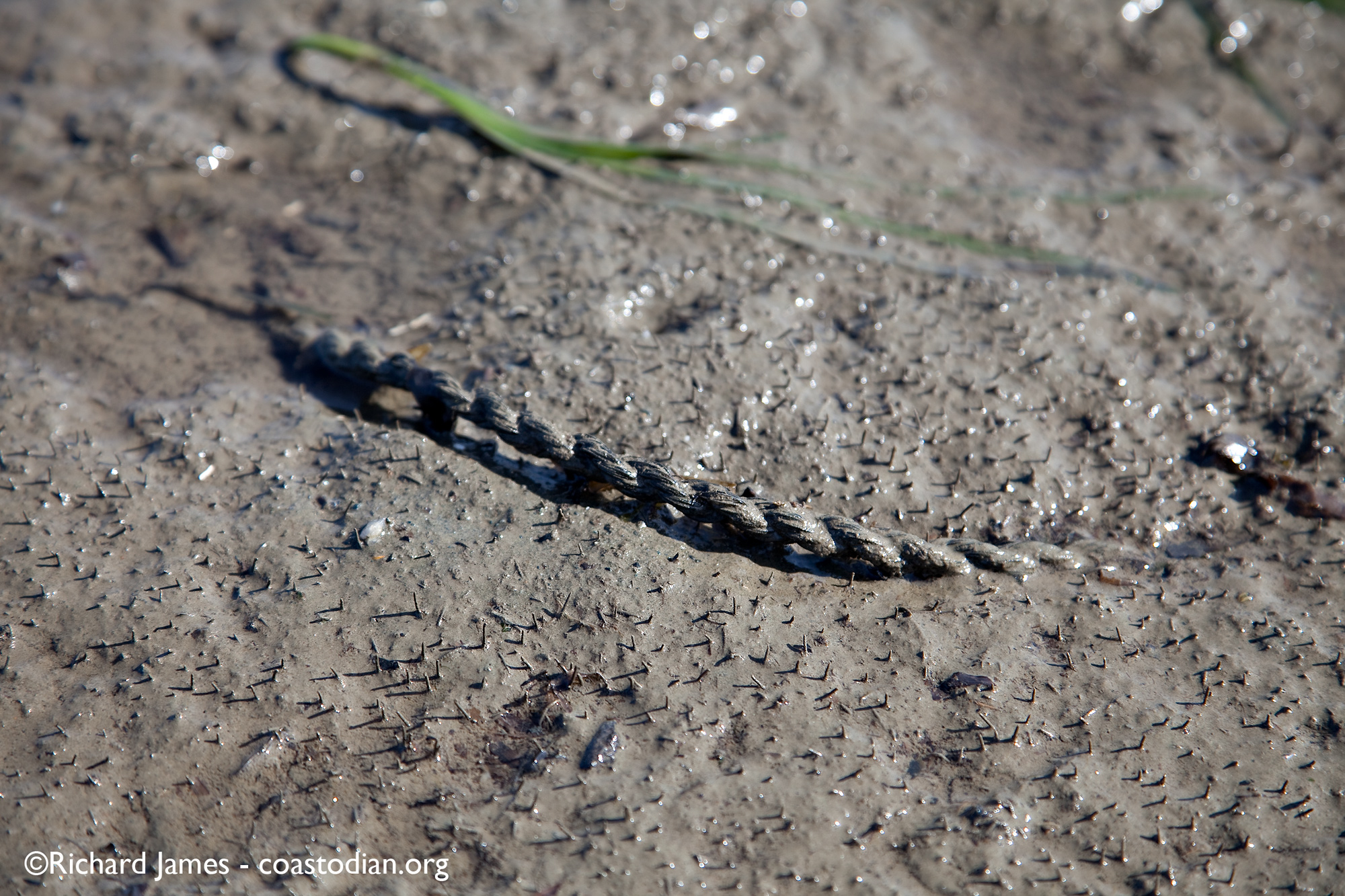
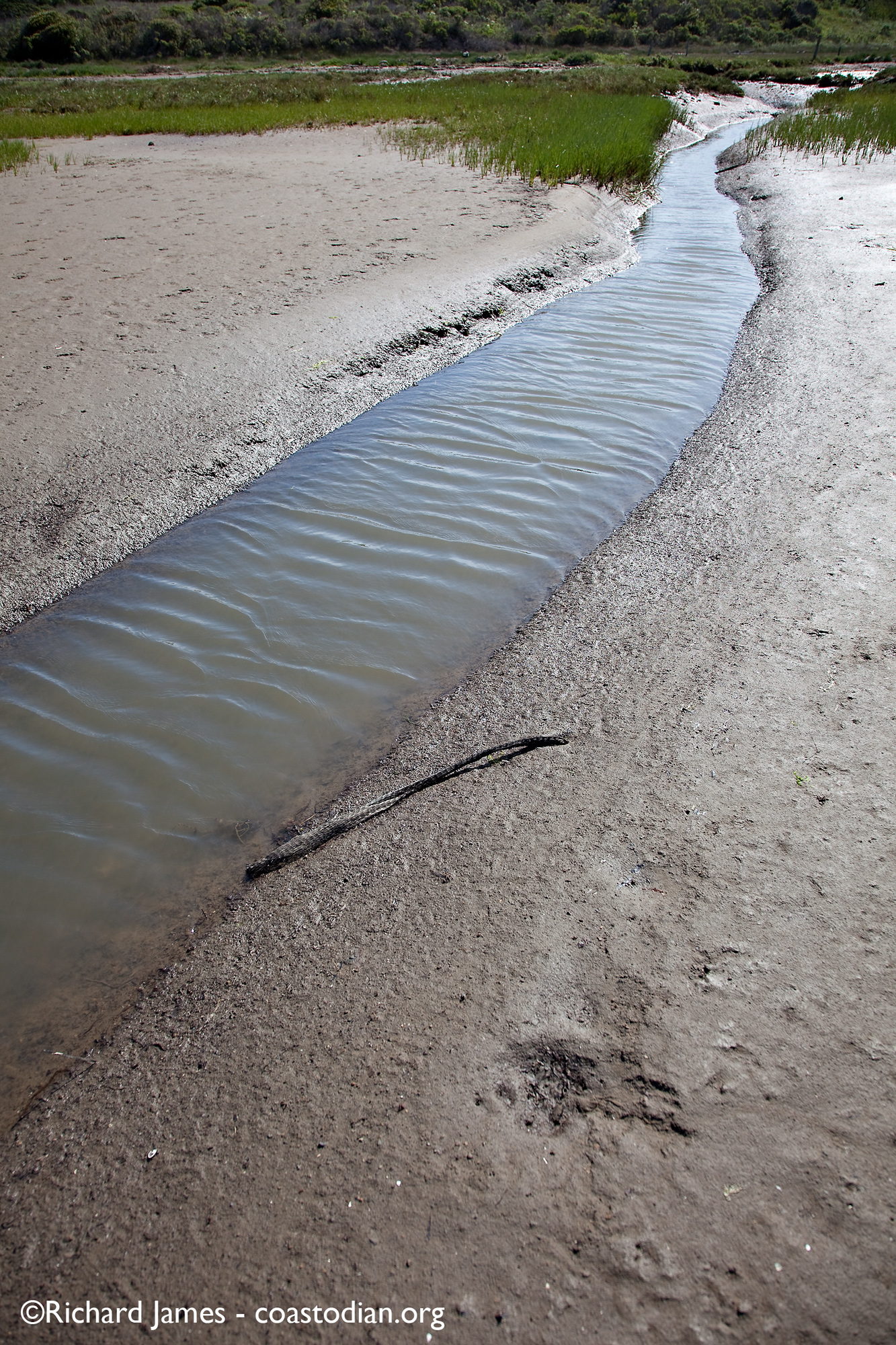
abandoned rope - Tomales Bay Oyster Company

abandoned rope – Tomales Bay Oyster Company
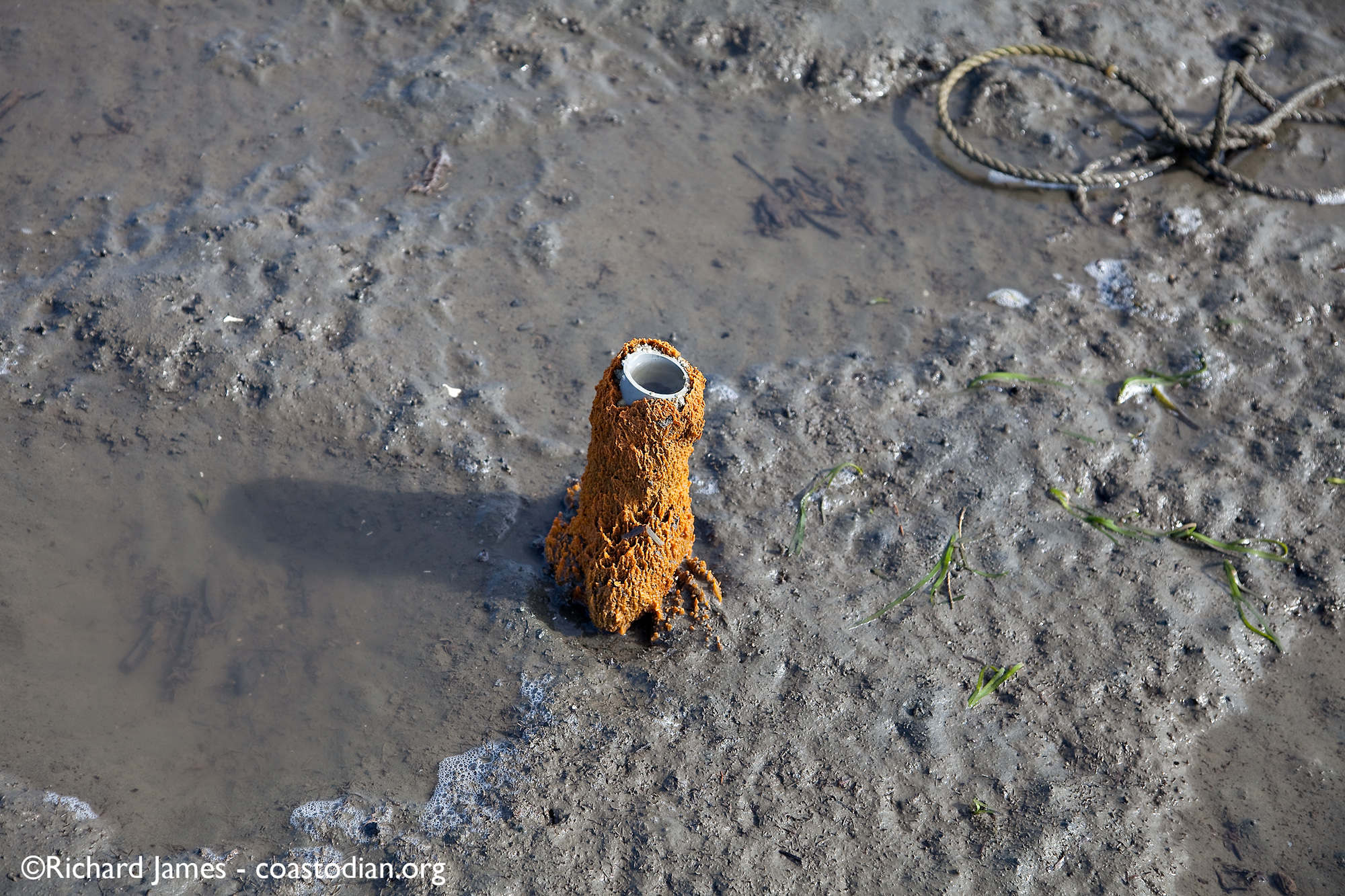
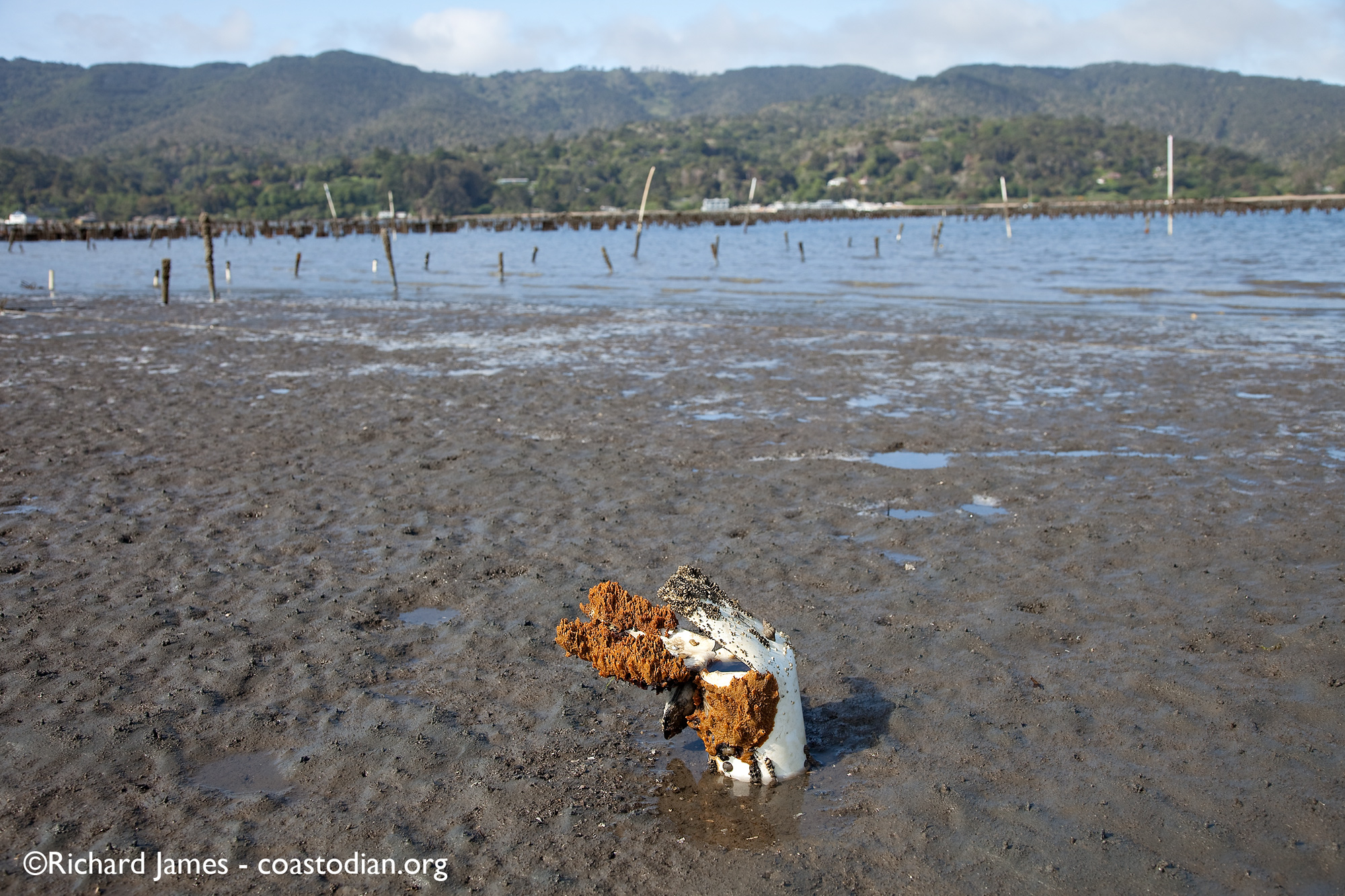
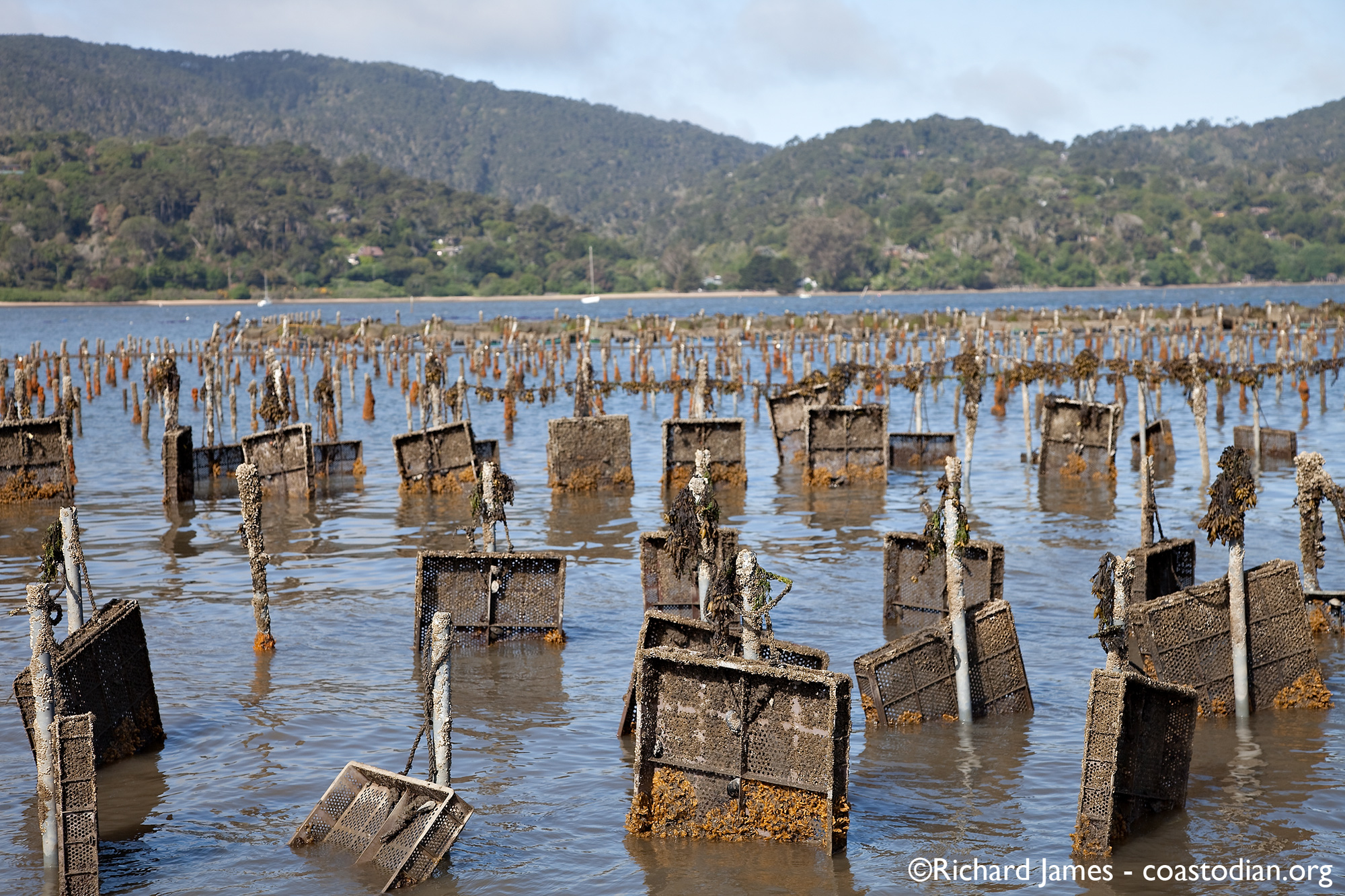
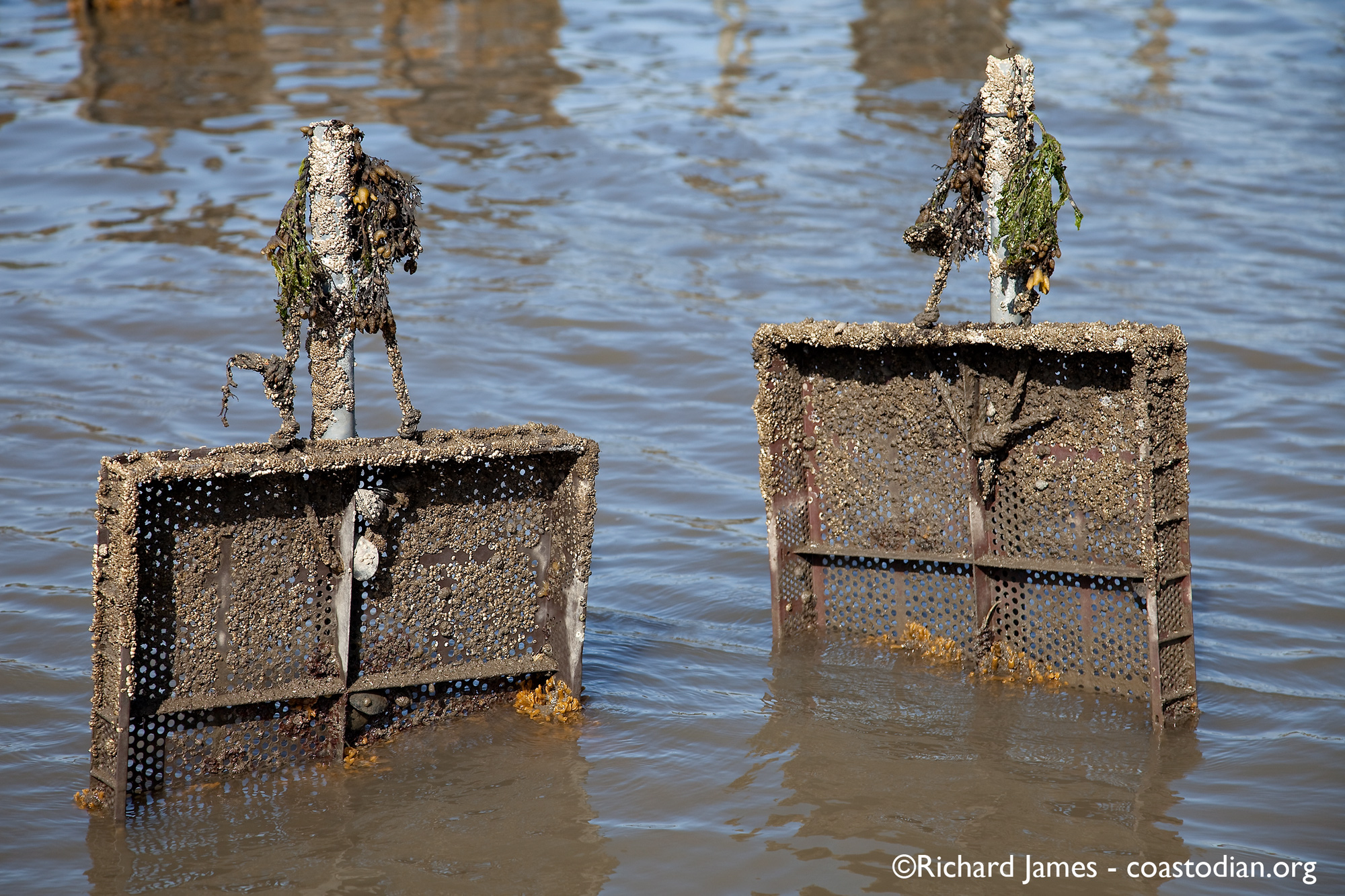
abandoned oyster rack mount covered with marine growth - Tomales Bay Oyster Company

abandoned oyster rack mount covered with marine growth – Tomales Bay Oyster Company

Click any image to see a huge version

abandoned oyster bags - Tomales Bay Oyster Company

abandoned oyster bags – Tomales Bay Oyster Company
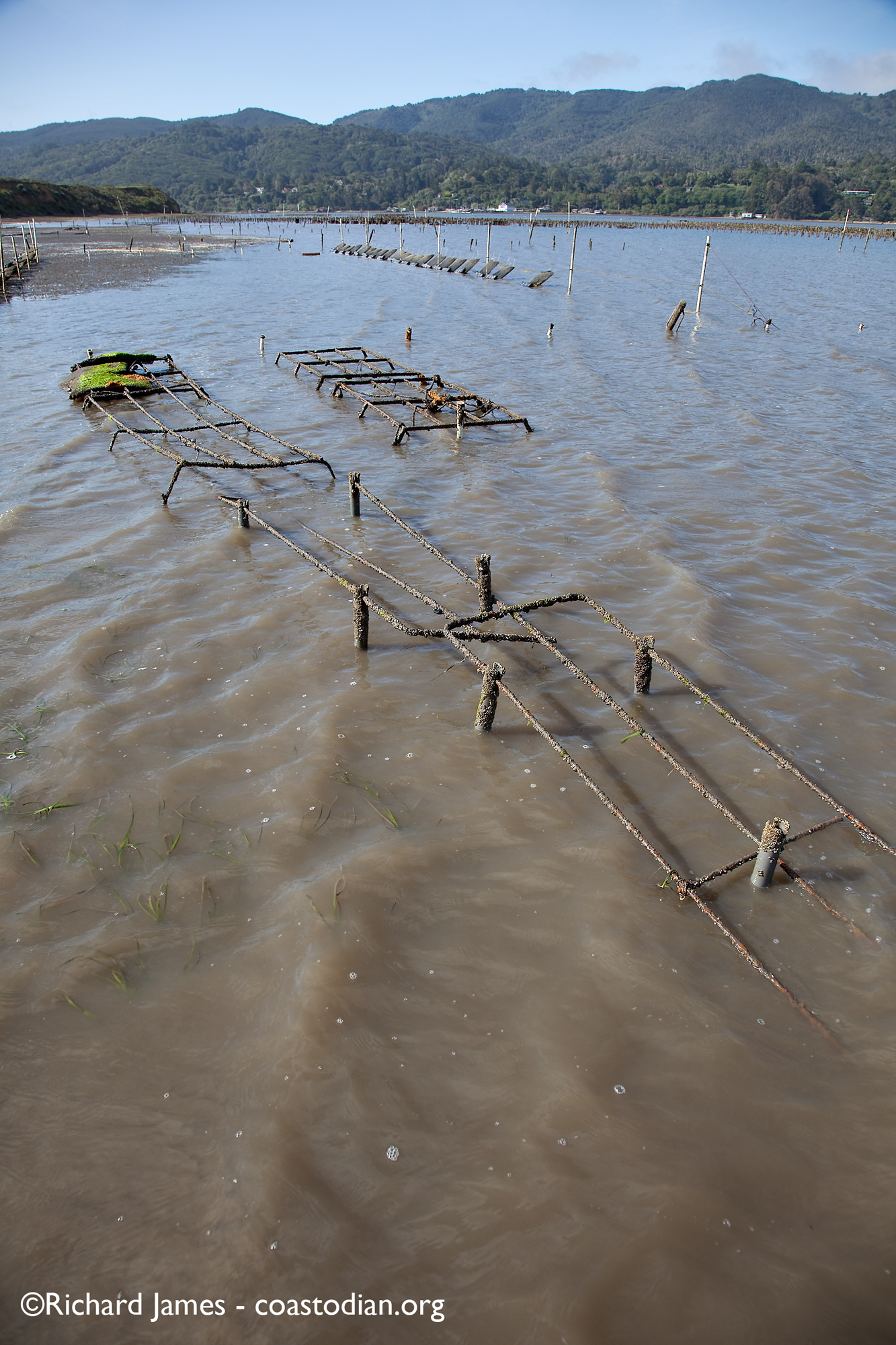
abandoned oyster racks - Tomales Bay Oyster Company

abandoned oyster racks – Tomales Bay Oyster Company

Click any image to see a huge version

abandoned oyster racks - Tomales Bay Oyster Company

abandoned oyster racks – Tomales Bay Oyster Company

abandoned PVC pipes  - Tomales Bay Oyster Company

abandoned PVC pipes – Tomales Bay Oyster Company

Click any image to see a huge version

abandoned PVC pipes and in use grow out bags - Tomales Bay Oyster Company Looks like a hurricane hit a hardware store. If a hardware store looked like this, it would either get cleaned up, or go out of business. Hardware stores are easy to build. There is only one Tomales Bay. So.....clean it up, or go out of business!

abandoned PVC pipes and in use grow out bags – Tomales Bay Oyster Company
Looks like a hurricane hit a hardware store. If a hardware store looked like this, it would either get cleaned up, or go out of business.
Hardware stores are easy to build. There is only one Tomales Bay.
So…..clean it up, or go out of business!

abandoned PVC pipes and in use grow out bags - Tomales Bay Oyster Company

abandoned PVC pipes and in use grow out bags – Tomales Bay Oyster Company

Click any image to see a huge version

abandoned PVC pipes - Tomales Bay Oyster Company

abandoned PVC pipes – Tomales Bay Oyster Company
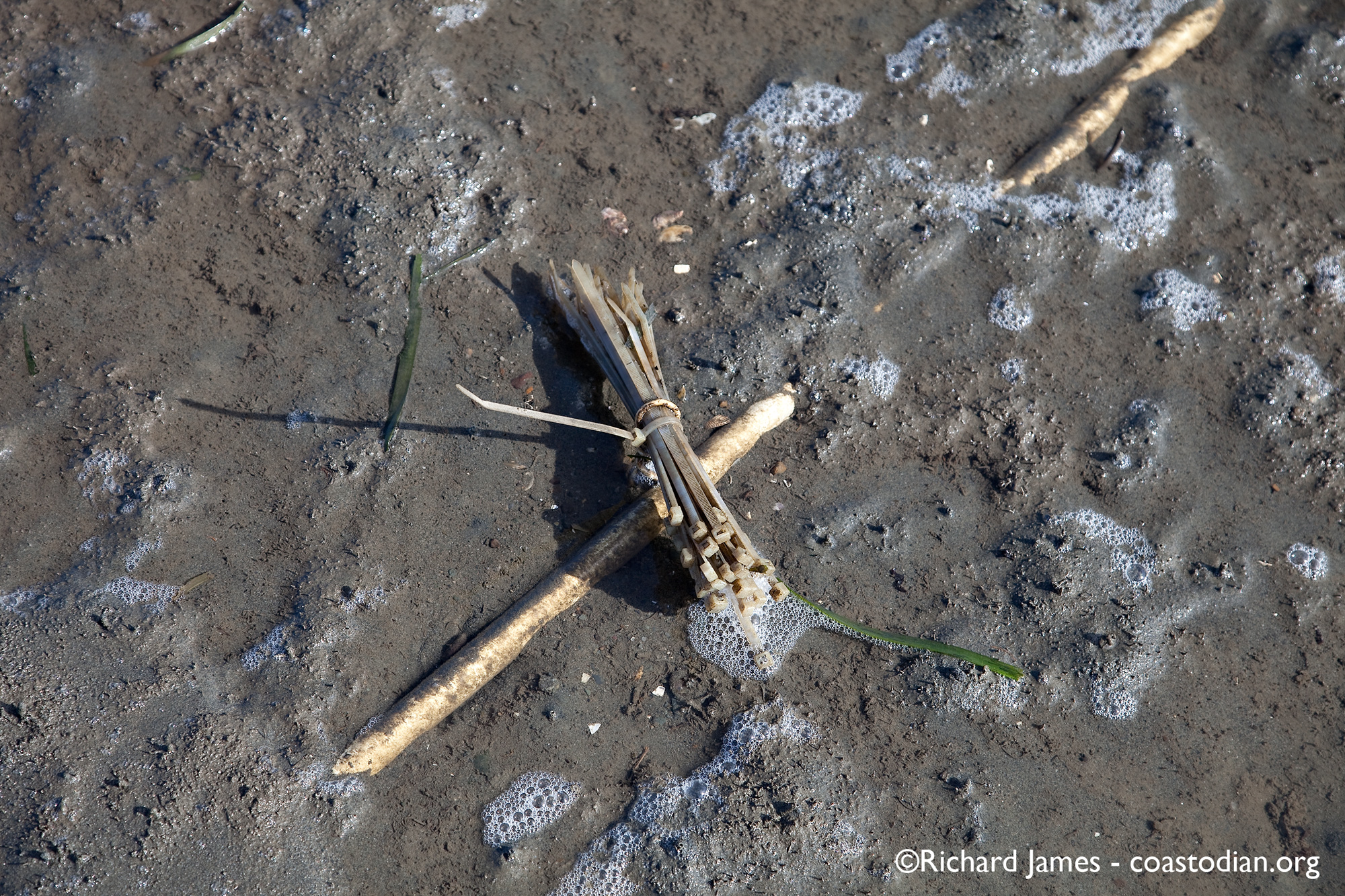
abandoned zip-ties - Tomales Bay Oyster Company

abandoned zip-ties – Tomales Bay Oyster Company

Click any image to see a huge version

abandoned oyster rack gear - Tomales Bay Oyster Company

abandoned oyster rack gear – Tomales Bay Oyster Company
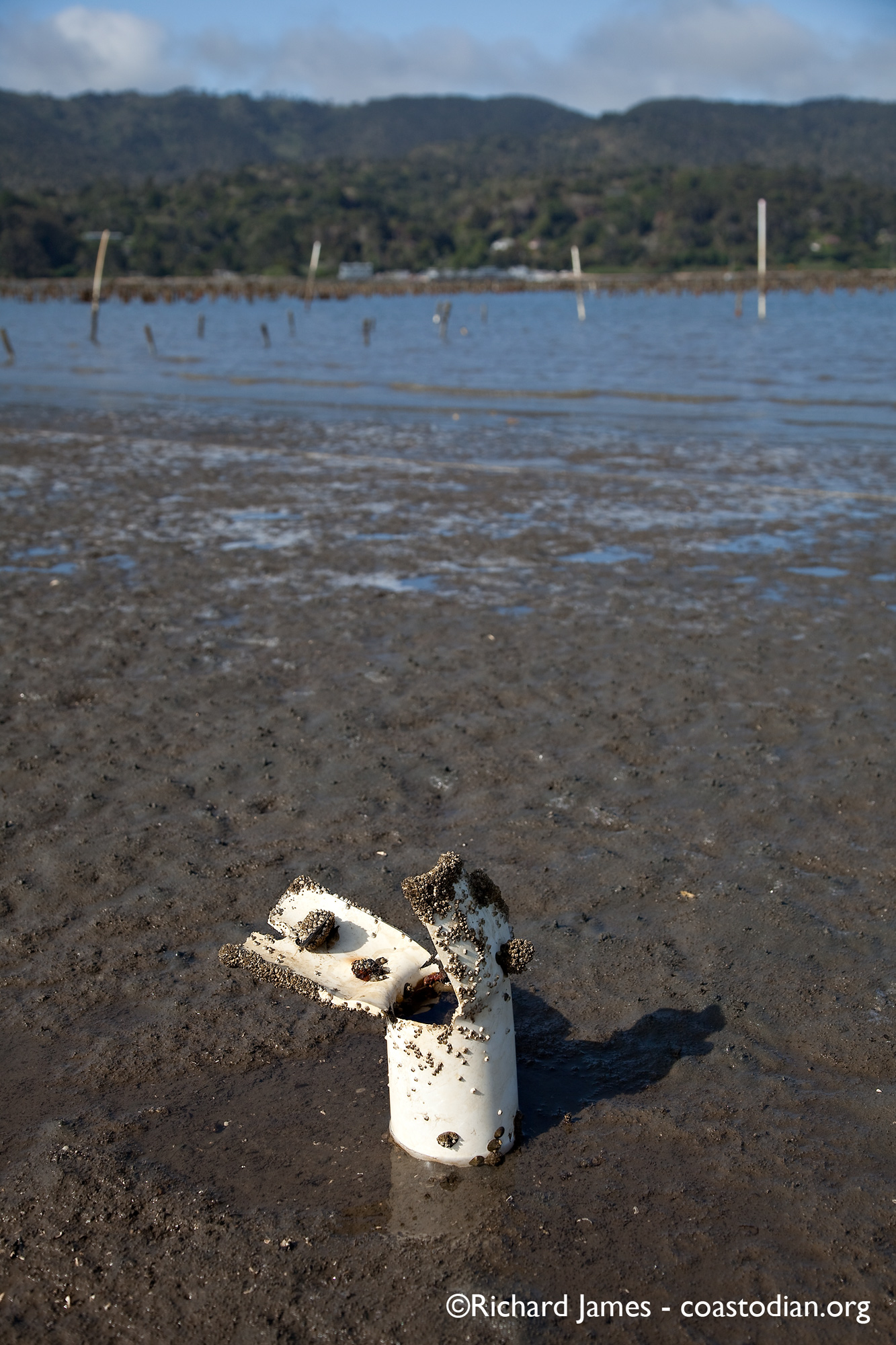
abandoned oyster rack mount covered with marine growth - Tomales Bay Oyster Company

abandoned oyster rack mount covered with marine growth – Tomales Bay Oyster Company

Click any image to see a huge version

abandoned oyster rack mount covered with marine growth - Tomales Bay Oyster Company

abandoned oyster rack mount covered with marine growth – Tomales Bay Oyster Company

abandoned grow out bags, rope and PVC pipes - Tomales Bay Oyster Company

abandoned grow out bags, rope and PVC pipes – Tomales Bay Oyster Company

Click any image to see a huge version

abandoned grow out bags covered with marine growth - Tomales Bay Oyster Company

abandoned grow out bags covered with marine growth – Tomales Bay Oyster Company

abandoned grow out bags covered with marine growth - Tomales Bay Oyster Company

abandoned grow out bags covered with marine growth – Tomales Bay Oyster Company

Click any image to see a huge version

abandoned grow out bags covered with marine growth - Tomales Bay Oyster Company

abandoned grow out bags covered with marine growth – Tomales Bay Oyster Company

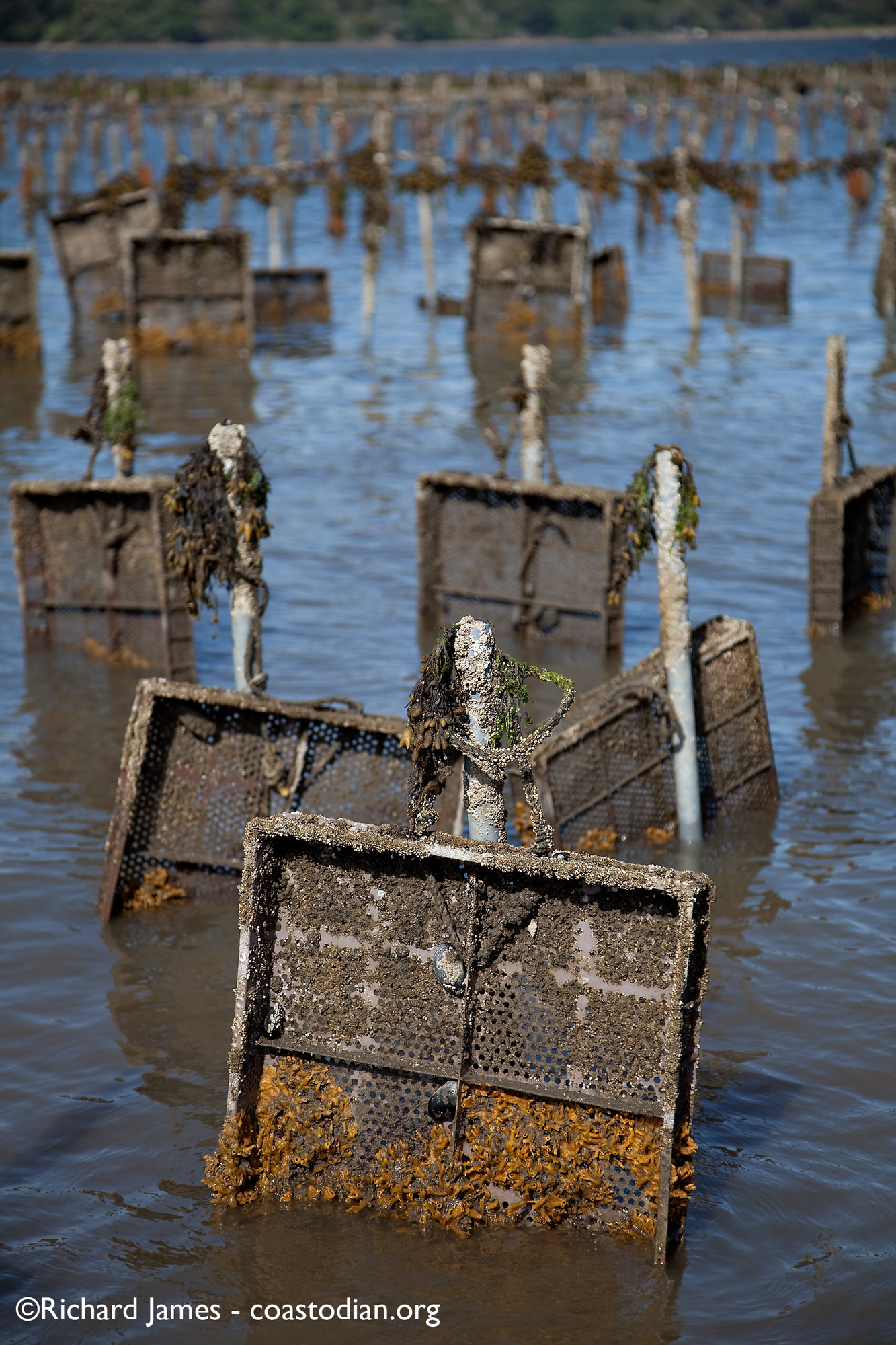
abandoned plastic trays - Tomales Bay Oyster Company

abandoned plastic trays – Tomales Bay Oyster Company
Click any image to see a huge version

abandoned plastic trays - Tomales Bay Oyster Company

abandoned plastic trays – Tomales Bay Oyster Company

abandoned plastic trays - Tomales Bay Oyster Company

abandoned plastic trays – Tomales Bay Oyster Company

Click any image to see a huge version

abandoned plastic trays - Tomales Bay Oyster Company

abandoned plastic trays – Tomales Bay Oyster Company

abandoned plastic trays - Tomales Bay Oyster Company

abandoned plastic trays – Tomales Bay Oyster Company

Click any image to see a huge version

abandoned plastic trays - Tomales Bay Oyster Company

abandoned plastic trays – Tomales Bay Oyster Company

abandoned oyster rack - Tomales Bay Oyster Company

abandoned oyster rack – Tomales Bay Oyster Company

Click any image to see a huge version

abandoned grow out bags covered with marine growth - Tomales Bay Oyster Company

abandoned grow out bags covered with marine growth – Tomales Bay Oyster Company

abandoned grow out bags covered with marine growth - Tomales Bay Oyster Company

abandoned grow out bags covered with marine growth – Tomales Bay Oyster Company

Click any image to see a huge version

abandoned grow out bags covered with marine growth - Tomales Bay Oyster Company

abandoned grow out bags covered with marine growth – Tomales Bay Oyster Company

abandoned grow out bags covered with marine growth - Tomales Bay Oyster Company

abandoned grow out bags covered with marine growth – Tomales Bay Oyster Company

Click any image to see a huge version

abandoned grow out bags covered with marine growth - Tomales Bay Oyster Company

abandoned grow out bags covered with marine growth – Tomales Bay Oyster Company

abandoned grow out bags covered with marine growth - Tomales Bay Oyster Company

abandoned grow out bags covered with marine growth – Tomales Bay Oyster Company

Click any image to see a huge version

abandoned grow out bags covered with marine growth - Tomales Bay Oyster Company

abandoned grow out bags covered with marine growth – Tomales Bay Oyster Company

retail oyster bag stuck in the mud - Tomales Bay Oyster Company

retail oyster bag stuck in the mud – Tomales Bay Oyster Company

Click any image to see a huge version

plastic rope by the miles lost each year in the mud - Tomales Bay Oyster Company

plastic rope by the miles lost each year in the mud – Tomales Bay Oyster Company

retail oyster bag stuck in the mud - Tomales Bay Oyster Company

retail oyster bag stuck in the mud – Tomales Bay Oyster Company

Click any image to see a huge version

retail oyster bag stuck in the mud - Tomales Bay Oyster Company

retail oyster bag stuck in the mud – Tomales Bay Oyster Company

.

Next related post may be found here.

Previous related post may be found here.

See the first post in this series “Save our Tomales Bay” here.

Flotsam and Jetsam, a film

Click on the title of the film above, “Flotsam and Jetsam”, to see this post as intended.

14 minutes and worth a view I reckon.

It came out in 2012, I only now discovered it.

Read about the film here.

The banner image above shows a toilet that washed ashore at Abbotts Lagoon, Point Reyes National Seashore on 17 July, 2010.

A fishing boat from central California overturned in the surf with four fishermen aboard.

Sadly, all four died.

In addition to the toilet, I recovered empty beer cans, life vests, several fishing rods, large sections of the boat and a ziploc bag of quarters.


Our SPECIES treats this one and only planet we call home as if it were that toilet.


When will we stop this madness?


Sustainable oyster farming, West Marin style – part 2

Click on the words above “Sustainable oyster farming, West Marin style…” to see this post as it was meant to be seen.

March of 2013, I published the image showing over 5000 black plastic oyster spacer tubes I had picked up. The image shows them in a large pile of black plastic on a tarp in front of the turn-off to the DBOC farm. See it here.

Besides meeting Kevin’s parents the day I made that image (that is a post all in itself), a few months later, Kevin found my blog, had a look around, then sent me a note inviting me over to talk about oyster farming trash. I went out to meet him the same day I photographed this Osprey over Drakes Estero, see it here.

The upshot of what he told me for nearly two hours was, “Richard, all this trash you and others are finding is from Charlie Johnson, not DBOC.”

He also showed me the new way they are growing oysters using long white plastic tubes impregnated with bits of oyster shell, they are called French Tubes.

When I saw them, I commented that I thought I’d only ever picked up one in all my days on the local beaches.

He seemed to think they were the silver bullet to all this lost plastic getting into the ocean.

I thanked him for his time and we parted ways, I did not give French Tubes much more thought. That is until I went diving in Drakes Estero. I wanted to see what was going on under the surface with my own eyes.

Kevin is right, I won’t be picking up those long white tubes from all over the beaches of Point Reyes. The reason being, French Tubes sink!

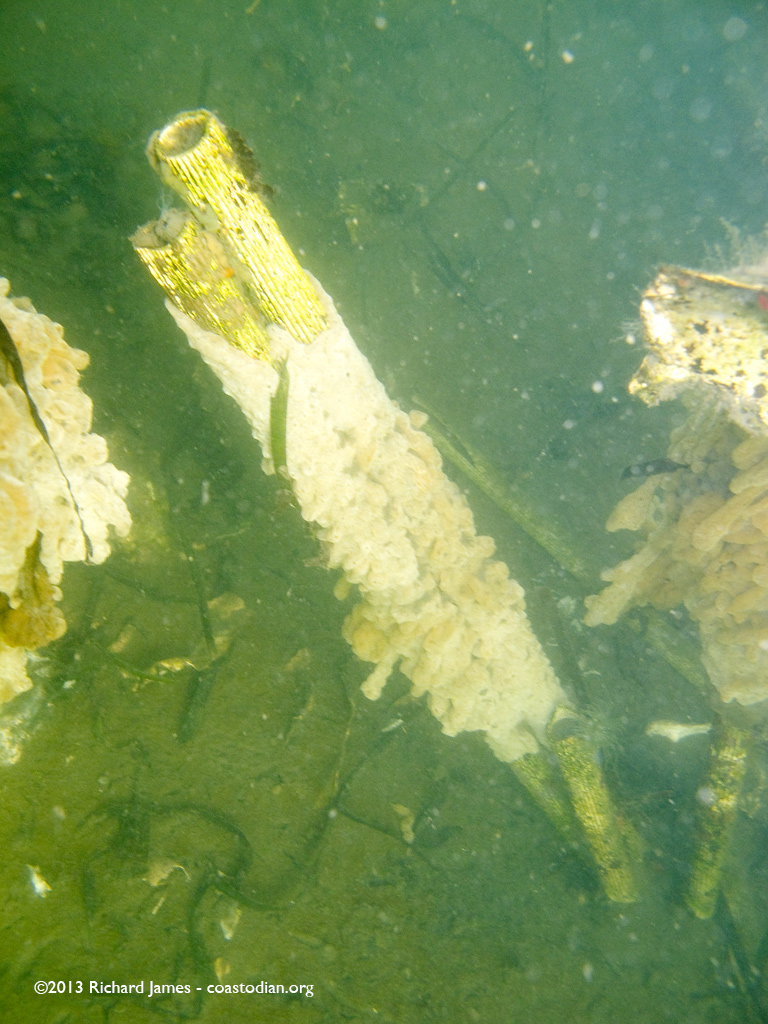
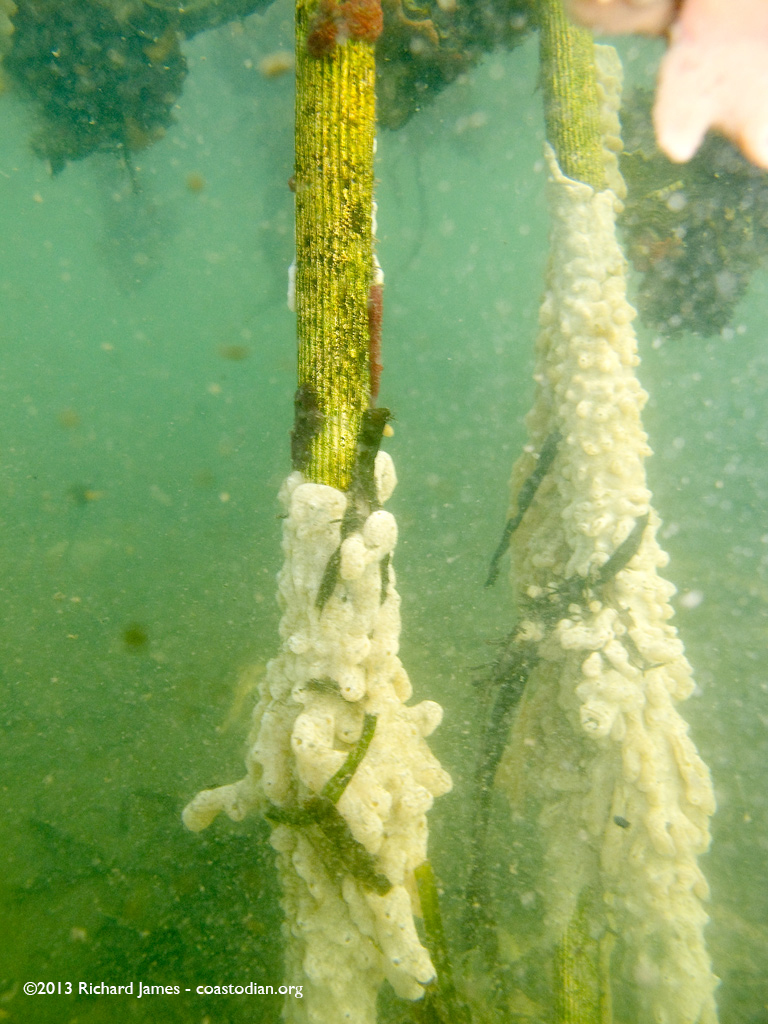
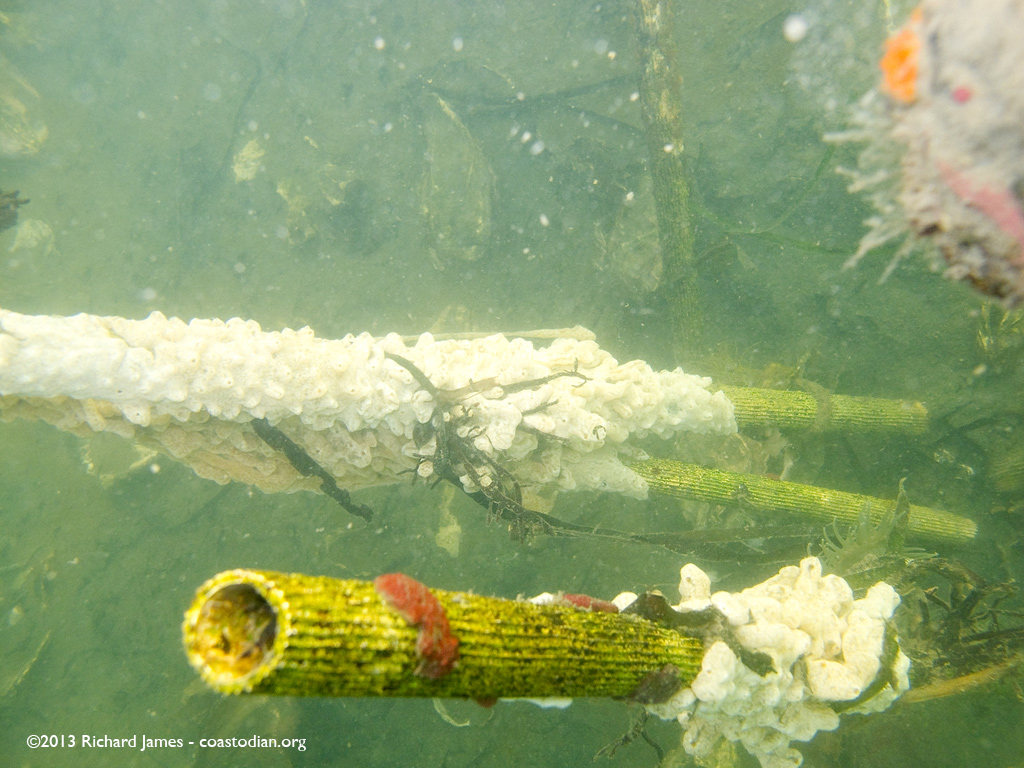
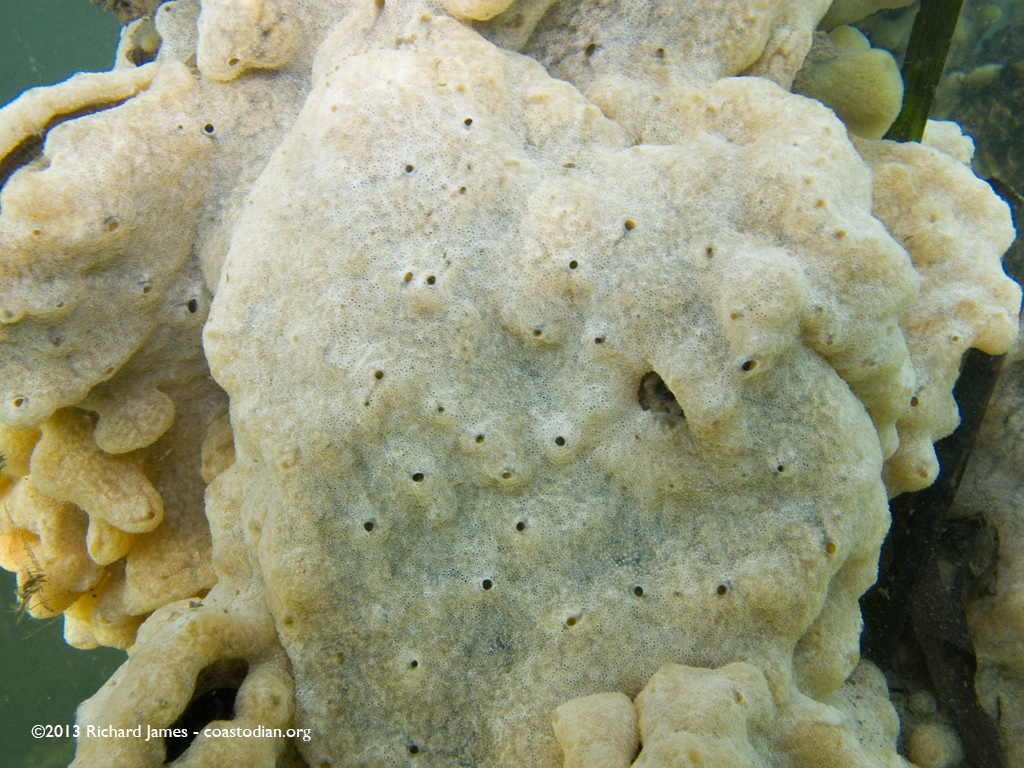
Have a look for yourself. See the invasive tunicate growing all over them.

This is surely one way to keep your litter out of the public eye.


While hiking back from the mouth of the Estero today with a load of trash (over 60 black tubes) along with all the usual human-waste, I came upon 3 people that wanted to know what all the trash was on my back. After explaining my affliction (the inability to walk past garbage on the beach), I briefly explained the oyster situation to them. The mess in the Estero, the mess I keep finding in Tomales Bay etc.

The young woman looked at me and asked “Is it possible to grow oysters and not make a mess of the environment?”

That is a very good question I told her.

I’ve seen little evidence of it so far. The folks at Hog Island do seem to be improving their practice, looking for ways to lose less gear. TBOC has a long way to go to clean up their practice, I see small efforts and much larger issues to be tackled. The others I cannot speak of accurately.

If one reads the position paper put forth by the California Shellfish Initiative, dated 29 Aug. 2013 It states in part (emphasis mine) …

The California Shellfish Initiative (“Initiative”) is a collaborative effort of growers, regulators, NGO’sand scientists to restore and expand California’s shellfish resources, including oysters, mussels,clams, abalone and scallops.

The Initiative seeks to harness the creative talents of shellfish growers, local, state, and federal resource managers and environmental leaders. The Initiative’s goals are to protect and enhance our marine habitats, foster environmental quality, increase jobs, encourage inter-agency coordination and communication, and strengthen coastal economies. A successful Initiative will engage coastal stakeholders in a comprehensive process to grow California’s $25M sustainable shellfish (bivalve) harvest, restore natural shellfish reefs, protect clean water and enhance healthy watersheds.

I’d be happier if what this says were happening…


As always, click on a picture to see it larger

Oyster farm debris littering the bottom of Drakes Estero

Oyster farm debris littering the bottom of Drakes Estero


As always, click on a picture to see it larger

Oyster farm debris littering the bottom of Drakes Estero

Oyster farm debris littering the bottom of Drakes Estero


As always, click on a picture to see it larger

Oyster farm debris littering the bottom of Drakes Estero

Oyster farm debris littering the bottom of Drakes Estero


As always, click on a picture to see it larger

Oyster farm debris littering the bottom of Drakes Estero

Oyster farm debris littering the bottom of Drakes Estero


As always, click on a picture to see it larger

Oyster farm debris littering the bottom of Drakes Estero

Oyster farm debris littering the bottom of Drakes Estero


As always, click on a picture to see it larger

tunicates love oyster racks, oyster bags, oyster tubes. Non-native tunicates!

tunicates love oyster racks, oyster bags, oyster tubes. Non-native tunicates!


As always, click on a picture to see it larger

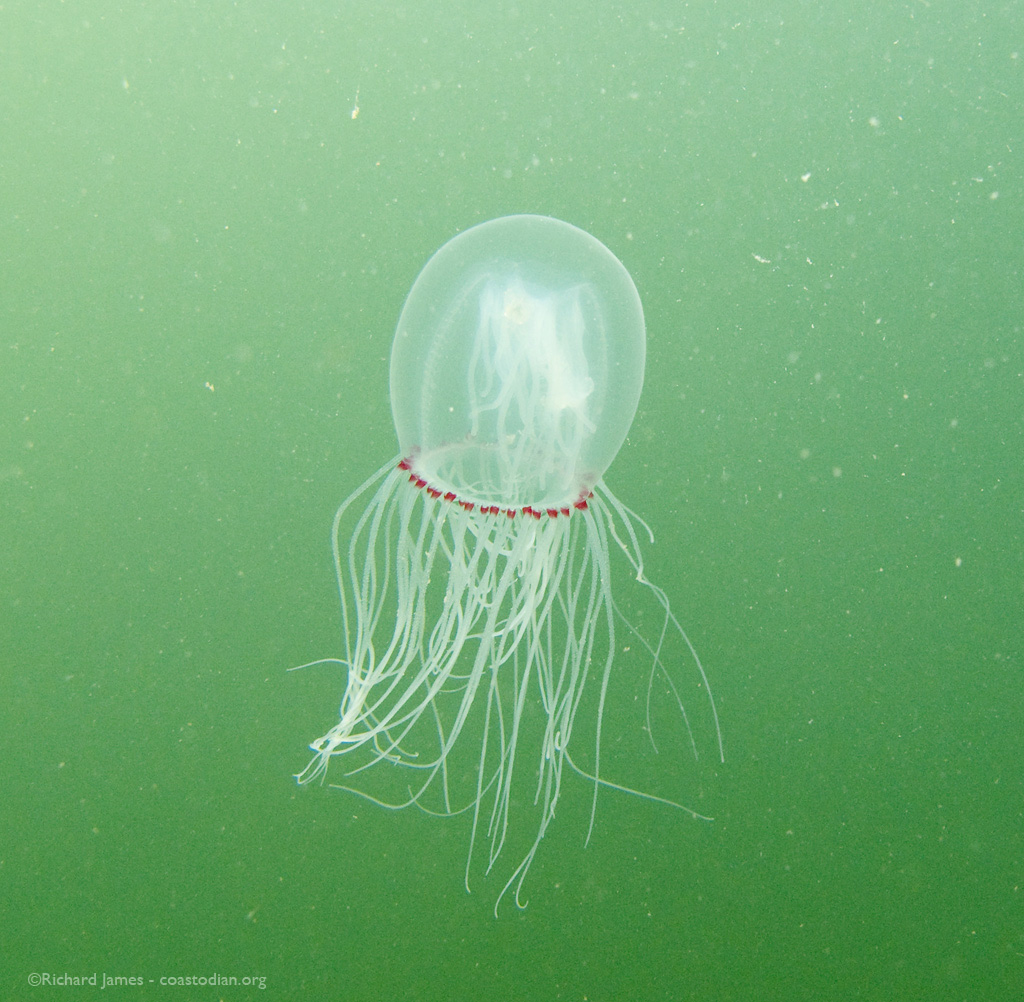
A local jelly floating by

A local jelly floating by


Snorkling near DBOC oyster racks in Drakes Estero


Snorkling near DBOC oyster racks in Drakes Estero


See the next post in this series here

Save our Tomales Bay – part 14 Tomales Bay Oyster Company poised to improve business practices

Click the words “Save our Tomales Bay…” above to see this post in its entirety.

Saturday morning while walking the shore of the Bay picking up oyster farming debris just south of TBOC, as I have done for the past few months, something most interesting happened.

Two TBOC employees saw me with bag in hand heading south along the shore, stooping down to pick up the bazillionth discarded cable-tie (zip-tie, tie-wrap), they shouted at me in their accented english, “Hello mister, hey, hello, can we help you?”

Can they help me I thought to myself?

They sure can I thought to myself. I stopped and turned, waiting a few seconds as they jogged over to me.

You sure can help me.“, I offered.

You can stop leaving all the plastic garbage along this beach and all over Tomales Bay

They both looked a little confused.

Basura, mucho basura todas.” I offered in my simplistic spanish.

Porque basura siempre aqui?” [Why always trash here?]

I dug into my bag and showed them the handful of cable-ties, wire segments, oyster tags and rope I had collected.

Eric, I later learned his name, said “We do the best cleanup of the bay of all the oyster growers!

I chuckled a few times, shaking my head. “I’ll have to disagree with you there. I have cleaned up nearly this entire bay shoreline a couple times, and the area around TBOC is by far the messiest, covered with oyster trash.

I explained that I had been cleaning this shore near their operation for months, bagging what I’d found, and dating each bag, as well as photographing the hundreds of grow out bags I’d found nearby. These photos are up on the internet I told them.

They asked me if I’d talked to Todd about this. Yes was my reply, with little to show for our discussion.

After a little more discussion, I thanked them for their time, we shook hands and parted ways.

I continued walking south, picking up what I’d missed on the way north.

Not five minutes after the boys had left, I turned a corner of the shore and not two-hundred feet south was Todd Friend walking towards me, with a large stick in his hand.

Hmmm, this could get interesting, I thought to myself.

He saw me and then reached down to pull a large two by four out of the driftwood pile, abandoned oyster racks likely.

As we closed on one another, it became apparent that Todd was picking up trash as well.

In another minute we were upon each other and he said “Hello Richard.

Hello Todd.

We talked a bit about what I’d been finding, I showed him the contents of my bag, explaining this was a fraction of what I had usually found. He explained the likely source of each item.

The upshot of our conversation is that he agreed that TBOC had been leaving a mess and that they could do better.

I explained that if they did good things on the bay, I’d write good things about them. He looked me in the eye and said “Deal!

But, if you continue to do what you’ve been doing, I’ll continue to document that as well.

I asked about changing methods so that less gear was lost. I also asked if TBOC talked with other growers about best practices. He said not really, but a meeting of all the growers was coming up.

I shared a different way of attaching bags to the line used by a grower further north, the clips cost more, but they lose much fewer bags, so it actually costs less.

This is great news and I hope to hear more of their plans to reduce lost gear.

I’ll continue to record debris locations and offer maps to the growers. It would be great if they could use their boats to get to remote areas, then walk the shore to recover gear, as walking is the best way I have found to find lost gear.

A great morning indeed.


Next related post may be found here.

Previous related post may be found here.

See the first post in this series “Save our Tomales Bay” here.

Save our Tomales Bay – part 13.2 Hog Island Oysters gets it done!

Click the words “Save our Tomales Bay…” above to see this post in its entirety.

The folks up at Hog Island saw my recent going on about the bumper crop of tractor tires spoiling the beauty of Tomales Bay near Millerton Point.

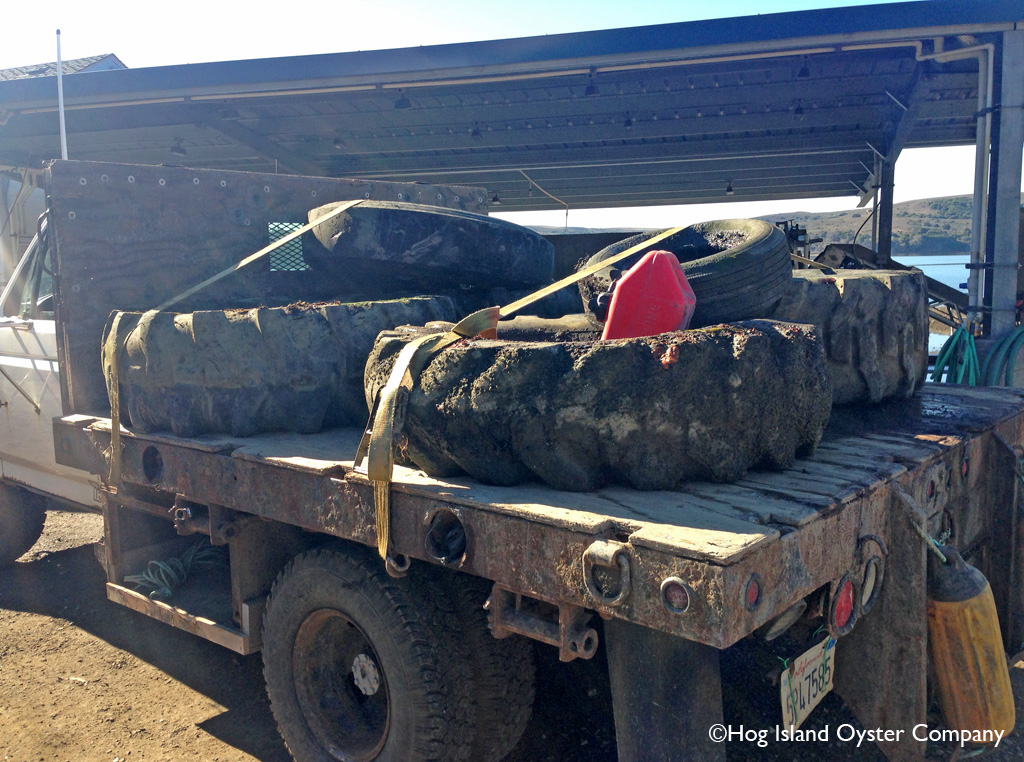
They went down this morning, Zane Finger and one other and pulled out 6 tires between them. 5 Big ones and 1 auto-sized tire.

See below what two experienced water-workers can get done in short order.

Two workers from Hog Island Oyster Company drove to Millerton Point on 20 January, 2014 and recovered six discarded tires from Tomales Bay. - - Bravo!

Two workers from Hog Island Oyster Company drove to Millerton Point on 20 January, 2014 and recovered six discarded tires from Tomales Bay.


Bravo!


Click image for a larger version

Huge thanks to Hog Island Oysters for coming down from Marshall to get these tires from a hopefully bygone era of thoughtless discarding of items no longer wanted.

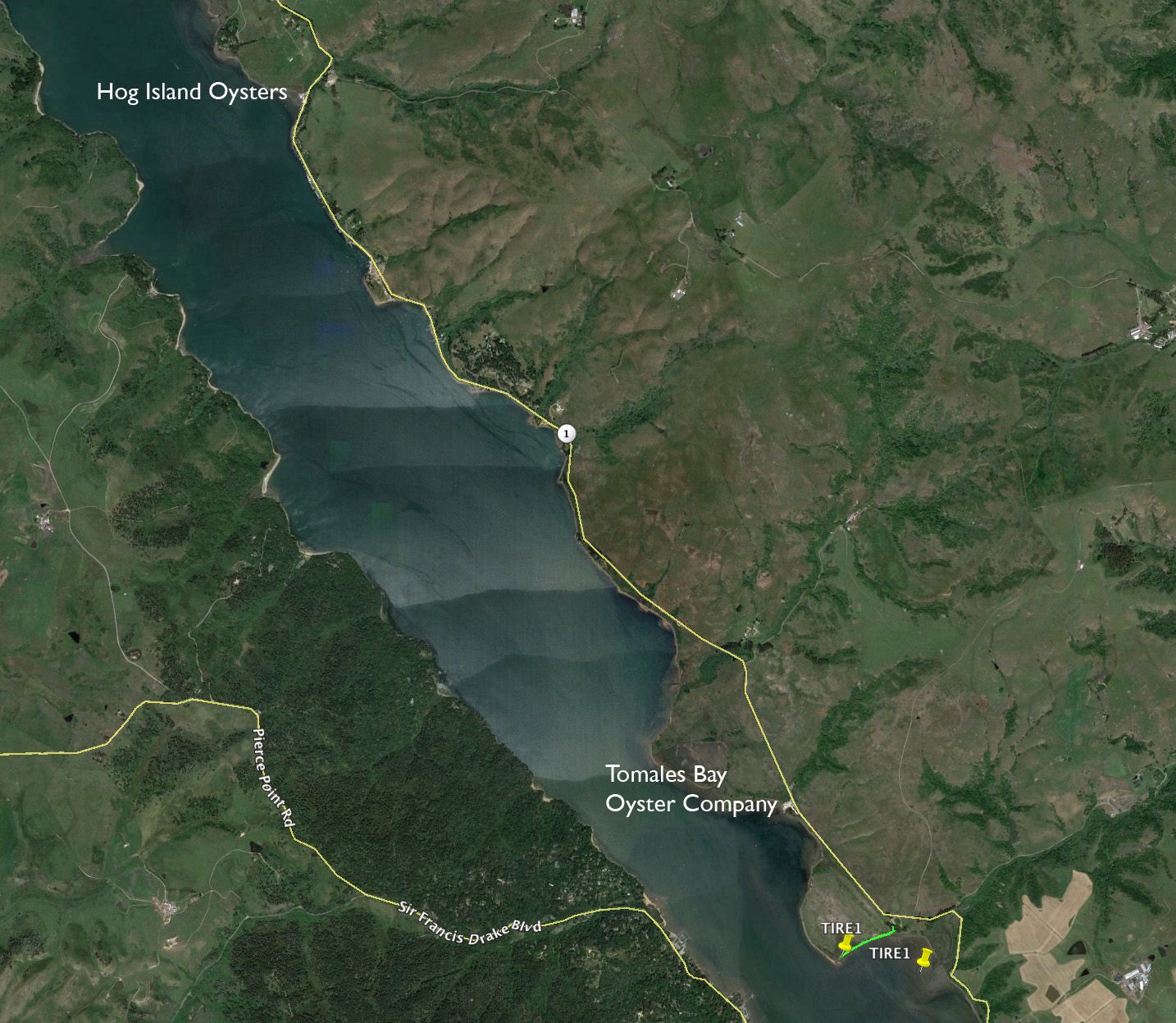
Lower right of this image shows where I attached the floats (yellow pin to the right) and where it drifted with the high tide the next morning a third of a mile away. - - Kudos to Hog Island Oysters for taking a leadership role in cleaning up their oyster debris, as well as the errant trash of others.

Lower right of this image shows where I attached the floats (yellow pin to the right) and where it drifted with the high tide the next morning a third of a mile away.


Kudos to Hog Island Oysters for taking a leadership role in cleaning up their oyster debris, as well as the errant trash of others.


Click image for a larger version

See the short video below for how much work it is for one less experienced water worker to get 1 large tire out of Tomales Bay.


Next installment of this series may be found here.

See the first post in this series “Save our Tomales Bay” here.