Stinson Beach Library – Found Art

Four artists’ work is on display at the Stinson Beach Library until 31 January, 2012.

Richard James has two of his large meta-bottles on the patio along with 49 jellyfish I made out of Korean fishing-net floats and crab-fishing rope.

Lina Jane Prairie has baskets made from kelp and the same rope I use for tentacles.

John Norton is showing a few of his collections of similar items found on the beach.

Tess Felix has created two mermaids and a few portraits, mosaics actually, all from the bits of petroleum-based plastic we humans discard every minute of every day which wash ashore on the world’s beaches and are eaten by birds and fish the world over every minute of every day.

Orca at Point Reyes

Click on the title of this post to read it and see a related header image.

NOTE2: Go to this post to see images of the skeleton being assembled at The Academy of Science.

NOTE: Hello orca enthusiast. You’ve found my images, take a moment to leave a comment at the bottom of this page. Tell me how you got here, what your interest in orcas is. This orca skeleton is being assembled at the California Academy of Science for the next few weeks. Go here to learn more.

I packed out both pectoral fins as well as four vertebrae.

Here are images from the removal of O319 from the beach.

[nggallery id=3]

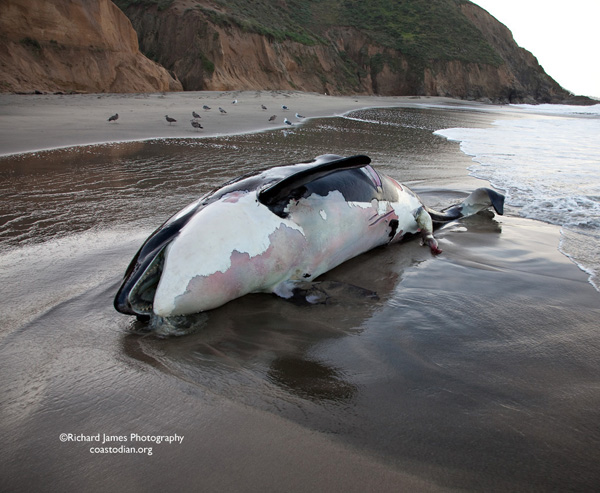
An 18 foot long, juvenile male orca washed ashore on a remote beach at Point Reyes just before thanksgiving 2011. This animal belongs to one of three ecotypes, the offshore group. It was last seen off Vancouver in September. The other ecotypes are resident and transient. These names are derived based on what the animals do during the summer months.

A full necropsy was performed. Blood was found in the blowhole and there was other evidence of trauma to the head. This may have been the result of being struck by a ship, or during interactions with other whales. No determination on cause of death has been made.

Little is known about offshore orcas. This may be only the second specimen of this type to be collected, most animals die offshore and sink.

Orcas are actually members of the dolphin family, the largest member. Males can grow to over 30 feet long, though are usually 20-26 feet in length. This is the first killer whale known to wash ashore at Point Reyes in many decades.

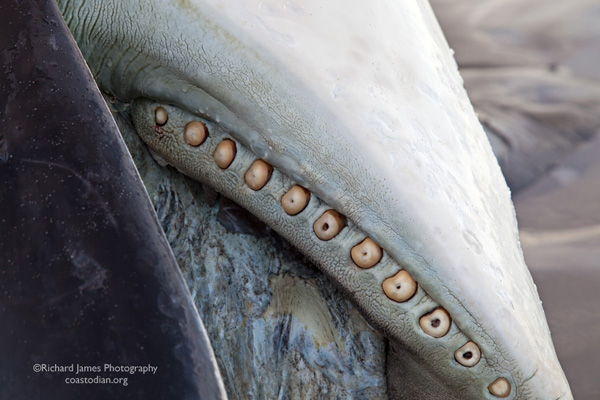
Offshore orcas mainly feed on sharks. Sharks have very tough skin and that is likely why the teeth of this animal are very degraded. Resident animals mainly feed on salmon, transients prefer marine mammals, such as seals.

Here is some video of the whale in the surf.

Orca – ©Richard James Photography

Orca – ©Richard James Photography

Orca flukes – ©Richard James Photography

Orca fluke – ©Richard James Photography

Orca mouth – ©Richard James Photography

Orca teeth – ©Richard James Photography

orca teeth closeup – ©Richard James Photography

Why is the sun yellow? – by Sethra May, guest blogger

Have you ever wondered why the sun is yellow? Or maybe why the sky is blue or the grass is green? Well, there are several ways to go about answering those questions. The sun, it’s yellow because it is a medium heat star. The sky, ya.. that’s blue because we’ve got this thing called an atmosphere and the blue you see is the light shining through the atmosphere. Now grass. If you didn’t know, you don’t actually ‘see’ things, what you see is the light reflecting off the object or person you are looking at. So, grass is green because the grass goes about absorbing all the colors but green.

So that was a very scientific way of answering three simple questions. Many parents would just tell their kids because it is. If I weren’t about answering this question, I think I’d say this: Because if they weren’t, the people on this world wouldn’t quite know what to do with themselves. So keep the world clean so that many years from now kids can continue to ask why the sun is yellow, the sky blue and the grass green.

Logging

This year the amount of plastic litter washing ashore is a fraction of that seen last year.

Storms, swells, wave and wind directions all conspire to return to land what we humans carelessly dumped directly, or indirectly into the sea.

I was invited by Jennifer Stock of the Cordell Bank National Marine Sanctuary to be on her radio show along with Curtis Ebbesmeyer, author of “FLOTSAMETRICS AND THE FLOATING WORLD: How One Man’s Obsession with Runaway Sneakers and Rubber Ducks Revolutionized Ocean Science”. Since 1990, Curtis has been studying the sea and how currents move the man-made trash constantly deposited in it.

Curtis told me that a current theory on the North-Pacific gyre is that it has an orbital period of about seven years and kind of wobbles around the large patch of garbage in the center of the gyre during that time.

Listen to Jennifer Stock interview Curtis on KWMR here.

You can read more about Curtis here

What is showing up in great numbers this year is lumber. Lots and lots of 8-foot long 2×4’s, 4×4’s and 4×6’s. Many of them as you’d find at Home Depot, a few are even straight.

I feel a bit like an ox, tilling the soil as I drag lumber down the beach. After some trial and error, making the rope just the right length keeps the leading edge from plowing too deeply as well as from smacking my feet.

https://youtu.be/wYxopqFsTUw

Nineteen is a prime number – too large and too small…

Last Saturday I walked 3 miles along Point Reyes Beach from North Beach to Abbotts Lagoon with the Point Reyes Plover expert. She does this regularly during Western Snowy Plover breeding season. She also covers other regions of the Point Reyes Snowy Plover breeding area. This day we were on the lookout for 5 Snowy Plover chicks that had hatched recently.

She prowled for birds while I gleaned the plastics that wash ashore on a regular basis.

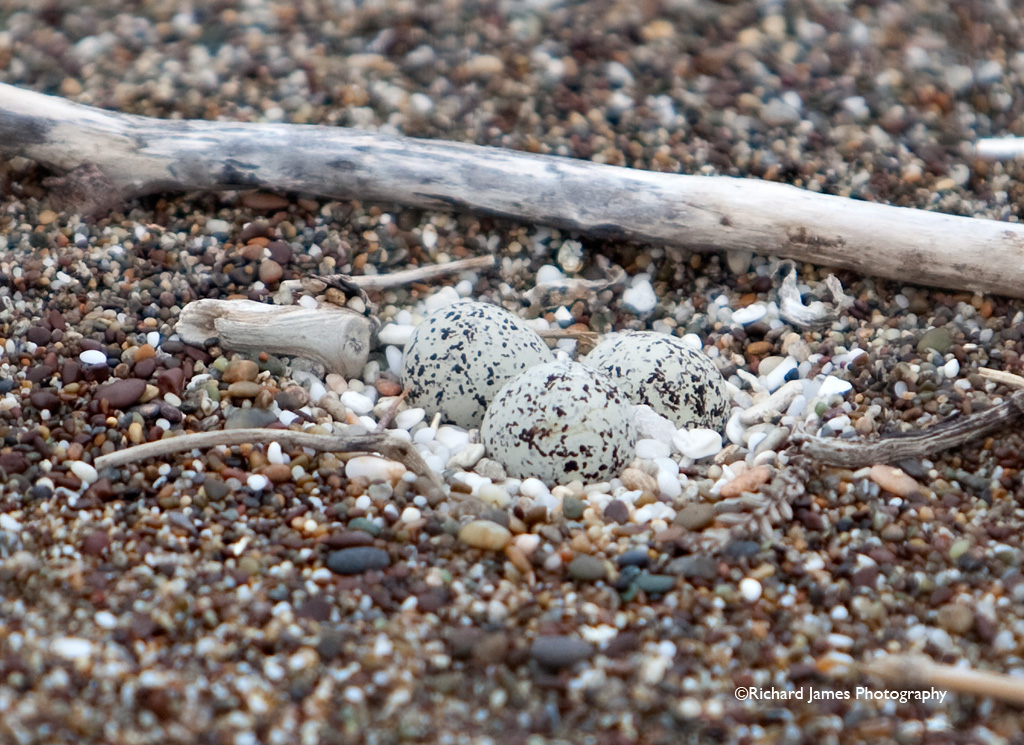
After creating a small depression in the sand and lining it with mostly light colored rocks to increase the stealthiness of the nest, a female plover will lay 2-4 eggs directly on the sand. Most times she lays 3 eggs.

Three Western Snowy Plover eggs in a scrape (nest)

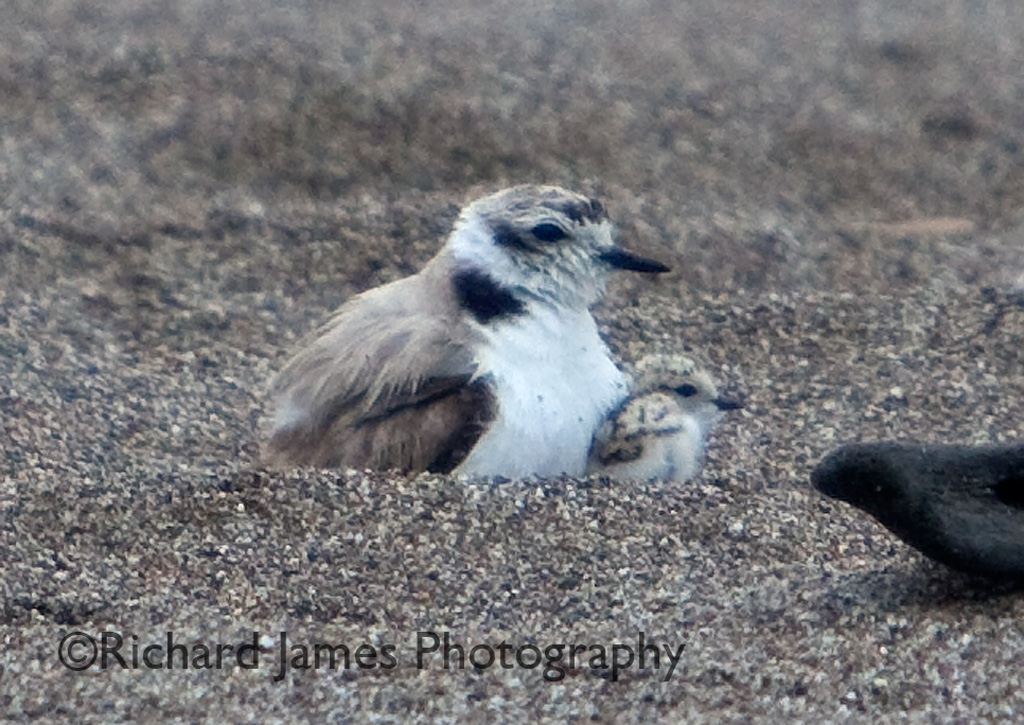
About 28 days later, if the sea has not washed away the eggs, ravens, crows, coyotes, raccoons, skunks or weasels have not eaten the eggs, off-leash dogs or errant humans have not trampled the nest, the birds emerge form their cocoon. Plover chicks are “precocious”, meaning that they are out of the nest and cruising for food within hours after hatching.

Mother plover leaves to go find another mate, father plover begins a month-long odyssey attempting to ensure his brood learns to eat, and keeps from being eaten.

Researchers consider a chick fledged if it survives 28 days. The last 3 years at Point Reyes have seen 7, 8 and 5 chicks fledge (2010, 2009, 2008). There are an estimated 5000 plovers, period.

Western Snowy Plovers are on the endangered species list. This means that they are in danger of going extinct. Extinct means there are no more plovers. Ever.

Dog owners, please keep this in mind the next time you want to let your domesticated, far from extinct pal run off-leash in this area.

Beach driftwood architects, enjoy building your complex driftwood structures. But, once you are done, please dismantle your work-of-art. Ravens use these structures to rest and look for prey, including endangered plovers. Don’t make it easy for ravens to further reduce the dwindling numbers of snowy plovers.

The park plover expert knows when each plover egg is laid and when each chick hatches. Finding all plovers present and accounted for each day is a good day.

Last Saturday we found all 5 chicks, plus fourteen adults for a total of nineteen birds.

I found a small bag of plastic trash, including nineteen plastic beverage bottles.

Nineteen plastic bottles, nineteen too many

So, depending on one’s perspective, nineteen is too small, and too large.

Please use one metal bottle for your drinking water needs.

The coastodian

Three is a good number

Click on the title of this post to read it and see a related header image.

Sometimes I come across much more pleasant sights than a beach covered with plastic.

Here are three peregrine falcons on Kehoe Beach. The middle bird is a chick that has fledged.

Three peregrines

Three peregrines, one cleared for take-off

Three peregrines, one aloft

I imagine the other two are proud parents.

Here are the customary three chicks in a western snowy plover clutch on North Beach.

Three precocious plover chicks

Hagard plover dad and chicks

Happy father's day little plover


What I hope is a soon to be extinct plastic pink sea-horse.

If it has so little worth it can be left behind, as most of these cheap plastic toys are, why buy it in the first place?

WIth a little imagination, one can use sticks, kelp, and other natural items found on the beach to entertain a young child.

Sending money to China so petroleum can be turned into what will become poisonous trash makes no sense. To me at least.

I wonder if an iMagination app for the iphone is available?

coastodian

Powered by petroleum

Click on the title of this post to read it and see a related header image.

Powered by petroleum

Does my Prius consume more gasoline to go a mile than was needed to build and ship all those plastic bottles on the roof?

I don’t know.

Google could give me lots of numbers in a short time.

My eyes tell me that plastic bottles, even one, consume too much oil.

We kid ourselves, thinking it gets recycled, all is good.

If it gets recycled, why do I find thousands upon thousands of plastic water bottles on a fraction of the California coast each year?

What about all the animals that will eventually eat all that plastic we keep dumping in the ocean?

Man is one of those animals.

Tomorrow, instead of pouring milk on your cereal or in your coffee, eat the bottle.

Go direct!

Cut out the middleman and save.

Experience what all the fishes and birds in the sea do every day.

Or buy milk in a glass bottle.

Or raise chickens and trade their eggs for milk from your neighbor’s cow Rosie like a friend of mine does.

That bottle on my car is at Marin Arts Council for another month as part of their Pop Art show.

Check out the show here.

Go see lots of cool art. Buy a card and support the arts and your local coastodian.

Stop buying bottled water!

Get a metal water bottle and use your tap.

Put a filter on the tap if you don’t like the taste.

Stop fouling the rivers if you don’t want to filter that which belongs to our children, and their children, and so on.

the coastodian

Perspective – by Sethra May, guest blogger

Naomi Shihab Nye wrote a poem called “Valentine for Ernest Mann”. It is a poem about poems. In the poem, one character is ‘a serious man who lived in a serious way. Nothing was ugly just because the world said so.’ This serious man gave his wife two skunks for Valentine’s Day. When his wife cried, he said this, ‘I thought they had such beautiful eyes.’, and he was serious.’ The man really enjoyed the skunks he gave his wife. He had ‘reinvented them as valentines and they became beautiful’.

I understand that though Richard’s giant bottles are art, they aren’t considered to be a finishing touch completing the natural beauty of the national park. Though I’m sure many a poem could be found in the beauty of Richard’s giant battles, I’m certain that is not the reason they are there. They magnify a part of the park that isn’t pretty. It makes you look, and when you look you can’t help but compare the bottles to their surroundings. The juxtaposing effect is obvious. The way the bottles look so un-indigenous in the park make you re-think tossing your water bottle on the ground! It might even make you go out and buy a reusable metal water bottle.

Don’t look at the bottles and see them as a scar on the face of the park, look at them and see that the world isn’t a utopia. It is a balance between good and bad. A harmony sung with a million parts. The ocean’s melody pleads for us to help her stay clean, and Richard’s song harmonizes with the ocean’s.

Below their music though is the constant chant of the plastic bottles that wash up on the shore. Sing your song clear and strong, and I hope it’s closer to the ocean’s rush and roar than the growling of the bottles on the beach.

Sethra May
8th Grade Student
Bay Area, California
23, May 2011

I don’t like your bottles in the park

Click on the title of this post to read it and see a related header image.

A couple days ago I stopped to get coffee at a local market.

As I got out of my car and walked towards the door, cup in hand, a woman I know shouted out to me “Hey, shouldn’t you be out on the beach picking up trash?”

She was smiling as she said it. One of those smiles that says I am kidding, but not fully.

I explained that I wrenched my knee and was on the DL for a while as I recuperated.

Standing feet apart from one another at the edge of Sir Francis Drake Boulevard, she said to me, “I saw your sculptures in the park by the visitor center. I don’t like them in the National Park.”

I’ve known her for a few years now, mostly bumping into her at volunteer events at the park. She is a long time Point Reyes National Seashore volunteer, roosting in West Marin when not at one of her other residences.

She is always pretty direct, in your face. She likes to get a reaction with her words.

The object of her disdain is “Thirsty?”, my collection of five eight-and-a-half-foot-tall plastic bottle sculptures. I spent a year picking up about a ton of trash off park beaches, from which I culled one item, plastic bottles, to create the art installation.

“What don’t you like about the sculptures?” I asked.

“I don’t like their aesthetic,” she said.

“Yeah. They look kind of trashy in the meadow don’t they?” I stated.

“That’s right, I don’t like that sort of thing in the National Park, it looks bad,” she said.

At this point I am figuring she declined to walk over to the art installation and read the 43-word interpretive panel explaining the piece.

“I’m glad you don’t like it,” I said, “neither do I. All that trash in the park is just plain wrong!”

I encouraged her, after entering the market, to ask the owner to stop selling bottled water. He has told me he is a capitalist and he intends to make money, consequences be damned.

I’m not quite sure she got the message of “Thirsty?”.

Tons of trash washes ashore on California beaches each and every day. Most of it almost tinier than the eye can see in the form of (raw plastic-nurdles), shredded Styrofoam pellets, packaging, toys, fishing gear, food containers etc.

Most people don’t see the magnitude of the trash problem when they visit the beach.

Magnifying the problem by building eight and a half foot tall plastic bottles apparently registered on her radar.

How big do I need to make these bottles to get on a majority of people’s radar?

We are shitting in our nest a toxic brew of chemicals nature cannot metabolize.

Please, use one metal bottle!

the coastodian
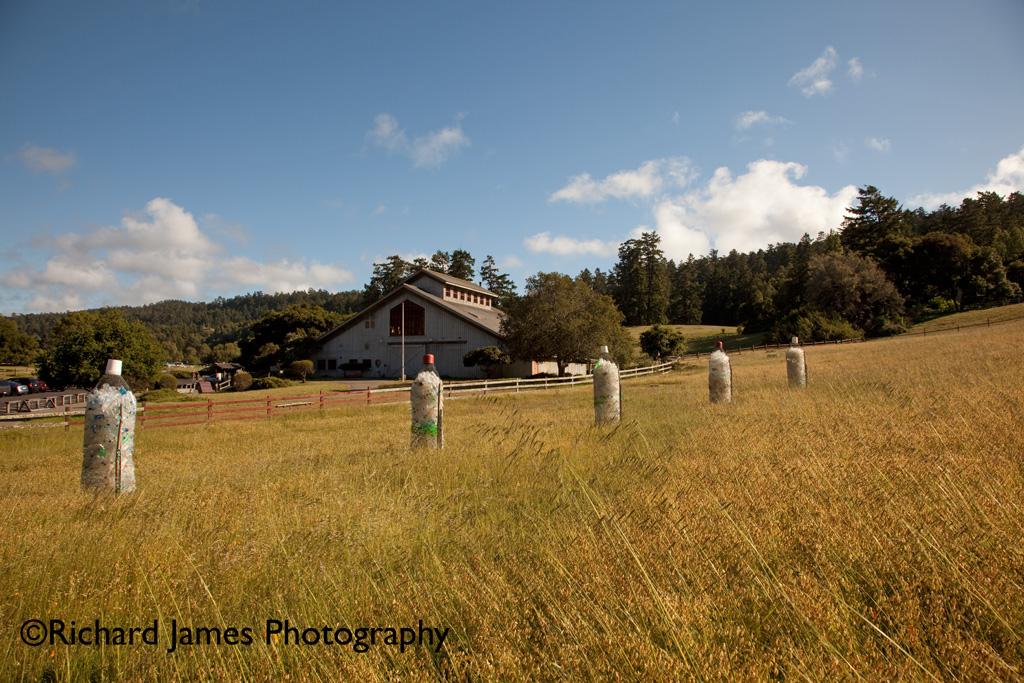
Thirsty? at Bear Valley Visitor Center - Point Reyes National Seashore

The following entry…

A good friend of mine often comes up and walks the beach with me. Sometimes he brings his two daughters. One of his daughters decided to write about her experiences cleaning up the beach for her english class. Her writing skills rival her skills at combing the beach for man-made trash to collect. Enjoy.